Roofing Services

Industrial roofing solutions for factories and warehouses including installation, replacement and maintenance of durable metal roofing systems designed for long service life.

Industrial Shed Design in Pune | Factory & Warehouse Construction Guide

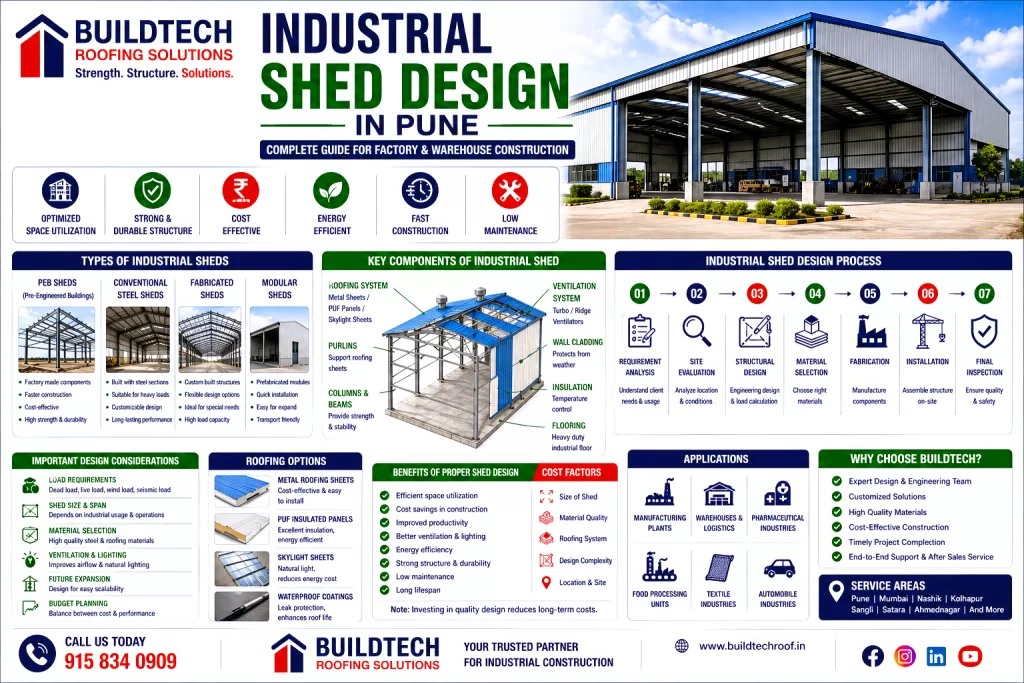
Industrial Shed Design in Pune – Complete Guide for Factory & Warehouse Construction

Introduction Industrial sheds form the backbone of manufacturing units, warehouses, logistics hubs, and commercial operations. A well-designed industrial shed is not just a structure—it is a critical asset that directly impacts productivity, efficiency, safety, and long-term operational cost. In Pune, one of India’s fastest-growing industrial hubs, businesses are increasingly focusing on modern shed designs that combine strength, durability, energy efficiency, and cost-effectiveness. Traditional construction methods are rapidly being replaced by advanced engineered solutions that offer faster execution and superior performance. This is where Industrial Shed Design Pune solutions by Buildtech Roofing Solutions provide expert planning, structural engineering, and execution tailored to industrial requirements. This comprehensive guide explains everything about industrial shed design, including types, structural components, materials, roofing systems, design considerations, cost factors, and best practices. What is Industrial Shed Design? Industrial shed design refers to the planning, engineering, and construction of large-span structures used for industrial and commercial purposes. These structures are designed to: Types of Industrial Sheds 1. Pre-Engineered Buildings (PEB) PEB sheds are factory-manufactured structures assembled on-site. Features: Advantages: 2. Conventional Steel Sheds Traditional construction using hot-rolled steel sections. Features: 3. Fabricated Sheds Custom-designed sheds based on specific industrial requirements. 4. Modular Sheds Prefabricated modular units for quick installation. Key Components of Industrial Shed Design 1. Structural Framework The backbone of the shed includes: These components provide strength and stability. 2. Roofing System Roofing is one of the most important aspects. Options: 3. Purlins Purlins support roofing sheets and distribute the load evenly. 4. Wall Cladding Protects the structure and enhances aesthetics. 5. Ventilation System Includes: Ensures proper airflow. 6. Insulation System Controls the temperature inside the shed. 7. Flooring System Industrial flooring designed for heavy loads. Important Design Considerations 1. Load Calculation Includes: 2. Shed Size & Span Large spans require stronger structural design. 3. Material Selection Choosing high-quality steel and roofing materials is essential. 4. Ventilation & Lighting Proper airflow and natural lighting improve productivity. 5. Future Expansion Design should allow scalability. 6. Budget Planning Balance between cost and performance. Roofing Options for Industrial Sheds 1. Metal Roofing Sheets Cost-effective but with less insulation. 2. PUF Insulated Panels Provide excellent thermal insulation. 3. Skylight Sheets Allow natural lighting. 4. Waterproof Coatings Protect against leakage. Benefits of Proper Industrial Shed Design 1. Efficient Space Utilisation Maximises operational area. 2. Cost Savings Reduces construction and maintenance costs. 3. Improved Productivity Better working conditions enhance efficiency. 4. Energy Efficiency Insulated roofing reduces cooling costs. 5. Durability Strong structure ensures a long lifespan. Industrial Shed Design Process Step-1 – Requirement Analysis Understand client needs and usage. Step-2 – Site Evaluation Analyse location and conditions. Step-3 – Structural Design Engineering design based on load calculations. Step-4 – Material Selection Choose appropriate materials. Step-5 – Fabrication Manufacture structural components. Step-6 – Installation Assemble structure on-site. Step-7 – Final Inspection Ensure quality and safety. Cost of Industrial Shed Design in Pune The cost depends on: 💡 Tip: Investing in quality design reduces long-term costs. Maintenance Tips for Industrial Sheds Common Mistakes to Avoid 1. Poor Design Planning 2. Low-Quality Materials 3. Ignoring Ventilation 4. Improper Installation Why Choose Buildtech Roofing Solutions Pune Buildtech Roofing Solutions is a trusted provider of industrial shed design and construction. Key Advantages: ✔ Expert engineering team✔ Customised solutions✔ High-quality materials✔ Cost-effective design✔ Timely project execution Industries Served Service Areas || Pune | Mumbai | Nashik | Kolhapur | Sangli | Satara | Ahmednagar || Future Trends in Industrial Shed Design Conclusion Industrial shed design is a critical factor in building efficient, durable, and cost-effective industrial infrastructure. With Industrial Shed Design Pune solutions by Buildtech Roofing Solutions, businesses can achieve optimised designs that enhance productivity and performance.

Industrial Shed Design in Pune – Complete Guide for Factory & Warehouse Construction Read More »
Industrial Roof Waterproofing in Pune | Leak-Proof Roofing Solutions

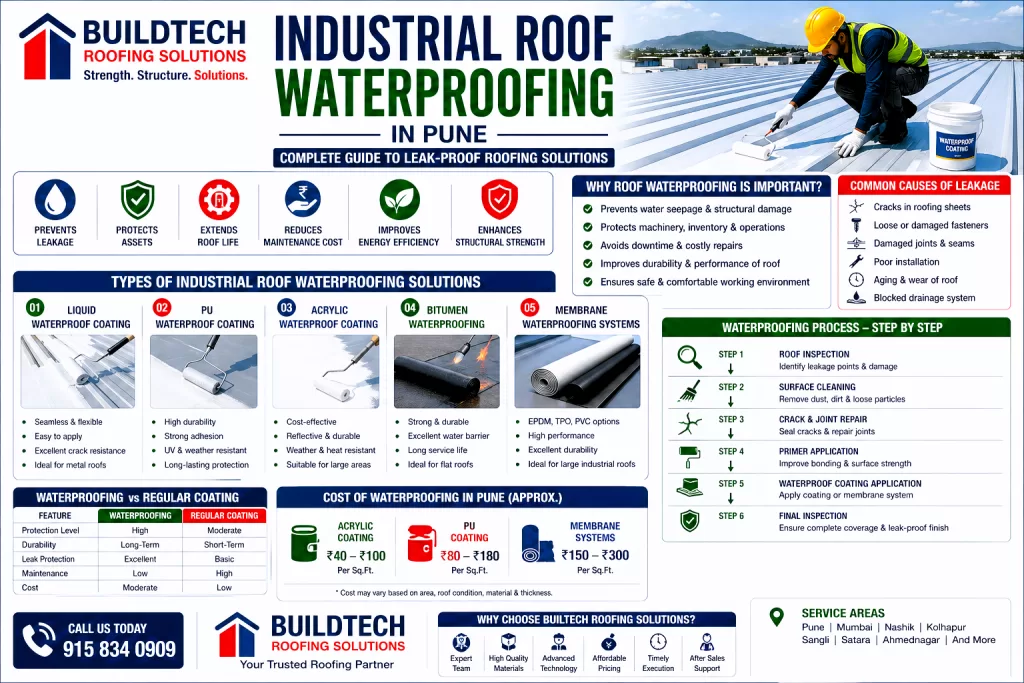
Industrial Roof Waterproofing in Pune – Complete Guide to Leak-Proof Roofing Solutions for Factories & Warehouses

Introduction Industrial roofs are constantly exposed to harsh environmental conditions such as heavy rainfall, extreme heat, dust, and pollution. In a city like Pune, where monsoon seasons can be intense and prolonged, industrial roofs face a high risk of water leakage and structural damage. Water seepage may start as a minor issue, but if ignored, it can lead to severe consequences such as: This is why Industrial Roof Waterproofing Pune solutions by Buildtech Roofing Solutions are essential for ensuring long-term protection and durability. This comprehensive guide explains everything about industrial roof waterproofing, including causes of leakage, types of waterproofing systems, materials used, application process, cost factors, and expert tips. What is Industrial Roof Waterproofing? Industrial roof waterproofing is the process of protecting roofs from water penetration using advanced materials such as coatings, membranes, and sealants. The objective is to create a continuous, leak-proof barrier that prevents water from entering the structure. Waterproofing includes: Why Waterproofing is Critical for Industrial Roofs 1. Prevents Water Leakage Waterproofing eliminates entry points for water, ensuring a dry and secure building. 2. Extends Roof Lifespan Protects the roof from moisture damage, corrosion, and wear. 3. Protects Machinery and Inventory Prevents water damage to valuable equipment and stored materials. 4. Improves Structural Integrity Prevents weakening of the building structure due to moisture. 5. Reduces Maintenance Costs Avoids frequent repairs and emergency fixes. 6. Enhances Energy Efficiency Reflective waterproof coatings can also reduce heat absorption. Common Causes of Industrial Roof Leakage 1. Cracks in Roofing Sheets Small cracks allow water to seep through. 2. Loose or Damaged Fasteners Creates gaps in roofing systems. 3. Damaged Joints and Seams Water enters through weak connections. 4. Ageing Roofing Systems Older roofs are more prone to leakage. 5. Poor Installation Incorrect installation leads to long-term issues. 6. Blocked Drainage Systems Water accumulation increases leakage risk. Types of Industrial Roof Waterproofing Systems 1. Liquid Waterproof Coating Liquid coatings are applied directly to the roof surface, forming a seamless protective layer. Features: Best For: 2. Polyurethane (PU) Waterproofing PU coatings provide excellent durability and waterproofing performance. Benefits: 3. Acrylic Waterproof Coating Acrylic coatings are cost-effective and widely used. Advantages: 4. Bitumen Waterproofing Bitumen-based systems provide strong waterproofing protection. Features: 5. Membrane Waterproofing Systems Membrane systems provide high-performance waterproofing. Types: Waterproofing Process (Step-by-Step) Step-1 – Roof Inspection Identify leakage points and damage areas. Step-2 – Surface Cleaning Remove dust, debris, and contaminants. Step-3 – Crack and Joint Repair Seal cracks and strengthen joints. Step-4 – Primer Application Improves the bonding of the waterproofing material. Step-5 – Waterproof Coating Application Apply the selected coating or membrane system. Step-6 – Final Inspection Ensure complete coverage and leak-proof finish. Waterproofing vs Regular Coating Feature Waterproofing Regular Coating Protection Level High Moderate Durability Long-term Short-term Cost Moderate Low Performance Superior Basic Benefits of Industrial Roof Waterproofing ✔ Leak-proof protection✔ Increased roof lifespan✔ Reduced maintenance cost✔ Protection of assets✔ Improved energy efficiency✔ Enhanced structural durability Cost of Industrial Roof Waterproofing in Pune The cost depends on: Approximate Cost: 💡 Tip: High-quality waterproofing reduces long-term repair costs. Maintenance Tips for Waterproofed Roofs Common Mistakes to Avoid 1. Ignoring Small Leaks Minor leaks can become major problems. 2. Poor Surface Preparation Improper cleaning affects coating performance. 3. Using Low-Quality Materials Reduces durability and effectiveness. 4. Improper Application Leads to uneven coverage and failure. Why Choose Buildtech Roofing Solutions Pune Buildtech Roofing Solutions provides expert waterproofing services tailored for industrial needs. Key Advantages: ✔ Advanced waterproofing systems✔ Experienced professionals✔ High-quality materials✔ Customised solutions✔ Cost-effective services✔ Timely project execution Industries Served Service Areas Pune | Mumbai | Nashik | Kolhapur | Sangli | Satara | Ahmednagar Future of Waterproofing Technology Modern waterproofing systems focus on: Conclusion Industrial roof waterproofing is essential for protecting buildings from water damage, improving durability, and reducing maintenance costs. With Industrial Roof Waterproofing Pune solutions by Buildtech Roofing Solutions, businesses can ensure leak-proof, long-lasting roofing systems that withstand harsh weather conditions.

Industrial Roof Waterproofing in Pune – Complete Guide to Leak-Proof Roofing Solutions for Factories & Warehouses Read More »

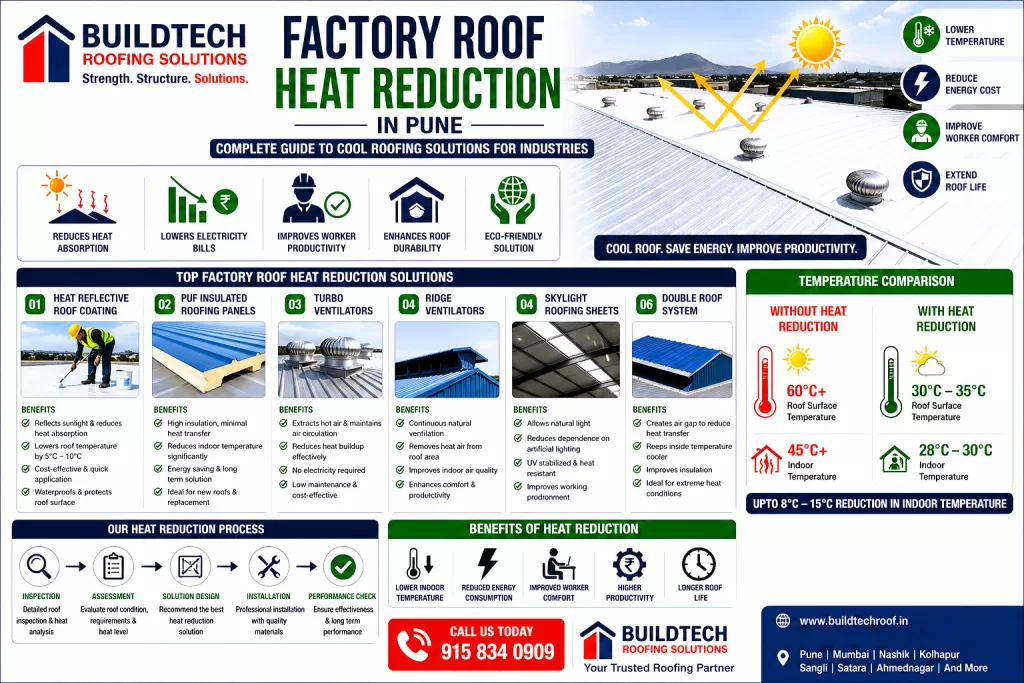
Factory Roof Heat Reduction in Pune – Complete Guide to Cool Roofing Solutions for Industries

Factory Roof Heat Reduction in Pune – Complete Guide to Cool Roofing Solutions for Industries

Introduction Industrial facilities across Pune—especially factories, warehouses, and production units—face a persistent and costly challenge: excessive indoor heat. During peak summer, temperatures inside metal-roofed sheds can soar far above ambient conditions, sometimes by 8–15°C. This heat stress impacts worker comfort, productivity, equipment performance, and energy consumption. Most industrial roofs are constructed using metal sheets, which absorb solar radiation and transfer heat into the building. Without mitigation, this leads to: This is where Factory Roof Heat Reduction Pune solutions by Buildtech Roofing Solutions deliver measurable improvements. This comprehensive guide explains the science behind heat buildup, evaluates practical cooling solutions (coatings, insulation, ventilation, and hybrid systems), and provides a step-by-step framework to select and implement the right strategy for your facility. Understanding Heat Buildup in Industrial Roofs 1. Solar Radiation & Absorption Metal roofing (GI/Galvalume/colour-coated sheets) has high thermal conductivity. Under direct sunlight, roof surface temperatures can exceed 60–70°C. A portion of this heat is transmitted indoors via conduction and radiation. 2. Lack of Thermal Resistance (R-Value) Uninsulated roofs have minimal resistance to heat flow. Without insulation layers, heat transfer into the building remains high. 3. Poor Ventilation Hot air rises and accumulates near the roof. Without effective exhaust (ridge/turbo ventilators), this trapped heat increases indoor temperature. 4. Large Surface Area Industrial roofs cover large spans. Even moderate solar gain per square meter compounds into a significant heat load. 5. Internal Heat Gains Machinery, processes, and lighting add to internal heat, worsening the overall thermal environment. Impact of Excess Heat on Industrial Operations Heat Reduction Strategies – Overview Effective heat reduction combines reflectivity, insulation, and ventilation: A hybrid approach typically delivers the best results. 1. Heat Reflective Roof Coatings (Cool Roof Systems) How They Work Cool roof coatings increase solar reflectance (SR) and thermal emittance (TE), reflecting sunlight and emitting absorbed heat back to the atmosphere. Types Benefits Best Use Cases Limitations 2. PUF Insulated Roofing Panels What They Are Sandwich panels with Polyurethane Foam (PUF) core between metal sheets, providing high insulation (low thermal conductivity). Benefits Best Use Cases Considerations 3. Ventilation Systems (Turbo & Ridge Ventilators) Turbo Ventilators Wind-driven rotating units that create negative pressure, extracting hot air continuously without electricity. Ridge Ventilators Static systems are installed along the roof ridge, enabling continuous natural exhaust of hot air. Benefits Best Use Cases 4. Double Roof / False Ceiling Systems Concept Creating an air gap between two layers (double roof) or installing a false ceiling/liner reduces heat transfer. Benefits Considerations 5. Skylight Roofing Sheets (Optimised Daylighting) Role in Heat Management While skylights introduce light, improper selection can add heat. Use diffused, UV-stabilised, low solar heat gain materials. Benefits Best Practices 6. Radiant Barriers & Insulation Liners Reflective foils or insulation liners are installed under roofing sheets to reduce radiant heat transfer. Comparative Analysis of Solutions Solution Capex Heat Reduction Installation Time Best For Cool Roof Coating Low Medium–High Fast Existing roofs PUF Panels High Very High Medium New/Replacement Ventilators Medium High (indirect) Fast All roofs Double Roof Medium–High High Medium Large sheds Skylights (optimized) Medium Indirect Fast Lighting + comfort Step-by-Step Implementation Framework Step-1 – Roof Audit & Thermal Assessment Step-2 – Define Objectives Step-3 – Solution Design Step-4 – Surface Preparation Step-5 – Installation Step-6 – Quality Check & Handover Performance Metrics to Track Cost of Heat Reduction Solutions in Pune (Indicative) Actual costs vary based on thickness, brand, roof condition, height, and access. ROI & Payback Maintenance Best Practices Common Mistakes to Avoid Why Choose Buildtech Roofing Solutions Pune ✔ End-to-end thermal audit and solution design✔ High-quality coatings, panels, and ventilation systems✔ Experienced industrial installation teams✔ Customised hybrid solutions for best ROI✔ Fast execution with safety compliance Industries Served Service Areas Pune | Mumbai Nashik | Kolhapur | Sangli | Satara | Ahmednagar Future of Cool Roofing in Industry Conclusion Factory heat reduction is not just a comfort upgrade—it’s a productivity and cost optimisation strategy. By combining reflective coatings, insulation, and ventilation, industries can achieve significant temperature reduction, lower energy bills, and improved working conditions. With Factory Roof Heat Reduction Pune solutions by Buildtech Roofing Solutions, your facility can become cooler, more efficient, and future-ready.

Factory Roof Heat Reduction in Pune – Complete Guide to Cool Roofing Solutions for Industries Read More »

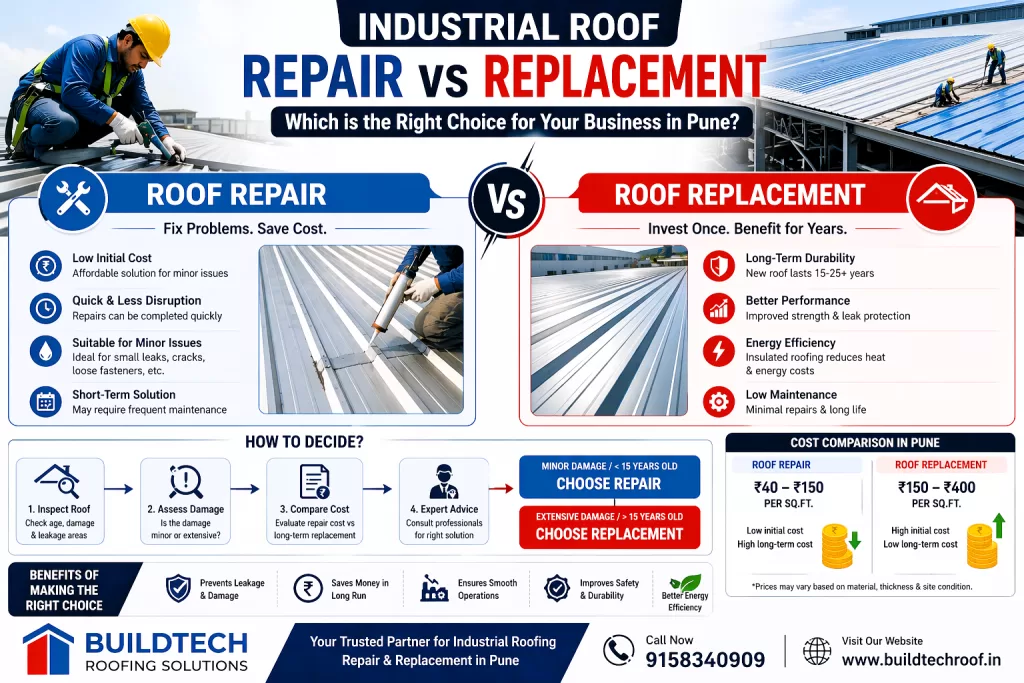
Industrial Roof Repair vs Replacement in Pune | Cost & Expert Guide

Industrial Roof Repair vs Replacement in Pune – Complete Decision Guide for Factories & Warehouses

Introduction Industrial roofs are critical assets that protect machinery, inventory, and daily operations from environmental exposure. Over time, however, these roofs are subjected to harsh weather conditions such as heavy rains, intense sunlight, wind, and pollution, leading to gradual deterioration. When problems like leakage, corrosion, or structural weakness arise, business owners face a crucial decision: 👉 Should you repair the roof or replace it completely? This decision directly impacts your budget, operational continuity, and long-term maintenance costs. Choosing repair when replacement is needed can lead to repeated failures. On the other hand, opting for replacement too early can result in unnecessary expenditure. This is where Industrial Roof Repair vs Replacement Pune guidance by Buildtech Roofing Solutions helps businesses make informed, cost-effective decisions. This detailed guide explores everything you need to know about roof repair and replacement, including cost comparisons, decision criteria, benefits, and expert insights. Understanding Industrial Roof Repair Roof repair involves fixing specific damaged areas without replacing the entire roofing system. Common Repair Activities: Repair is generally suitable for minor issues and localised damage. Understanding Industrial Roof Replacement Roof replacement involves removing the existing roof and installing a completely new roofing system. Replacement Includes: Replacement is a long-term solution for severely damaged or ageing roofs. Key Differences Between Repair and Replacement Feature Roof Repair Roof Replacement Cost Low High Time Short Longer Lifespan Temporary Long-term Scope Partial Complete Maintenance Frequent Minimal When Should You Choose Roof Repair? 1. Minor Leakage Issues If leakage is limited to specific areas and can be fixed easily. 2. Localised Damage Small cracks, loose fasteners, or minor corrosion can be repaired. 3. Roof is Relatively New If the roof is less than 10–15 years old. 4. Budget Constraints Repair is a cost-effective short-term solution. 5. No Structural Damage If the underlying structure is still strong. When Should You Choose Roof Replacement? 1. Extensive Damage Large areas are affected by rust, leakage, or wear. 2. Ageing Roof Roof nearing the end of its lifespan (15–25 years). 3. Frequent Repairs Recurring repairs indicate deeper issues. 4. Structural Weakness If purlins or framework are damaged. 5. Energy Efficiency Upgrade Replacement allows installation of insulated roofing systems. Cost Comparison in Pune Prices may vary based on materials, thickness, and site conditions. The price is not fixed; it is always flexible. Roof Repair Cost ₹40 – ₹150 per sq.ft Roof Replacement Cost ₹150 – ₹400 per sq.ft Cost Insight Repair is cheaper initially, but repeated repairs may exceed replacement cost over time. Hidden Costs to Consider 1. Downtime Frequent repairs can disrupt operations. 2. Energy Loss Old roofs increase cooling costs. 3. Maintenance Cost Repeated maintenance adds up. 4. Risk of Damage Leakage can damage machinery and inventory. Long-Term Cost Analysis Repair Approach: Replacement Approach: 💡 Tip: Evaluate cost over 10–15 years, not just immediate expense. Factors to Consider Before a Decision 1. Roof Age Older roofs are better replaced. 2. Damage Severity Extensive damage requires replacement. 3. Budget Short-term vs long-term investment. 4. Business Operations Downtime impact must be considered. 5. Future Plans Expansion or upgrade plans may require replacement. Benefits of Roof Repair ✔ Cost-effective✔ Quick solution✔ Minimal disruption✔ Suitable for minor issues Benefits of Roof Replacement ✔ Long-term durability✔ Better insulation✔ Improved performance✔ Reduced maintenance✔ Higher property value Step-by-Step Decision Framework Step-1 – Detailed Inspection Assess roof condition thoroughly. Step-2 – Damage Assessment Identify the extent and type of damage. Step-3 – Cost Comparison Compare repair vs replacement cost. Step-4 – Expert Consultation Seek professional advice. Step-5 – Final Decision Choose the best option based on the analysis. Role of Professional Inspection Professional inspection helps: Common Mistakes to Avoid 1. Ignoring Minor Issues Small problems can cause major damage. 2. Choosing Cheap Repairs Low-quality repairs lead to repeated failures. 3. Delaying Replacement Delays increase overall cost. 4. Lack of Inspection Without inspection, decisions may be incorrect. Maintenance After Repair or Replacement Why Choose Buildtech Roofing Solutions Pune Buildtech Roofing Solutions provides expert roofing services with a focus on quality and durability. Key Advantages: ✔ Expert inspection team✔ Repair & replacement solutions✔ High-quality materials✔ Transparent pricing✔ Fast project execution Industries Served Service Areas Pune | Mumbai | Nashik | Kolhapur | Sangli | Satara | Ahmednagar Future of Industrial Roofing Modern roofing solutions focus on: Replacing old roofs with modern systems improves performance. Conclusion Choosing between roof repair and replacement is a critical decision that impacts cost, performance, and long-term durability. With Industrial Roof Repair vs Replacement Pune guidance by Buildtech Roofing Solutions, businesses can make informed decisions and ensure reliable roofing systems.

Industrial Roof Repair vs Replacement in Pune – Complete Decision Guide for Factories & Warehouses Read More »

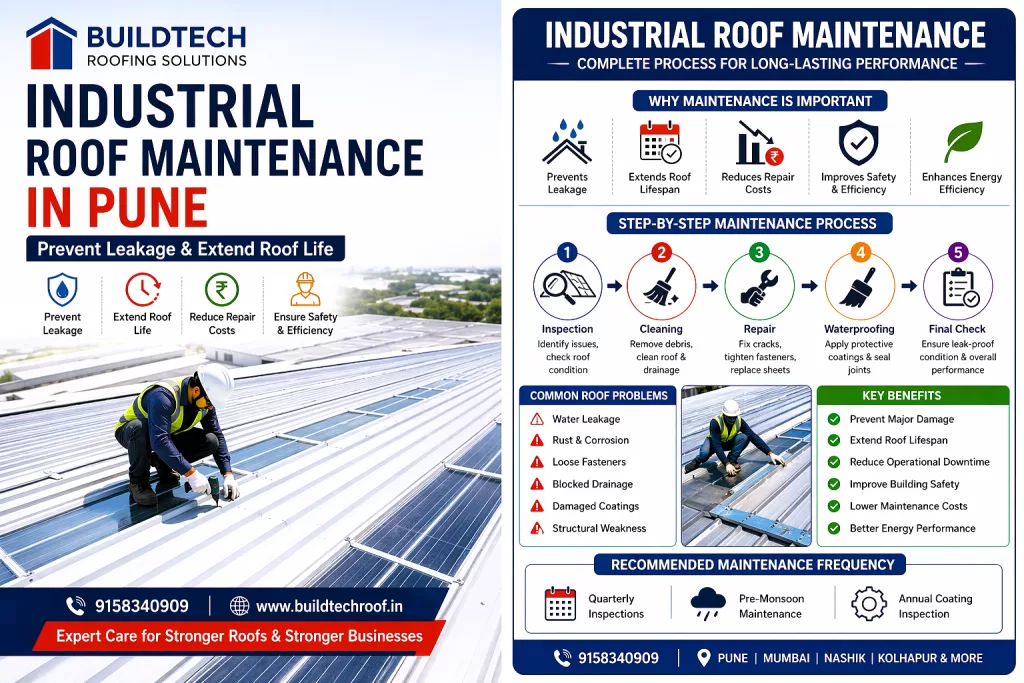
Industrial Roof Maintenance in Pune – Complete Guide to Extend Roof Life & Prevent Leakage

Industrial Roof Maintenance in Pune – Complete Guide to Extend Roof Life & Prevent Leakage

Introduction Industrial roofs are one of the most critical components of any factory, warehouse, or commercial building. They protect machinery, inventory, and operations from harsh environmental conditions such as heavy rainfall, extreme heat, dust, and pollution. However, over time, even the strongest roofing systems begin to deteriorate due to continuous exposure. Without proper maintenance, minor issues like loose fasteners or small cracks can quickly escalate into major problems, including water leakage, structural damage, and costly repairs. This is where Industrial Roof Maintenance services by Buildtech Roofing Solutions become essential. Regular maintenance not only extends the lifespan of your roof but also ensures smooth business operations by preventing unexpected failures. In an industrial city like Pune, where monsoons can be intense and summers extremely hot, proactive roof maintenance is not just recommended—it is necessary. This comprehensive guide covers everything you need to know about industrial roof maintenance, including its importance, common problems, maintenance types, inspection processes, and expert tips. What is Industrial Roof Maintenance? Industrial roof maintenance refers to the routine inspection, cleaning, repair, and protection of roofing systems to ensure they function efficiently over time. It includes activities such as: The goal is to prevent damage before it occurs and maintain the structural integrity of the building. Why Industrial Roof Maintenance is Important 1. Prevents Roof Leakage Leakage is one of the most common problems in industrial buildings. Regular maintenance helps identify vulnerable areas before they turn into leaks. 2. Extends Roof Lifespan Well-maintained roofs last significantly longer, reducing the need for premature replacement. 3. Reduces Repair Costs Preventive maintenance is far more cost-effective than major repairs or replacements. 4. Improves Safety A well-maintained roof ensures the safety of workers, equipment, and operations. 5. Enhances Energy Efficiency Maintained roofs perform better in insulation and heat reduction, lowering energy costs. Common Industrial Roof Problems Understanding common issues helps in timely maintenance. 1. Water Leakage Caused by: 2. Rust & Corrosion Metal roofs are prone to rust due to moisture exposure. 3. Loose Fasteners Fasteners loosen due to vibration, wind, and thermal expansion. 4. Blocked Drainage Systems Clogged gutters cause water accumulation and leakage. 5. Damaged Coatings Protective coatings wear off over time, exposing the roof to damage. 6. Structural Weakness Over time, structural components may weaken, affecting stability. Signs Your Industrial Roof Needs Maintenance Ignoring these signs can lead to serious issues. Types of Industrial Roof Maintenance 1. Preventive Maintenance Scheduled inspections and minor repairs to avoid major problems. 2. Corrective Maintenance Fixing existing issues, such as leaks or damage. 3. Predictive Maintenance Using inspection data to predict future problems. 4. Emergency Maintenance Immediate repair of sudden damage or leakage. Industrial Roof Maintenance Checklist ✔ Inspect roof surface✔ Check joints and seams✔ Tighten fasteners✔ Clean drainage systems✔ Repair cracks✔ Apply waterproof coatings✔ Inspect insulation✔ Check structural components Step-by-Step Maintenance Process Step-1 – Detailed Roof Inspection Step-2 – Cleaning Step-3 – Repair Work Step-4 – Waterproofing Step-5 – Final Inspection Maintenance Frequency Benefits of Regular Roof Maintenance ✔ Prevents major damage✔ Extends roof lifespan✔ Reduces operational disruptions✔ Improves building safety✔ Enhances energy efficiency✔ Saves long-term costs Maintenance Tips for Different Roofing Types Metal Roofing PUF Roofing Skylight Sheets Cost of Industrial Roof Maintenance in Pune The cost varies depending on: 💡 Tip: Preventive maintenance costs are much lower than repair costs. Why Choose Buildtech Roofing Solutions Pune Buildtech Roofing Solutions is a trusted name in industrial roofing maintenance. Key Advantages: ✔ Experienced professionals✔ Advanced maintenance solutions✔ High-quality materials✔ Safety-compliant work✔ Cost-effective services✔ Fast response Industries Served Preventive Maintenance Strategy for Businesses Businesses should adopt a long-term maintenance strategy: Future of Industrial Roof Maintenance With advancements in technology, roof maintenance is becoming more efficient through: Conclusion Industrial roof maintenance is essential for ensuring long-term durability, safety, and cost savings. By choosing Industrial Roof Maintenance services from Buildtech Roofing Solutions, businesses can prevent costly damage, improve performance, and extend the life of their roofing systems.

Industrial Roof Maintenance in Pune – Complete Guide to Extend Roof Life & Prevent Leakage Read More »

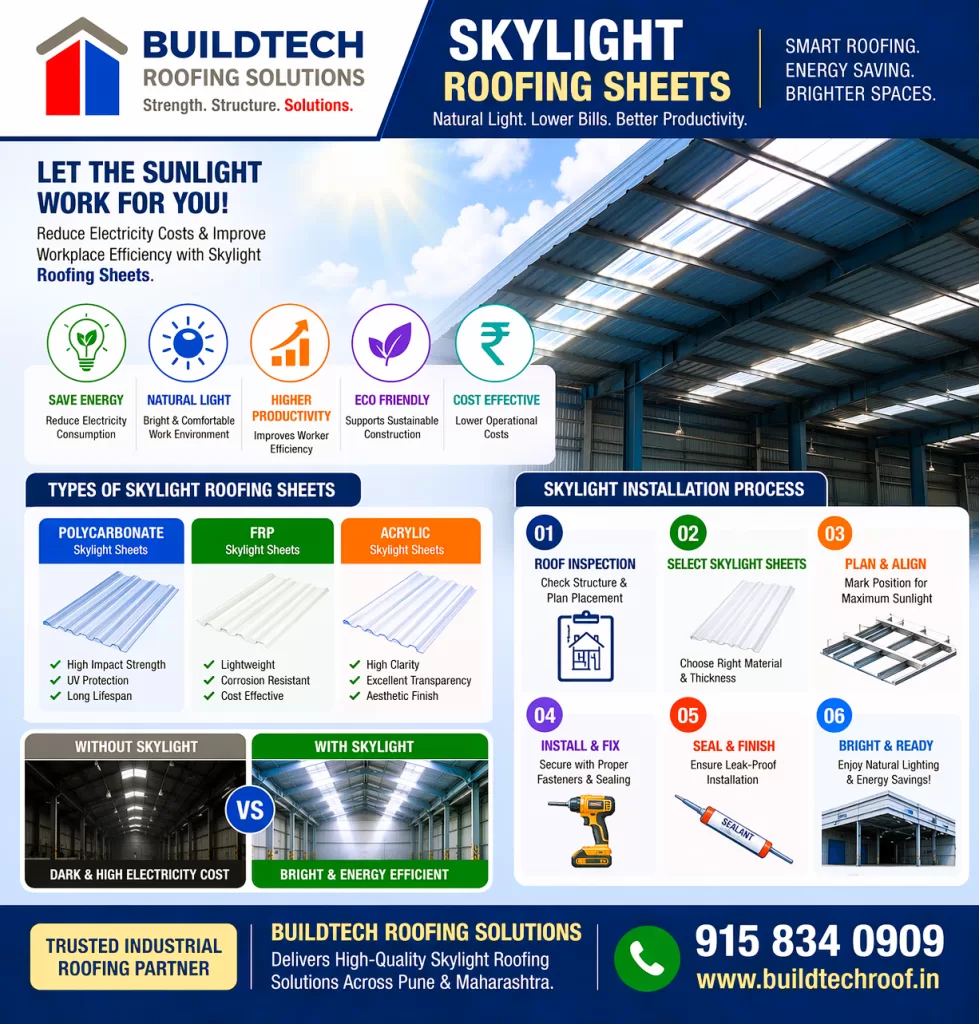
Install skylight roofing sheets in Pune with Buildtech Roofing Solutions. Improve natural lighting, reduce electricity costs, and enhance industrial workspace efficiency.

Skylight Roofing Sheets in Pune – Complete Guide for Industrial Natural Lighting Solutions

Introduction Industrial and commercial buildings such as factories, warehouses, and production units require effective lighting systems to maintain productivity and operational efficiency. Traditionally, these buildings rely heavily on artificial lighting, which significantly increases electricity consumption and operational costs. In a growing industrial hub like Pune, where energy efficiency and sustainability are becoming critical business priorities, companies are actively looking for smarter alternatives. This is where Skylight Roofing Sheets Pune solutions by Buildtech Roofing Solutions offer a highly effective and eco-friendly solution. Skylight roofing sheets are designed to allow natural sunlight to enter industrial buildings, reducing dependence on artificial lighting during the day. These systems not only reduce energy costs but also improve working conditions by providing consistent and natural illumination. This comprehensive guide explains everything you need to know about skylight roofing sheets, including types, features, benefits, applications, installation process, and why they are a smart investment for industrial infrastructure. What Are Skylight Roofing Sheets? Skylight roofing sheets are transparent or translucent roofing panels installed along with conventional metal roofing sheets to allow natural light into buildings. They are typically manufactured using advanced materials such as: These materials are engineered to provide: How Skylight Roofing Sheets Work Skylight sheets function by allowing sunlight to pass through the roof structure while maintaining protection from environmental elements. Working Mechanism: This simple yet effective system helps improve energy efficiency. Types of Skylight Roofing Sheets 1. Polycarbonate Skylight Sheets Polycarbonate sheets are widely used due to their strength and durability. Features: Best For: 2. FRP Skylight Sheets FRP sheets are cost-effective and commonly used in industrial applications. Benefits: 3. Acrylic Skylight Sheets Acrylic sheets provide high clarity and aesthetic appeal. Advantages: Key Features of Skylight Roofing Sheets 1. High Light Transmission Allows maximum daylight inside buildings. 2. UV Protection Protects against harmful ultraviolet rays. 3. Weather Resistance Withstands rain, heat, and dust. 4. Lightweight Structure Easy to install without adding structural load. 5. Long Lifespan Durable materials ensure long-term performance. Benefits of Skylight Roofing Sheets 1. Reduced Electricity Consumption Natural lighting significantly reduces energy usage. 2. Cost Savings Lower electricity bills result in long-term savings. 3. Improved Workplace Environment Natural light improves visibility and worker comfort. 4. Eco-Friendly Solution Supports sustainable and green building practices. 5. Increased Productivity Better lighting conditions enhance efficiency. 6. Enhanced Aesthetics Improves the interior appearance of industrial spaces. Applications of Skylight Roofing Sheets Skylight sheets are widely used in: Skylight Sheets vs Traditional Roofing Feature Skylight Sheets Metal Roofing Light Transmission High None Energy Efficiency High Low Cost Savings High Low Installation Easy Standard Ideal Placement of Skylight Sheets Proper placement ensures maximum efficiency. Recommended Placement: Correct placement maximises natural lighting. Step-by-Step Installation Process Step-1 – Roof Inspection Evaluate the roof structure and the sunlight direction. Step-2 – Material Selection Choose a suitable skylight material. Step-3 – Layout Planning Determine placement for maximum light. Step-4 – Sheet Installation Install skylight sheets with proper alignment. Step-5 – Sealing & Fastening Ensure leak-proof installation. Step-6 – Final Inspection Check performance and alignment. Maintenance Tips Cost of Skylight Roofing Sheets in Pune Cost depends on: 💡 Tip: Investing in high-quality sheets ensures better durability and performance. Why Choose Buildtech Roofing Solutions Pune Buildtech Roofing Solutions is a trusted provider of industrial roofing systems. Key Advantages: ✔ High-quality skylight materials✔ Expert installation team✔ Customised solutions✔ Competitive pricing✔ Industrial-grade performance Industries Served Service Areas | Pune | Mumbai | Nashik | Kolhapur | Sangli | Satara | Ahmednagar | Future of Industrial Lighting Solutions With increasing focus on: Skylight roofing systems are becoming an essential component of modern industrial buildings. Conclusion Skylight roofing sheets provide a powerful combination of energy savings, improved working conditions, and sustainable building practices. With Skylight Roofing Sheets Pune solutions by Buildtech Roofing Solutions, businesses can reduce electricity costs while enhancing productivity and workplace comfort.

Skylight Roofing Sheets in Pune – Complete Guide for Industrial Natural Lighting Solutions Read More »

Ridge Ventilator System in Pune

Ridge Ventilator System in Pune – Complete Guide for Industrial Ventilation Solutions

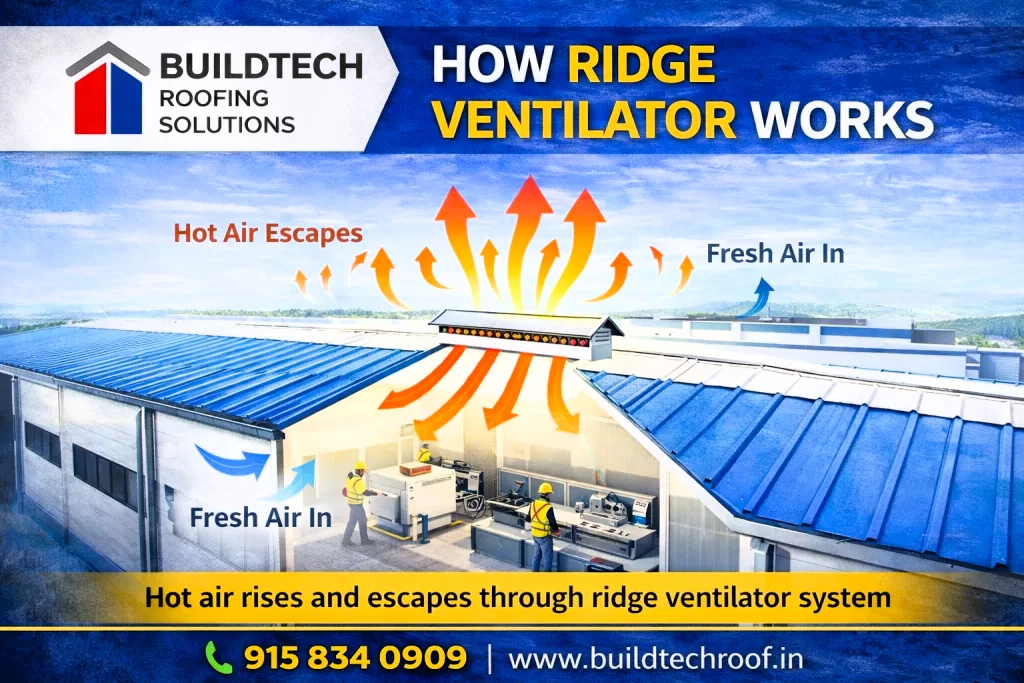
Introduction Industrial buildings such as factories, warehouses, logistics hubs, and manufacturing units generate a significant amount of internal heat due to machinery, production processes, and limited airflow. In cities like Pune, where temperatures can rise considerably during summer, this heat buildup becomes a major challenge. Poor ventilation leads to: This is where the Ridge Ventilator System Pune solutions by Buildtech Roofing Solutions provide an efficient and cost-effective solution. Ridge ventilators are natural ventilation systems installed at the highest point of industrial roofs. They allow hot air to escape, improving airflow and maintaining a balanced indoor environment without using electricity. This comprehensive guide explains everything about ridge ventilators, including working principles, types, benefits, installation process, and industrial applications. What is a Ridge Ventilator System? A ridge ventilator is a roof-mounted ventilation system installed along the ridge line of a building. Its primary function is to: It works on the principle of natural convection, where hot air rises and escapes through the roof opening. How Ridge Ventilators Work Ridge ventilators operate based on natural airflow dynamics: Step-by-step working: This creates a continuous airflow cycle. Importance of Industrial Ventilation Proper ventilation is essential for industrial buildings. 1. Temperature Control Excess heat is removed, maintaining a comfortable environment. 2. Worker Safety & Comfort Improved airflow reduces heat stress and enhances productivity. 3. Energy Savings Natural ventilation reduces dependence on fans and AC systems. 4. Moisture Control Prevents condensation and corrosion. 5. Equipment Protection Maintains optimal temperature for machinery. Types of Ridge Ventilator Systems 1. Turbo Ridge Ventilators These ventilators use wind energy to rotate and enhance airflow. Features: 2. Static Ridge Ventilators Fixed ventilators with no moving parts. Advantages: 3. Monitor Roof Ventilators Raised structures along the ridge for maximum airflow. Best For: Key Features of Ridge Ventilators 1. Natural Ventilation Operates without electricity. 2. Continuous Airflow Provides constant ventilation. 3. Weather Protection Designed to prevent rainwater entry. 4. Durable Construction Made from corrosion-resistant materials. 5. Low Maintenance Minimal servicing required. Benefits of Ridge Ventilator Systems 1. Reduces Indoor Temperature Helps maintain cooler working conditions. 2. Improves Air Quality Removes stale air and pollutants. 3. Enhances Productivity Comfortable workers perform better. 4. Reduces Energy Costs Less dependency on electrical ventilation. 5. Prevents Moisture Damage Avoids condensation-related issues. 6. Eco-Friendly Solution Supports sustainable building practices. Applications of Ridge Ventilators Ridge ventilators are widely used in: Ridge Ventilator vs Exhaust Fans Feature Ridge Ventilator Exhaust Fan Power Requirement No Yes Maintenance Low High Cost One-time Recurring Airflow Continuous Limited Noise Silent Noisy Step-by-Step Installation Process Step-1 – Site Inspection Evaluate roof structure and ventilation requirements. Step-2 – Design Planning Determine ventilator size, placement, and quantity. Step-3 – Ridge Opening Creation Create an opening along the roof ridge. Step-4 – Ventilator Installation Install the ventilator structure securely. Step-5 – Sealing & Waterproofing Ensure no water leakage. Step-6 – Final Inspection Check airflow efficiency and installation quality. Factors to Consider Before Installation Maintenance Tips Cost of Ridge Ventilator System in Pune Cost depends on: 💡 Tip: Ridge ventilators provide long-term savings by reducing energy costs. Why Choose Buildtech Roofing Solutions Pune Buildtech Roofing Solutions is a leading provider of industrial ventilation systems. Key Advantages: ✔ High-quality ventilators✔ Expert installation team✔ Customised industrial solutions✔ Competitive pricing✔ Fast project execution Industries Served Future of Industrial Ventilation With increasing focus on: Ridge ventilators are becoming essential in modern industrial infrastructure. Conclusion Ridge ventilator systems provide an efficient, cost-effective, and eco-friendly solution for industrial ventilation. With Ridge Ventilator System Pune solutions by Buildtech Roofing Solutions, businesses can achieve better airflow, reduced heat, and improved working conditions.

Ridge Ventilator System in Pune – Complete Guide for Industrial Ventilation Solutions Read More »

Industrial Roof Replacement in Pune – Complete Guide for Factories & Warehouses

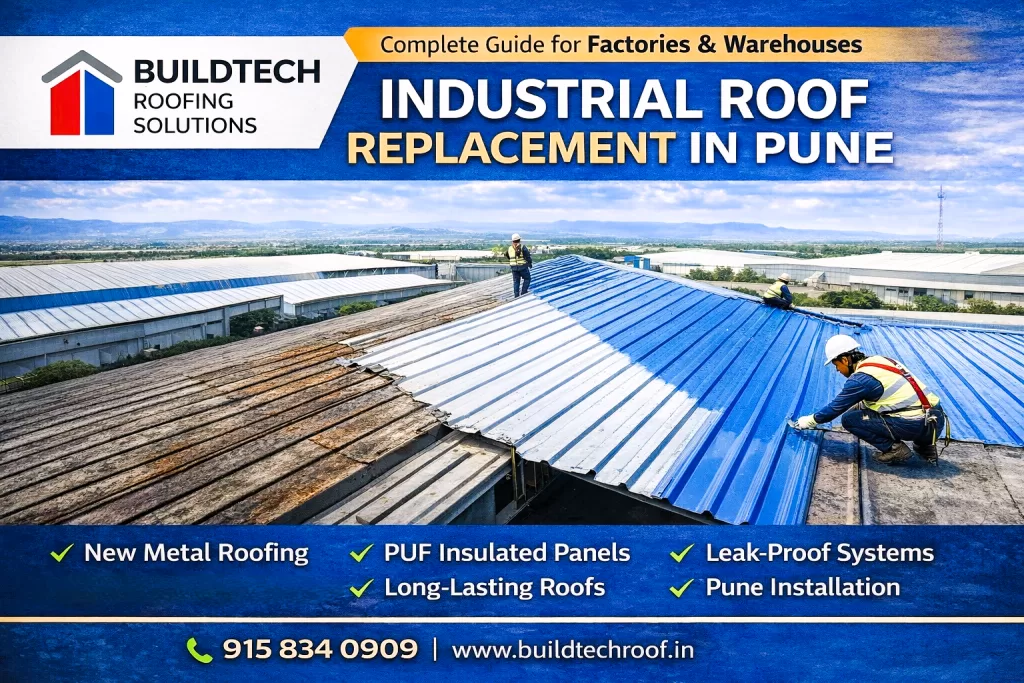
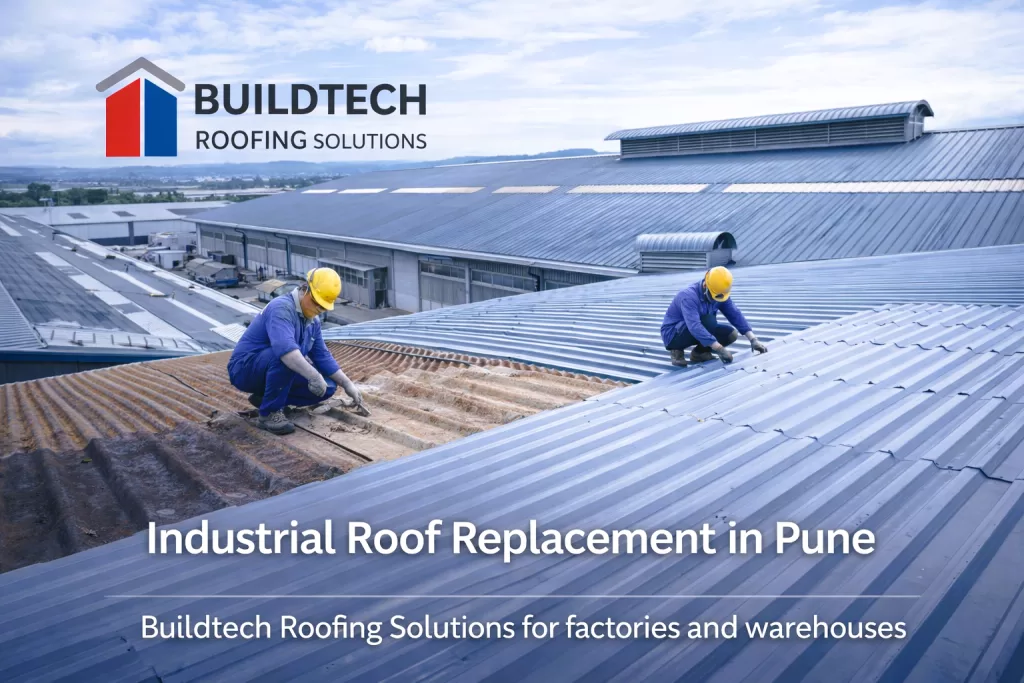
Introduction Industrial roofs play a critical role in protecting factory operations, machinery, and stored goods. However, over time, roofing systems deteriorate due to weather exposure, corrosion, leakage, and structural fatigue. When repairs are no longer effective, Industrial Roof Replacement Pune services by Buildtech Roofing Solutions become essential. Roof replacement is not just about removing old sheets—it involves engineering, safety planning, structural evaluation, and installation of advanced roofing systems designed for long-term performance. This guide explains when to replace your roof, replacement options, cost factors, and benefits. When Does an Industrial Roof Need Replacement? Not all roofing problems can be solved with repairs. Replacement becomes necessary when damage is extensive. Key Signs: 1. Frequent Leakage Problems Repeated leaks even after repairs indicate system failure. 2. Severe Corrosion Rust weakens metal roofing sheets and reduces durability. 3. Structural Weakness Sagging roofs or damaged purlins indicate structural risk. 4. High Maintenance Costs Frequent repairs become more expensive than replacement. 5. Ageing Roof (15–25 Years) Older roofs lose performance and efficiency. Types of Industrial Roof Replacement Systems 1. Metal Roofing Sheet Replacement Replacing old sheets with new colour-coated metal roofing. Benefits: ✔ High durability✔ Weather resistance✔ Cost-effective 2. PUF Insulated Roofing System Upgrading to insulated sandwich panels. Advantages: ✔ Heat reduction✔ Energy efficiency✔ Noise reduction 3. Standing Seam Roofing Modern roofing system with concealed fasteners. Benefits: ✔ Leak-proof system✔ Premium finish✔ Long lifespan 4. Double Skin Roofing System Two-layer roofing system for thermal insulation. 5. Retrofit Roofing System Installing a new roof over the existing structure. Benefits: ✔ No production shutdown✔ Faster installation✔ Cost savings Step-by-Step Industrial Roof Replacement Process Step-1 – Site Inspection & Structural Analysis Step-2 – Planning & Design Step-3 – Dismantling Old Roof Step-4 – Structural Repair Step-5 – New Roof Installation Step-6 – Waterproofing & Finishing Step-7 – Quality Check & Handover Benefits of Industrial Roof Replacement ✔ Eliminates leakage problems✔ Improves energy efficiency✔ Enhances building safety✔ Reduces maintenance cost✔ Increases property value Cost Factors for Industrial Roof Replacement Several factors affect project cost: 💡 Tip: Retrofit systems can reduce costs significantly. Why Choose Buildtech Roofing Solutions Pune ✔ Experienced industrial roofing experts✔ Advanced roofing systems✔ Safety-compliant work✔ High-quality materials✔ Fast project completion Buildtech provides reliable roofing solutions across Maharashtra. Industries Served Service Areas | Pune | Mumbai | Nashik | Kolhapur | Sangli | Satara | Ahmednagar | Maintenance Tips After Roof Replacement Conclusion Industrial roof replacement is a critical investment for long-term building safety and efficiency. By choosing Industrial Roof Replacement Pune services from Buildtech Roofing Solutions, businesses can upgrade to modern, durable, and energy-efficient roofing systems.

Industrial Roof Replacement in Pune – Complete Guide for Factories & Warehouses Read More »

Industrial Roof Replacement in Pune – Complete Guide for Factories & Warehouses

Introduction Industrial roofing systems are the first line of defence for factories, warehouses, and commercial facilities. They protect machinery, inventory, and operations from harsh environmental conditions such as heavy rainfall, heat, dust, and corrosion. In industrial zones like Pune, roofing systems are constantly exposed to extreme weather variations. Over time, these conditions lead to deterioration, leakage, and structural weakening. When repairs are no longer sufficient, Industrial Roof Replacement Pune services by Buildtech Roofing Solutions become essential. Roof replacement is not just about changing sheets—it is a complete engineering process involving structural assessment, safety planning, modern material selection, and precision installation. This guide will help you understand when to replace your roof, available replacement systems, cost factors, and the long-term benefits of upgrading your industrial roofing system. When Does an Industrial Roof Need Replacement? Not all roofing issues can be fixed with repairs. In many cases, continued patchwork leads to higher long-term costs. Here are the key indicators that your industrial roof requires replacement: 1. Frequent Leakage Problems If your roof continues to leak even after multiple repairs, it is a sign that the roofing system has failed. Persistent leakage can damage machinery, electrical systems, and stored materials. 2. Severe Corrosion Metal roofs are prone to rust over time, especially in humid or industrial environments. Corrosion weakens the roofing sheets and reduces their load-bearing capacity. 3. Structural Weakness Signs such as sagging roofs, bent purlins, or structural deformation indicate serious safety risks and require immediate attention. 4. High Maintenance Costs If your maintenance expenses are increasing year after year, replacing the roof becomes more economical than repeated repairs. 5. Ageing Roof (15–25 Years) Industrial roofs typically have a lifespan of 15–25 years. Beyond this period, performance declines significantly. Types of Industrial Roof Replacement Systems Modern industrial roofing offers a variety of advanced solutions tailored to different requirements. 1. Metal Roofing Sheet Replacement This involves replacing old or damaged sheets with new colour-coated metal roofing sheets. Benefits: ✔ High durability✔ Corrosion resistance✔ Cost-effective solution✔ Quick installation 2. PUF Insulated Roofing System PUF (Polyurethane Foam) panels provide insulation along with structural strength. Advantages: ✔ Excellent thermal insulation✔ Reduced energy consumption✔ Noise reduction✔ Improved indoor comfort 3. Standing Seam Roofing System A premium roofing solution with concealed fasteners, offering superior waterproofing. Benefits: ✔ Leak-proof design✔ Modern appearance✔ Long lifespan✔ Minimal maintenance 4. Double Skin Roofing System A dual-layer roofing system designed for high thermal insulation and performance. Key Features: ✔ Better heat control✔ Increased durability✔ Suitable for high-temperature industries 5. Retrofit Roofing System One of the most efficient methods is where a new roof is installed over the existing one. Benefits: ✔ No production downtime✔ Faster project completion✔ Cost savings✔ Improved insulation Step-by-Step Industrial Roof Replacement Process A systematic process ensures durability and safety. Step1 – Site Inspection & Structural Analysis Step2 – Planning & Design Step3 – Dismantling Old Roof Step4 – Structural Repair Step5 – New Roof Installation Step6 – Waterproofing & Finishing Step7 – Quality Check & Handover Benefits of Industrial Roof Replacement Replacing an industrial roof offers multiple long-term advantages: ✔ Eliminates leakage issues✔ Improves energy efficiency✔ Enhances structural safety✔ Reduces maintenance costs✔ Increases property value✔ Improves working conditions Cost Factors for Industrial Roof Replacement The cost of roof replacement depends on several variables: 1. Roof Size Larger roofs require more materials and labor. 2. Material Type Premium systems like standing seam or insulated panels cost more than basic metal sheets. 3. Structural Condition If the structure requires repair, the cost increases. 4. Labor and Installation Skilled labor and safety compliance impact overall cost. 5. Accessibility Difficult site conditions may increase project complexity. 💡 Pro Tip: Retrofit roofing systems can significantly reduce overall project cost and downtime. Why Choose Buildtech Roofing Solutions Pune Choosing the right contractor is critical for successful roof replacement. Buildtech Roofing Solutions Pune is known for delivering high-performance industrial roofing systems tailored to client requirements. Key Advantages: ✔ Experienced industrial roofing specialists✔ Advanced roofing technologies✔ Strict safety compliance✔ High-quality materials✔ Timely project completion✔ Customised solutions Industries Served Industrial roof replacement services are widely used across: Each sector requires tailored roofing systems to meet specific operational demands. Service Areas Buildtech Roofing Solutions provides services across: Maintenance Tips After Roof Replacement To ensure long-term performance: Future Trends in Industrial Roofing Modern roofing systems are evolving with innovations: These technologies are helping industries reduce costs and improve sustainability. Conclusion Industrial roof replacement is a strategic investment that ensures long-term protection, safety, and efficiency of your facility. By choosing Industrial Roof Replacement Pune services from Buildtech Roofing Solutions, businesses can upgrade to modern, durable, and energy-efficient roofing systems. Whether you are dealing with leakage, corrosion, or ageing infrastructure, replacing your industrial roof ensures better performance, reduced maintenance, and peace of mind.

Industrial Roof Replacement in Pune – Complete Guide for Factories & Warehouses Read More »

Industrial Roof Waterproofing in Pune – Complete Guide for Long-Lasting Protection

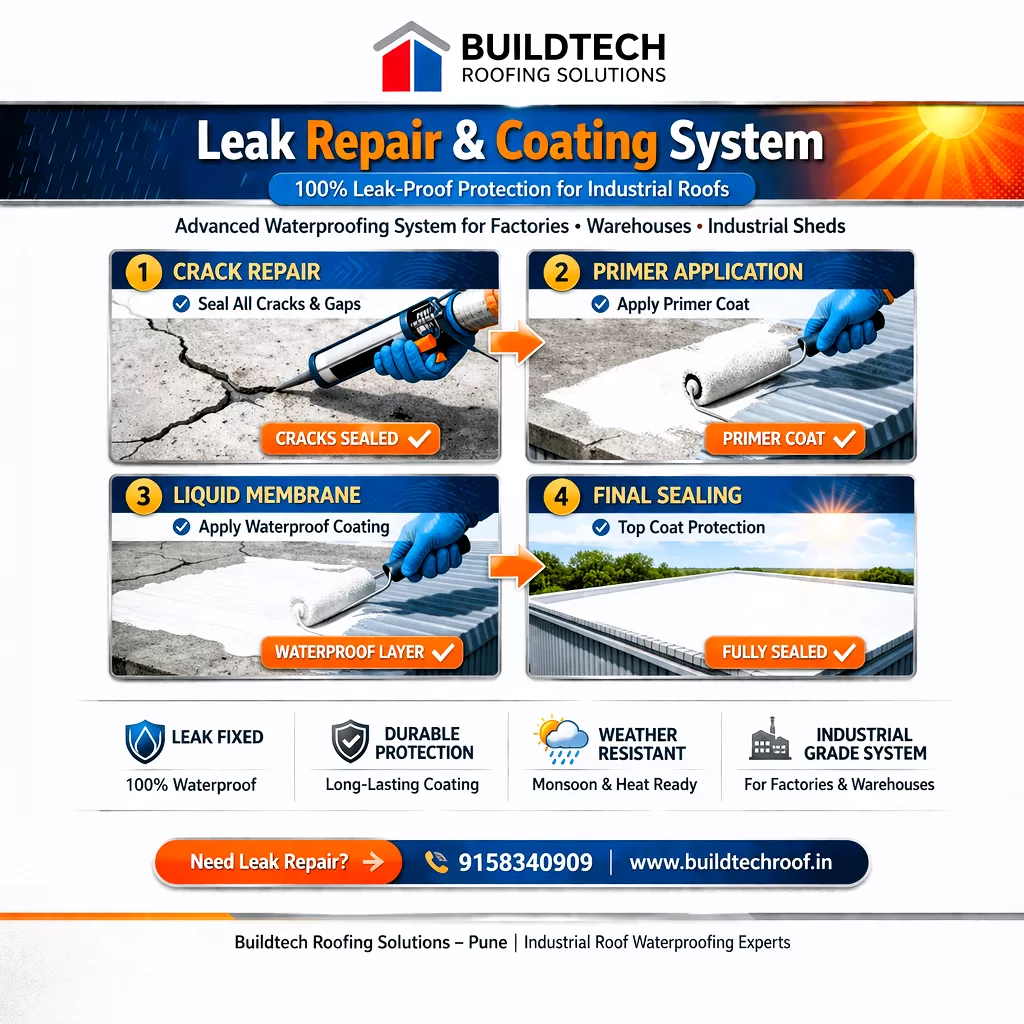
Introduction Industrial roofing systems in Pune and Maharashtra face continuous exposure to harsh environmental conditions, including heavy monsoon rainfall, extreme summer heat, dust, and UV radiation. Over time, these factors lead to roof deterioration, water leakage, corrosion, and structural damage. For factories, warehouses, and industrial facilities, even a minor roof leak can result in: This is where Industrial Roof Waterproofing Pune services by Buildtech Roofing Solutions play a critical role. With advanced waterproofing technologies like liquid membranes, elastomeric coatings, PU systems, and joint sealing solutions, industrial roofs can be protected effectively, ensuring long-term durability and performance. This comprehensive guide covers everything you need to know about industrial roof waterproofing. It discusses the causes of leakage, the types of systems available, and the application process. Additionally, it highlights the benefits of waterproofing and provides maintenance strategies to ensure effectiveness. Using these strategies can greatly enhance the durability and performance of your roofing system. What is Industrial Roof Waterproofing? Industrial roof waterproofing is the process of applying specialised protective layers or coatings that prevent water penetration into roofing structures. These systems create a seamless barrier that protects roofs from: Waterproofing is essential for both: Why Industrial Roof Waterproofing is Important 1. Prevents Water Leakage Water seepage is the most common issue in industrial buildings. Waterproofing ensures that rainwater does not enter through joints, fasteners, or cracks. 2. Protects Structural Integrity Continuous moisture exposure weakens roofing structures, leading to corrosion and deterioration. Waterproofing enhances structural strength. 3. Reduces Maintenance Costs Frequent repairs can be expensive. Waterproofing acts as a preventive solution, reducing long-term costs. 4. Extends Roof Lifespan A properly waterproofed roof lasts longer than one that hasn’t been treated. 5. Improves Energy Efficiency Reflective waterproof coatings reduce heat absorption, lowering indoor temperatures and energy consumption. Common Causes of Industrial Roof Leakage Understanding the root causes of leakage is essential for selecting the right waterproofing solution. 1. Damaged Roofing Sheets Metal sheets may develop cracks, holes, or corrosion from weather exposure. 2. Loose Fasteners Fasteners can loosen over time from vibrations and thermal expansion, leading to water infiltration. 3. Joint Failures Roof joints are highly vulnerable areas where leakage commonly occurs. 4. Poor Installation Improper installation leads to weak sealing and premature roof failure. 5. Blocked Drainage Systems Clogged gutters cause water accumulation, increasing leakage risk. Types of Industrial Roof Waterproofing Systems 1. Liquid Waterproofing Membrane A liquid-applied system that forms a seamless waterproof layer. Benefits: 2. Elastomeric Waterproof Coating Highly flexible coating that adapts to temperature changes. Advantages: 3. Polyurethane (PU) Waterproofing High-performance waterproofing system for industrial applications. Benefits: 4. Bituminous Waterproofing Traditional system using asphalt-based materials. Features: 5. Acrylic Waterproofing Coating Water-based coating is ideal for reflective and protective purposes. Step-by-Step Industrial Roof Waterproofing Process Step1 – Roof Inspection Step2 – Surface Preparation Step3 – Crack and Joint Repair Step4 – Primer Application Step5 – Waterproofing Application Step6 – Quality Testing Step7 – Final Inspection & Handover Benefits of Industrial Roof Waterproofing ✔ Complete leak protection✔ Improved building safety✔ Increased roof durability✔ Lower maintenance costs✔ Enhanced energy efficiency✔ Protection against corrosion Signs Your Industrial Roof Needs Waterproofing Early detection helps avoid major damage. Why Choose Buildtech Roofing Solutions Pune Buildtech Roofing Solutions is a trusted industrial roofing company providing advanced waterproofing services. Key Advantages: ✔ Experienced professionals✔ Advanced waterproofing systems✔ High-quality materials✔ Safety-compliant work✔ Cost-effective solutions✔ Timely project completion Industries Served Service Areas Pune | Mumbai | Nashik | Kolhapur | Satara | Sangli | Ahmednagar | Across Maharashtra Maintenance Tips After Waterproofing Conclusion Industrial roof waterproofing is not just a maintenance activity—it is a long-term investment in building safety and operational efficiency. With Industrial Roof Waterproofing Pune services by Buildtech Roofing Solutions, businesses can protect their infrastructure, reduce costs, and ensure uninterrupted operations.

Industrial Roof Waterproofing in Pune – Complete Guide for Long-Lasting Protection Read More »

©2023 buildtechroof. All Rights Reserved.