
Introduction
Industrial roofs are one of the most critical components of any factory, warehouse, or commercial building. They protect machinery, inventory, and operations from harsh environmental conditions such as heavy rainfall, extreme heat, dust, and pollution.
However, over time, even the strongest roofing systems begin to deteriorate due to continuous exposure. Without proper maintenance, minor issues like loose fasteners or small cracks can quickly escalate into major problems, including water leakage, structural damage, and costly repairs.
This is where Industrial Roof Maintenance services by Buildtech Roofing Solutions become essential.
Regular maintenance not only extends the lifespan of your roof but also ensures smooth business operations by preventing unexpected failures. In an industrial city like Pune, where monsoons can be intense and summers extremely hot, proactive roof maintenance is not just recommended—it is necessary.
This comprehensive guide covers everything you need to know about industrial roof maintenance, including its importance, common problems, maintenance types, inspection processes, and expert tips.
What is Industrial Roof Maintenance?
Industrial roof maintenance refers to the routine inspection, cleaning, repair, and protection of roofing systems to ensure they function efficiently over time.
It includes activities such as:
- Roof inspection
- Leak detection
- Cleaning debris and drainage systems
- Repairing cracks and joints
- Tightening fasteners
- Applying protective coatings
The goal is to prevent damage before it occurs and maintain the structural integrity of the building.
Why Industrial Roof Maintenance is Important
1. Prevents Roof Leakage
Leakage is one of the most common problems in industrial buildings. Regular maintenance helps identify vulnerable areas before they turn into leaks.
2. Extends Roof Lifespan
Well-maintained roofs last significantly longer, reducing the need for premature replacement.
3. Reduces Repair Costs
Preventive maintenance is far more cost-effective than major repairs or replacements.
4. Improves Safety
A well-maintained roof ensures the safety of workers, equipment, and operations.
5. Enhances Energy Efficiency
Maintained roofs perform better in insulation and heat reduction, lowering energy costs.
Common Industrial Roof Problems
Understanding common issues helps in timely maintenance.
1. Water Leakage
Caused by:
- Cracks in roofing sheets
- Damaged joints
- Improper sealing
2. Rust & Corrosion
Metal roofs are prone to rust due to moisture exposure.
3. Loose Fasteners
Fasteners loosen due to vibration, wind, and thermal expansion.
4. Blocked Drainage Systems
Clogged gutters cause water accumulation and leakage.
5. Damaged Coatings
Protective coatings wear off over time, exposing the roof to damage.
6. Structural Weakness
Over time, structural components may weaken, affecting stability.
Signs Your Industrial Roof Needs Maintenance
- Water stains on ceilings
- Rust patches on metal sheets
- Loose or missing fasteners
- Increased indoor temperature
- Visible cracks or damage
- Mould or dampness
Ignoring these signs can lead to serious issues.
Types of Industrial Roof Maintenance
1. Preventive Maintenance
Scheduled inspections and minor repairs to avoid major problems.
2. Corrective Maintenance
Fixing existing issues, such as leaks or damage.
3. Predictive Maintenance
Using inspection data to predict future problems.
4. Emergency Maintenance
Immediate repair of sudden damage or leakage.
Industrial Roof Maintenance Checklist
✔ Inspect roof surface
✔ Check joints and seams
✔ Tighten fasteners
✔ Clean drainage systems
✔ Repair cracks
✔ Apply waterproof coatings
✔ Inspect insulation
✔ Check structural components
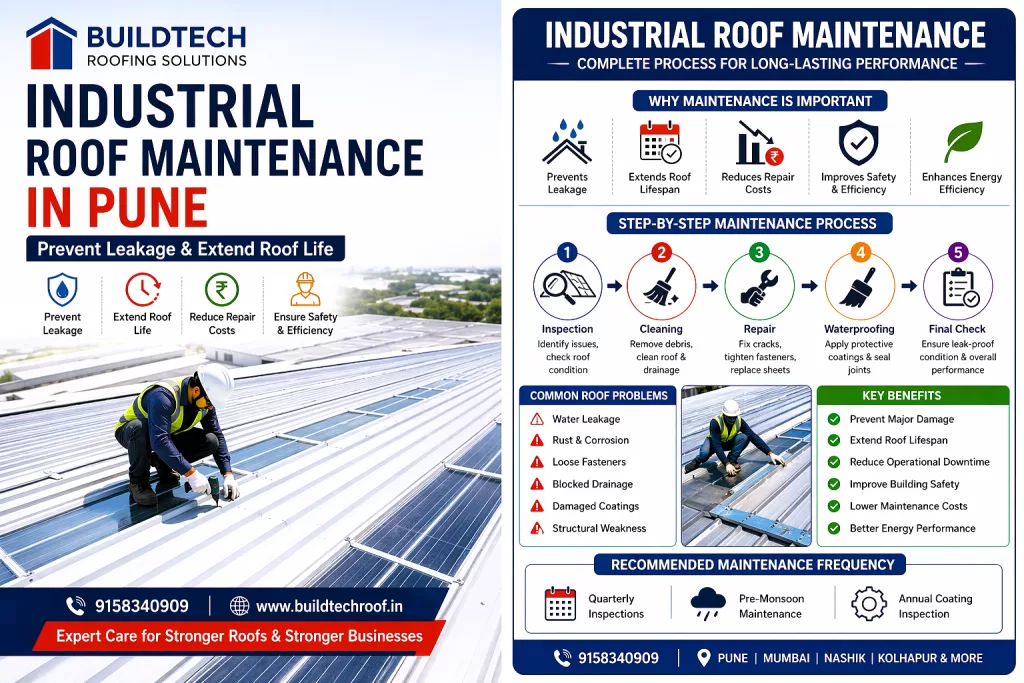
Step-by-Step Maintenance Process
Step-1 – Detailed Roof Inspection
- Identify damaged areas
- Check for leakage points
- Evaluate structural condition
Step-2 – Cleaning
- Remove debris
- Clean drainage systems
- Eliminate dust and dirt
Step-3 – Repair Work
- Fix cracks and holes
- Replace damaged sheets
- Tighten fasteners
Step-4 – Waterproofing
- Apply protective coatings
- Seal joints and seams
Step-5 – Final Inspection
- Ensure a leak-proof condition
- Verify overall performance
Maintenance Frequency
- Quarterly inspections recommended
- Pre-monsoon maintenance is critical
- Annual coating inspection
Benefits of Regular Roof Maintenance
✔ Prevents major damage
✔ Extends roof lifespan
✔ Reduces operational disruptions
✔ Improves building safety
✔ Enhances energy efficiency
✔ Saves long-term costs
Maintenance Tips for Different Roofing Types
Metal Roofing
- Check for rust
- Tighten fasteners
- Recoat surface
PUF Roofing
- Inspect joints
- Check insulation integrity
Skylight Sheets
- Clean regularly
- Replace damaged panels
Cost of Industrial Roof Maintenance in Pune
The cost varies depending on:
- Roof size
- Type of roofing system
- Level of damage
- Maintenance scope
💡 Tip: Preventive maintenance costs are much lower than repair costs.
Why Choose Buildtech Roofing Solutions Pune
Buildtech Roofing Solutions is a trusted name in industrial roofing maintenance.
Key Advantages:
✔ Experienced professionals
✔ Advanced maintenance solutions
✔ High-quality materials
✔ Safety-compliant work
✔ Cost-effective services
✔ Fast response
Industries Served
- Manufacturing plants
- Warehouses
- Logistics hubs
- Pharmaceutical industries
- Food processing units
- Textile factories
Preventive Maintenance Strategy for Businesses
Businesses should adopt a long-term maintenance strategy:
- Schedule regular inspections
- Maintain maintenance records
- Invest in quality materials
- Partner with professional roofing companies
Future of Industrial Roof Maintenance
With advancements in technology, roof maintenance is becoming more efficient through:
- Smart inspection tools
- Advanced coating systems
- Predictive maintenance techniques
Conclusion
Industrial roof maintenance is essential for ensuring long-term durability, safety, and cost savings.
By choosing Industrial Roof Maintenance services from Buildtech Roofing Solutions, businesses can prevent costly damage, improve performance, and extend the life of their roofing systems.