Industrial Roofing Ventilation Systems Guide: Improve Airflow & Reduce Factory Heat
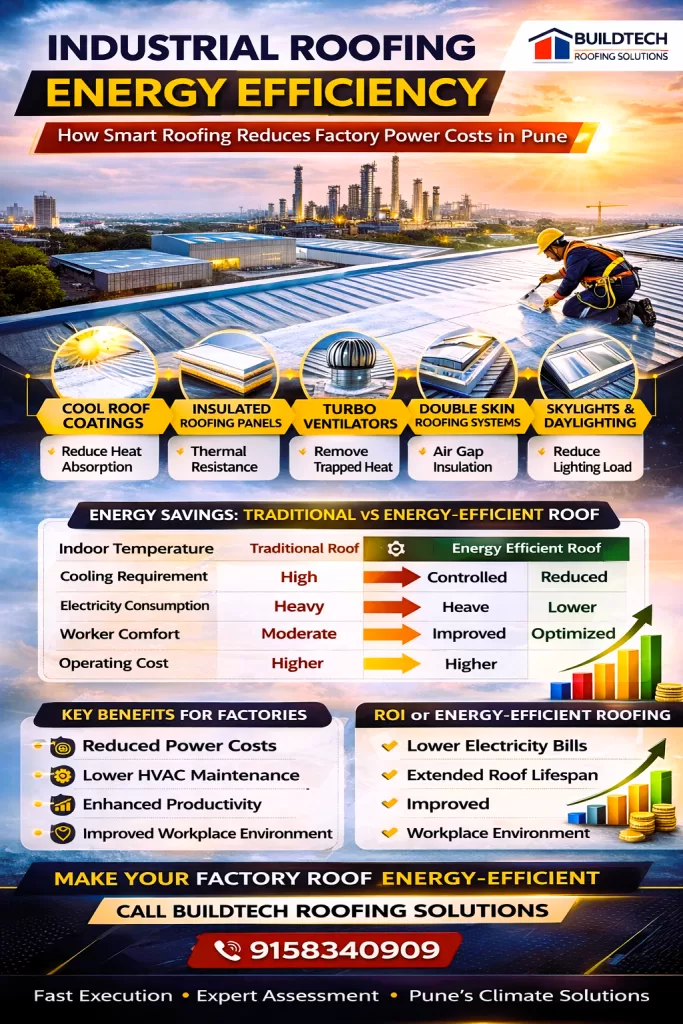
Introduction: Why Industrial Roof Ventilation Is Essential Industrial buildings generate and retain large amounts of heat due to machinery operation, solar exposure, and expansive roof surfaces. Without proper airflow, hot air accumulates beneath roofing sheets, increasing indoor temperature and energy consumption. In Pune’s hot climate, poor ventilation leads to uncomfortable working environments, reduced productivity, and higher cooling costs. Properly designed industrial roofing ventilation systems remove trapped heat naturally, improving operational efficiency while extending roof lifespan. How Heat Builds Up Inside Industrial Buildings Industrial structures experience a natural heat cycle: This phenomenon, known as the stack effect, continuously increases indoor temperature unless ventilation systems release hot air. Benefits of Industrial Roofing Ventilation Effective ventilation systems provide: Ventilation is one of the most cost-effective industrial upgrades. Types of Industrial Roofing Ventilation Systems 1️⃣ Turbo Ventilators (Wind-Driven Ventilation) Turbo ventilators rotate using wind energy to extract hot air. Advantages Commonly installed in factories and warehouses. 2️⃣ Ridge Ventilators Installed along the roof ridge for uniform exhaust. Benefits 3️⃣ Louvers & Air Intake Systems Ventilation requires both air exhaust and air intake. Louvers allow fresh air entry while ventilators remove hot air, creating balanced airflow. 4️⃣ Powered Ventilation Systems Electric exhaust systems are used when natural ventilation is insufficient. Best suited for: Turbo Ventilator vs Ridge Ventilator Comparison Feature Turbo Ventilator Ridge Ventilator Power Requirement None None Airflow Coverage Localized Continuous Installation Type Retrofit friendly New construction ideal Maintenance Low Very low Both systems may be combined for optimal performance. Key Ventilation Design Factors Professional design considers: Incorrect placement reduces effectiveness. Ventilation and Energy Efficiency Ventilation directly impacts energy consumption. By removing hot air naturally: Natural airflow improves sustainability and operational savings. Signs Your Factory Needs Roof Ventilation You may require ventilation if you notice: These symptoms indicate trapped heat. Industrial Ventilation Installation Process Engineering planning ensures optimal airflow performance. Maintenance of Industrial Ventilation Systems Recommended maintenance includes: Preventive maintenance ensures consistent performance. Common Ventilation Mistakes Industries Make Professional installation prevents these issues. Why Professional Ventilation Design Matters Industrial ventilation must integrate with the roofing structure and waterproofing systems. Professional design ensures: Why Industries Choose Buildtech Roofing Solutions Buildtech Roofing Solutions provides: This ensures long-term ventilation efficiency. FAQs: Industrial Roofing Ventilation Systems How many turbo ventilators are required for a factory?Quantity depends on building size, heat load, and airflow calculations. Do turbo ventilators reduce heat?Yes, they continuously remove hot air, lowering the indoor temperature. Are ridge ventilators better than turbo ventilators?Ridge ventilators provide uniform airflow, while turbo ventilators are ideal for retrofits. Does ventilation reduce electricity costs?Yes, natural ventilation reduces dependency on cooling systems. Conclusion: Ventilation Turns Hot Buildings Into Efficient Workspaces Industrial roofing ventilation systems are essential for maintaining comfortable, efficient, and energy-optimised industrial environments. Proper airflow design improves productivity, protects roofing materials, and reduces operating costs. For professional industrial roof ventilation assessment and installation in Pune, Buildtech Roofing Solutions delivers engineered solutions tailored to industrial performance requirements.
Industrial Roofing Ventilation Systems Guide: Improve Airflow & Reduce Factory Heat Read More »