Roof Insulation Materials

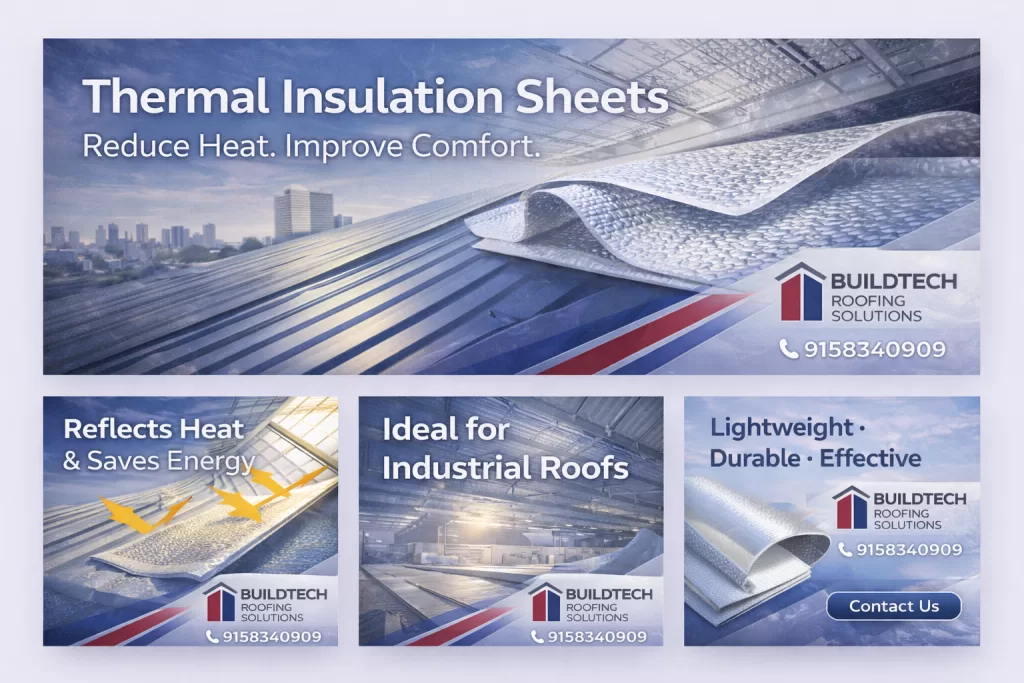
Roof insulation materials including glass wool, rock wool and reflective insulation designed to reduce heat transfer and improve indoor comfort.

Thermal Roofing Systems in Pune | Energy-Efficient Industrial Roofing Solutions

Thermal Roofing Systems in Pune

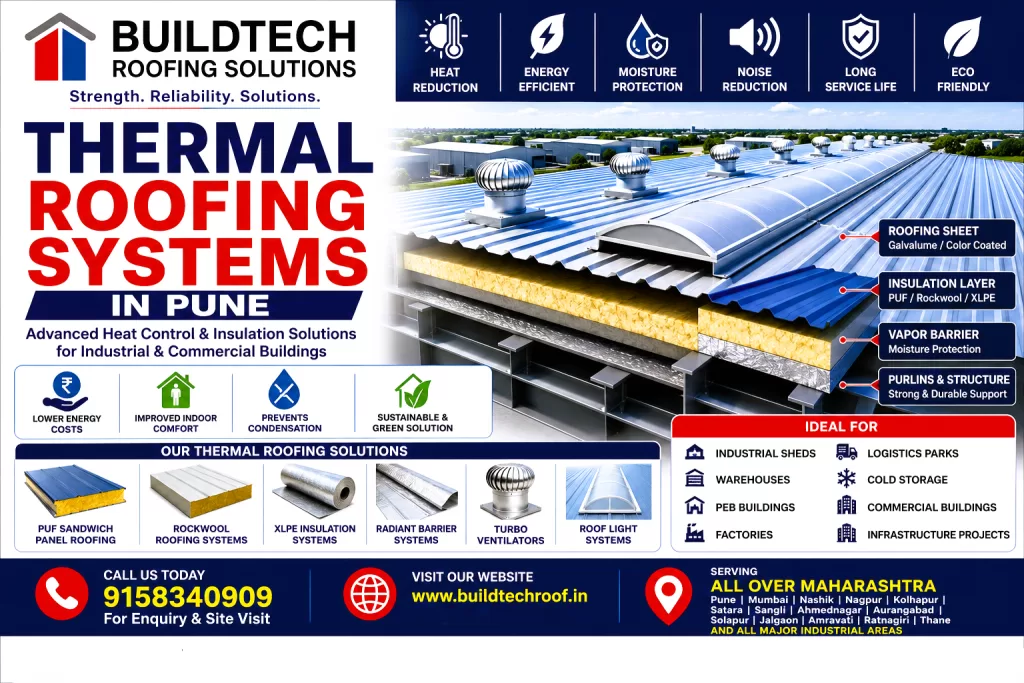
Introduction Industrial and commercial buildings across Pune and Maharashtra face a common challenge—excessive heat gain through roofing systems. During summer months, roof surfaces can reach extremely high temperatures, causing uncomfortable working conditions, increased cooling costs, equipment overheating, and reduced operational efficiency. To address these issues, industries are increasingly investing in Thermal Roofing Systems, which provide superior insulation, temperature control, and energy savings. At Buildtech Roofing Solutions, we specialise in designing and installing advanced thermal roofing systems that help factories, warehouses, logistics parks, manufacturing plants, and commercial buildings maintain comfortable indoor temperatures while reducing electricity consumption. What is a Thermal Roofing System? A Thermal Roofing System is an insulated roofing solution designed to minimise heat transfer from the roof into the building. These systems combine: The result is a roofing structure that keeps interiors cooler during summer and more energy-efficient throughout the year. Why Thermal Roofing is Essential for Industrial Buildings Industrial facilities generate heat from: Without proper insulation, heat accumulates inside the building, leading to: Thermal roofing systems effectively solve these challenges. Key Benefits of The Thermal Roofing Systems 1. Significant Heat Reduction Thermal roofing reduces heat transfer through the roof by creating an insulating barrier. Benefits include: 2. Lower Energy Costs By reducing heat gain, cooling systems work less, resulting in: 3. Enhanced Worker Productivity Comfortable indoor temperatures improve: 4. Condensation Prevention Thermal insulation reduces moisture buildup and condensation, helping protect: 5. Noise Reduction Insulated roofing systems also improve acoustic performance by reducing: 6. Extended Roof Life Thermal roofing minimises thermal stress on roofing sheets, increasing durability and service life. Types of Thermal Roofing Systems PUF Sandwich Panel Roofing PUF (Polyurethane Foam) panels offer excellent thermal insulation and are ideal for: Rockwool Insulated Roofing Provides: Suitable for industrial and commercial projects. XLPE Insulation Roofing Cross-linked polyethene insulation offers: Widely used in PEB buildings and warehouses. Radiant Barrier Roofing Systems Reflective insulation that blocks solar heat radiation and improves roof performance. Ventilated Thermal Roofing Combines insulation with: For maximum heat reduction and airflow. Applications of Thermal Roofing Systems Thermal roofing solutions are ideal for: Industrial Sheds Maintain comfortable indoor temperatures. Warehouses Protect stored materials from excessive heat. Manufacturing Plants Improve working conditions and equipment efficiency. Logistics Parks Reduce operational energy costs. PEB Buildings Enhance overall building performance. Commercial Buildings Improve occupant comfort and energy efficiency. Cold Storage Facilities Maintain temperature-controlled environments. Thermal Roofing vs Conventional Roofing Feature Thermal Roofing Conventional Roofing Heat Reduction Excellent Limited Energy Efficiency High Moderate Indoor Comfort Superior Standard Condensation Control Excellent Poor Electricity Savings Significant Minimal Roof Lifespan Longer Standard Components of a Thermal Roofing System A complete thermal roofing system may include: Galvalume Roofing Sheets Highly durable and corrosion-resistant roofing material. Colour Coated Roofing Sheets Attractive and weather-resistant roofing solution. PUF Insulation Panels High-performance thermal insulation. XLPE Insulation Cost-effective heat and moisture protection. Rockwool Insulation Excellent thermal and acoustic performance. Turbo Ventilators Natural heat extraction systems. Roof Light Systems Natural daylight solutions that reduce lighting costs. Installation Process Step-1: Site Assessment Analyse building dimensions and thermal requirements. Step-2: System Design Develop a customised roofing solution. Step-3: Material Selection Choose roofing sheets and insulation materials. Step-4: Structural Preparation Install purlins and supporting framework. Step-5: Insulation Installation Apply the insulation system. Step-6: Roofing Installation Install roofing sheets and accessories. Step-7: Final Inspection Verify insulation performance and weatherproofing. Why Choose Buildtech Roofing Solutions? Buildtech Roofing Solutions is a trusted provider of industrial roofing and insulation systems in Pune. Our Strengths Industries We Serve Service Areas We serve industries across Maharashtra, including: Frequently Asked Questions What is Thermal Roofing? Thermal roofing is an insulated roofing system that reduces heat transfer and improves building energy efficiency. Which insulation material is best for thermal roofing? PUF panels, Rockwool, and XLPE insulation are among the most effective options, depending on project requirements. Can thermal roofing reduce electricity bills? Yes. By reducing indoor heat gain, thermal roofing lowers cooling energy requirements and electricity costs. Is thermal roofing suitable for industrial sheds? Absolutely. Thermal roofing is widely used in factories, warehouses, and PEB buildings. How long does a thermal roofing system last? A properly installed thermal roofing system can provide excellent performance for 20–30 years or more. Conclusion Thermal Roofing Systems are becoming an essential part of modern industrial and commercial construction. By reducing heat transfer, improving energy efficiency, minimising condensation, and enhancing workplace comfort, these systems provide significant long-term value. If you’re planning a new industrial shed, warehouse, factory, or PEB building in Pune or anywhere in Maharashtra, Buildtech Roofing Solutions can provide a customised thermal roofing solution designed for maximum performance and durability.

Thermal Roofing Systems in Pune Read More »
XLPE Insulation in Pune | High Performance Thermal & Acoustic Insulation Solutions

XLPE Insulation in Pune | High Performance Thermal

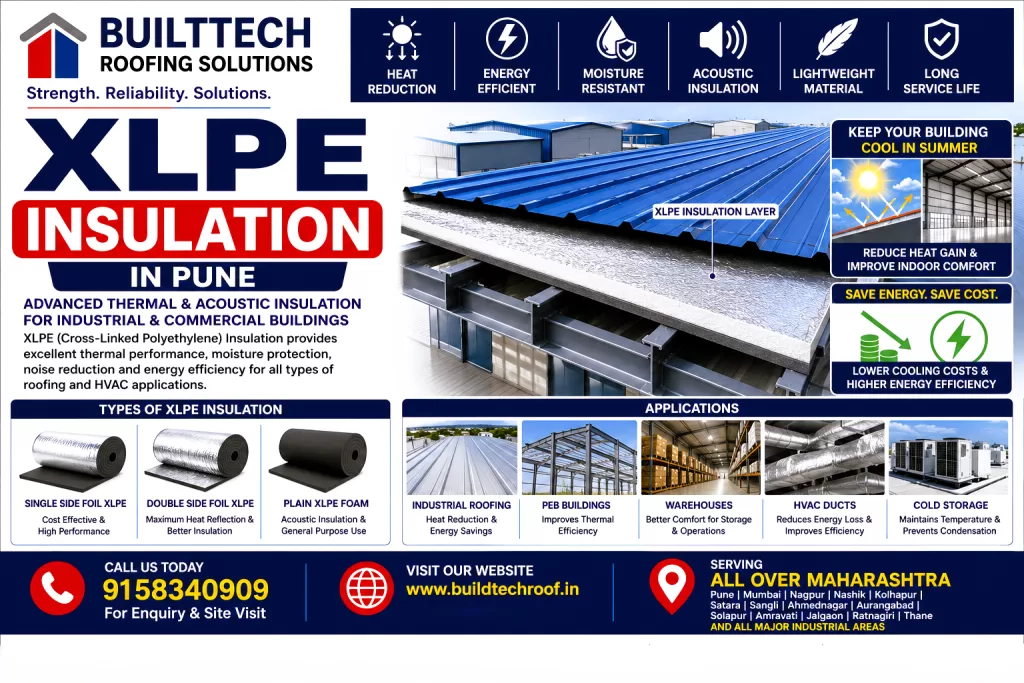
📖 Introduction Heat gain, condensation, noise pollution, and energy losses are major challenges faced by industrial buildings, warehouses, factories, commercial complexes, and Pre-Engineered Buildings (PEB). Without proper insulation, roofing systems absorb excessive heat, causing uncomfortable indoor temperatures, increased cooling costs, and reduced operational efficiency. To overcome these challenges, modern industries increasingly choose XLPE Insulation, one of the most effective thermal and acoustic insulation materials available today. XLPE (Cross-Linked Polyethene) Insulation offers excellent thermal resistance, moisture protection, durability, and energy efficiency, making it ideal for industrial roofing and building insulation applications. Buildtech Roofing Solutions supplies and installs premium-quality XLPE Insulation in Pune and across Maharashtra for industrial, commercial, and infrastructure projects. What is XLPE Insulation? XLPE stands for Cross-Linked Polyethene Foam. It is a closed-cell insulation material manufactured through a cross-linking process that improves its: The closed-cell structure creates millions of tiny air pockets that reduce heat transfer and improve insulation efficiency. How XLPE Insulation Works XLPE insulation acts as a barrier against heat flow. During Summer During Winter Throughout the Year Why XLPE Insulation is Important Industrial buildings often face: XLPE Insulation helps solve these issues effectively. Structure of XLPE Insulation A typical XLPE insulation system consists of: Closed-Cell Polyethene Foam Provides thermal insulation. Reflective Aluminum Foil (Optional) Enhances radiant heat reflection. Protective Facing Layer Improves durability and installation performance. Types of XLPE Insulation Single Side Foil XLPE Foil facing on one side. Applications: Double Side Foil XLPE Foil facing on both sides. Benefits: Plain XLPE Foam Without foil facing. Used for: Fire Retardant XLPE Designed for enhanced fire safety requirements. Applications: Key Benefits of XLPE Insulation 1. Excellent Thermal Insulation One of the primary advantages. Benefits: 2. Closed Cell Structure Provides: 3. Lightweight Material Advantages: 4. Energy Efficiency Helps reduce: 5. Acoustic Performance Reduces: 6. Condensation Prevention Protects roofing systems from moisture-related issues. 7. Long Service Life Maintains insulation performance for many years. 8. Corrosion Protection By reducing condensation, XLPE helps protect metal roofing systems. Applications of XLPE Insulation Industrial Roofing Most common application. Provides: PEB Buildings Improves thermal efficiency of pre-engineered structures. Warehouses Maintains better storage conditions. Manufacturing Plants Controls temperature fluctuations. Commercial Buildings Enhances occupant comfort. HVAC Duct Insulation Prevents energy loss through air ducts. Cold Storage Facilities Supports temperature-controlled environments. Infrastructure Projects Airports, terminals, and industrial parks. XLPE Insulation for Roofing Systems Widely used beneath: Colour Coated Roofing Sheets Galvalume Roofing Sheets Standing Seam Roofing PUF Roofing Systems Industrial Shed Roofing The insulation layer reduces heat transfer through the roof. The XLPE Insulation vs Glass Wool Feature XLPE Glass Wool Moisture Resistance Excellent Moderate Weight Lightweight Heavier Durability Higher Moderate Installation Easier Moderate Maintenance Low Moderate The XLPE Insulation vs Rockwool Feature XLPE Rockwool Weight Lower Higher Moisture Resistance Better Moderate Flexibility Excellent Moderate Installation Easier More Complex XLPE Insulation vs PUF Insulation Feature XLPE PUF Flexibility High Moderate Cost Lower Higher Installation Easy Specialized Maintenance Low Low Installation Process Step-1 – Site Assessment Evaluate roofing requirements. Step-2 – Material Selection Choose a suitable thickness and facing. Step-3 – Surface Preparation Prepare the roofing support system. Step-4 – Insulation Placement Install insulation beneath roofing sheets. Step-5 – Joint Sealing Seal joints for maximum efficiency. Step-6 – Roofing Installation Install roofing sheets over insulation. Step-7 – Final Inspection Verify complete coverage. Common Problems Solved by XLPE Insulation Excessive Indoor Heat Reduces heat transfer. Condensation Formation Prevents moisture accumulation. High Electricity Bills Improves energy efficiency. Worker Discomfort Creates a cooler indoor environment. Noise Pollution Improves acoustic performance. Corrosion Issues Reduces moisture-related corrosion. Industries Served Manufacturing Plants Warehouses Logistics Parks Food Processing Units Pharmaceutical Facilities Textile Industries Commercial Buildings Infrastructure Projects Maintenance Tips Cost of XLPE Insulation in Pune Pricing depends on: Approximate Cost Range ₹20 – ₹130 per sq.ft Actual pricing varies according to specifications. Why Choose Buildtech Roofing Solutions? Our Advantages Service Areas Serving All Over Maharashtra PuneMumbaiNagpurNashikKolhapurSataraSangliAhmednagarAurangabadSolapurAmravatiJalgaonRatnagiriThane And All Major Industrial Areas Across Maharashtra Frequently Asked Questions What is XLPE Insulation? XLPE is Cross-Linked Polyethene Foam insulation used for thermal, acoustic, and moisture protection. Is XLPE suitable for industrial roofing? Yes. It is one of the most widely used insulation materials for industrial roofing systems. Can XLPE reduce roof heat? Yes. XLPE significantly reduces heat transfer and improves indoor comfort. Is XLPE waterproof? Its closed-cell structure provides excellent moisture resistance and condensation control. How long does XLPE insulation last? Properly installed XLPE insulation can provide reliable performance for many years with minimal maintenance. Conclusion An effective insulation system is essential for maintaining comfortable indoor conditions, reducing energy consumption, and protecting industrial buildings from heat and moisture. XLPE insulation combines thermal efficiency, moisture resistance, lightweight construction, and durability, making it an excellent choice for factories, warehouses, logistics parks, and PEB buildings. If you are looking for XLPE Insulation in Pune, Buildtech Roofing Solutions provides high-quality insulation materials and professional installation services tailored to your project requirements across Maharashtra.

XLPE Insulation in Pune | High Performance Thermal Read More »

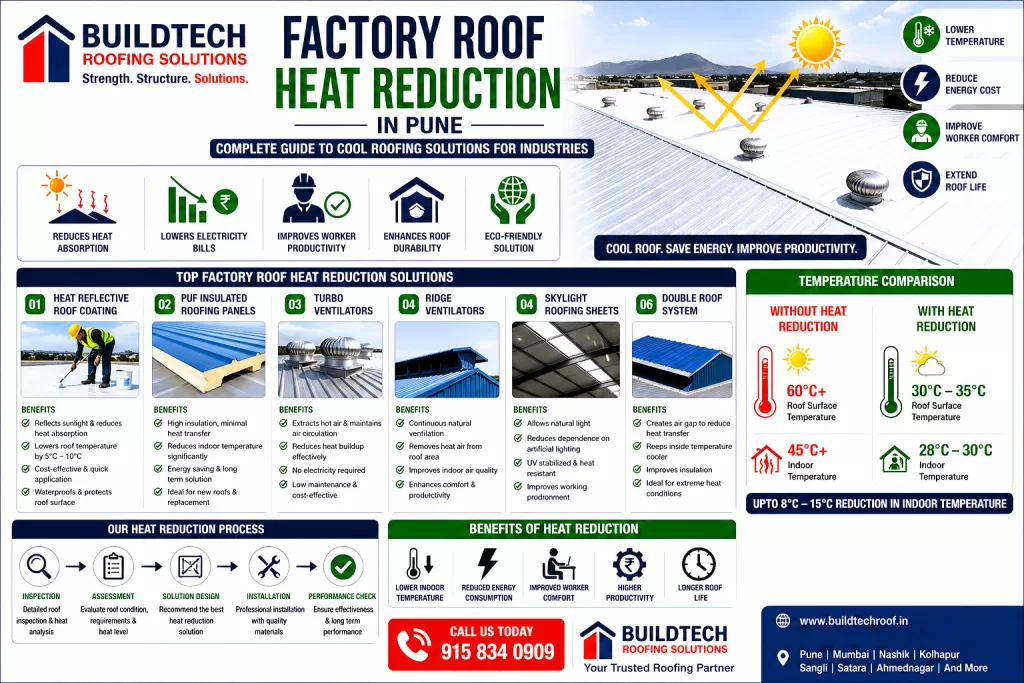
Factory Roof Heat Reduction in Pune – Complete Guide to Cool Roofing Solutions for Industries

Factory Roof Heat Reduction in Pune – Complete Guide to Cool Roofing Solutions for Industries

Introduction Industrial facilities across Pune—especially factories, warehouses, and production units—face a persistent and costly challenge: excessive indoor heat. During peak summer, temperatures inside metal-roofed sheds can soar far above ambient conditions, sometimes by 8–15°C. This heat stress impacts worker comfort, productivity, equipment performance, and energy consumption. Most industrial roofs are constructed using metal sheets, which absorb solar radiation and transfer heat into the building. Without mitigation, this leads to: This is where Factory Roof Heat Reduction Pune solutions by Buildtech Roofing Solutions deliver measurable improvements. This comprehensive guide explains the science behind heat buildup, evaluates practical cooling solutions (coatings, insulation, ventilation, and hybrid systems), and provides a step-by-step framework to select and implement the right strategy for your facility. Understanding Heat Buildup in Industrial Roofs 1. Solar Radiation & Absorption Metal roofing (GI/Galvalume/colour-coated sheets) has high thermal conductivity. Under direct sunlight, roof surface temperatures can exceed 60–70°C. A portion of this heat is transmitted indoors via conduction and radiation. 2. Lack of Thermal Resistance (R-Value) Uninsulated roofs have minimal resistance to heat flow. Without insulation layers, heat transfer into the building remains high. 3. Poor Ventilation Hot air rises and accumulates near the roof. Without effective exhaust (ridge/turbo ventilators), this trapped heat increases indoor temperature. 4. Large Surface Area Industrial roofs cover large spans. Even moderate solar gain per square meter compounds into a significant heat load. 5. Internal Heat Gains Machinery, processes, and lighting add to internal heat, worsening the overall thermal environment. Impact of Excess Heat on Industrial Operations Heat Reduction Strategies – Overview Effective heat reduction combines reflectivity, insulation, and ventilation: A hybrid approach typically delivers the best results. 1. Heat Reflective Roof Coatings (Cool Roof Systems) How They Work Cool roof coatings increase solar reflectance (SR) and thermal emittance (TE), reflecting sunlight and emitting absorbed heat back to the atmosphere. Types Benefits Best Use Cases Limitations 2. PUF Insulated Roofing Panels What They Are Sandwich panels with Polyurethane Foam (PUF) core between metal sheets, providing high insulation (low thermal conductivity). Benefits Best Use Cases Considerations 3. Ventilation Systems (Turbo & Ridge Ventilators) Turbo Ventilators Wind-driven rotating units that create negative pressure, extracting hot air continuously without electricity. Ridge Ventilators Static systems are installed along the roof ridge, enabling continuous natural exhaust of hot air. Benefits Best Use Cases 4. Double Roof / False Ceiling Systems Concept Creating an air gap between two layers (double roof) or installing a false ceiling/liner reduces heat transfer. Benefits Considerations 5. Skylight Roofing Sheets (Optimised Daylighting) Role in Heat Management While skylights introduce light, improper selection can add heat. Use diffused, UV-stabilised, low solar heat gain materials. Benefits Best Practices 6. Radiant Barriers & Insulation Liners Reflective foils or insulation liners are installed under roofing sheets to reduce radiant heat transfer. Comparative Analysis of Solutions Solution Capex Heat Reduction Installation Time Best For Cool Roof Coating Low Medium–High Fast Existing roofs PUF Panels High Very High Medium New/Replacement Ventilators Medium High (indirect) Fast All roofs Double Roof Medium–High High Medium Large sheds Skylights (optimized) Medium Indirect Fast Lighting + comfort Step-by-Step Implementation Framework Step-1 – Roof Audit & Thermal Assessment Step-2 – Define Objectives Step-3 – Solution Design Step-4 – Surface Preparation Step-5 – Installation Step-6 – Quality Check & Handover Performance Metrics to Track Cost of Heat Reduction Solutions in Pune (Indicative) Actual costs vary based on thickness, brand, roof condition, height, and access. ROI & Payback Maintenance Best Practices Common Mistakes to Avoid Why Choose Buildtech Roofing Solutions Pune ✔ End-to-end thermal audit and solution design✔ High-quality coatings, panels, and ventilation systems✔ Experienced industrial installation teams✔ Customised hybrid solutions for best ROI✔ Fast execution with safety compliance Industries Served Service Areas Pune | Mumbai Nashik | Kolhapur | Sangli | Satara | Ahmednagar Future of Cool Roofing in Industry Conclusion Factory heat reduction is not just a comfort upgrade—it’s a productivity and cost optimisation strategy. By combining reflective coatings, insulation, and ventilation, industries can achieve significant temperature reduction, lower energy bills, and improved working conditions. With Factory Roof Heat Reduction Pune solutions by Buildtech Roofing Solutions, your facility can become cooler, more efficient, and future-ready.

Factory Roof Heat Reduction in Pune – Complete Guide to Cool Roofing Solutions for Industries Read More »

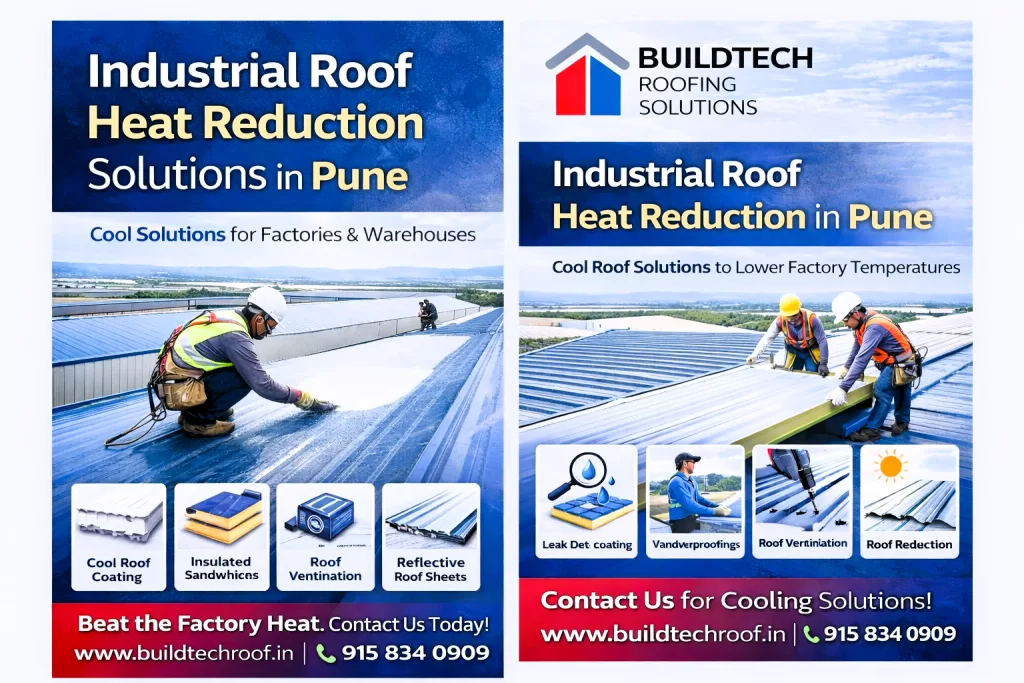
Industrial Roof Heat Reduction Solutions in Pune – Complete Guide for Factories & Warehouses

Introduction Industrial buildings in Pune and across Maharashtra experience extremely high temperatures during summer. Metal roofing sheets absorb significant solar heat, which increases indoor temperatures in factories, warehouses, and production facilities. High roof temperatures lead to: • Worker discomfort• Reduced productivity• Increased electricity consumption• Higher HVAC costs This is why Industrial Roof Heat Reduction Pune solutions by Buildtech Roofing Solutions are becoming essential for modern industrial infrastructure. Using advanced technologies like cool roof coatings, insulation panels, ventilators, and reflective systems, industrial roofs can reduce indoor temperatures significantly while improving energy efficiency. Why Industrial Roof Heat Reduction is Important Industrial roofs made from metal sheets can reach temperatures above 70°C under direct sunlight. Without proper heat control, buildings experience several problems. 1. Worker Productivity Decline High indoor temperatures create uncomfortable working environments. Heat stress can lead to: • Worker fatigue• Lower efficiency• Increased health risks Heat reduction systems create better working conditions. 2. Increased Electricity Costs Factories often rely on cooling systems such as: • Air conditioning• Exhaust systems• Industrial fans When roof heat increases, energy consumption rises. Heat reduction solutions help reduce cooling costs. 3. Equipment Damage Extreme heat affects sensitive machinery and electronics. Problems may include: • Overheating equipment• Reduced machine lifespan• Production interruptions Cool roofing systems protect valuable equipment. Major Causes of Roof Heat in Industrial Buildings Understanding heat sources helps implement the right solution. 1. Metal Roofing Heat Absorption Metal sheets absorb solar radiation quickly. Dark roofing colours increase heat absorption. 2. Lack of Roof Insulation Buildings without insulation transfer heat directly indoors. 3. Poor Ventilation Without proper airflow, hot air gets trapped inside industrial sheds. 4. Large Roof Surface Area Industrial buildings have massive roof areas exposed to sunlight. Best Industrial Roof Heat Reduction Solutions Buildtech Roofing Solutions offers multiple systems to reduce roof temperature. 1. Cool Roof Reflective Coating Cool roof coatings reflect solar radiation instead of absorbing it. Benefits • Reduces roof temperature• Reflects sunlight• Improves energy efficiency• Extends roof life Indoor temperature reduction: 5°C to 10°C 2. PUF Insulated Roofing Panels PUF sandwich panels provide excellent thermal insulation. Advantages • High thermal resistance• Energy efficiency• Moisture protection• Noise reduction These panels are ideal for warehouses and manufacturing plants. 3. Roof Ventilation Systems Proper ventilation removes trapped hot air. Common systems include: • Ridge ventilators• Turbo ventilators• Air exhaust systems These solutions improve airflow inside factories. 4. Double Skin Roofing System A double-layer roof creates an air gap that reduces heat transfer. Benefits include: • Lower roof temperature• Reduced heat penetration• Better insulation 5. Reflective Roof Sheets Special reflective coatings on metal sheets reduce solar heat absorption. Step-by-Step Industrial Roof Heat Reduction Process Professional heat reduction projects follow a systematic process. Step 1 – Roof Inspection Experts analyse roof condition and heat levels. Step 2 – Heat Source Identification Identify areas where heat absorption is highest. Step 3 – Solution Planning Select the best cooling system based on building design. Step 4 – Professional Installation Install coatings, insulation panels, or ventilators. Step 5 – Performance Testing Measure the temperature difference after installation. Benefits of Industrial Roof Cooling Systems Businesses that implement heat reduction solutions experience significant advantages. Improved worker comfort Reduced electricity bills Increased equipment life Better productivity Longer roof lifespan Why Choose Buildtech Roofing Solutions Pune Buildtech Roofing Solutions specialises in industrial roofing and heat reduction systems. Key advantages ✔ Experienced roofing professionals✔ Advanced heat reduction technology✔ High-quality materials✔ Safe installation practices✔ Cost-effective industrial solutions Buildtech delivers reliable roofing systems for factories and warehouses. Industries That Need Roof Heat Reduction • Manufacturing plants• Warehouses• Automotive factories• Textile industries• Pharmaceutical companies• Food processing plants• Logistics parks Service Areas Buildtech Roofing Solutions serves industrial clients across: PuneMumbaiNashikKolhapurSangliSataraAhmednagarMaharashtra Industrial Regions Conclusion Industrial roof heat can severely impact worker productivity, equipment efficiency, and operational costs. By implementing Industrial Roof Heat Reduction Pune solutions, factories can maintain comfortable indoor environments while reducing energy consumption. Buildtech Roofing Solutions provides advanced cool roof systems, insulation panels, ventilation systems, and heat reflective coatings designed for industrial buildings.

Industrial Roof Heat Reduction Solutions in Pune – Complete Guide for Factories & Warehouses Read More »

Industrial Roof Heat Reduction Guide: How to Reduce Factory Roof Temperature

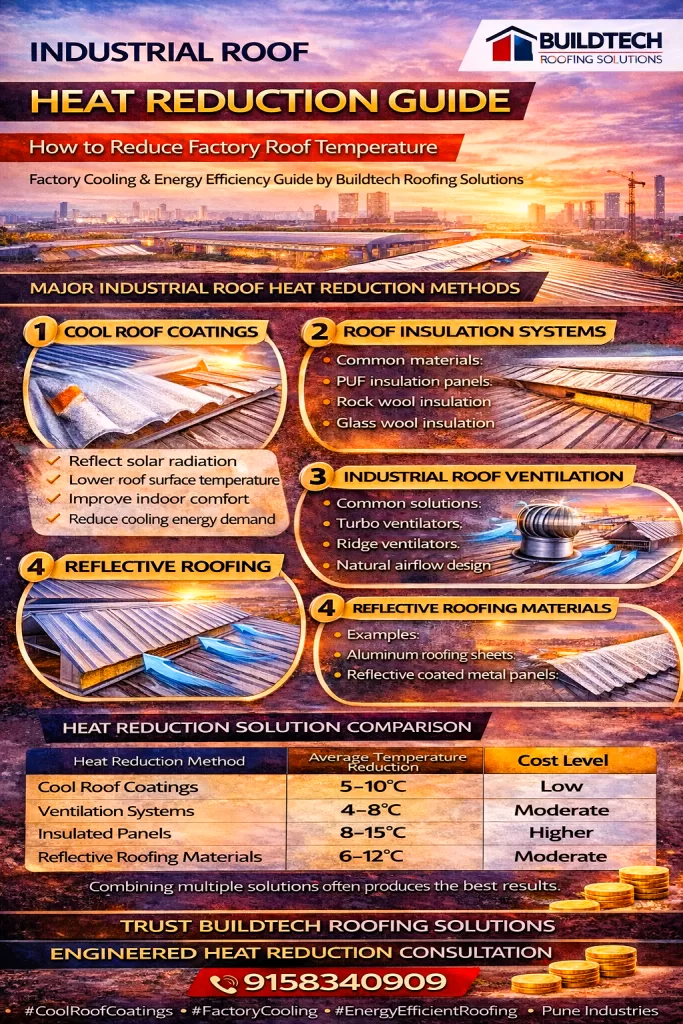
Introduction: Why Industrial Roof Heat Reduction Is Essential Industrial buildings often experience excessive indoor heat because large metal roofing surfaces absorb sunlight throughout the day. As heat accumulates under the roof, indoor temperatures rise significantly, making working conditions uncomfortable and increasing energy consumption. In cities like Pune, where summers can be extremely hot, factories and warehouses require effective strategies for industrial roof heat reduction. Implementing cooling solutions not only improves worker comfort but also enhances productivity, protects equipment, and reduces operational costs. This guide explains practical methods industries can use to reduce roof heat and maintain a comfortable indoor environment. How Heat Enters Industrial Buildings Heat enters industrial sheds through three primary mechanisms: Solar Radiation Sunlight directly heats metal roofing sheets, increasing surface temperature. Heat Conduction Heat travels through roofing material into the interior space. Trapped Hot Air Without proper ventilation, rising hot air accumulates below the roof structure. These processes cause indoor temperatures to rise significantly during daytime operations. Why Industrial Roof Heat Reduction Matters Reducing heat inside industrial buildings improves: Heat management is therefore an important aspect of facility management. Major Industrial Roof Heat Reduction Methods 1️⃣ Cool Roof Coatings Cool roof coatings are reflective coatings applied to roofing surfaces to reduce heat absorption. Benefits Cool roof coatings are one of the most cost-effective heat reduction solutions. 2️⃣ Roof Insulation Systems Roof insulation materials prevent heat transfer into the building. Common insulation materials include: Insulated roofing significantly improves thermal performance. 3️⃣ Industrial Roof Ventilation Ventilation systems remove accumulated hot air from the building. Common ventilation solutions: These systems allow hot air to escape naturally. 4️⃣ Reflective Roofing Materials Light-colored or reflective roofing sheets absorb less heat compared to darker materials. Examples include: These materials reduce solar heat gain. Heat Reduction Solution Comparison Heat Reduction Method Average Temperature Reduction Cost Level Cool Roof Coatings 5–10°C Low Ventilation Systems 4–8°C Moderate Insulated Panels 8–15°C Higher Reflective Roofing Materials 6–12°C Moderate Combining multiple solutions often produces the best results. Signs Your Factory Needs Heat Reduction Industries should consider roof heat reduction if they notice: These indicators suggest heat accumulation problems. Benefits of Industrial Roof Cooling Implementing heat reduction strategies provides several advantages: Cooling solutions therefore, improve both operational efficiency and cost control. Industrial Roof Heat Reduction Implementation Process Professional heat reduction solutions follow a structured process: Engineering-based planning ensures optimal cooling performance. Common Industrial Roof Heat Reduction Mistakes Industries sometimes make mistakes, such as: These errors reduce effectiveness and increase long-term costs. Why Professional Heat Reduction Solutions Matter Industrial roofing experts ensure: Professional planning ensures reliable cooling performance. Why Industries Choose Buildtech Roofing Solutions Buildtech Roofing Solutions provides: This ensures factories maintain comfortable working conditions while improving efficiency. FAQs: Industrial Roof Heat Reduction How much temperature reduction can cool roof coatings provide?Reflective coatings can reduce roof temperature by approximately 5–10°C. Do turbo ventilators help reduce heat?Yes, turbo ventilators remove hot air trapped inside the building. Is insulation better than roof coating?Insulation prevents heat transfer while coatings reflect sunlight; both solutions work best together. What is the most economical heat reduction solution?Cool roof coatings combined with ventilation systems are usually the most cost-effective approach. Conclusion: Smart Heat Reduction Improves Industrial Efficiency Industrial roof heat reduction plays an important role in improving indoor comfort, lowering energy consumption, and extending roof lifespan. By combining reflective coatings, insulation systems, and ventilation solutions, factories and warehouses can create a cooler and more efficient working environment. For professional heat reduction solutions and roofing consultation in Pune, Buildtech Roofing Solutions offers engineered solutions tailored for industrial performance.

Industrial Roof Heat Reduction Guide: How to Reduce Factory Roof Temperature Read More »

FRP Roofing Sheets for Industrial Buildings | Buildtech Roofing Solutions

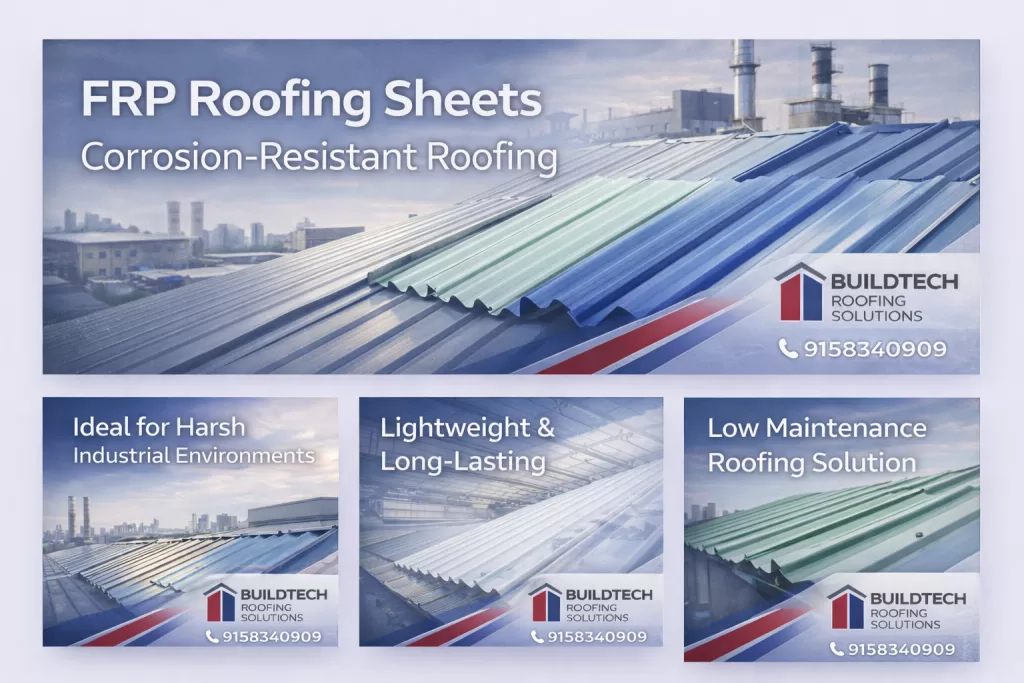
FRP Roofing Sheets – Lightweight & Corrosion-Resistant Industrial Roofing Industrial and commercial environments demand roofing materials that can withstand corrosion, chemicals, moisture, and harsh weather conditions. FRP roofing sheets (Fiber Reinforced Plastic) provide a durable, lightweight, and low-maintenance roofing solution for such demanding applications. At Buildtech Roofing Solutions, we supply and install high-performance FRP roofing sheets engineered for long service life, chemical resistance, and reliable protection across diverse industrial sectors. What Are FRP Roofing Sheets? FRP roofing sheets are composite roofing materials manufactured by reinforcing high-strength fibers within a polymer resin matrix. This construction delivers superior resistance to corrosion, chemicals, and moisture compared to conventional metal roofing. Because FRP sheets do not rust, conduct electricity, or degrade easily, they are widely used in chemical plants, coastal buildings, factories, and utility structures. Key Features & Benefits Corrosion & Chemical ResistanceIdeal for aggressive industrial and coastal environments. Lightweight ConstructionReduces structural load and speeds up installation. Long Service LifeMaintains performance with minimal maintenance. Weather & UV ResistantPerforms reliably under sunlight, rain, and humidity. Non-Conductive & SafeSuitable for electrical and utility installations. Low Maintenance Roofing SolutionNo frequent painting or corrosion treatment required. Applications of FRP Roofing Sheets FRP roofing sheets are widely used in: Types of FRP Roofing Sheets Corrugated FRP Sheets Commonly used for industrial roofing and cladding. Trapezoidal FRP Sheets Provides higher strength and modern profile aesthetics. Translucent FRP Daylight Sheets Allows natural daylight while maintaining durability. Custom Profile FRP Sheets Manufactured to match existing roofing profiles. Typical Technical Specifications Feature Specification Material Fiber Reinforced Plastic (FRP) Thickness 1.0 – 3.0 mm Profile Corrugated / Trapezoidal Color Options Clear, Green, Blue, White UV Protection Yes Installation Screw-fixed with washers Installation Process Buildtech’s experienced teams ensure leak-free installation and long-term performance. Why Choose Buildtech Roofing Solutions? Conclusion FRP roofing sheets are an excellent choice for industrial buildings requiring corrosion resistance, durability, and lightweight construction. With Buildtech Roofing Solutions, clients receive dependable materials and professional execution designed for real-world industrial conditions.

FRP Roofing Sheets for Industrial Buildings | Buildtech Roofing Solutions Read More »

Thermal Insulation Sheets for Industrial Roofing | Buildtech Roofing Solutions

Thermal Insulation Sheets – Smart Heat Control for Industrial Roofing Industrial buildings often face excessive heat due to metal roofing and prolonged sun exposure. This leads to higher indoor temperatures, discomfort for workers, and increased energy costs. Thermal insulation sheets provide an effective solution by reducing heat transfer and improving overall thermal comfort. At Buildtech Roofing Solutions, we supply and install high-quality thermal insulation sheets designed to enhance energy efficiency, protect roofing systems, and maintain a comfortable indoor environment. What Are Thermal Insulation Sheets? Thermal insulation sheets are specially engineered materials installed beneath roofing sheets to minimize heat transfer. They reflect radiant heat, reduce temperature buildup, and act as a protective thermal barrier. These sheets are commonly used in industrial sheds, warehouses, factories, and commercial buildings. Types of Thermal Insulation Sheets We Offer ✅ Bubble Insulation Sheets Multi-layer reflective insulation with air bubbles that block radiant heat. ✅ Aluminium Foil Insulation Highly reflective foil that reduces heat penetration and improves indoor comfort. ✅ Foam-Based Insulation Sheets Lightweight insulation that provides added thermal resistance. Key Benefits of Thermal Insulation Sheets ✔ Reduces indoor temperature significantly✔ Improves worker comfort and productivity✔ Lowers air-conditioning and cooling costs✔ Reflects radiant heat✔ Lightweight and easy to install✔ Moisture and corrosion resistant✔ Enhances roof lifespan Applications Technical Specifications Feature Specification Material Aluminium foil/bubble/foam Thickness 3 mm – 10 mm Reflectivity Up to 95% Installation Under-roof / sandwiched Water Resistance Yes Compatibility GI / PPGI / PPGL roofs How Thermal Insulation Works Thermal insulation sheets work by reflecting radiant heat and trapping air layers that slow down heat transfer. When installed below roofing sheets, they significantly reduce roof surface temperature and interior heat buildup. Installation Process Buildtech ensures proper installation for maximum performance and durability. Why Choose Buildtech Roofing Solutions Conclusion Thermal insulation sheets are a smart investment for industrial buildings aiming to reduce heat, improve energy efficiency, and enhance working conditions. With Buildtech Roofing Solutions, you get dependable materials and expert installation for long-term performance.

Thermal Insulation Sheets for Industrial Roofing | Buildtech Roofing Solutions Read More »

©2023 buildtechroof. All Rights Reserved.