FRP Roofing Sheets Product Guide for Industrial Roofing Solutions
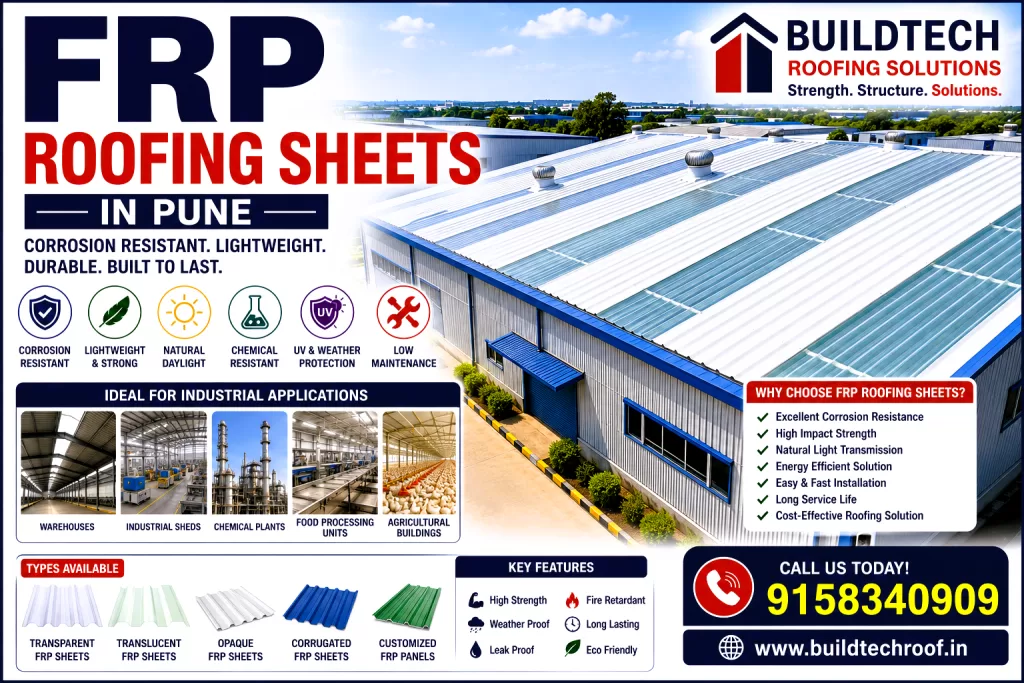
Introduction Industrial roofing systems are constantly exposed to harsh environmental conditions, including heavy rainfall, extreme temperatures, UV radiation, moisture, chemical fumes, and corrosion. Traditional roofing materials often require frequent maintenance and replacement, increasing operational costs over time. Modern industries are increasingly looking for roofing materials that offer durability, corrosion resistance, natural lighting, and long-term performance. One such advanced roofing solution is FRP Roofing Sheets. FRP (Fibre Reinforced Plastic) roofing sheets have become one of the most preferred materials for industrial sheds, warehouses, chemical plants, food processing facilities, agricultural buildings, and commercial structures. Their lightweight design, superior strength, corrosion resistance, and ability to transmit natural daylight make them an ideal choice for modern industrial roofing systems. This is where FRP Roofing Sheets Pune solutions by Buildtech Roofing Solutions provide durable, weather-resistant, and cost-effective roofing systems designed to meet industrial requirements. This comprehensive guide explains everything about FRP roofing sheets, including their composition, benefits, types, applications, installation process, maintenance requirements, and cost considerations. What Are FRP Roofing Sheets? FRP Roofing Sheets are roofing panels manufactured using Fibre Reinforced Plastic, a composite material made by combining resin with reinforcing fibres. This combination creates a strong, lightweight, and corrosion-resistant roofing material. FRP sheets are widely used where durability and resistance to environmental conditions are critical. Composition of FRP Roofing Sheets A standard FRP sheet consists of three major components: 1. Resin Matrix The resin binds the structure together and provides weather resistance. 2. Reinforcing Fibres Glass fibres provide: 3. Protective Surface Layer This layer improves: How FRP Roofing Sheets Work Unlike traditional metal roofing, FRP sheets do not corrode or rust when exposed to moisture or chemicals. They provide: ✔ Structural protection✔ Weather resistance✔ Natural daylight transmission✔ Long-term durability Their composite structure allows them to perform efficiently in harsh industrial environments. Why Industries Choose FRP Roofing Sheets Industrial buildings require roofing systems that can withstand: FRP roofing sheets address all these challenges effectively. Key Benefits of FRP Roofing Sheets 1. Excellent Corrosion Resistance One of the biggest advantages of FRP roofing sheets is their resistance to corrosion. Unlike metal roofing, FRP sheets do not rust. This makes them ideal for: 2. Lightweight Construction FRP sheets are significantly lighter than many conventional roofing materials. Benefits include: 3. Natural Daylight Transmission Transparent and translucent FRP sheets allow sunlight to enter the building. This reduces the need for artificial lighting during the daytime. 4. Chemical Resistance FRP roofing sheets are highly resistant to: This makes them suitable for aggressive industrial conditions. 5. Weather Resistance FRP sheets provide excellent protection against: 6. Long Service Life High-quality FRP roofing systems can provide reliable performance for many years. 7. Low Maintenance Minimal maintenance requirements reduce long-term operational costs. 8. High Strength-to-Weight Ratio FRP sheets offer excellent strength while remaining lightweight. Types of FRP Roofing Sheets 1. Transparent FRP Roofing Sheets These sheets are designed to maximise natural daylight. Applications 2. Translucent FRP Roofing Sheets Allow diffused light while reducing glare. Benefits 3. Opaque FRP Roofing Sheets Used where daylight transmission is not required. Features 4. Corrugated FRP Roofing Sheets The most commonly used industrial profile. Advantages 5. Customised FRP Roofing Panels Manufactured according to specific industrial requirements. Applications of FRP Roofing Sheets Industrial Sheds Provides corrosion-resistant roofing with long service life. Warehouses Allows natural daylight while maintaining structural protection. Chemical Plants Ideal due to chemical resistance properties. Food Processing Units Supports hygienic and corrosion-resistant environments. Textile Industries Provides durable roofing with reduced maintenance requirements. Agricultural Buildings Used for poultry farms, storage facilities, and agricultural sheds. Commercial Buildings Suitable for showrooms, workshops, and service centres. FRP Roofing Sheets vs Polycarbonate Sheets Feature FRP Sheets Polycarbonate Sheets Chemical Resistance Excellent Good Impact Resistance High Very High Cost Moderate Higher UV Resistance Good Excellent Industrial Usage Very High High FRP Roofing Sheets vs Metal Roofing Feature FRP Roofing Metal Roofing Corrosion Resistance Excellent Moderate Light Transmission Yes No Weight Lightweight Heavier Chemical Resistance Excellent Limited Maintenance Low Moderate Why FRP Roofing Is Better for Chemical Industries Chemical facilities often experience: FRP roofing sheets provide superior resistance compared to conventional metal roofing systems. Importance of Proper Roofing Design A well-designed roofing system improves: ✔ Drainage performance✔ Structural stability✔ Ventilation efficiency✔ Roof lifespan Poor roofing design can result in leakage and maintenance issues. FRP Roofing Sheet Installation Process Step-1 – Site Inspection Analyse structural requirements and roofing dimensions. Step-2 – Roof Structure Preparation Ensure purlins and supports are properly aligned. Step-3 – Sheet Alignment Position sheets according to the roofing layout. Step-4 – Fastener Installation Secure sheets using approved fasteners and washers. Step-5 – Waterproof Sealing Seal overlaps and joints to prevent leakage. Step-6 – Final Inspection Verify installation quality and waterproofing performance. Roofing Accessories Used with FRP Sheets A complete roofing system includes: These accessories improve roof performance and durability. Common Roofing Problems Solved by FRP Sheets Corrosion Damage FRP sheets eliminate rust-related problems. Dark Interiors Transparent FRP sheets improve natural lighting. Moisture Problems Non-corrosive surfaces resist moisture damage. Frequent Maintenance Long-lasting materials reduce repair frequency. Chemical Exposure FRP sheets withstand harsh industrial environments. Maintenance Tips for FRP Roofing Sheets Regular maintenance helps maximise service life. Recommended Practices ✔ Clean roof surfaces periodically✔ Inspect fasteners and joints✔ Check sealants annually✔ Remove debris from drainage systems✔ Replace damaged sections promptly Cost of FRP Roofing Sheets in Pune Pricing depends on: Approximate Cost Range ₹100 – ₹250 per sq.ft Actual pricing may vary based on specifications and installation requirements. Factors Affecting FRP Roofing Sheet Cost Material Quality Premium materials provide longer service life. Thickness Thicker sheets offer higher durability. UV Coating Enhanced UV protection increases performance and cost. Custom Profiles Customised sheets may have higher manufacturing costs. Why Choose Buildtech Roofing Solutions Pune Buildtech Roofing Solutions provides advanced FRP roofing systems designed for industrial and commercial applications. Key Advantages ✔ Premium-quality FRP roofing sheets✔ Expert installation team✔ Customised roofing solutions✔ Competitive pricing✔ Fast project execution✔ Industrial roofing expertise Industries Served Service Areas PuneMumbaiNashikKolhapurSangliSataraAhmednagarAurangabad Future of FRP Roofing Technology Modern industrial construction increasingly focuses on: FRP
FRP Roofing Sheets Product Guide for Industrial Roofing Solutions Read More »