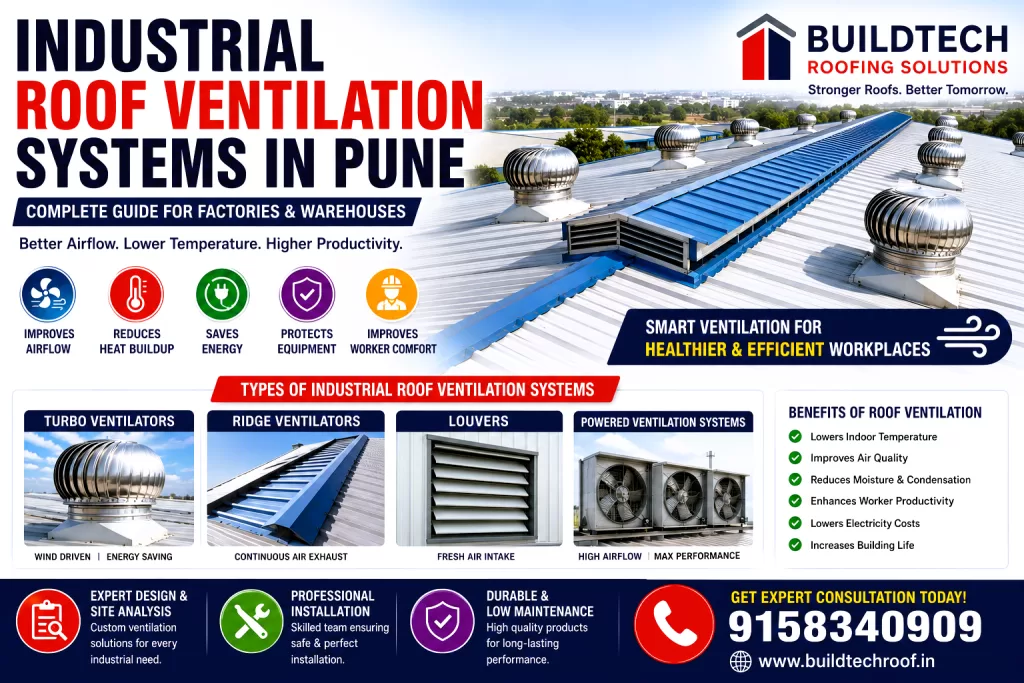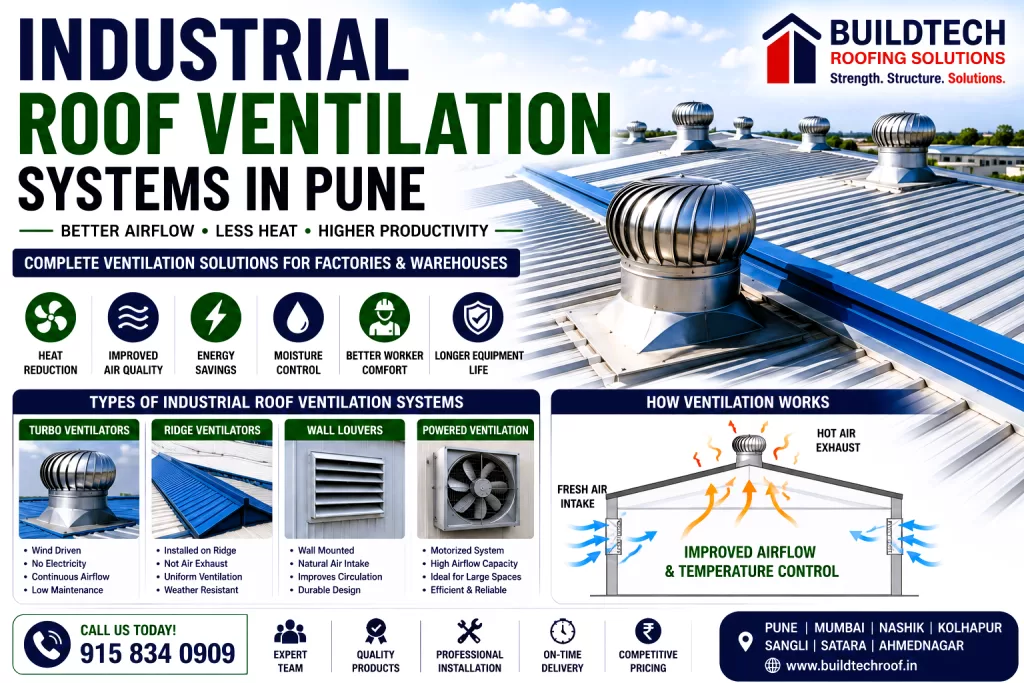
Turbo Ventilator Installation

Turbo ventilator installation services improving airflow and reducing heat buildup inside factories and warehouses. Our ventilation solutions enhance workplace comfort and reduce energy consumption.

Ridge Ventilator System in Pune

Ridge Ventilator System in Pune – Complete Guide for Industrial Ventilation Solutions

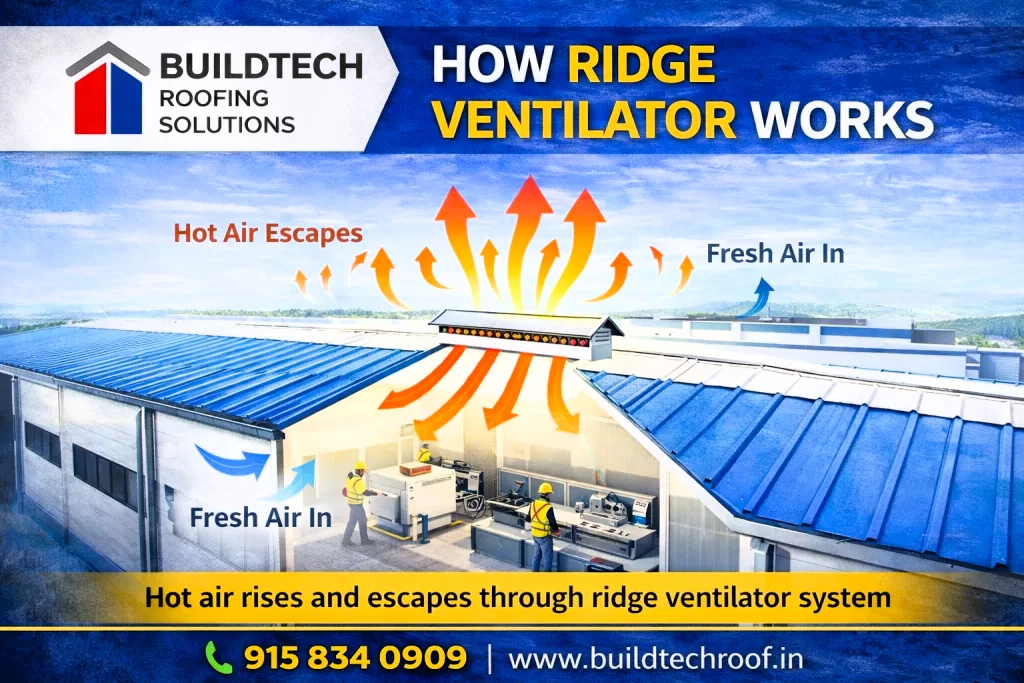
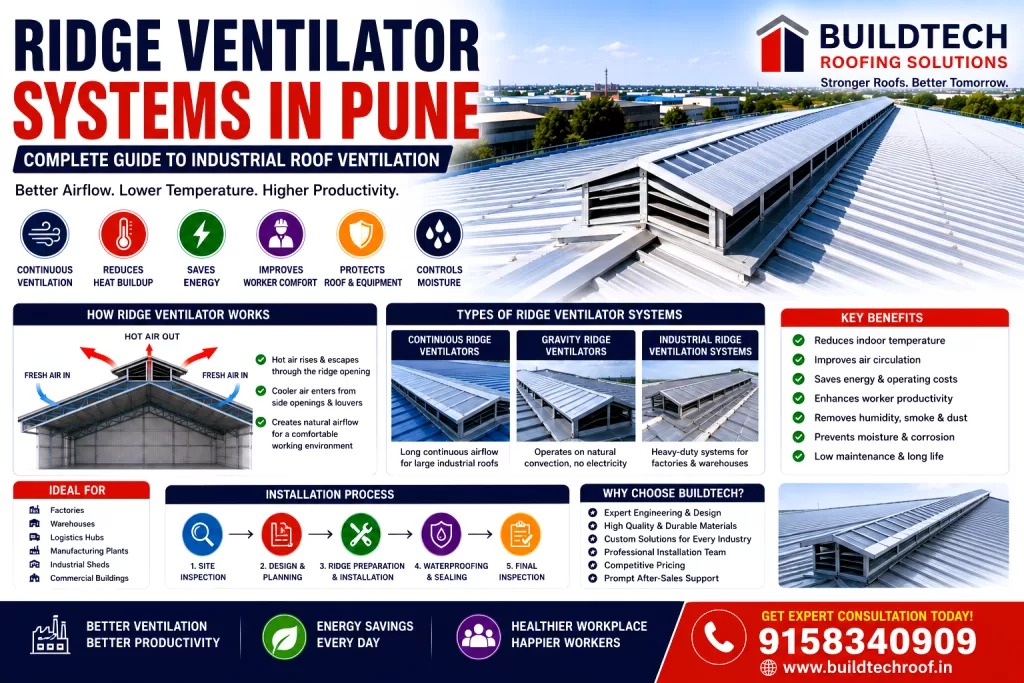
Introduction Industrial buildings such as factories, warehouses, logistics hubs, and manufacturing units generate a significant amount of internal heat due to machinery, production processes, and limited airflow. In cities like Pune, where temperatures can rise considerably during summer, this heat buildup becomes a major challenge. Poor ventilation leads to: This is where the Ridge Ventilator System Pune solutions by Buildtech Roofing Solutions provide an efficient and cost-effective solution. Ridge ventilators are natural ventilation systems installed at the highest point of industrial roofs. They allow hot air to escape, improving airflow and maintaining a balanced indoor environment without using electricity. This comprehensive guide explains everything about ridge ventilators, including working principles, types, benefits, installation process, and industrial applications. What is a Ridge Ventilator System? A ridge ventilator is a roof-mounted ventilation system installed along the ridge line of a building. Its primary function is to: It works on the principle of natural convection, where hot air rises and escapes through the roof opening. How Ridge Ventilators Work Ridge ventilators operate based on natural airflow dynamics: Step-by-step working: This creates a continuous airflow cycle. Importance of Industrial Ventilation Proper ventilation is essential for industrial buildings. 1. Temperature Control Excess heat is removed, maintaining a comfortable environment. 2. Worker Safety & Comfort Improved airflow reduces heat stress and enhances productivity. 3. Energy Savings Natural ventilation reduces dependence on fans and AC systems. 4. Moisture Control Prevents condensation and corrosion. 5. Equipment Protection Maintains optimal temperature for machinery. Types of Ridge Ventilator Systems 1. Turbo Ridge Ventilators These ventilators use wind energy to rotate and enhance airflow. Features: 2. Static Ridge Ventilators Fixed ventilators with no moving parts. Advantages: 3. Monitor Roof Ventilators Raised structures along the ridge for maximum airflow. Best For: Key Features of Ridge Ventilators 1. Natural Ventilation Operates without electricity. 2. Continuous Airflow Provides constant ventilation. 3. Weather Protection Designed to prevent rainwater entry. 4. Durable Construction Made from corrosion-resistant materials. 5. Low Maintenance Minimal servicing required. Benefits of Ridge Ventilator Systems 1. Reduces Indoor Temperature Helps maintain cooler working conditions. 2. Improves Air Quality Removes stale air and pollutants. 3. Enhances Productivity Comfortable workers perform better. 4. Reduces Energy Costs Less dependency on electrical ventilation. 5. Prevents Moisture Damage Avoids condensation-related issues. 6. Eco-Friendly Solution Supports sustainable building practices. Applications of Ridge Ventilators Ridge ventilators are widely used in: Ridge Ventilator vs Exhaust Fans Feature Ridge Ventilator Exhaust Fan Power Requirement No Yes Maintenance Low High Cost One-time Recurring Airflow Continuous Limited Noise Silent Noisy Step-by-Step Installation Process Step-1 – Site Inspection Evaluate roof structure and ventilation requirements. Step-2 – Design Planning Determine ventilator size, placement, and quantity. Step-3 – Ridge Opening Creation Create an opening along the roof ridge. Step-4 – Ventilator Installation Install the ventilator structure securely. Step-5 – Sealing & Waterproofing Ensure no water leakage. Step-6 – Final Inspection Check airflow efficiency and installation quality. Factors to Consider Before Installation Maintenance Tips Cost of Ridge Ventilator System in Pune Cost depends on: 💡 Tip: Ridge ventilators provide long-term savings by reducing energy costs. Why Choose Buildtech Roofing Solutions Pune Buildtech Roofing Solutions is a leading provider of industrial ventilation systems. Key Advantages: ✔ High-quality ventilators✔ Expert installation team✔ Customised industrial solutions✔ Competitive pricing✔ Fast project execution Industries Served Future of Industrial Ventilation With increasing focus on: Ridge ventilators are becoming essential in modern industrial infrastructure. Conclusion Ridge ventilator systems provide an efficient, cost-effective, and eco-friendly solution for industrial ventilation. With Ridge Ventilator System Pune solutions by Buildtech Roofing Solutions, businesses can achieve better airflow, reduced heat, and improved working conditions.

Ridge Ventilator System in Pune – Complete Guide for Industrial Ventilation Solutions Read More »

Industrial Ridge Ventilators: Natural Ventilation Solutions for Modern Industrial Buildings

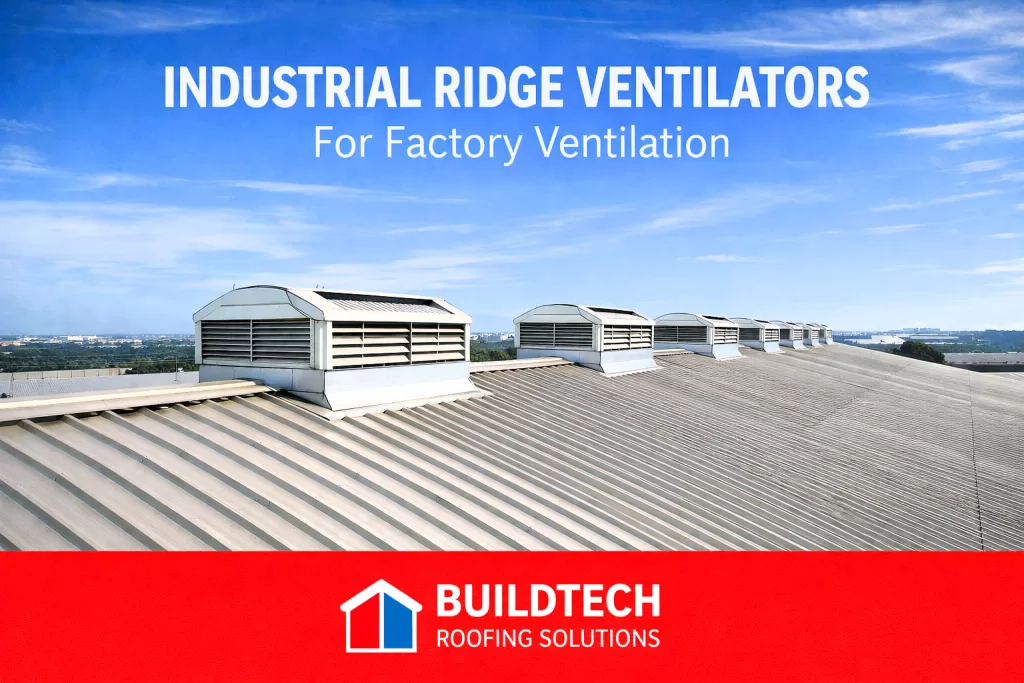
Industrial Ridge Ventilators: The Smart Ventilation System for Modern Buildings Industrial buildings require effective ventilation systems to maintain indoor air quality, control heat, and improve working conditions. One of the most efficient passive ventilation technologies available today is the Industrial Ridge Ventilator. At Buildtech Roofing Solutions, we design and supply high-performance ridge ventilators that provide continuous natural ventilation for factories, warehouses, and large commercial structures. In this comprehensive guide, we will explore: What is an Industrial Ridge Ventilator? An Industrial Ridge Ventilator is a passive ventilation system installed along the ridge line of a roof. Its primary purpose is to remove hot air, fumes, and humidity from the building without using electricity. Unlike mechanical ventilation systems, ridge ventilators rely on natural airflow principles, making them energy-efficient and cost-effective. They are commonly used in: • Manufacturing factories• Warehouses• Logistics hubs• Industrial plants• Commercial buildings• Agricultural storage facilities Why Industrial Buildings Need Proper Roof Ventilation Factories generate large amounts of heat, dust, and industrial fumes. Without proper ventilation, this can lead to serious issues such as: Heat Build-Up Industrial roofs absorb sunlight throughout the day, causing indoor temperatures to rise significantly. Poor Air Quality Machines and production processes often release gases, vapours, and dust. Worker Discomfort Excess heat leads to reduced productivity and unsafe working conditions. Moisture & Condensation Poor ventilation causes condensation, which may damage machinery and roofing structures. Installing industrial ridge ventilators solves all these problems by enabling continuous natural airflow. How Industrial Ridge Ventilators Work Ridge ventilators operate using a natural convection process known as the Stack Effect. Step-by-step airflow process This creates constant natural airflow inside the building. Because the system uses natural air pressure and temperature differences, it requires no electricity. Key Components of a Ridge Ventilator System A well-designed ridge ventilator system includes several engineered components. 1. Ventilator Body The main structure is mounted on the roof ridge. 2. Wind Deflectors Prevents rainwater entry while allowing airflow. 3. Side Louvers Improves airflow efficiency and blocks debris. 4. Bird Mesh Protects the building interior from birds and insects. 5. Flashing System Ensures leak-proof integration with roofing sheets. At Buildtech Roofing Solutions, ridge ventilators are manufactured using high-quality colour-coated steel or aluminium to ensure long service life. Advantages of Industrial Ridge Ventilators 1. 100% Natural Ventilation Ridge ventilators provide continuous air circulation without electricity, making them highly energy efficient. 2. Temperature Reduction Factories using ridge ventilation can reduce indoor temperatures by 3–6°C, depending on building design. 3. Improved Worker Productivity Better airflow creates comfortable working conditions, increasing productivity and reducing fatigue. 4. Moisture Control Proper ventilation prevents condensation that could damage equipment and roofing systems. 5. Environmentally Friendly Because ridge ventilators do not require electricity, they reduce carbon emissions and energy consumption. 6. Low Maintenance With no moving parts, ridge ventilators require minimal maintenance. Technical Specifications of Buildtech Ridge Ventilators Typical specifications include: Feature Specification Material Colour Coated Steel / Aluminium Thickness 0.5 mm – 0.8 mm Vent Width 300 mm – 1000 mm Finish Weather-resistant coating Installation Roof ridge mounted Airflow Continuous passive ventilation Custom designs are available depending on the roof structure and airflow requirements. Applications of Ridge Ventilators Industrial ridge ventilators are widely used across different sectors. Manufacturing Plants Removes machine heat and fumes. Warehouses Controls humidity and temperature. Steel Plants Ventilates smoke and hot air. Food Processing Units Maintains hygienic airflow conditions. Textile Industries Removes humidity generated during production. Integration with Modern Roofing Systems Ridge ventilators are typically installed along with: • Colour-coated roofing sheets• Deck sheets• Insulated roofing panels• Industrial louvers• Metal flashing systems This creates a complete roofing ventilation ecosystem. Installation Guidelines Proper installation is essential for achieving maximum ventilation performance. Important installation steps Professional installation ensures long-term durability and performance. Why Choose Buildtech Ridge Ventilators? Buildtech Roofing Solutions is one of the trusted suppliers of industrial roofing products in Maharashtra. Key advantages of Buildtech roofing solutions • High-quality materials• Precision fabrication• Custom sizes available• Leak-proof installation• Competitive pricing• Experienced technical support We serve factories, warehouses, infrastructure projects, and industrial contractors across India. Future of Industrial Ventilation Systems With increasing focus on energy efficiency and sustainable construction, natural ventilation systems like ridge ventilators are becoming essential components of modern building design. Architects and engineers are now integrating ridge ventilators with: • Green building concepts• Passive cooling systems• Sustainable architecture• Energy-efficient factory design This trend makes ridge ventilators a key technology for the future of industrial infrastructure. Conclusion Industrial ridge ventilators provide a simple, energy-efficient, and reliable solution for factory ventilation. They improve air quality, reduce heat, and enhance working conditions — all without consuming electricity. By choosing Buildtech Roofing Solutions, businesses can ensure high-quality roofing ventilation systems designed for long-term performance. If you are planning a factory roofing project or ventilation upgrade, ridge ventilators are one of the smartest investments you can make.

Industrial Ridge Ventilators: Natural Ventilation Solutions for Modern Industrial Buildings Read More »

Industrial Roof Heat Reduction Guide: How to Reduce Factory Roof Temperature

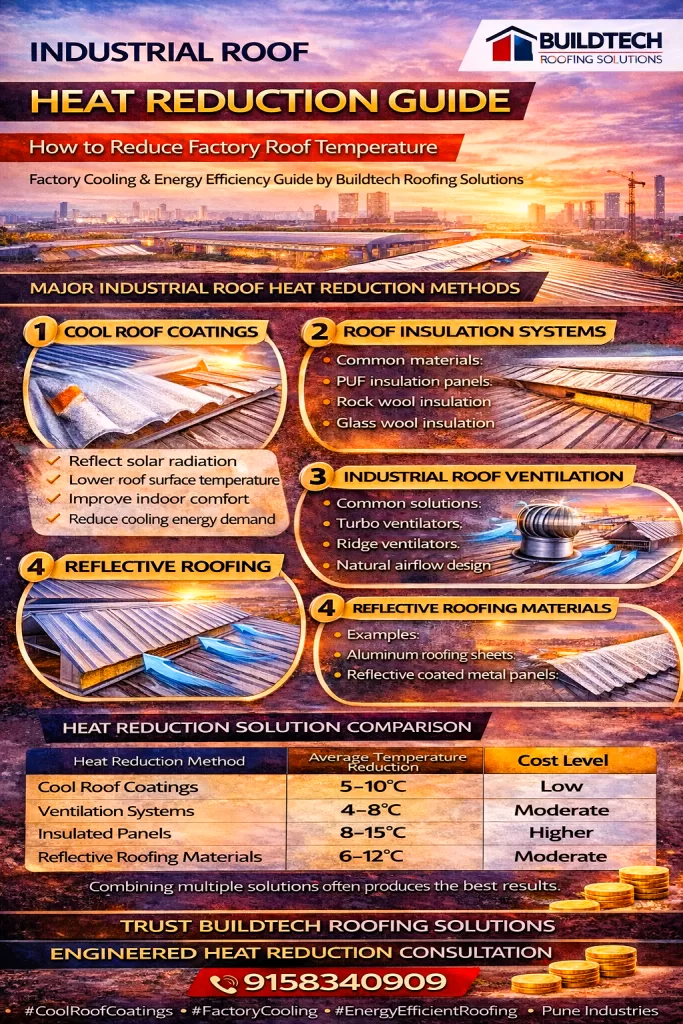
Introduction: Why Industrial Roof Heat Reduction Is Essential Industrial buildings often experience excessive indoor heat because large metal roofing surfaces absorb sunlight throughout the day. As heat accumulates under the roof, indoor temperatures rise significantly, making working conditions uncomfortable and increasing energy consumption. In cities like Pune, where summers can be extremely hot, factories and warehouses require effective strategies for industrial roof heat reduction. Implementing cooling solutions not only improves worker comfort but also enhances productivity, protects equipment, and reduces operational costs. This guide explains practical methods industries can use to reduce roof heat and maintain a comfortable indoor environment. How Heat Enters Industrial Buildings Heat enters industrial sheds through three primary mechanisms: Solar Radiation Sunlight directly heats metal roofing sheets, increasing surface temperature. Heat Conduction Heat travels through roofing material into the interior space. Trapped Hot Air Without proper ventilation, rising hot air accumulates below the roof structure. These processes cause indoor temperatures to rise significantly during daytime operations. Why Industrial Roof Heat Reduction Matters Reducing heat inside industrial buildings improves: Heat management is therefore an important aspect of facility management. Major Industrial Roof Heat Reduction Methods 1️⃣ Cool Roof Coatings Cool roof coatings are reflective coatings applied to roofing surfaces to reduce heat absorption. Benefits Cool roof coatings are one of the most cost-effective heat reduction solutions. 2️⃣ Roof Insulation Systems Roof insulation materials prevent heat transfer into the building. Common insulation materials include: Insulated roofing significantly improves thermal performance. 3️⃣ Industrial Roof Ventilation Ventilation systems remove accumulated hot air from the building. Common ventilation solutions: These systems allow hot air to escape naturally. 4️⃣ Reflective Roofing Materials Light-colored or reflective roofing sheets absorb less heat compared to darker materials. Examples include: These materials reduce solar heat gain. Heat Reduction Solution Comparison Heat Reduction Method Average Temperature Reduction Cost Level Cool Roof Coatings 5–10°C Low Ventilation Systems 4–8°C Moderate Insulated Panels 8–15°C Higher Reflective Roofing Materials 6–12°C Moderate Combining multiple solutions often produces the best results. Signs Your Factory Needs Heat Reduction Industries should consider roof heat reduction if they notice: These indicators suggest heat accumulation problems. Benefits of Industrial Roof Cooling Implementing heat reduction strategies provides several advantages: Cooling solutions therefore, improve both operational efficiency and cost control. Industrial Roof Heat Reduction Implementation Process Professional heat reduction solutions follow a structured process: Engineering-based planning ensures optimal cooling performance. Common Industrial Roof Heat Reduction Mistakes Industries sometimes make mistakes, such as: These errors reduce effectiveness and increase long-term costs. Why Professional Heat Reduction Solutions Matter Industrial roofing experts ensure: Professional planning ensures reliable cooling performance. Why Industries Choose Buildtech Roofing Solutions Buildtech Roofing Solutions provides: This ensures factories maintain comfortable working conditions while improving efficiency. FAQs: Industrial Roof Heat Reduction How much temperature reduction can cool roof coatings provide?Reflective coatings can reduce roof temperature by approximately 5–10°C. Do turbo ventilators help reduce heat?Yes, turbo ventilators remove hot air trapped inside the building. Is insulation better than roof coating?Insulation prevents heat transfer while coatings reflect sunlight; both solutions work best together. What is the most economical heat reduction solution?Cool roof coatings combined with ventilation systems are usually the most cost-effective approach. Conclusion: Smart Heat Reduction Improves Industrial Efficiency Industrial roof heat reduction plays an important role in improving indoor comfort, lowering energy consumption, and extending roof lifespan. By combining reflective coatings, insulation systems, and ventilation solutions, factories and warehouses can create a cooler and more efficient working environment. For professional heat reduction solutions and roofing consultation in Pune, Buildtech Roofing Solutions offers engineered solutions tailored for industrial performance.

Industrial Roof Heat Reduction Guide: How to Reduce Factory Roof Temperature Read More »

©2023 buildtechroof. All Rights Reserved.