Floor Decking Sheets in Pune Product Guide
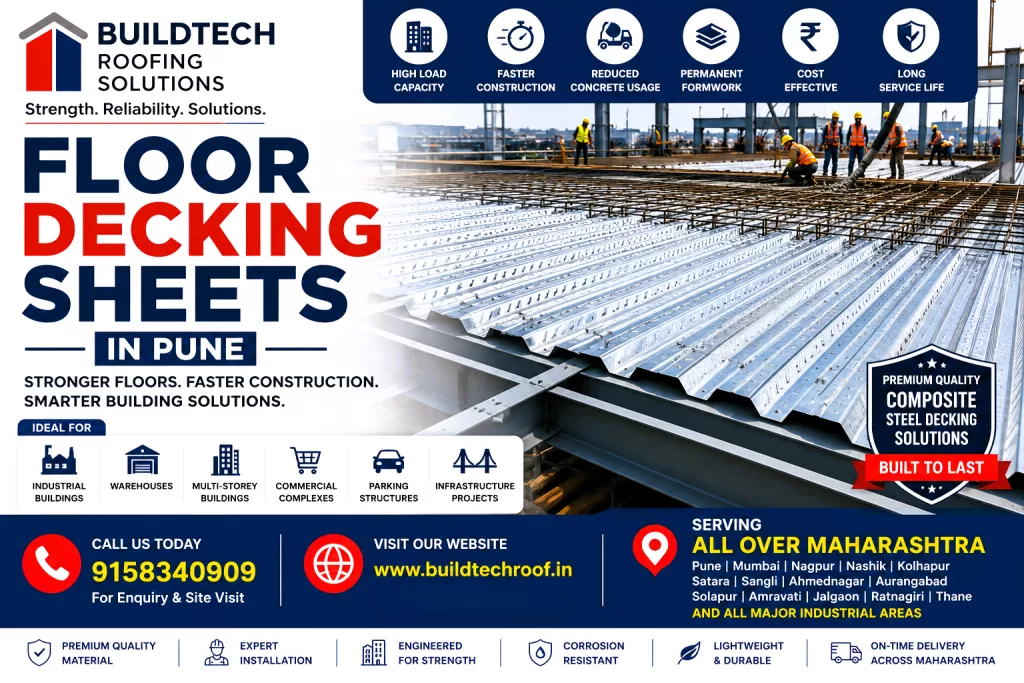
📖 Introduction Modern construction projects demand faster execution, lower structural costs, and stronger building systems. Traditional slab construction methods often require extensive shuttering, labour, and construction time. Floor Decking Sheets have revolutionised the construction industry by providing a faster and more efficient flooring solution. Widely used in industrial buildings, commercial complexes, warehouses, parking structures, hospitals, educational institutions, and multi-storey buildings, floor decking sheets improve structural performance while reducing project timelines. Buildtech Roofing Solutions supplies premium Floor Decking Sheets in Pune and across Maharashtra for industrial and commercial construction projects. What Are Floor Decking Sheets? Floor decking sheets are specially profiled galvanised steel sheets used as permanent formwork and reinforcement support for reinforced concrete slabs. Once concrete is poured, the decking sheet and concrete work together as a composite slab system. This creates: How Floor Decking Sheets Work The profiled steel deck acts as: Permanent Shuttering No need for conventional plywood shuttering. Reinforcement Support Supports wet concrete during construction. Composite Action After curing, steel and concrete function together structurally. Benefits include: Components of a Floor Decking System Steel Deck Sheet Profiled galvanised steel. Shear Connectors Create a composite action between steel and concrete. Reinforcement Mesh Additional reinforcement where required. Concrete Slab Provides structural floor strength. Supporting Beams Transfer loads to the building framework. Key Benefits of Floor Decking Sheets 1. Faster Construction One of the biggest advantages. Construction time can be reduced significantly compared to conventional slab systems. Benefits: 2. Reduced Shuttering Cost Traditional slab construction requires extensive formwork. Deck sheets act as permanent shuttering. Result: 3. High Structural Strength Composite slabs offer: 4. Reduced Concrete Consumption Optimised slab design lowers concrete usage. Benefits: 5. Lightweight Construction Compared to conventional systems. Advantages: 6. Improved Safety Provides stable working platforms during construction. 7. Long Service Life Galvanised steel protects against corrosion and environmental damage. Types of Floor Decking Sheets Composite Decking Sheets Most commonly used. Features: Non-Composite Decking Sheets Used primarily as permanent shuttering. Applications: Galvanised Floor Deck Sheets Corrosion-resistant steel coating. Ideal for industrial projects. Heavy-Duty Decking Sheets Designed for: Applications of Floor Decking Sheets Industrial Buildings Factories and manufacturing units. Warehouses Large-span floor systems. Commercial Complexes Shopping centres and offices. Multi-Storey Buildings Fast construction and reduced weight. Hospitals Efficient structural systems. Educational Institutions Cost-effective floor construction. Parking Structures High load-bearing capability. Infrastructure Projects Airports, railway stations, and public buildings. Floor Decking Sheets vs Conventional Slab Construction Feature Floor Decking Conventional Slab Construction Speed Fast Slow Shuttering Requirement Minimal High Labor Requirement Lower Higher Concrete Usage Reduced Higher Structural Efficiency High Moderate Floor Decking Sheets vs RCC Slabs Feature Decking System RCC Slab Weight Lower Higher Construction Time Faster Slower Cost Efficiency Better Moderate Structural Performance High High Importance of Proper Deck Design Proper decking design ensures: Installation Process Step-1 – Structural Planning Review building design and load requirements. Step-2 – Deck Sheet Placement Position sheets on supporting beams. Step-3 – Fastening Secure sheets properly. Step-4 – Shear Connector Installation Install composite action connectors. Step-5 – Reinforcement Placement Position reinforcement mesh. Step-6 – Concrete Pouring Apply a concrete slab. Step-7 – Curing & Inspection Verify structural integrity. Common Problems Solved Long Construction Timelines Accelerates project completion. High Labor Costs Reduces manpower requirements. Excessive Shuttering Costs Eliminates temporary formwork. Heavy Structural Loads Provides lighter floor systems. Maintenance Tips Floor decking systems require minimal maintenance. Recommended: Cost of Floor Decking Sheets in Pune Pricing depends on: Approximate Cost Range ₹80 – ₹280 per sq.ft Project pricing varies according to specifications and volume. Why Choose Buildtech Roofing Solutions? Our Advantages Industries Served Service Areas Serving All Over Maharashtra PuneMumbaiNagpurNashikKolhapurSataraSangliAhmednagarAurangabadSolapurAmravatiJalgaonRatnagiriThane And All Major Industrial Zones Across Maharashtra
Floor Decking Sheets in Pune Product Guide Read More »