
📖 Introduction
Lighting is one of the most important aspects of any industrial or commercial building. Warehouses, factories, logistics centres, manufacturing plants, and Pre-Engineered Buildings (PEB) require adequate illumination for safety, productivity, and operational efficiency.
However, relying solely on artificial lighting significantly increases electricity consumption and operating costs.
This is where Roof Light Systems become an ideal solution.
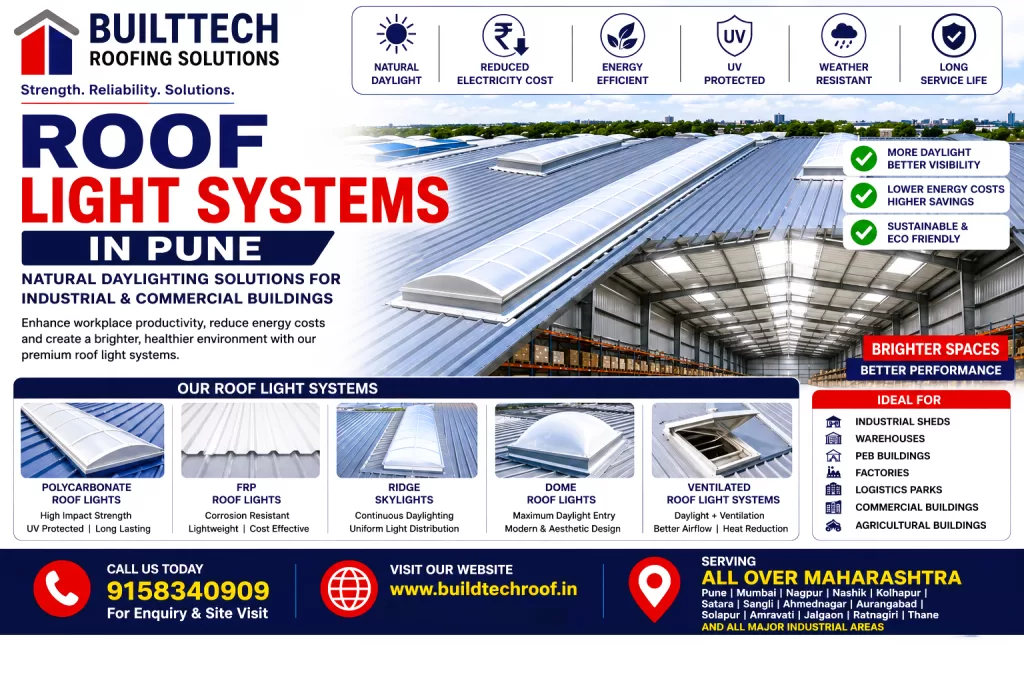
Roof Light Systems allow natural daylight to enter industrial buildings through specially designed translucent roofing panels and skylight systems. They improve indoor visibility, reduce energy consumption, enhance workplace comfort, and contribute to sustainable building design.
Buildtech Roofing Solutions supplies and installs premium Roof Light Systems in Pune and across Maharashtra, helping industries maximise natural daylight while reducing energy costs.
What Are Roof Light Systems?
Roof Light Systems are specially designed daylighting components installed within roofing structures to allow natural sunlight into a building.
They are commonly integrated with:
- ✔ Industrial Roofing Sheets
- ✔ PEB Structures
- ✔ Warehouses
- ✔ Factories
- ✔ Logistics Centres
- ✔ Commercial Buildings
- ✔ Manufacturing Facilities
These systems provide controlled daylight without compromising weather protection.
Why Roof Light Systems Are Important
Industrial buildings often face:
- ❌ High Electricity Costs
- ❌ Poor Natural Lighting
- ❌ Dark Workspaces
- ❌ Increased Energy Consumption
- ❌ Reduced Employee Comfort
Roof Light Systems solve these issues by utilising free natural daylight.
Benefits include:
- ✔ Reduced Electricity Bills
- ✔ Improved Visibility
- ✔ Better Workplace Environment
- ✔ Sustainable Building Design
- ✔ Enhanced Productivity
How Roof Light Systems Work
Roof lights are installed strategically within roofing systems.
Sunlight passes through translucent panels and spreads evenly across the interior space.
The result:
- ✔ Natural Illumination
- ✔ Reduced Dependence on Artificial Lighting
- ✔ Improved Indoor Environment
- ✔ Lower Energy Costs
Types of Roof Light Systems
1. Polycarbonate Roof Light Systems
One of the most popular daylighting solutions.
Features
- ✔ High Impact Resistance
- ✔ UV Protection
- ✔ Excellent Light Transmission
- ✔ Long Service Life
Applications:
- Warehouses
- Factories
- Commercial Buildings
2. FRP Roof Light Systems
Fibreglass Reinforced Plastic roof lights.
Benefits
- ✔ Corrosion Resistance
- ✔ Lightweight Construction
- ✔ Cost-Effective
- ✔ Good Daylight Transmission
Applications:
- Industrial Sheds
- Manufacturing Units
3. Continuous Ridge Skylights
Installed along the roof ridge.
Advantages
- ✔ Uniform Daylight Distribution
- ✔ Modern Appearance
- ✔ Enhanced Natural Lighting
Applications:
- Large Industrial Buildings
- PEB Structures
4. Dome Roof Lights
Raised skylight structures designed for maximum daylight capture.
Benefits
- ✔ Enhanced Daylight Entry
- ✔ Architectural Appeal
- ✔ Improved Indoor Brightness
5. Ventilated Roof Lights
Combine natural daylight and ventilation.
Benefits
- ✔ Daylighting
- ✔ Heat Extraction
- ✔ Improved Airflow
Key Benefits of Roof Light Systems
1. Energy Savings
One of the biggest advantages.
Natural daylight reduces the need for electric lighting during the daytime.
Benefits:
- ✔ Lower Electricity Bills
- ✔ Reduced Energy Consumption
- ✔ Improved Sustainability
2. Improved Workplace Productivity
Well-lit workspaces improve:
- ✔ Visibility
- ✔ Accuracy
- ✔ Employee Comfort
- ✔ Safety
3. Enhanced Building Appearance
Natural lighting creates a brighter and more professional environment.
4. Environment Friendly
Supports green building initiatives.
Reduces:
- Carbon Footprint
- Energy Demand
- Operational Costs
5. Uniform Light Distribution
Properly designed roof lights provide balanced illumination.
6. Reduced Heat Build-Up
Modern polycarbonate systems include UV protection and heat-control technologies.
7. Long Service Life
Premium roof light systems provide years of reliable performance.
Applications of Roof Light Systems
Industrial Sheds
Provides natural illumination for production areas.
Warehouses
Improves visibility and inventory management.
Manufacturing Plants
Enhances worker productivity.
PEB Buildings
Popular daylighting solution for modern structures.
Logistics Parks
Reduces operational lighting costs.
Commercial Buildings
Supports sustainable building design.
Agricultural Buildings
Ideal for storage and livestock facilities.
Infrastructure Projects
Airports, terminals, and public facilities.
Roof Light Systems for PEB Buildings
Pre-Engineered Buildings often integrate roof lights because they:
- ✔ Improve Energy Efficiency
- ✔ Reduce Lighting Costs
- ✔ Enhance Building Value
- ✔ Improve Working Conditions
The Polycarbonate vs FRP Roof Lights
| Feature | Polycarbonate | FRP |
|---|---|---|
| Impact Resistance | Excellent | Good |
| UV Resistance | Excellent | Moderate |
| Lifespan | Longer | Moderate |
| Light Transmission | Excellent | Good |
| Cost | Higher | Lower |
Roof Light Systems vs Artificial Lighting
| Feature | Roof Lights | Artificial Lighting |
|---|---|---|
| Operating Cost | Very Low | Continuous Cost |
| Energy Consumption | None | High |
| Sustainability | Excellent | Moderate |
| Maintenance | Low | Moderate |
Design Considerations
Effective roof light design depends on:
Building Orientation
Roof Layout
Daylight Requirements
Climate Conditions
Roof Height
Internal Operations
Professional planning ensures optimal daylight performance.
Installation Process
Step-1 – Site Assessment
Evaluate daylight requirements.
Step-2 – System Selection
Choose an appropriate roof light type.
Step-3 – Structural Preparation
Prepare roofing framework.
Step-4 – Roof Light Installation
Install translucent panels or skylights.
Step-5 – Waterproof Sealing
Ensure leak-proof performance.
Step-6 – Inspection
Verify lighting and waterproofing quality.
Common Problems Solved by Roof Light Systems
High Electricity Bills
Reduces daytime lighting costs.
Dark Workspaces
Improves visibility.
Poor Workplace Environment
Creates brighter interiors.
Sustainability Challenges
Supports green building goals.
Inadequate Daylight
Provides natural illumination.
Maintenance Tips
- ✔ Clean Roof Lights Regularly
- ✔ Inspect Seals
- ✔ Check Fasteners
- ✔ Monitor UV Protection Layers
- ✔ Inspect for Damage
- ✔ Perform Annual Maintenance Checks
Cost of Roof Light Systems in Pune
Pricing depends on:
- Material Type
- Roof Design
- Area Coverage
- Installation Requirements
Approximate Cost Range
₹190 – ₹950 per sq.ft
Actual pricing depends on project specifications.
Why Choose Buildtech Roofing Solutions?
Our Advantages
- ✔ Premium Roof Light Systems
- ✔ Polycarbonate & FRP Solutions
- ✔ Industrial Roofing Expertise
- ✔ Professional Installation Team
- ✔ Customised Daylighting Design
- ✔ Competitive Pricing
- ✔ Service Across Maharashtra
Industries Served
- Manufacturing Plants
- Warehouses
- Logistics Parks
- Food Processing Industries
- Pharmaceutical Facilities
- Textile Units
- Commercial Buildings
- Infrastructure Projects
Service Areas
Serving All Over Maharashtra
Pune
Mumbai
Nagpur
Nashik
Kolhapur
Satara
Sangli
Ahmednagar
Aurangabad
Solapur
Amravati
Jalgaon
Ratnagiri
Thane
And All Major Industrial Areas Across Maharashtra
Frequently Asked Questions
What is a Roof Light System?
A Roof Light System is a daylighting solution installed within roofing structures to allow natural sunlight into buildings.
Are roof lights suitable for industrial buildings?
Yes. They are widely used in factories, warehouses, and PEB buildings.
Do roof lights reduce electricity costs?
Yes. They significantly reduce daytime dependence on artificial lighting.
Which is better: Polycarbonate or FRP roof lights?
Polycarbonate offers higher impact resistance and longer lifespan, while FRP is often more economical.
Are roof light systems waterproof?
Yes. Professional installation ensures complete weatherproofing and leak protection.