Roof Light Systems in Pune
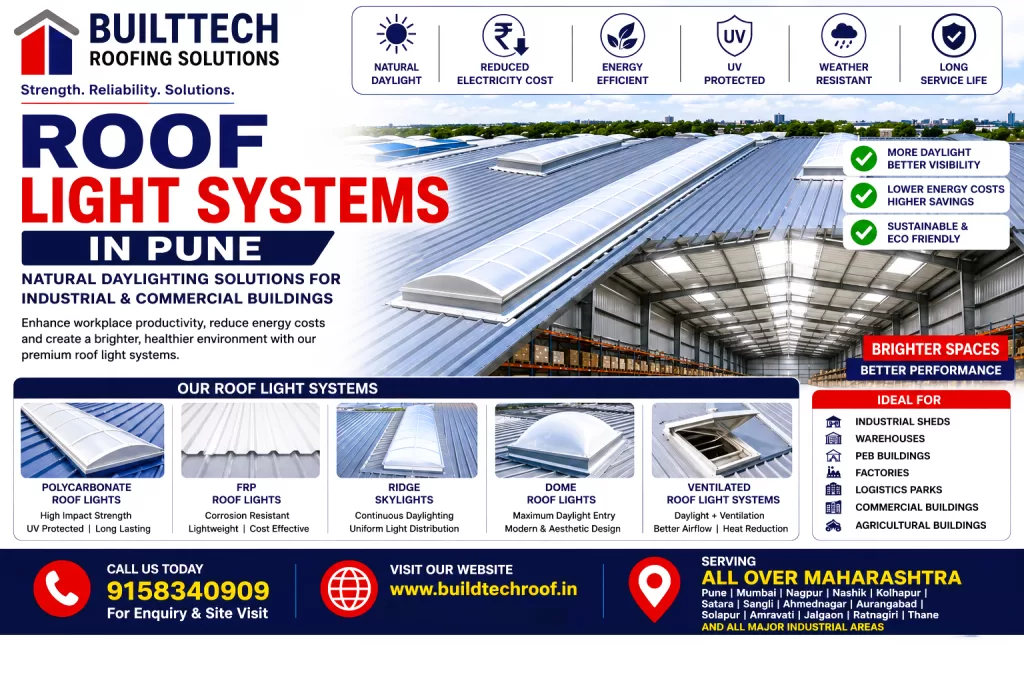
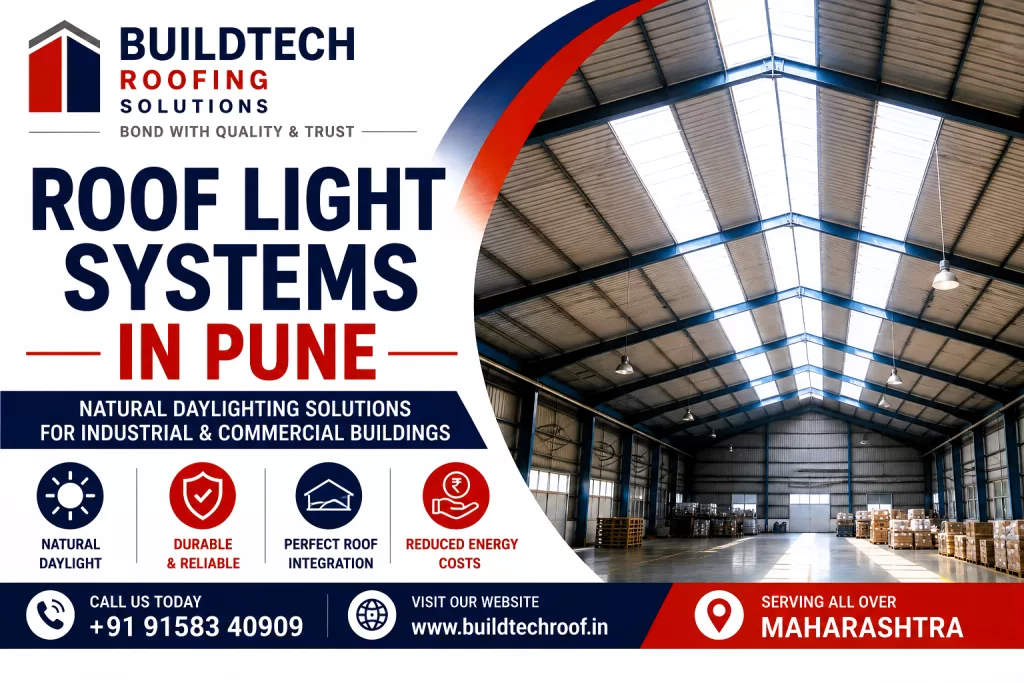
Introduction Lighting is an important part of industrial and commercial building design. Factories, warehouses, logistics centres, manufacturing plants and Pre-Engineered Buildings need adequate illumination for safe and efficient operations. A building that depends entirely on artificial lighting can have significant daytime lighting requirements. Roof Light Systems provide another approach by introducing natural daylight through selected translucent sections of the roof. Roof Light Systems in Pune are therefore suitable for industrial buildings where natural daylight, roof integration and practical building performance are important considerations. A Roof Light System uses translucent roofing components or skylight assemblies to allow daylight to enter the building. The system can be integrated with industrial roofing sheets, PEB structures, warehouses, factories and manufacturing facilities. The supplied Buildtech article describes these systems as daylighting components installed within roofing structures to bring natural sunlight into buildings. Buildtech Roofing Solutions positions Roof Light Systems as part of its broader Daylighting Systems portfolio, alongside polycarbonate and FRP daylighting products. What Are Roof Light Systems? Roof Light Systems are specially designed daylighting components installed within a roofing structure. Their primary purpose is to allow natural daylight to enter an enclosed building through selected roof areas. They can be integrated with: The basic concept is simple: Opaque Roofing + Translucent Roof Light + Supporting Structure = Industrial Daylighting System The translucent section allows daylight to enter while the surrounding roofing continues to provide the primary roof enclosure. Why Roof Light Systems Are Important Large industrial buildings frequently have limited opportunities for daylight through conventional windows. This can create: Roof Light Systems address the daylighting component by introducing natural light from above. Main benefits include: The supplied Buildtech content specifically identifies reduced electricity bills, improved visibility, workplace environment, sustainable design and productivity as key benefits. How Roof Light Systems Work Roof lights are strategically positioned within the roofing system. Sunlight passes through translucent panels and enters the building. The internal roof and floor areas then receive natural illumination. A simplified arrangement is: Sunlight → Translucent Roof Light → Industrial Building Interior → Natural Illumination The effectiveness of the system depends on factors such as: Therefore, Roof Light Systems should be planned rather than installed randomly. Types of Roof Light Systems Different daylighting configurations can be used depending on the building and roofing design. 1. Polycarbonate Roof Light Systems Polycarbonate is one of the daylighting materials used for roof-light applications. The supplied Buildtech source identifies the following characteristics: Typical applications include: Polycarbonate roof lights are particularly useful where the project requires a lightweight translucent material with good impact performance. 2. The FRP Roof Light Systems FRP means Fibreglass Reinforced Plastic. FRP roof lights can be used as translucent roofing sections in suitable industrial applications. The supplied Buildtechroof material identifies: Typical applications include: This makes FRP a useful option when industrial daylighting and profile-compatible roofing are required. 3. Continuous Ridge Skylights Continuous ridge skylights are installed along the roof ridge. They can provide daylight from the highest portion of a large industrial roof. Potential advantages They can be particularly relevant to: The supplied source specifically identifies continuous ridge skylights for large industrial buildings and PEB structures. 4. Dome Roof Lights Dome roof lights use a raised skylight structure. Their geometry can provide a larger daylight-capture surface than a flat translucent panel. Potential benefits The final design should consider the roof structure, weatherproofing and installation requirements. 5. Ventilated Roof Lights Ventilated roof lights combine two functions: Daylighting + Ventilation The supplied Buildtech content identifies: as their principal benefits. This can be useful for industrial buildings where natural daylight and high-level air movement are both required. Key Benefits of Roof Light Systems 1. Natural Daylight The primary benefit is obvious but important: Roof Light Systems introduce natural light into enclosed spaces. This can improve visibility in suitable: 2. Reduced Dependence on Artificial Lighting When sufficient daylight is available, a building may require less artificial illumination during daytime hours. The actual reduction depends on: Therefore, Roof Light Systems should be described as a solution that can reduce reliance on artificial lighting, rather than guaranteeing a fixed percentage of energy savings. 3. Potential Energy Savings Reduced daytime artificial lighting can reduce electricity consumption. However, the actual financial benefit depends on the building’s: The supplied source identifies energy savings and reduced electricity bills as major benefits. 4. Improved Workplace Visibility Good daylight can support visibility for workers. This is particularly useful for: Better visibility can contribute to a more comfortable and functional work environment. 5. Better Workplace Environment A brighter interior can create a more pleasant working environment. Natural daylight can be especially valuable in large industrial buildings where occupants spend long periods indoors. 6. Sustainable Building Design Roof daylighting makes use of naturally available sunlight. This can support building strategies aimed at reducing unnecessary daytime artificial-lighting demand. The supplied Buildtech source associates roof-light systems with sustainable building design and reduced energy demand. 7. Uniform Daylight Distribution A properly planned roof-light arrangement can distribute daylight more effectively than relying on a small number of side windows. This is particularly useful in wide industrial buildings. The exact distribution depends on: 8. Long Service Life The service life of a Roof Light System depends on its material, specification, installation and environmental exposure. Quality products combined with appropriate installation and maintenance can provide long-term service. The supplied Buildtech source identifies long service life as a benefit of premium roof-light systems. Applications of Roof Light Systems Industrial Sheds Industrial sheds can benefit from overhead daylight because large roof areas often provide significant opportunities for controlled daylighting. Roof lights can be positioned above production and working areas. Warehouses Warehouses frequently have large roof spans and limited windows. Roof Light Systems can improve visibility for: The supplied source specifically identifies warehouses as a major application. Manufacturing Plants Manufacturing facilities can use daylighting to improve general workplace illumination. The lighting strategy should still account for process-specific lighting requirements. PEB Buildings Pre-Engineered Buildings are well suited to planned roof daylighting because the roofing system and structural framework can
Roof Light Systems in Pune Read More »