Roof Louvers

Metal roof louvers for natural ventilation and fresh air circulation.

Industrial Roof Louvers in Pune for factory, warehouse and PEB roof ventilation

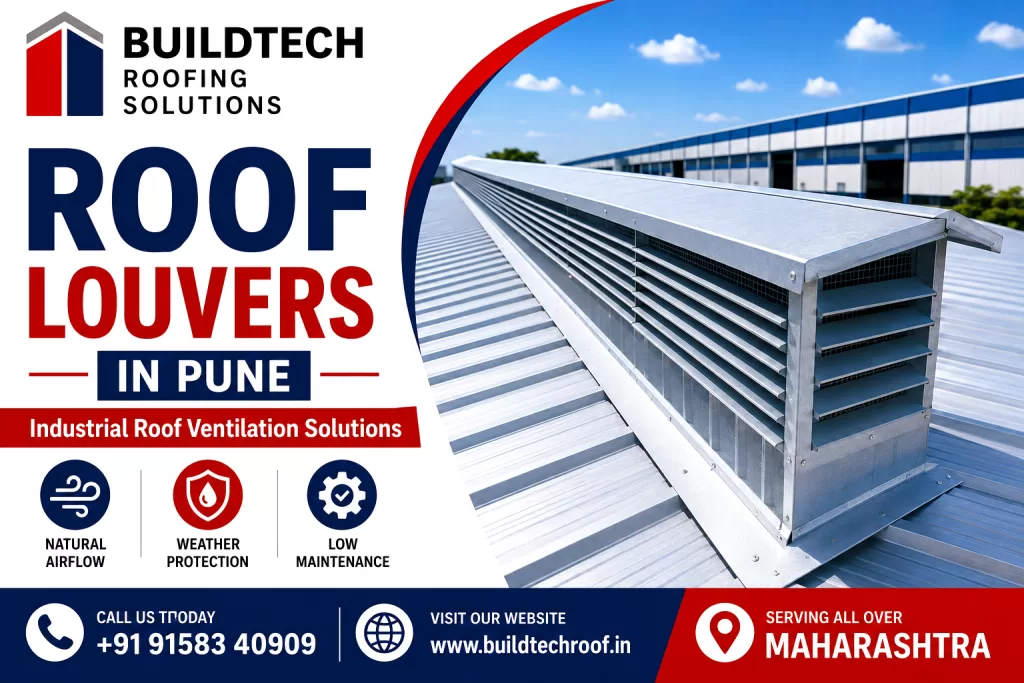
Roof Louvers in Pune for Industrial Roof Ventilation

Roof Louvers in Pune for Industrial Roof Ventilationindustrial Louve Introduction Effective ventilation is essential for maintaining a comfortable and productive environment inside industrial buildings. Factories, warehouses, workshops and large commercial structures can experience significant heat accumulation beneath the roof because of solar radiation, machinery, production processes and insufficient air movement. Roof Louvers provide a practical solution by allowing hot air and stale air to escape while supporting continuous natural ventilation. Properly designed roof louvers can improve airflow, reduce heat build-up and contribute to a healthier indoor environment without relying entirely on electrically powered exhaust systems. For industrial buildings in Pune and throughout Maharashtra, Roof Louvers can be integrated with modern roofing systems, Pre-Engineered Buildings (PEBs), wall cladding and other ventilation products. Buildtech Roofing Solutions supplies roof ventilation and roofing solutions for factories, warehouses, industrial sheds, commercial buildings and other large structures. What Are Roof Louvers? A Roof Louver is a ventilation component designed to facilitate controlled air movement through a building’s roof or upper ventilation zone. The louver consists of angled blades or openings that allow air to move through while helping protect the ventilation opening from direct exposure to rain and other weather conditions. Depending on the building design, Roof Louvers can be incorporated into: Their primary purpose is to support the movement of hot and stale air out of the building. How Do Roof Louvers Work? Roof Louvers work by creating controlled openings through which air can circulate. 1. Hot Air Rises Warm air generated by machinery, production processes and solar heat naturally rises toward the upper portion of the building. 2. Louver Provides an Air Outlet The louvered opening provides a pathway for accumulated warm air to move outside. 3. Fresh Air Enters Fresh air can enter through suitable openings such as doors, windows, wall louvers, fresh-air inlets or designed ventilation openings. 4. Continuous Air Movement When properly designed, the difference between indoor and outdoor air conditions helps maintain continuous natural air movement. Why Are Roof Louvers Important for Industrial Buildings? Large industrial buildings often have substantial roof areas and high internal heat loads. Without sufficient ventilation, hot air can remain trapped below the roof. Roof Louvers can help: Types of Roof Louvers Different louver configurations can be selected depending on building design, airflow requirements and weather protection requirements. 1. Fixed Roof Louvers Fixed louvers contain stationary blades positioned at an angle to facilitate airflow. Features Applications 2. Weather Louvers Weather louvers are designed with angled blades that help protect ventilation openings from direct rain penetration. Advantages They are particularly useful where ventilation openings are exposed to changing outdoor conditions. 3. Industrial Roof Louvers Industrial Roof Louvers are designed for larger buildings where substantial air movement is required. Applications 4. Custom Roof Louvers Custom-designed louvers can be manufactured according to project requirements. Possible customisation may include: The final design should be based on the building’s structural and ventilation requirements. Materials Used for Roof Louvers The selection of material depends on the environmental conditions, expected service life and project specifications. Galvanized Steel Galvanised steel provides a combination of strength and corrosion protection. Benefits Colour-Coated Steel Colour-coated steel can be selected where appearance and compatibility with the roofing system are important. Advantages Aluminium Aluminium provides a lightweight and corrosion-resistant option. Benefits Main Components of a Roof Louver A typical roof louver system may include: The exact configuration depends on the roof design and the required installation method. Features of Quality Roof Louvers A properly designed industrial Roof Louver should provide a balance between ventilation and weather protection. Important Features Benefits of Roof Louvers 1. Natural Ventilation Roof Louvers support natural air movement without necessarily requiring continuous mechanical power. 2. Heat Removal Warm air accumulating near the roof can escape through appropriately designed ventilation openings. 3. Improved Indoor Comfort Better air circulation can contribute to a more comfortable working environment for employees. 4. Low Maintenance Fixed louver systems have no complex rotating mechanism, reducing maintenance requirements. 5. Weather Protection Angled blades can help prevent direct rain from entering the ventilation opening when correctly designed and installed. 6. Energy Efficiency Natural ventilation can reduce dependence on electrically powered exhaust systems and mechanical cooling in suitable applications. 7. Long Service Life With appropriate material selection, coating and installation, Roof Louvers can provide reliable long-term performance. Roof Louvers vs Turbo Ventilators Feature Roof Louvers Turbo Ventilators Operating Principle Natural air movement Wind-driven rotation + thermal effect Moving Parts Usually none Rotating turbine Electricity Not inherently required Not inherently required Maintenance Low Low Weather Protection Designed with louver blades Weather-resistant turbine design Installation Roof/ventilation opening Roof-mounted point ventilation Best Use Controlled ventilation openings Point-based roof air extraction The appropriate solution depends on building size, heat load, roof configuration, airflow requirements and ventilation design. Roof Louvers for PEB Buildings Pre-Engineered Buildings are commonly used for factories, warehouses, workshops and logistics facilities. Roof Louvers can complement PEB roofing systems by providing additional ventilation openings at suitable roof locations. Applications Roof Louvers for Warehouses Warehouses can experience substantial heat accumulation, particularly under large metal roof areas. Roof Louvers can help provide natural air circulation and reduce stagnant hot air near the roof. Suitable Applications Roof Louvers for Industrial Sheds Industrial sheds often contain machinery and processes that generate heat. Properly designed roof ventilation can help remove accumulated warm air. Common Applications Why Choose Buildtech Roofing Solutions? Buildtech Roofing Solutions provides roofing, structural and ventilation solutions for industrial and commercial projects. For Roof Louvers, the focus should be on: Buildtech can support customers with roofing and ventilation solutions for factories, warehouses, PEB structures and industrial buildings. Technical Specifications of Roof Louvers Roof Louvers should be selected according to the building’s ventilation requirement, roof configuration, environmental exposure and structural arrangement. For industrial projects, the louver assembly should provide adequate free airflow while maintaining appropriate weather protection. Typical Technical Parameters Parameter Typical Specification Product Type Industrial Roof Louver Operating Principle Natural Air Movement Louver Design Fixed / Weather Louver Material Galvanised Steel / Colour-Coated Steel / Aluminium Blade Type

Roof Louvers in Pune for Industrial Roof Ventilation Read More »
Roof Louvers in Pune | Industrial Roof Louvers Manufacturer & Supplier

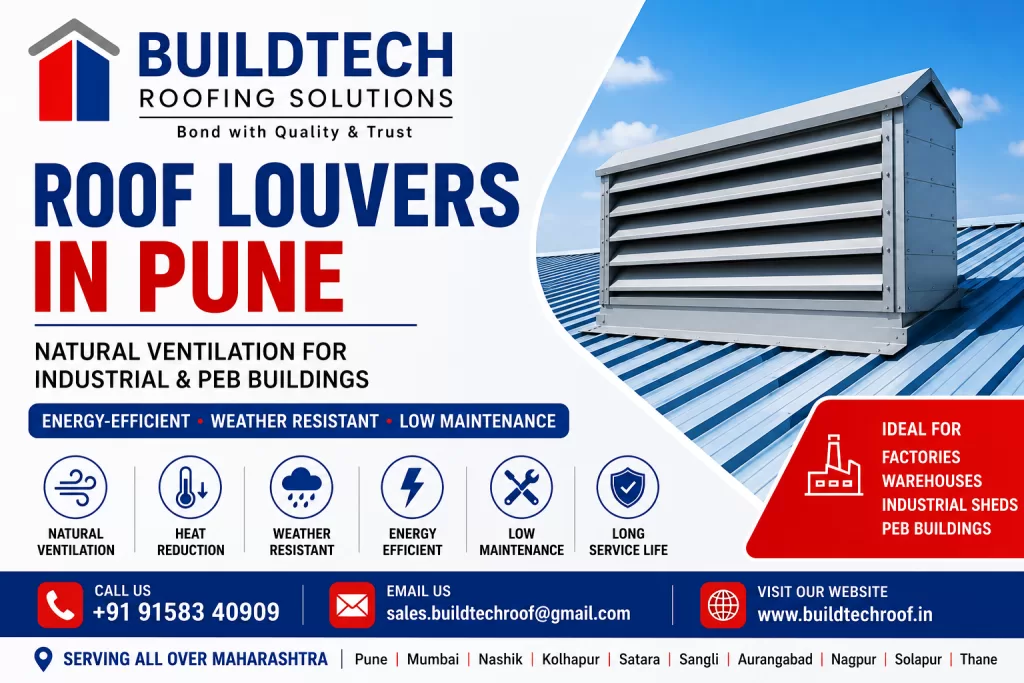
Roof Louvers in Pune | Industrial Roof Louvers

Roof Louvers in Pune for Industrial Roof Ventilation Systems Introduction Industrial buildings are designed to support manufacturing, warehousing, logistics, and commercial operations that often generate significant amounts of heat, humidity, dust, smoke, and airborne contaminants. Without an efficient ventilation system, these conditions can affect employee comfort, reduce equipment efficiency, increase maintenance costs, and shorten the lifespan of the building itself. One of the most reliable and energy-efficient solutions for improving airflow in industrial structures is the Roof Louver. Installed on the roof of a building, Roof Louvers allow trapped hot air and stale indoor air to escape while encouraging fresh outside air to circulate naturally. Unlike powered exhaust systems, Roof Louvers operate without electricity, making them a cost-effective and environmentally friendly solution for factories, warehouses, workshops, logistics centres, and Pre-Engineered Buildings (PEBs). At Buildtech Roofing Solutions, Pune, we manufacture and supply high-quality Roof Louvers engineered to deliver superior ventilation performance, weather resistance, and long-term durability. Our Roof Louvers are designed to integrate seamlessly with modern steel roofing systems and industrial buildings across Maharashtra. Whether you are constructing a new industrial shed or upgrading an existing roof ventilation system, choosing the right Roof Louver can significantly improve indoor air quality, reduce heat accumulation, and enhance overall building efficiency. What are Roof Louvers? Roof Louvers are roof-mounted ventilation systems designed to facilitate the continuous movement of air through a building. Their angled blades allow hot air, moisture, smoke, and stale air to exit while helping prevent the direct entry of rainwater and debris. These systems work on the natural principle that warm air rises. As heated air collects beneath the roof, it escapes through the louvers, creating negative pressure that draws cooler outside air into the building through wall openings or other intake vents. This passive ventilation process provides effective air circulation without the need for mechanical fans. Why Roof Louvers are Important Proper ventilation is essential for maintaining safe and efficient industrial operations. Roof Louvers help to: By improving natural airflow, Roof Louvers contribute to healthier workplaces and reduced energy consumption. How Roof Louvers Work Roof Louvers operate using passive ventilation principles: This process improves air quality, controls temperature, and reduces moisture without consuming electrical power. Key Benefits of Roof Louvers 1. Natural Ventilation Roof Louvers provide continuous airflow using natural air movement, eliminating the need for powered exhaust systems in many applications. 2. Heat Reduction By exhausting trapped hot air, Roof Louvers help lower indoor temperatures, improving comfort and reducing heat stress. 3. Improved Air Quality Continuous ventilation removes smoke, fumes, dust, and stale air, creating a healthier working environment. 4. Energy Efficiency Because Roof Louvers require no electricity to operate, they help reduce energy costs associated with mechanical ventilation. 5. Moisture Control Effective ventilation reduces condensation, helping protect roofing systems, insulation, machinery, and stored goods. 6. Low Maintenance With no motors or moving mechanical components, Roof Louvers require minimal maintenance while offering reliable long-term performance. 7. Long Service Life Manufactured from corrosion-resistant materials, quality Roof Louvers are designed to withstand demanding industrial environments. Types of Roof Louvers Fixed Roof Louvers Provide continuous natural ventilation throughout the year and are widely used in industrial and commercial buildings. Adjustable Roof Louvers Allow airflow to be regulated by adjusting the angle of the blades, making them suitable for buildings with changing ventilation requirements. Metal Roof Louvers Constructed from galvanised steel or aluminium for enhanced strength, durability, and corrosion resistance. PEB Roof Louvers Specifically designed for Pre-Engineered Buildings, ensuring compatibility with steel roofing systems and efficient passive ventilation. Technical Specifications of Roof Louvers Selecting the right Roof Louver is essential for achieving efficient natural ventilation, long service life, and reliable weather protection. The performance of a Roof Louver depends on factors such as material quality, blade profile, dimensions, airflow capacity, and installation. At Buildtech Roofing Solutions, every Roof Louver is manufactured with precision to meet the demanding requirements of industrial and commercial roofing projects. Typical Technical Specifications Parameter Specification Material Galvanised Steel (GI), Galvalume Steel (GL), Aluminium Thickness 0.50 mm – 2.00 mm (Project Dependent) Finish Powder Coated / PVDF / Polyester Coated Blade Type Fixed / Adjustable Mounting Roof Mounted Airflow Engineered as per project requirements Weather Protection Rain-resistant blade profile Fastening High-quality self-drilling screws with sealing washers Material Grades Material selection has a direct impact on the durability and performance of Roof Louvers. Galvanised Steel (GI) Galvanised steel is one of the most widely used materials due to its excellent corrosion resistance and structural strength. Advantages Galvalume Steel (GL) Galvalume steel combines aluminium, zinc, and silicon coatings to provide enhanced corrosion resistance. Benefits Aluminium Roof Louvers Aluminium Roof Louvers are lightweight and naturally resistant to corrosion. Recommended For Types of Louver Blade Designs Different blade profiles are designed to optimise airflow while minimising water ingress. Fixed Blade Louvers The most common configuration for industrial buildings. Features Drainable Blade Louvers Designed to divert rainwater away while maintaining airflow. Applications Adjustable Blade Louvers Blade angles can be modified manually or automatically. Advantages Standard Sizes Roof Louvers are available in multiple sizes to match project ventilation requirements. Typical widths: Typical lengths: Surface Finishes Roof Louvers can be supplied in several finishes depending on project requirements. Polyester Coating Suitable for general industrial and commercial buildings. PVDF Coating Provides superior resistance to UV radiation, colour fading, and harsh weather conditions. Powder Coating Offers excellent appearance, durability, and corrosion protection. Plain Galvanised Finish Ideal for applications where additional painting is not required. Performance Characteristics Properly designed Roof Louvers provide: Manufacturing Process Every Roof Louver supplied by Buildtech Roofing Solutions undergoes a systematic manufacturing process to ensure consistent quality and performance. Step-1 – Material Selection Certified steel or aluminium sheets are selected according to project specifications. Quality checks include: Step-2 – Precision Cutting Advanced CNC machinery is used to cut components accurately. Benefits include: Step-3 – Blade Forming Specialised roll-forming equipment creates accurately shaped louver blades. This ensures: Step-4 – Frame Fabrication The outer frame is fabricated and prepared for blade assembly. Quality checks include: Step-5 –

Roof Louvers in Pune | Industrial Roof Louvers Read More »

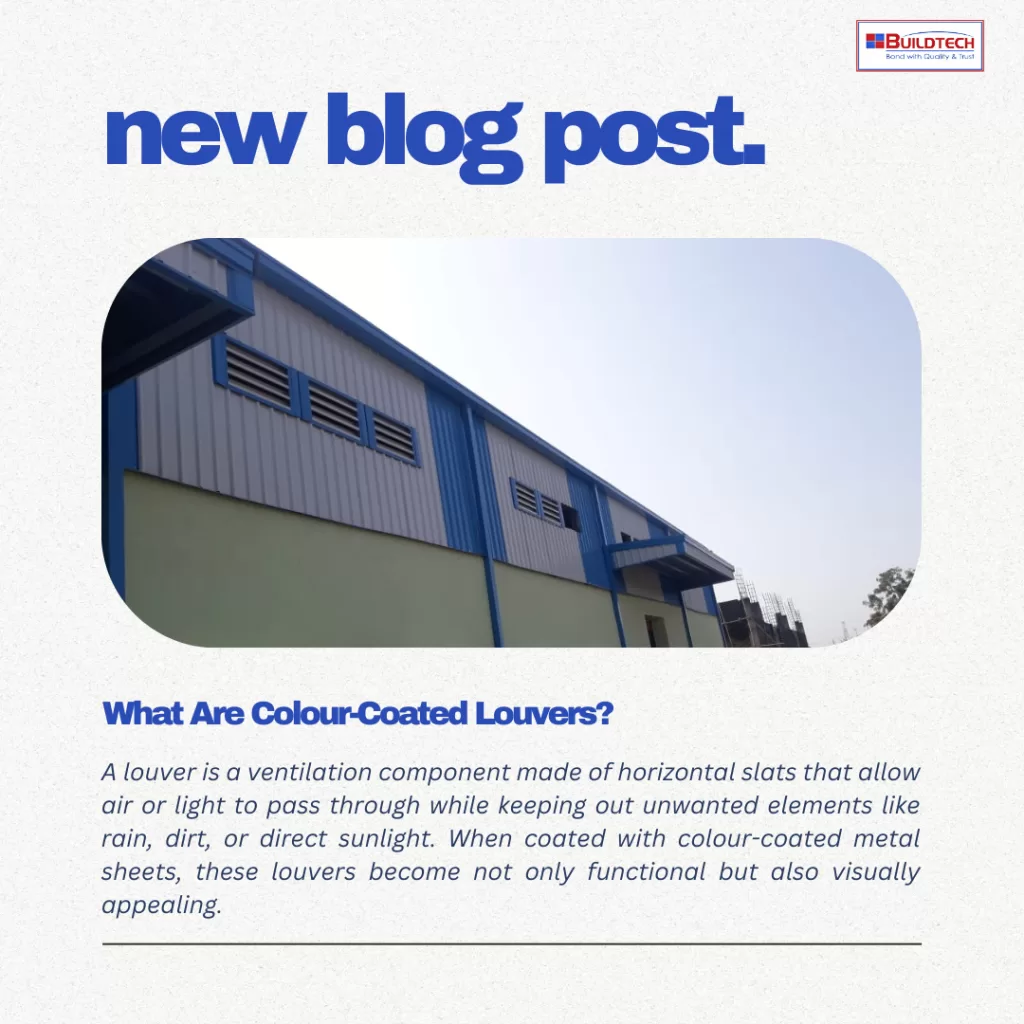
Colour Coated Roof Louvers

Everything You Need to Know About Colour-Coated Louvers Introduction In modern construction, ventilation plays a much bigger role than it did in the past. Today, it affects energy efficiency, indoor comfort, and even the overall appearance of a building. Colour-coated louvers meet all these needs in one practical solution. These louvers are widely used in industrial, commercial, and residential buildings. They provide reliable airflow while improving durability and visual appeal. In this article, you will learn what colour-coated louvers are, the different types available, their benefits, and where they are commonly used. What Are Colour-Coated Louvers? Colour-coated louvers are metal ventilation systems made from galvanized or pre-painted steel. Manufacturers apply a protective colour coating to improve corrosion resistance and extend service life. Builders install these louvers on walls, façades, and rooftops. As a result, they allow fresh air to circulate while blocking rain, dust, and excessive sunlight. At the same time, they help maintain a clean and modern building appearance. Types of Colour-Coated Louvers Different projects require different ventilation solutions. Therefore, colour-coated louvers are available in several designs. Fixed Colour-Coated Louvers Fixed louvers have non-movable blades. They provide continuous airflow and work best for permanent ventilation needs. Because of their simple design, they require very little maintenance. Adjustable Colour-Coated Louvers Adjustable louvers include movable blades that allow airflow control. Facility managers often use them where ventilation requirements change during the day. This flexibility makes them suitable for commercial and industrial buildings. Acoustic Colour-Coated Louvers Acoustic louvers reduce noise while maintaining airflow. For this reason, they are commonly installed in generator rooms, power plants, and factories where sound control is important. Sand Trap Colour-Coated Louvers Sand trap louvers filter dust and sand from incoming air. As a result, they perform well in dusty, coastal, or desert environments. Architectural Colour-Coated Louvers Architectural louvers focus on enhancing the building façade. Although they allow limited airflow, they significantly improve the visual design of commercial and corporate buildings. Benefits of Colour-Coated Louvers Colour-coated louvers offer several practical advantages: Because of these benefits, they are a preferred choice for modern construction projects. Applications of Colour-Coated Louvers Colour-coated louvers are suitable for many building types, including: Why Choose Colour-Coated Louvers? Colour-coated louvers provide a balance between performance and design. They improve airflow while maintaining a professional and modern appearance. Moreover, their durable coatings protect against corrosion and environmental damage. When sourced from a trusted manufacturer, these louvers meet industry standards and deliver consistent results over time. Conclusion Colour-coated louvers are a reliable ventilation solution for buildings that demand durability, efficiency, and aesthetic value. With multiple types available, they suit a wide range of industrial and commercial applications. If you are planning a project and need expert guidance, choosing the right colour-coated louvers will ensure long-term performance and comfort.

Colour Coated Roof Louvers Read More »

©2023 buildtechroof. All Rights Reserved.