Ventilation Systems

Industrial roof ventilation products for improved airflow and heat reduction. High-quality Turbo Ventilators, Ridge Ventilator, and Metal Louvers in Pune for industrial sheds, factories, and warehouses. Improve ventilation and reduce heat with Buildtech Roofing Solutions.

Ridge Ventilators for Industrial Roof Ventilation

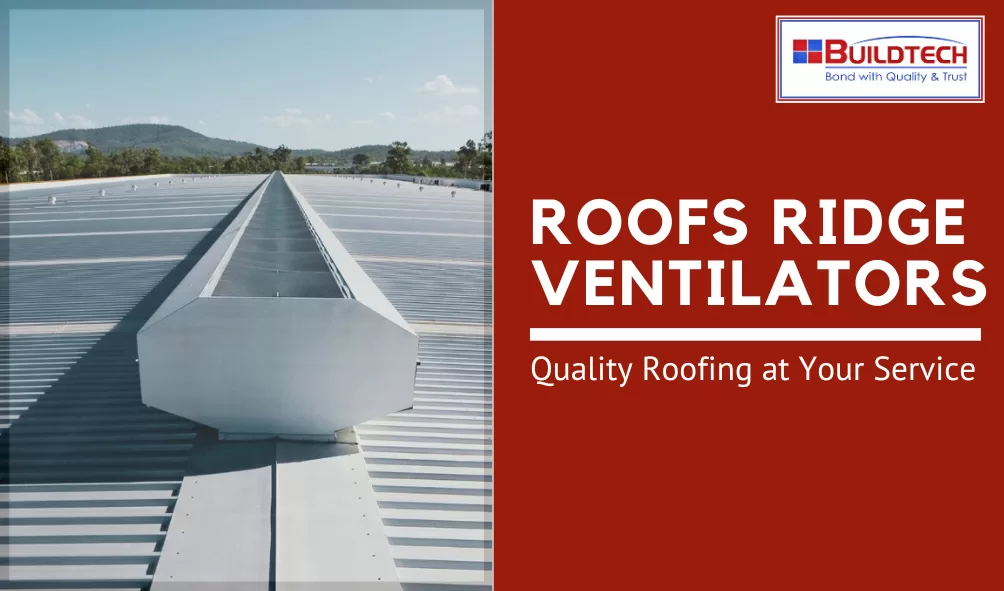
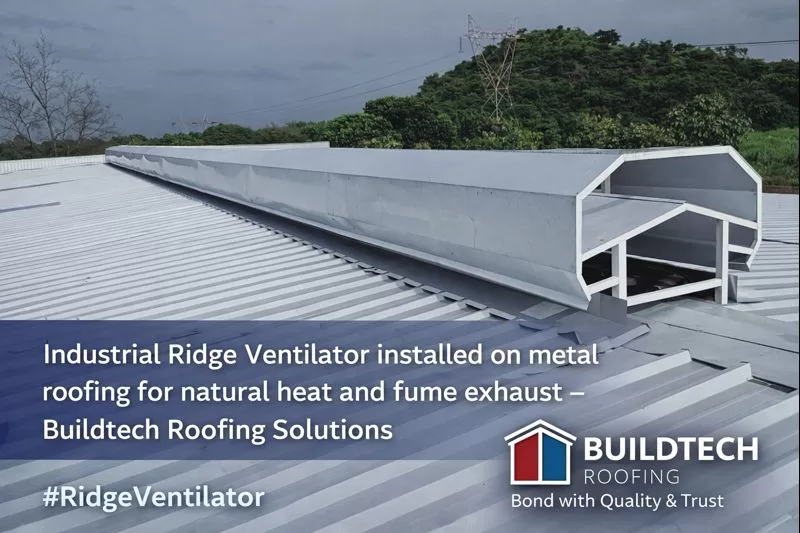
Ridge Ventilators – Natural Roof Ventilation for Industrial Buildings Industrial buildings generate excess heat, fumes, and moisture during daily operations. Without proper ventilation, this trapped heat can reduce productivity, damage equipment, and increase energy costs. Ridge ventilators provide a highly effective, power-free solution for releasing hot air naturally from the roof. At Buildtech Roofing Solutions, we design, manufacture, and install industrial ridge ventilators that deliver continuous airflow, improved indoor comfort, and long-term performance for factories, warehouses, and commercial sheds. What Are Ridge Ventilators? Ridge ventilators are ventilation systems installed along the highest point of the roof (ridge line). They work on the principle of natural convection, where hot air rises and escapes through the ridge opening while fresh air enters from side openings, louvers, or windows. Because ridge ventilators operate without electricity, they provide uninterrupted ventilation throughout the day and night. Why Ridge Ventilators Are Essential for Industrial Buildings Proper roof ventilation directly impacts building efficiency and worker comfort. Ridge ventilators help to: As a result, industries benefit from safer working conditions and reduced operational expenses. Types of Ridge Ventilators 1. Natural Ridge Ventilators Operate entirely on natural airflow without any moving parts or electricity. 2. Turbo-Assisted Ridge Ventilators Combined with turbo ventilators to enhance airflow in high-heat environments. 3. Custom-Fabricated Ridge Ventilators Designed to match roof profile, length, and ventilation requirements. Materials Used in Buildtech Ridge Ventilators Buildtech ridge ventilators are manufactured using: All materials are corrosion-resistant and suitable for harsh industrial conditions. Key Features of Buildtech Ridge Ventilators Applications of Ridge Ventilators Ridge ventilators are widely used in: Technical Specifications (Typical) Parameter Specification Material PPGI / PPGL / GI Thickness 0.45 – 0.80 mm Vent Type Natural / Turbo-assisted Installation Roof ridge mounted Operation Power-free Customisation Length & profile as required Installation Best Practices Buildtech follows industry-approved installation methods: This ensures maximum ventilation efficiency and leak-free performance. Why Choose Buildtech Roofing Solutions Integrated Roofing & Ventilation Solutions Buildtech also supplies: One trusted partner for complete industrial roofing systems. Conclusion Ridge ventilators are a smart, energy-efficient solution for maintaining airflow and temperature control in industrial buildings. With Buildtech Roofing Solutions, you receive durable materials, expert engineering, and professional installation—built for long-term performance.

Ridge Ventilators for Industrial Roof Ventilation Read More »
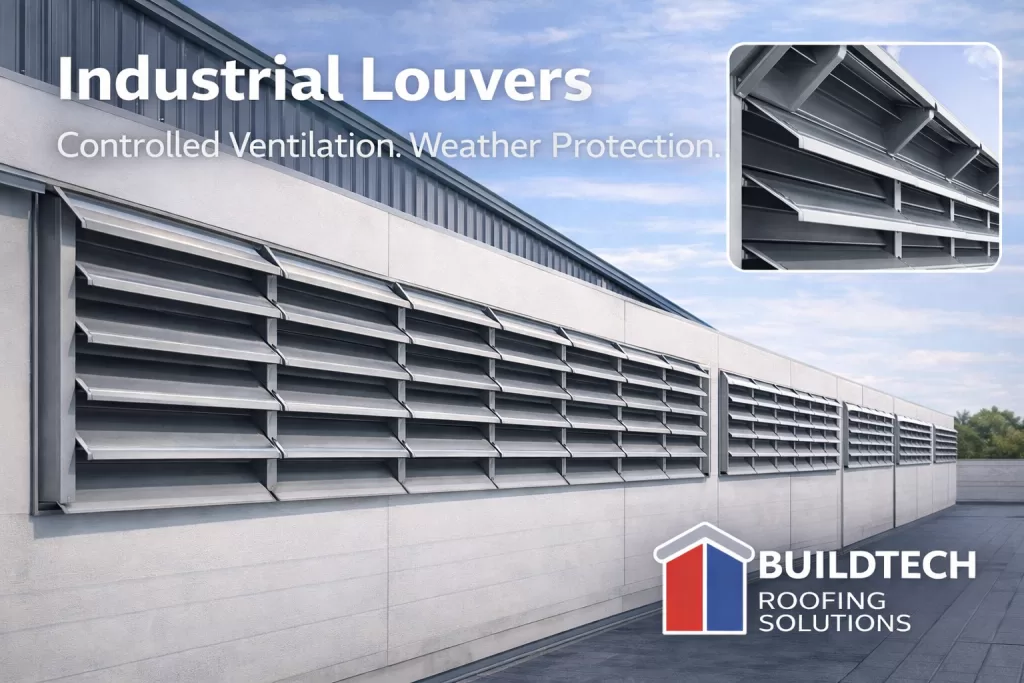
Industrial Louvers are Efficient Ventilation Solutions

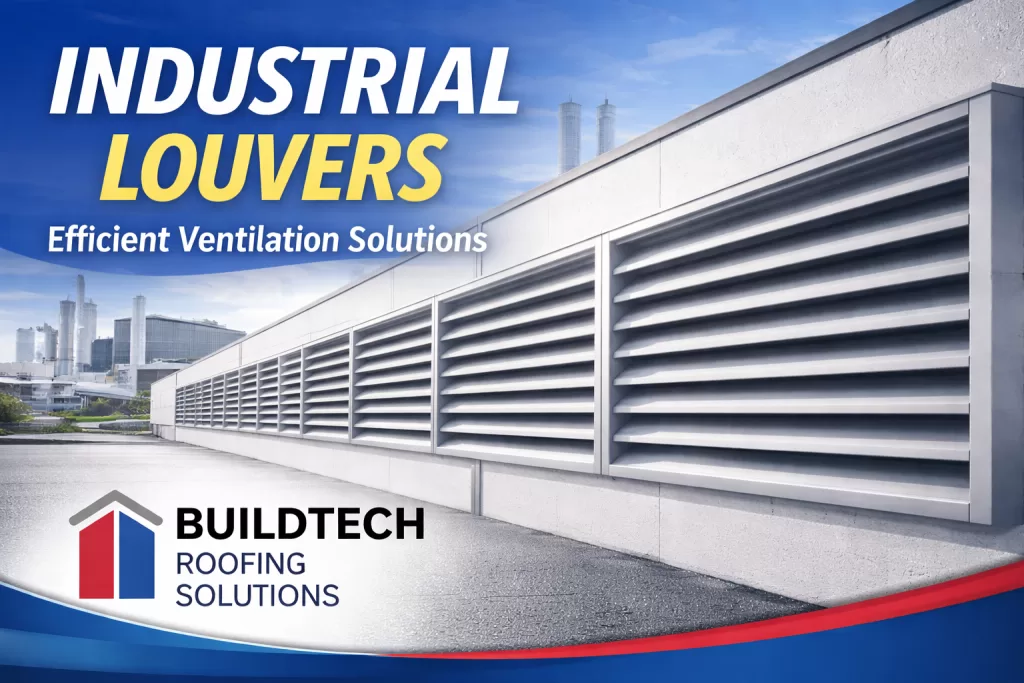
Introduction Proper ventilation is essential for maintaining a safe, comfortable, and productive industrial environment. Without effective airflow management, factories and warehouses can suffer from heat buildup, moisture accumulation, and poor air quality. Industrial louvers are one of the most reliable solutions for controlling airflow while protecting buildings from rain, dust, and external elements. At Buildtech Roofing Solutions, we design and supply high-quality industrial louvers that combine durability, efficiency, and custom engineering to suit diverse industrial applications. What Are Industrial Louvers? Industrial louvers are fixed or adjustable slatted structures installed on walls, roofs, or ventilation openings. Their primary function is to allow fresh air to enter and stale air to exit while preventing rainwater, debris, and excessive sunlight from entering the building. They are widely used in factories, warehouses, power plants, and commercial buildings where controlled ventilation is required. Why Industrial Louvers Are Important Efficient ventilation directly impacts building performance and workforce comfort. Industrial louvers help: As a result, buildings equipped with proper louvers experience improved operational efficiency and reduced maintenance costs. Types of Industrial Louvers 1. Fixed Louvers Fixed louvers are permanently angled slats that provide continuous airflow. They are cost-effective and ideal for areas where constant ventilation is required. 2. Adjustable Louvers Adjustable louvers allow control over airflow direction and volume. These are suitable for areas requiring variable ventilation depending on weather or operational needs. 3. Weatherproof Louvers Designed with special blade profiles, weatherproof louvers block rain penetration while maintaining airflow efficiency. 4. Acoustic Louvers Used in noise-sensitive zones, acoustic louvers reduce sound transmission while ensuring proper ventilation. Materials Used in Industrial Louvers Buildtech Roofing Solutions manufactures louvers using high-quality materials such as: These materials offer excellent corrosion resistance, strength, and long-term durability in harsh industrial environments. Key Features of Buildtech Industrial Louvers Each louver system is fabricated to meet specific project requirements. Applications of Industrial Louvers Industrial louvers are suitable for a wide range of applications, including: They can be integrated seamlessly with roofing, wall cladding, and ventilation systems. Technical Specifications (Typical) Parameter Specification Material GI / PPGI / PPGL / Aluminium Thickness 0.45 – 0.80 mm Blade Type Z-type / Aerofoil Finish Galvanized / Colour-coated Installation Wall-mounted / Panel-mounted Customization Size & colour as required Installation Best Practices Proper installation ensures optimal performance and longevity. Buildtech follows industry best practices such as: Why Choose Buildtech Roofing Solutions Buildtech Roofing Solutions is a trusted name in industrial roofing and ventilation systems. Clients choose us for: Our industrial louvers are designed to perform reliably in demanding environments. Integration with Complete Roofing Systems Industrial louvers work best when integrated with a complete roofing solution. Buildtech also supplies: This integrated approach ensures compatibility, efficiency, and long-term value. Conclusion Industrial louvers play a crucial role in maintaining airflow, protecting structures, and enhancing indoor comfort in industrial buildings. With Buildtech Roofing Solutions, you get durable, efficient, and customized louver systems engineered for performance and reliability. For expert consultation and installation support, Buildtech Roofing Solutions delivers ventilation solutions you can trust. 📞 Contact Buildtech Roofing Solutions 📞 Phone: 9158340909📩 Get in touch today to discuss your industrial louver requirements.

Industrial Louvers are Efficient Ventilation Solutions Read More »

Turbo Ventilators for Industrial Roof Ventilation

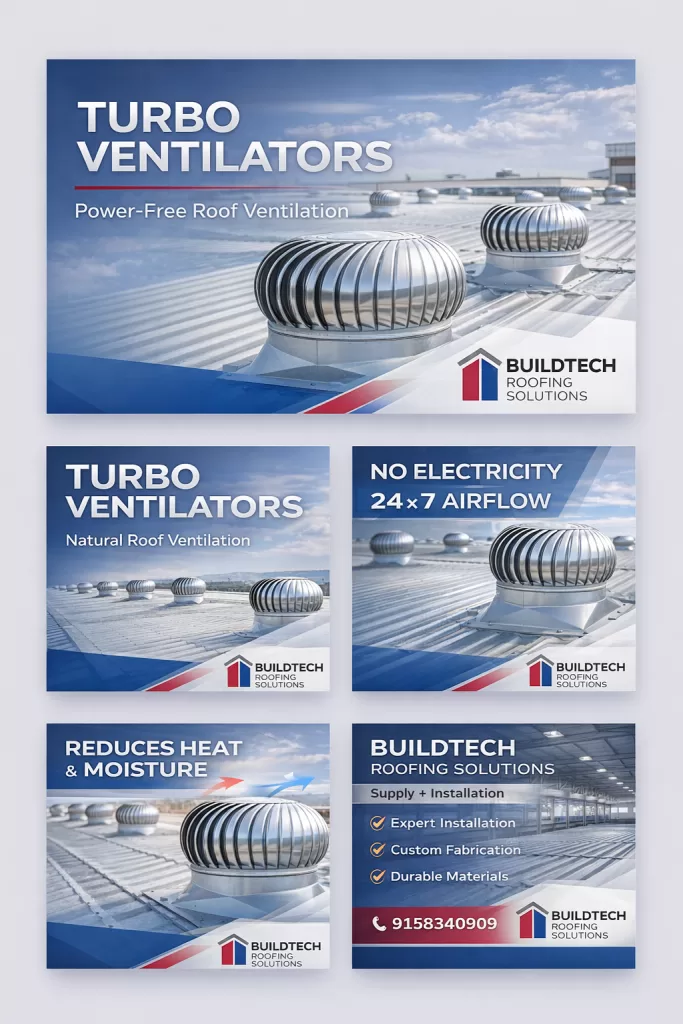
Turbo Ventilators – Power-Free Roof Ventilation for Industrial Buildings Industrial buildings generate substantial heat, fumes, and moisture due to continuous machinery operation and high occupancy levels. Without proper ventilation, these conditions can affect worker comfort, equipment efficiency, and overall productivity. Turbo ventilators offer a reliable, energy-efficient solution by continuously expelling hot air without electricity. At Buildtech Roofing Solutions, we supply and install high-quality turbo ventilators designed for smooth rotation, long service life, and consistent performance across demanding industrial environments. What Are Turbo Ventilators? A turbo ventilator is a wind-driven roof ventilation system installed at high points of an industrial roof. It works on natural principles of airflow—hot air rises and escapes through the rotating turbine, while fresh air enters from side openings, louvers, or ridge vents. Because turbo ventilators rely on wind movement and thermal pressure, they function continuously without motors, wiring, or power consumption. How Turbo Ventilators Work The operation of a turbo ventilator is simple yet highly effective: This ensures uninterrupted airflow even during power outages. Key Advantages of Turbo Ventilators ✔Zero Energy ConsumptionOperates entirely without electricity, reducing operational costs. ✔Continuous VentilationProvides airflow throughout the day and night. ✔Effective Heat & Moisture ReductionHelps lower indoor temperatures and humidity levels. ✔Silent OperationNo noise or vibration during functioning. ✔Low Maintenance RequirementFew moving parts ensure long-term reliability. ✔Weather-Resistant DesignProper flashing prevents rainwater ingress. Applications of Turbo Ventilators Turbo ventilators are widely used in: Typical Technical Specifications Parameter Specification Material Aluminium / Stainless Steel / PPGI base Throat Size 18”, 21”, 24” (custom sizes available) Operation Wind-driven & thermal pressure Power Requirement Nil Mounting Roof-mounted with flashing Specifications may vary depending on roof design and airflow requirements. Turbo Ventilators vs Exhaust Fans Feature Turbo Ventilator Exhaust Fan Power Consumption None Required Operating Cost Zero Continuous Coverage Area Large roof span Limited Maintenance Very low Regular Noise Level Silent Audible For large industrial buildings, turbo ventilators provide a more economical and sustainable solution. Installation Best Practices Buildtech’s trained installation teams ensure leak-free, stable, and long-lasting installations. Why Choose Buildtech Roofing Solutions? As a result, clients rely on Buildtech for dependable industrial ventilation systems. Conclusion Turbo ventilators are a cost-effective and eco-friendly solution for maintaining comfortable indoor conditions in industrial buildings. By eliminating heat buildup and improving air circulation without electricity, they enhance productivity and protect equipment. With Buildtech Roofing Solutions, you receive professionally engineered turbo ventilators and expert installation that deliver consistent performance for years to come.

Turbo Ventilators for Industrial Roof Ventilation Read More »
Industrial Louvers for Factory Ventilation

Industrial Louvers – Controlled Ventilation for Modern Industrial Buildings Industrial louvers are essential for managing airflow in modern industrial buildings. They provide controlled ventilation, ensuring that air circulation is efficient and effective. By allowing fresh air to enter while exhausting stale air, these systems help maintain optimal indoor conditions and enhance overall workplace safety. Additionally, louvers can be designed to integrate seamlessly with the architecture of the building, promoting both functionality and aesthetics. This makes them a crucial element in the design of energy-efficient structures. Properly installed, they offer durability and low maintenance, contributing to long-term operational savings As a result, they are widely used in factories, warehouses, substations, and utility buildings. At Buildtech Roofing Solutions, we supply and install high-performance industrial louvers engineered for durability, airflow efficiency, and long service life. These systems are designed to perform consistently in demanding industrial environments. What Are Industrial Louvers? Industrial louvers are metal ventilation panels with angled fins. They allow air to pass through while blocking rainwater and airborne particles. Their fin geometry enables airflow to move inward efficiently. At the same time, water drains outward. As a result, they ensure both ventilation and protection.Here’s a revised version with fewer transition words:Water drains outward. This ensures both ventilation and protection. Types of Industrial Louvers Fixed Industrial Louvers Fixed louvers feature non-adjustable fins and a simple, robust design. Since they provide continuous airflow, they are ideal for areas requiring constant ventilation. Z-Type Industrial Louvers Z-type industrial louvers use specially shaped fins that improve rain protection and dust control. Consequently, they are favored in heavy industrial and high-exposure environments. Key Advantages of Industrial Louvers Applications of Industrial Louvers Industrial louvers supplied by Buildtech Roofing Solutions are commonly used in: Typical Technical Specifications Parameter Specification Material GI / PPGI / PPGL Thickness 0.45 – 0.60 mm Fin Type Fixed / Z-Type Finish Colour-coated Installation Wall-mounted / façade Installation Best Practices For optimal performance, industrial louvers should be installed with correct fin orientation to ensure rain protection. In addition, proper sealing with flashings and uniform spacing helps maintain durability. When combined with ridge ventilators, airflow efficiency improves significantly. Buildtech’s trained installation teams ensure precise, leak-free execution for long-lasting results. Why Choose Buildtech Roofing Solutions? As a result, clients across Maharashtra and India trust Buildtech for dependable industrial ventilation systems. Conclusion Industrial louvers play a critical role in maintaining airflow while safeguarding interiors from weather and dust. With professionally designed and installed solutions from Buildtech Roofing Solutions, industrial buildings achieve consistent ventilation, improved safety, and long-term performance. 📞 Contact Buildtech Roofing Solutions today to discuss your industrial ventilation requirements.

Industrial Louvers for Factory Ventilation Read More »

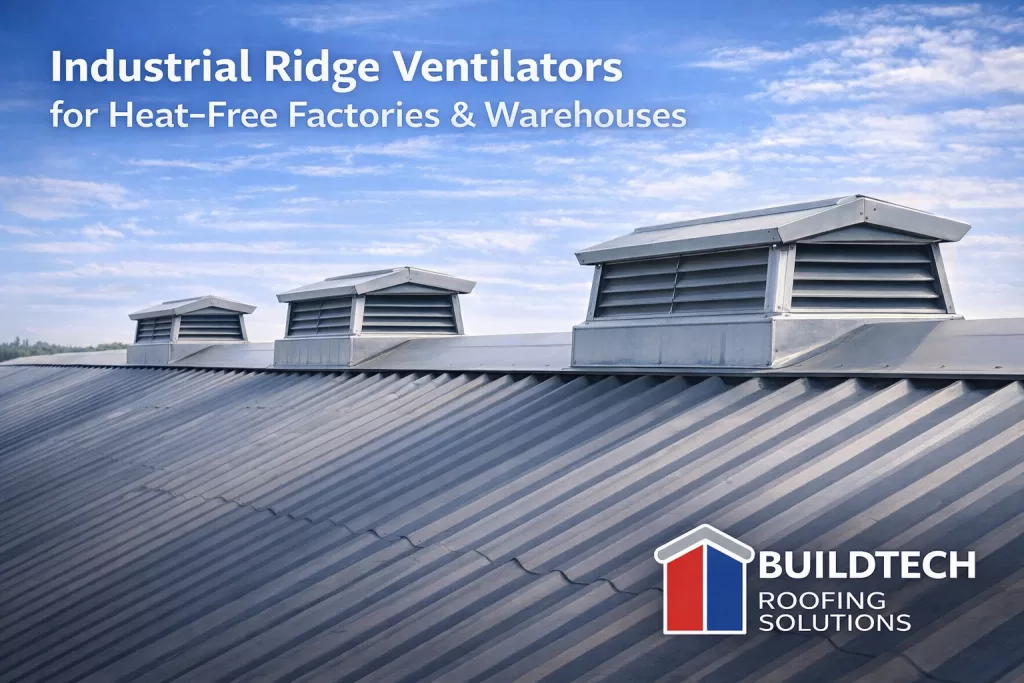
Industrial Ridge Ventilators in Maharashtra

Industrial Ridge Ventilators – Energy-Free Ventilation for Modern Buildings Industrial ridge ventilators play a critical role in maintaining healthy, productive, and energy-efficient industrial environments. In factories, warehouses, and heavy industrial plants, heat builds up rapidly due to machinery, equipment, and continuous operations. Without proper ventilation, this trapped heat reduces worker comfort, affects productivity, and shortens equipment life. At Buildtech Roofing Solutions, we design, manufacture, supply, and install high-performance industrial ridge ventilators that provide continuous airflow, effective heat removal, and moisture control—without electricity or ongoing operating costs. What Is an Industrial Ridge Ventilator? An industrial ridge ventilator is a natural ventilation system installed along the highest point of a sloped industrial roof. It operates on the principle of natural convection. As hot air rises inside the building, it exits through the ridge ventilator, while cooler air enters through side louvers or openings. As a result, a continuous airflow cycle is created, keeping indoor temperatures balanced and improving overall air quality. Image Alt Text: Industrial ridge ventilator installed on factory roof by Buildtech Roofing Solutions How Industrial Ridge Ventilators Work First, heat generated inside the building rises naturally.Next, the hot air moves toward the roof ridge.Then, the ridge ventilator allows this hot air to escape safely.Meanwhile, fresh air enters from louvers or side openings.Consequently, continuous ventilation is maintained 24×7, even during power failures. Because this system is completely natural, it remains reliable in all operating conditions. Key Advantages of Industrial Ridge Ventilators ✔ Energy-Free Ventilation Since ridge ventilators require no electricity, they operate at zero energy cost. ✔ Effective Heat Reduction They significantly lower indoor temperatures, especially in large industrial sheds. ✔ Improved Indoor Air Quality They efficiently remove hot air, fumes, dust, and excess moisture. ✔ Weather-Resistant Design Well-engineered ridge ventilators prevent rainwater entry while ensuring airflow. ✔ Low Maintenance Once installed, they require minimal maintenance throughout their service life. Applications of Industrial Ridge Ventilators Industrial ridge ventilators supplied by Buildtech Roofing Solutions are widely used in: Image Alt Text: Ridge ventilator system for warehouse ventilation in Maharashtra Technical Specifications (Typical) Parameter Specification Material GI / PPGI / PPGL Thickness 0.45 – 0.60 mm Length Customised as per roof Throat Width 300 / 400 / 600 mm Operation Natural airflow Power Requirement Nil Ridge Ventilators vs Exhaust Fans Feature Ridge Ventilator Exhaust Fan Power Consumption None High Maintenance Very low Regular Coverage Area Large roof span Limited Operating Cost Zero Continuous Noise Silent Audible Therefore, ridge ventilators are far more suitable for large industrial buildings than conventional exhaust systems. Installation Best Practices To ensure long-term performance, proper installation is essential: Buildtech Roofing Solutions follows strict installation standards to deliver leak-free and durable ventilation systems. Why Choose Buildtech Roofing Solutions? As a result, industries across Maharashtra trust Buildtech for reliable and efficient ridge ventilation systems. Conclusion Industrial ridge ventilators are a smart and sustainable investment for factories and warehouses seeking better heat control, improved air quality, and lower energy costs. With expert design, quality materials, and professional installation by Buildtech Roofing Solutions, these systems deliver dependable performance year after year in demanding industrial environments.

Industrial Ridge Ventilators in Maharashtra Read More »

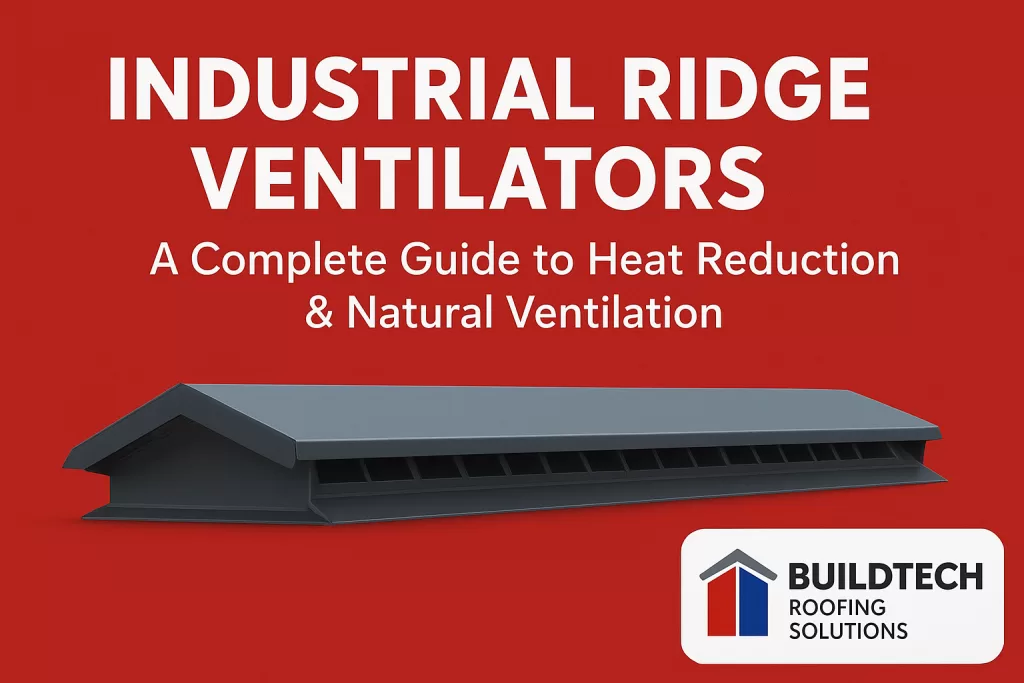
Industrial Ridge Ventilators:

Industrial Ridge Ventilators: A Complete Guide to Heat Reduction & Natural Ventilation 1. Introduction Industrial sheds, factories, warehouses, and commercial buildings often struggle with excessive heat buildup. Large machinery, metal roofing, and continuous operations generate high internal temperatures that affect worker comfort, equipment performance, and energy costs. The most effective and maintenance-free solution to this problem is the Industrial Ridge Ventilator. Ridge ventilators use the natural movement of hot air to exhaust heat, smoke, fumes, and humidity from inside a building — without electricity, motors, or maintenance. This article provides a comprehensive overview of ridge ventilators, covering all the essential information you need to know.: ✅ Picture Suggestion (Intro Section): A large industrial shed showing a row of ridge ventilators installed along the roof ridge. 2. What Is a Ridge Ventilator? A ridge ventilator is a ventilation device installed along the top ridge of industrial or commercial roofs. It allows hot air to escape while keeping out rain and dust. This creates a consistent airflow cycle: 3. How Ridge Ventilators Work Ridge ventilators operate on the principle of natural convection. Hot air is lighter, so it rises and escapes through the ridge opening. Meanwhile, cool air enters from lower points, creating continuous air circulation. – No mechanical components are involved.– It does not require any power. – No maintenance is necessary. 4. Types of Ridge Ventilators ✅ 1. Static Ridge Ventilator ✅ 2. Turbo Ridge Ventilator (Hybrid) ✅ 3. Continuous Ridge Ventilator 5. Key Benefits of Industrial Ridge Ventilators ✅ 1. Reduces Heat by 12–18°C Natural exhaust removes trapped heat from inside the building. ✅ 2. Zero Energy Consumption Operates without electricity, motors, or wiring. ✅ 3. Improves Worker Comfort A cooler workspace increases productivity and reduces fatigue. ✅ 4. Protects Machinery Reduced heat = longer equipment life. ✅ 5. Prevents Moisture Build-Up Controls humidity and prevents condensation. ✅ 6. Long Life & Low Maintenance Made using PPGL sheets with 150–200 gsm coating. ✅ 7. Increases Fresh Air Flow Better ventilation means healthier indoor air. 6. Technical Specifications (Recommended for Industry) Specification Recommended Range Material PPGL (AZ150) / PPGI (Z275) Coating 18–25 Microns Length 2 ft – 10 ft modules Throat Size 24″ / 32″ / 36″ Airflow Rate 300–1200 CFM (depends on size) Accessories Bird mesh, rainproof cowl 7. Applications of Ridge Ventilators ✅Industrial ✅Commercial ✅Institutional & Infrastructure 8. How to Choose the Right Ridge Ventilator Consider: 9. Installation Guidelines Improper installation may cause leakage issues. 10. Maintenance Tips Ridge ventilators are designed for effortless maintenance, making them a hassle-free choice for ensuring proper airflow!: 11. Pricing Factors Pricing depends on: PPGL ridge ventilators offer the best lifespan in industrial conditions. 12. Why Choose Buildtech Roofing Solutions Buildtech Roofing Solutions provides high-quality, long-life industrial ridge ventilators manufactured from premium PPGL/PPGI sheets. ✅ Our Advantages: 13. Conclusion Industrial ridge ventilators are an essential part of modern building design. They reduce heat, improve airflow, protect machinery, and offer long-term sustainability — all without electricity or maintenance. Ridge ventilators are a cost-effective, durable, and high-performing solution for your ventilation needs.

Industrial Ridge Ventilators: Read More »

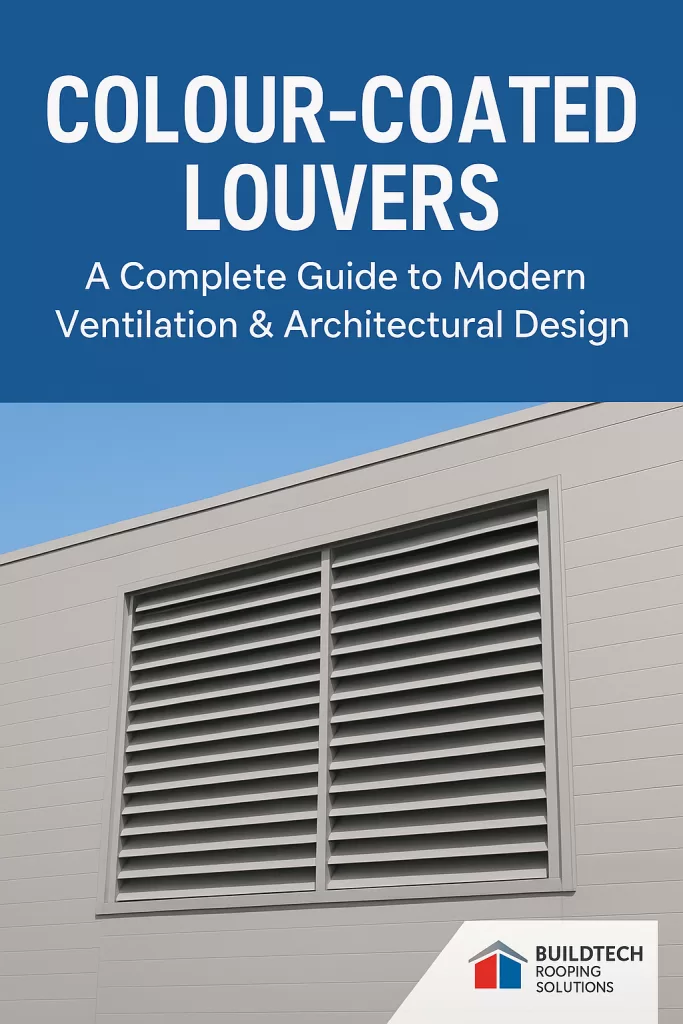
Colour-Coated Louvers

Colour-Coated Louvers: Modern Ventilation & Architectural Design 1. Introduction Industrial infrastructure has undergone significant evolution in the past decade. Today, building owners demand not just strength and durability but also ventilation efficiency, aesthetic appeal, energy savings, and long-term sustainability. The colour-coated louver meets these demands comprehensively and effectively. Colour-coated louvers have become a critical element in modern industrial and commercial construction. Louvers help control airflow in places like factories, warehouses, schools, malls, and residential buildings. They keep out rain, dust, insects, and debris. But what makes colour-coated metal louvers so popular among architects, industrial consultants, contractors, and facility owners? This comprehensive 2,500-word guide answers every question. 2. What Are Colour-Coated Louvers? A louver is a ventilation structure consisting of horizontal or vertical slats that are angled to permit airflow but block unwanted elements. When these are made from colour-coated steel or aluminium, the louvers become highly durable, corrosion-resistant, and aesthetically appealing. Modern louvers are manufactured using PPGI (Pre-Painted Galvanized Iron) or PPGL (Pre-Painted Galvalume) coated coils, offering: These features make them ideal for industrial roofing systems, ventilation ducts, façade designs, and mechanical spaces. 3. Why Colour Coating Is Important Metal louvers used in harsh outdoor environments must withstand: Colour coating using specialised paint systems—such as Polyester, SMP, and PVDF coatings—provides a protective layer that enhances durability and boosts aesthetic appeal. Benefits of Colour-Coating 4. Types of Colour-Coated Louvers Different industrial environments require different louver designs. Here are the most common types: ✅ a. Fixed Louvers ✅ b. Adjustable Louvers ✅ c. Acoustic Louvers ✅ d. Sand Trap Louvers ✅ e. Architectural/Decorative Louvers 5. Advantages of Colour-Coated Louvers Colour-coated louvers offer a variety of benefits beyond ventilation. ✅ 1. Durability PPGI/PPGL coating ensures long-term corrosion resistance. ✅ 2. Low Maintenance Only periodic cleaning is needed. ✅ 3. Better Ventilation Reduces heat buildup by enabling consistent airflow. ✅ 4. Energy Efficiency Reduces dependency on exhaust fans or HVAC systems. ✅ 5. Aesthetic Enhancement Gives a polished, modern look to building facades. ✅ 6. Cost-Effective Low lifecycle cost and long material life make them economical. 6. Applications of Colour-Coated Louvers ✅6.1 Industrial Use ✅6.2 Commercial Use ✅6.3 Infrastructure Projects ✅6.4 Residential Use 7. Technical Specifications to Consider When selecting louvers, pay attention to: For industrial use, PPGL with AZ150 coating is recommended due to superior corrosion resistance. 8. Installation Guidelines Proper installation ensures efficiency and lifespan. ✅ Checklist Incorrect installation can cause vibration, noise, or leakage. 9. Maintenance Tips Louvers are low-maintenance, but a few best practices help prolong their life: 10. Cost Factors The pricing of louvers depends on: Investing in high-quality louvers reduces long-term maintenance and enhances efficiency. 11. Why Industries Prefer Colour-Coated Louvers Industries choose colour-coated louvers because they: 12. Why Choose Buildtech Roofing Solutions for Louvers? Buildtech Roofing Solutions specialises in manufacturing and supplying durable, aesthetically appealing, and performance-driven colour-coated louvers. ✅ Our Strengths We guarantee consistent performance, long lifespan, and on-time project execution. 13. Conclusion Colour-coated louvers are a key component in modern industrial and commercial construction. They deliver a perfect blend of functionality, energy efficiency, and architectural beauty. With excellent weather resistance, superior airflow management, and long-term performance, these louvers are a smart investment for any building project. When designed and installed correctly, they significantly improve indoor comfort, reduce energy usage, and enhance the building’s overall appearance.

Colour-Coated Louvers Read More »

Colour Coated Roof Louvers

Everything You Need to Know About Colour-Coated Louvers Introduction In modern construction, ventilation plays a much bigger role than it did in the past. Today, it affects energy efficiency, indoor comfort, and even the overall appearance of a building. Colour-coated louvers meet all these needs in one practical solution. These louvers are widely used in industrial, commercial, and residential buildings. They provide reliable airflow while improving durability and visual appeal. In this article, you will learn what colour-coated louvers are, the different types available, their benefits, and where they are commonly used. What Are Colour-Coated Louvers? Colour-coated louvers are metal ventilation systems made from galvanized or pre-painted steel. Manufacturers apply a protective colour coating to improve corrosion resistance and extend service life. Builders install these louvers on walls, façades, and rooftops. As a result, they allow fresh air to circulate while blocking rain, dust, and excessive sunlight. At the same time, they help maintain a clean and modern building appearance. Types of Colour-Coated Louvers Different projects require different ventilation solutions. Therefore, colour-coated louvers are available in several designs. Fixed Colour-Coated Louvers Fixed louvers have non-movable blades. They provide continuous airflow and work best for permanent ventilation needs. Because of their simple design, they require very little maintenance. Adjustable Colour-Coated Louvers Adjustable louvers include movable blades that allow airflow control. Facility managers often use them where ventilation requirements change during the day. This flexibility makes them suitable for commercial and industrial buildings. Acoustic Colour-Coated Louvers Acoustic louvers reduce noise while maintaining airflow. For this reason, they are commonly installed in generator rooms, power plants, and factories where sound control is important. Sand Trap Colour-Coated Louvers Sand trap louvers filter dust and sand from incoming air. As a result, they perform well in dusty, coastal, or desert environments. Architectural Colour-Coated Louvers Architectural louvers focus on enhancing the building façade. Although they allow limited airflow, they significantly improve the visual design of commercial and corporate buildings. Benefits of Colour-Coated Louvers Colour-coated louvers offer several practical advantages: Because of these benefits, they are a preferred choice for modern construction projects. Applications of Colour-Coated Louvers Colour-coated louvers are suitable for many building types, including: Why Choose Colour-Coated Louvers? Colour-coated louvers provide a balance between performance and design. They improve airflow while maintaining a professional and modern appearance. Moreover, their durable coatings protect against corrosion and environmental damage. When sourced from a trusted manufacturer, these louvers meet industry standards and deliver consistent results over time. Conclusion Colour-coated louvers are a reliable ventilation solution for buildings that demand durability, efficiency, and aesthetic value. With multiple types available, they suit a wide range of industrial and commercial applications. If you are planning a project and need expert guidance, choosing the right colour-coated louvers will ensure long-term performance and comfort.

Colour Coated Roof Louvers Read More »

Essential Insights on LouversUnderstanding Louvers

Essential Insights on Louvers for Homeowners, Industrial Operators, Contractors, and Builders Introduction Louvers are essential components in modern building design. They play a critical role in ventilation, energy efficiency, and overall building performance. Whether you are a homeowner improving indoor comfort, a contractor advising clients, or an industrial operator managing large facilities, understanding louvers is important. In particular, metal louvers have become widely preferred due to their durability and efficiency. This article explains what louvers are, how they function, the different types available, and why they are valuable across residential, commercial, and industrial applications. What Are Louvers? Louvers are architectural elements made of angled slats or blades. These slats allow air to pass through while blocking rain, debris, and pests. As a result, louvers help maintain ventilation without compromising protection. Louvers can be installed on walls, roofs, windows, and doors. They are manufactured using various materials, such as wood, plastic, and metal. However, metal louvers are commonly chosen for their strength, long service life, and resistance to weather conditions. How Louvers Function Louvers serve multiple functions in a building. Each function contributes to improved comfort and performance. Ventilation Louvers allow fresh air to enter while pushing stale air out. This airflow helps maintain indoor air quality and creates a comfortable environment. Water Management Well-designed louvers prevent rain and snow from entering the building. Therefore, they reduce moisture-related problems such as mold and corrosion. Temperature Control By improving airflow, louvers help regulate indoor temperatures. As a result, buildings rely less on mechanical heating and cooling systems. Aesthetic Enhancement Louvers also add architectural value. They enhance the exterior appearance while serving a functional purpose. Noise Reduction Certain louvers are designed to reduce external noise. This feature is especially useful in urban and industrial environments. Types of Louvers Louvers are available in several types, each designed for specific requirements. Fixed Louvers Fixed louvers have blades set at a permanent angle. They allow continuous airflow and require minimal maintenance. These louvers are ideal for passive ventilation systems. Adjustable Louvers Adjustable louvers allow users to change the blade angle. This flexibility helps control airflow and light, making them suitable for spaces with changing ventilation needs. Drainable Louvers Drainable louvers include built-in channels that redirect water away from the building. They are effective in areas with heavy rainfall. Acoustic Louvers Acoustic louvers reduce noise while allowing airflow. They are commonly used in generator rooms, industrial plants, and urban buildings. Metal Louvers Metal louvers are made from aluminium, stainless steel, or galvanized steel. They offer superior durability and are suitable for both residential and industrial applications. Why Metal Louvers Are Important Metal louvers offer several advantages that make them a reliable choice. High Durability Metal louvers withstand extreme weather conditions, including strong winds and heavy rain. Therefore, they provide long-term performance. Low Maintenance Unlike wood or plastic, metal louvers resist corrosion, pests, and rot. As a result, maintenance requirements remain minimal. Design Flexibility Metal louvers are available in various finishes and colours. This versatility allows them to match different architectural styles. Fire Resistance Metal louvers provide better fire resistance than non-metal alternatives. This makes them suitable for commercial and industrial buildings. Eco-Friendly Options Many metal louvers use recyclable materials. Additionally, improved airflow helps reduce energy consumption. Applications of Louvers Louvers are widely used across different building types. Residential Applications Industrial Applications Commercial Applications Benefits of Using Louvers Louvers offer multiple practical benefits: Because of these benefits, louvers remain an essential building component. Installation of Louvers Proper installation ensures optimal performance. Step 1: Assess Ventilation Needs First, evaluate airflow requirements based on the space and usage. Step 2: Select the Right Louver Choose the louver type, size, and material suitable for the application. Step 3: Prepare the Installation Area Ensure the opening is clean, level, and properly measured. Step 4: Install the Frame Secure the frame using appropriate fasteners and anchors. Step 5: Attach the Blades Install the louver blades carefully, following manufacturer instructions. Step 6: Inspect and Test Finally, check airflow and ensure there are no leaks or obstructions. Maintenance of Louvers Regular maintenance extends louver life. Common Misconceptions About Louvers Conclusion Louvers, especially metal louvers, play a vital role in improving ventilation, energy efficiency, and building durability. They are suitable for homeowners, industrial operators, contractors, and builders alike. By choosing the right louvers and ensuring proper installation and maintenance, you can enhance comfort, reduce energy costs, and improve overall building performance.

Essential Insights on LouversUnderstanding Louvers Read More »

Understanding Ridge Vents:

Essential Insights for Homeowners, Small Business Owners, Contractors, and Builders Ridge vents are an integral part of roof ventilation systems, yet they often remain overlooked by many homeowners and builders. This article aims to cover everything you need to know about ridge vents, their benefits, installation processes, and maintenance tips. Whether you’re a homeowner looking to enhance your roof’s performance, a small business owner needing to understand building codes, or a contractor seeking to offer better solutions to clients, this comprehensive guide will serve your needs. What is a Ridge Vent? A ridge vent is a type of passive ventilation system installed along the peak of a sloped roof. It works in conjunction with soffit vents located at the eaves to create a natural airflow that helps regulate temperature and moisture levels in the attic or roof space. As warm air rises, it escapes through the ridge vent, while cooler air enters through the soffit vents. This continuous cycle of airflow is crucial for maintaining a balanced environment, which can lead to improved energy efficiency and longevity of roofing materials. Types of Ridge Vents Ridge vents come in various designs, each with its own unique features: Benefits of Ridge Vents Ridge vents offer numerous advantages, making them an excellent choice for any roofing system: 1. Improved Energy Efficiency By allowing hot air to escape, ridge vents help maintain a cooler attic space. This can lead to reduced energy costs, especially during hot summers, as your air conditioning system won’t have to work as hard to cool your home. 2. Moisture Control Excess moisture in the attic can lead to mould growth and wood rot. Ridge vents promote adequate airflow, helping to remove moisture and protect your home’s structural integrity. 3. Extended Roof Lifespan Proper ventilation reduces the risk of heat and moisture buildup, which can damage roofing materials over time. By investing in ridge vents, you’re likely to extend the life of your roof. 4. Increase in Home Value A well-ventilated roof is an attractive feature for potential buyers. Installing ridge vents can enhance your property’s value by ensuring that the roof remains in good condition. 5. Easy Installation Ridge vents are relatively easy to install compared to other ventilation systems. Most roofing contractors can add them during a new roof installation or as an upgrade for an existing roof. Installation Process 1. Assessing Your Ventilation Needs Before installation, it’s essential to evaluate your attic’s ventilation requirements. A general rule of thumb is to have one square foot of ventilation for every 150 square feet of attic space. 2. Choosing the Right Vent Select the appropriate type of ridge vent based on your roof’s design and your specific needs. It’s advisable to consult with a contractor or a building professional for recommendations. 3. Preparing the Roof Ensure that the roof is clean and free of debris. If you are installing ridge vents on an existing roof, make sure to remove any shingles along the ridge where the vent will be placed. 4. Cutting the Ridge Using a saw, cut a straight line along the peak of the roof, making sure the opening matches the dimensions of your chosen ridge vent. 5. Installing the Ridge Vent Position the ridge vent over the opening, ensuring it sits flush against the roof. Secure it in place with roofing nails, following the manufacturer’s instructions for spacing. 6. Shingling Over the Vent Replace the shingles over the ridge vent, ensuring a watertight seal. This step is crucial to prevent leaks. 7. Inspecting the Installation Once the installation is complete, inspect the vent to ensure it is securely fastened and that there are no gaps where water can infiltrate. Maintenance Tips for Ridge Vents 1. Regular Inspections Conduct regular inspections, especially after severe weather conditions. Look for any signs of damage or blockages that may hinder airflow. 2. Cleaning Remove debris, such as leaves or twigs, that may accumulate on or around the ridge vent. This will help maintain optimal airflow and prevent moisture buildup. 3. Check for Animal Intrusions Ensure that no animals have nested inside the vent or that there are no signs of pests. If you notice any issues, take immediate action to resolve them. 4. Professional Maintenance Consider hiring a professional for thorough inspections and maintenance. They can identify potential problems that may not be easily visible to the untrained eye. Common Misconceptions About Ridge Vents 1. Ridge Vents Are Too Expensive While the initial cost may seem high, the long-term benefits, such as energy savings and increased roof lifespan, often outweigh the initial investment. 2. Ridge Vents Are Not Effective Some people believe that ridge vents do not provide sufficient ventilation. However, when installed correctly and in conjunction with soffit vents, they can significantly improve airflow. 3. They Only Work in Certain Climates Ridge vents are effective in various climates. They are designed to facilitate airflow, regardless of temperature or humidity levels. Conclusion Understanding ridge vents is crucial for homeowners, small business owners, contractors, and builders alike. They play a vital role in maintaining a healthy roofing system, improving energy efficiency, and extending the life of your roof. If you’re considering installing ridge vents, consult with a professional to ensure you choose the right type and follow proper installation techniques. With regular maintenance, ridge vents can provide years of reliable service, making them a worthwhile investment for any property.

Understanding Ridge Vents: Read More »

©2023 buildtechroof. All Rights Reserved.