Ridge Ventilator

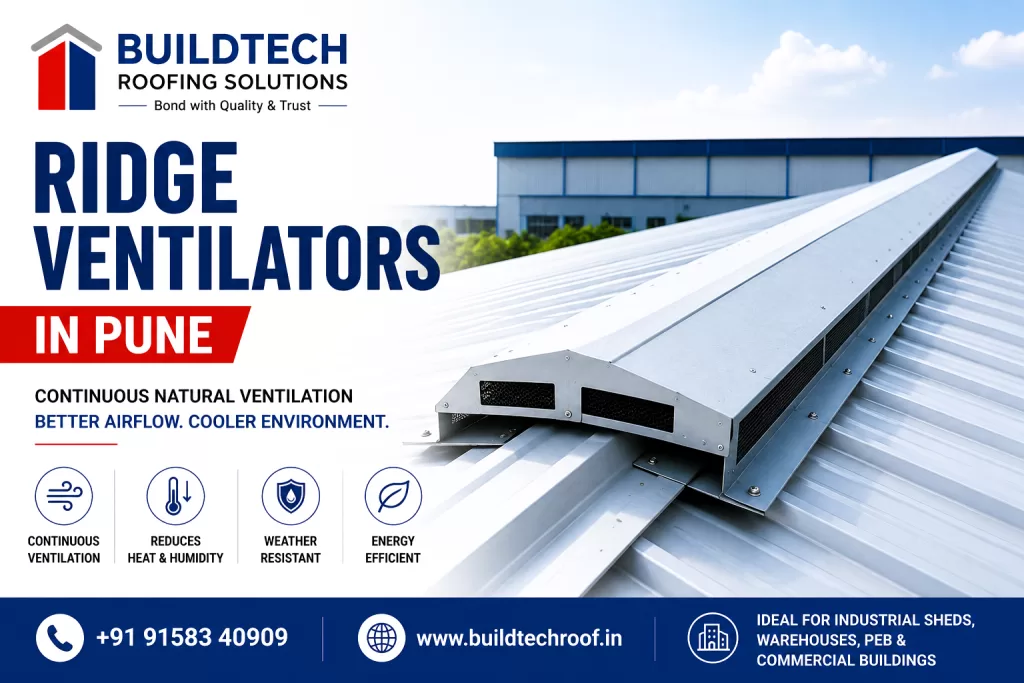
We rank among the top manufacturers, traders, and suppliers of Ridge Ventilators. Our vents, installed on sloped roofs, effectively eliminate warm air from the building’s attic. Our skilled professionals manufacture these ridge vents using high-quality materials and advanced technology. We offer a range of products, including Industrial Ridge Vents, Structural Ridge Vents, Aluminium Automatic Industrial Ridge Vents, Roof Ridge Ventilators, Stainless Steel Industrial Ridge Ventilation Systems, and Steel Ridge Ventilation Systems in Maharashtra, India.

Continuous ridge ventilation systems for industrial roofing applications.

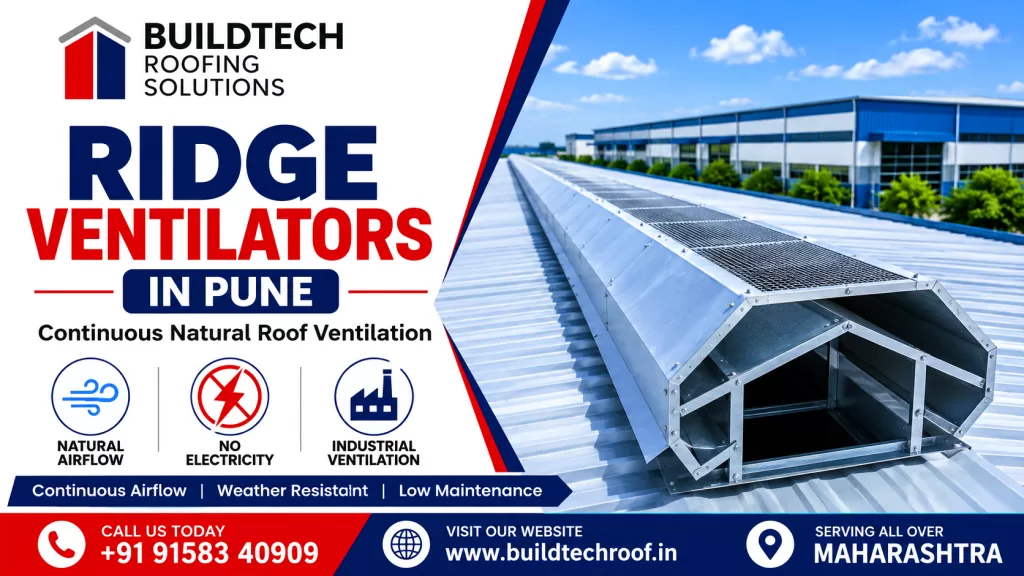
Ridge ventilators in Pune for improved airflow and industrial roof ventilation.

Ridge Ventilator in Pune by Buildtech Roofing Solutions for industrial roof ventilation and heat reduction.

Ridge Ventilator in Pune | Industrial Roof Ventilation Solutions

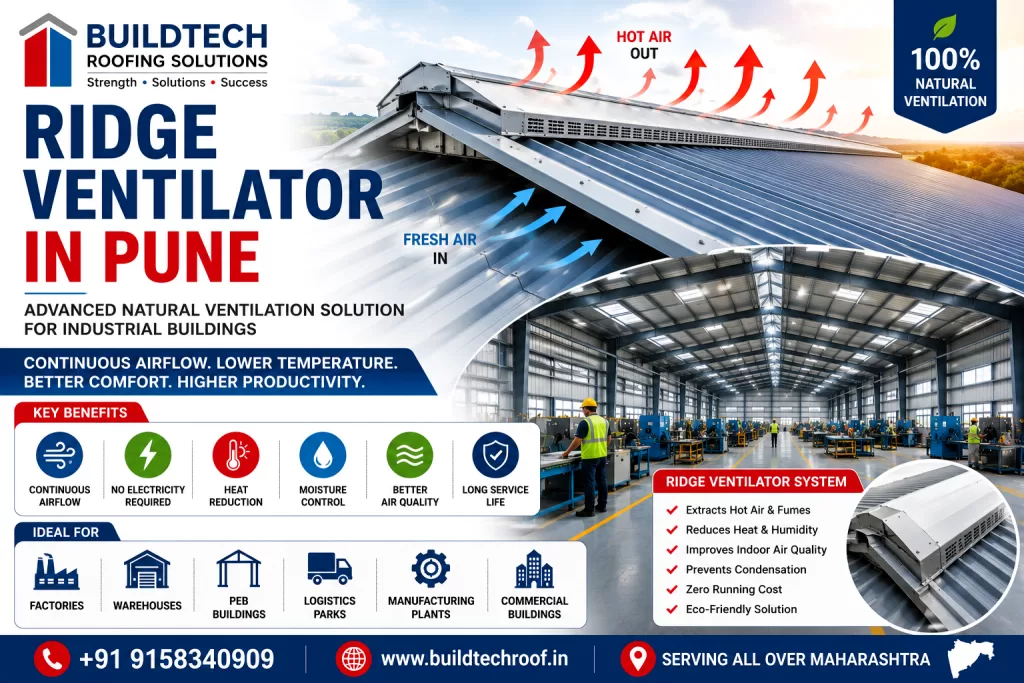
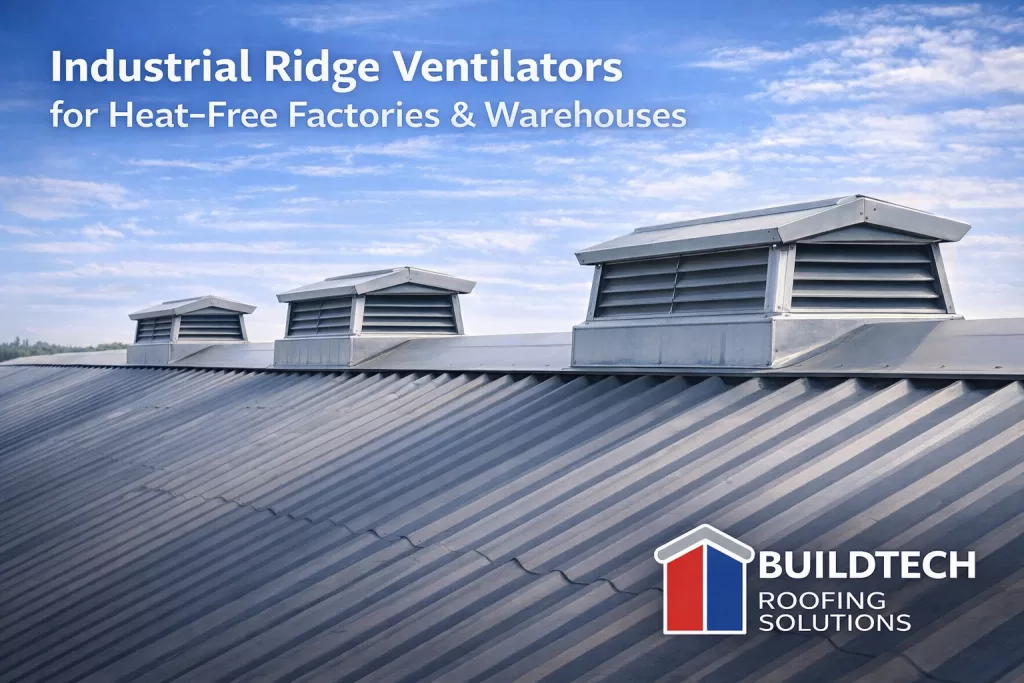
Ridge Ventilator in Pune – Advanced Natural Ventilation Solution for Industrial Buildings Introduction Heat accumulation, poor airflow, condensation, and humidity are common problems in industrial buildings, warehouses, manufacturing plants, and PEB structures. Without proper ventilation, indoor temperatures can rise significantly, affecting employee comfort, machinery performance, and operational efficiency. A Ridge Ventilator is one of the most effective natural ventilation systems available for industrial roofing applications. Installed along the highest point of the roof, ridge ventilators continuously remove hot air, fumes, and moisture while allowing fresh air circulation throughout the building. Buildtech Roofing Solutions provides premium Ridge Ventilators in Pune and across Maharashtra, delivering customized ventilation solutions for factories, warehouses, logistics parks, industrial sheds, and commercial buildings. What is a Ridge Ventilator? A Ridge Ventilator is a continuous roof-mounted ventilation system installed along the roof ridge (highest point of the roof). Its primary purpose is to: Unlike mechanical ventilation systems, ridge ventilators operate naturally without electricity. How Does a Ridge Ventilator Work? Hot air naturally rises inside a building. The ridge ventilator creates an outlet at the highest roof point, allowing: This process creates a comfortable and energy-efficient indoor environment. Why Industries Need Ridge Ventilators Industrial buildings often experience: A properly designed ridge ventilation system helps eliminate these issues. Key Benefits of Ridge Ventilators 1. Continuous Natural Ventilation Provides 24/7 ventilation without electricity. Benefits: 2. Reduces Indoor Temperature Hot air continuously escapes through the ridge opening. Result: 3. Improved Air Quality Removes: Creating a healthier workplace. 4. Condensation Control Helps prevent: 5. Low Maintenance Ridge ventilators have no moving parts. Advantages: 6. Energy Savings Reduces dependence on: 7. Long-Term Durability Manufactured using corrosion-resistant materials suitable for industrial environments. Types of Ridge Ventilators Continuous Ridge Ventilator Installed along the full ridge length. Benefits: Applications: Gravity Ridge Ventilator Uses natural thermal movement for ventilation. Advantages: PEB Ridge Ventilator Specifically designed for Pre-Engineered Buildings. Benefits: Components of a Ridge Ventilator System Ridge Vent Body Main ventilation structure. Weather Protection Hood Prevents rainwater entry. Air Outlet Openings Allow hot air extraction. Side Louvers Enhance airflow performance. Flashing Components Ensure waterproof installation. Structural Support System Provides stability and durability. Applications of Ridge Ventilators Industrial Sheds Improves indoor comfort and airflow. Warehouses Removes trapped heat and humidity. Manufacturing Plants Enhances ventilation and worker comfort. Logistics Parks Supports large-span ventilation requirements. PEB Buildings Most common application. Food Processing Units Improves hygiene and airflow. Pharmaceutical Facilities Supports controlled ventilation requirements. Commercial Buildings Provides energy-efficient ventilation. The Ridge Ventilator vs Turbo Ventilator Feature Ridge Ventilator Turbo Ventilator Moving Parts No Yes Maintenance Very Low Low Ventilation Coverage Continuous Point Based Power Requirement None None Air Extraction Excellent Excellent Many industrial projects use both systems together. Ridge Ventilator vs Exhaust Fan Feature Ridge Ventilator Exhaust Fan Electricity Not Required Required Running Cost Zero Ongoing Noise Silent Moderate Maintenance Low Higher Ridge Ventilators for PEB Buildings PEB structures benefit greatly from ridge ventilation. Advantages include: Ridge Ventilation and Thermal Roofing When combined with: Ridge ventilators significantly improve building performance. Common Problems Solved by Ridge Ventilators Excessive Heat Continuous hot air extraction. Condensation Reduces moisture buildup. Poor Airflow Improves natural ventilation. Worker Discomfort Creates cooler working conditions. High Energy Costs Reduces dependence on mechanical cooling. Installation Process Step-1 Site Inspection Step-2 Ventilation Assessment Step-3 Design & Engineering Step-4 Roof Preparation Step-5 Ventilator Installation Step-6 Waterproof Flashing Installation Step-7 Final Inspection Maintenance Tips Cost of Ridge Ventilators in Pune Pricing depends on: Approximate Cost Range ₹450 – ₹2,500 per running foot Project pricing varies according to design specifications. Why Choose Buildtech Roofing Solutions? Our Strengths Industries We Serve Service Areas Serving All Over Maharashtra Pune Mumbai Nashik Nagpur Kolhapur Satara Sangli Ahmednagar Aurangabad Solapur Ratnagiri Thane Jalgaon Amravati And All Major Industrial Areas Across Maharashtra Frequently Asked Questions 1. What is a Ridge Ventilator? A ridge ventilator is a continuous roof ventilation system installed along the roof ridge to remove hot air and improve airflow. 2. Does a Ridge Ventilator require electricity? No. It operates using natural ventilation principles. 3. Can Ridge Ventilators reduce indoor temperatures? Yes. They continuously remove accumulated hot air from the building. 4. Are Ridge Ventilators suitable for warehouses? Absolutely. They are widely used in warehouses and industrial buildings. 5. Which is better: Ridge Ventilator or Turbo Ventilator? Both are effective. Large industrial facilities often combine ridge ventilators with turbo ventilators for optimal ventilation. Conclusion Ridge Ventilators are among the most efficient and economical ventilation solutions for industrial and commercial buildings. They provide continuous airflow, reduce indoor temperatures, improve air quality, and operate without electricity. For factories, warehouses, industrial sheds, logistics parks, and PEB buildings across Maharashtra, Buildtech Roofing Solutions delivers premium ridge ventilator design, supply, and installation services tailored to your project requirements.

Ridge Ventilator in Pune | Industrial Roof Ventilation Solutions Read More »

Ridge Ventilator Systems in Pune | Industrial Roof Ventilation Solutions

Ridge Ventilator Systems – Guide for Industrial Roof Ventilation Solutions

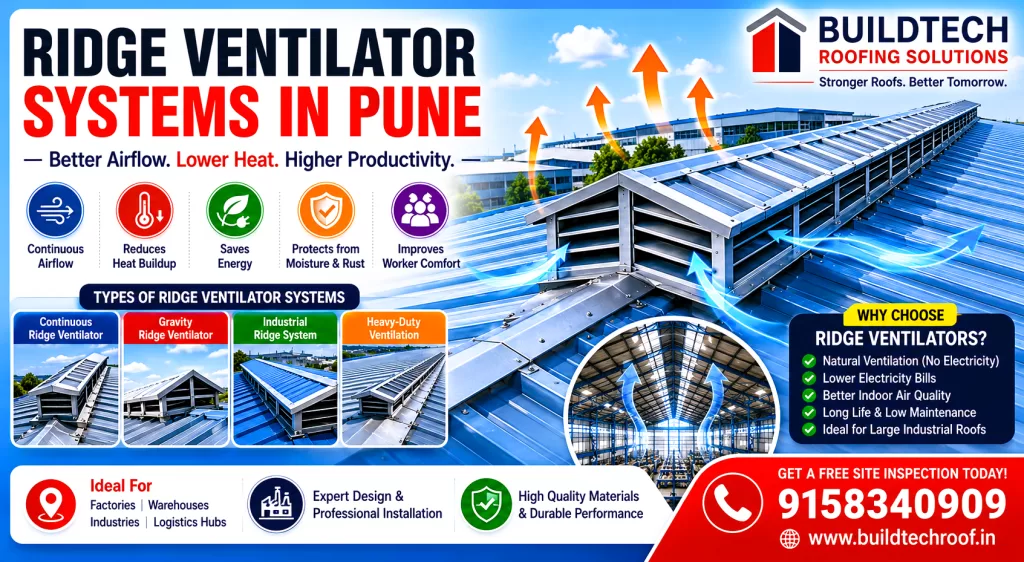
Ridge Ventilator Systems in Pune: The Smart Solution for Industrial Roof Ventilation Industrial buildings such as factories, warehouses, manufacturing plants, and logistics hubs generate substantial internal heat every day. Heat from machinery, production processes, and metal roofing systems can quickly increase indoor temperatures, creating uncomfortable and inefficient work environments. Without proper ventilation, businesses often face: To solve these challenges, industries are increasingly adopting Ridge Ventilator Systems in Pune—a highly efficient natural roof ventilation solution designed to improve airflow while reducing operational costs. At Buildtech Roofing Solutions, we provide customised ridge ventilator systems engineered for long-term industrial performance, better airflow, and energy efficiency. This complete guide explains everything you need to know about ridge ventilators—from how they work to their benefits, installation process, applications, and cost. What Is a Ridge Ventilator? A ridge ventilator is a roof-mounted natural ventilation system installed at the highest point (ridge) of an industrial roof. Its primary purpose is to remove: ✔ Hot air✔ Humid air✔ Smoke✔ Dust✔ Industrial fumes This creates continuous natural airflow throughout the building—without electricity. How Ridge Ventilator Systems Work Ridge ventilators operate on three natural airflow principles: 1. Thermal Convection Hot air naturally rises toward the roof. 2. Natural Exhaust The ridge opening allows trapped hot air to escape. 3. Fresh Air Intake Cooler outside air enters through side louvers and openings. This creates a balanced airflow cycle, improving ventilation across the entire structure. Why Industrial Buildings Need Ridge Ventilation Metal industrial roofs absorb large amounts of solar heat. Without ventilation: Installing a ridge ventilator system in Pune helps industries maintain cooler, healthier, and more productive environments. Benefits of Ridge Ventilator Systems 1. Continuous Natural Airflow Provides uninterrupted ventilation throughout the day. 2. Significant Heat Reduction Removes trapped hot air efficiently. 3. Lower Energy Bills Reduces reliance on exhaust fans and cooling systems. 4. Improved Worker Comfort Creates a healthier work environment. 5. Moisture & Condensation Control Prevents: 6. Better Indoor Air Quality Removes pollutants and improves air circulation. 7. Low Maintenance Durable design with minimal upkeep. Types of Ridge Ventilator Systems Continuous Ridge Ventilators Installed along the full ridge length for uniform airflow. Best for: Gravity Ridge Ventilators Use thermal air movement only. Benefits: Heavy-Duty Industrial Ridge Ventilators Designed for large-scale industrial operations. Ideal for: Applications of Ridge Ventilator Systems The Ridge ventilators are ideal for: The Ridge Ventilator vs The Turbo Ventilator Feature Ridge Ventilator Turbo Ventilator Airflow Coverage Continuous Point-based Efficiency Very High High Maintenance Low Low Electricity No No Best Use Large Buildings Medium Buildings Ridge Ventilator vs Exhaust Fan Feature Ridge Ventilator Exhaust Fan Electricity Not Required Required Running Cost Very Low High Noise Silent Moderate Airflow Natural Mechanical Ridge Ventilator Installation Process Step-1: Site Inspection Evaluate roof structure and airflow requirements. Step-2: Ventilation Design Calculate the ridge opening size and system capacity. Step-3: Roof Preparation Prepare the ridge section for installation. Step-4: Installation Secure ridge ventilator assembly. Step-5: Waterproof Sealing Apply flashing and leak-proof sealing. Step-6: Final Testing Check airflow performance and finishing quality. Factors That Affect Ridge Ventilator Performance Building Width Larger spans need an optimised design. Roof Height Higher roofs improve natural airflow. Ventilator Size Correct sizing ensures effective ventilation. Air Intake Design Side louvers improve performance. Roof Slope Impacts hot-air movement. Common Industrial Ventilation Problems Industries often face: Ridge ventilators solve these efficiently. Cost of Ridge Ventilator Systems in Pune Pricing depends on: Approximate Price: ₹350 to ₹1,200 per running foot Custom pricing available for large industrial projects. Why Choose Buildtech Roofing Solutions? Buildtech Roofing Solutions is a trusted provider of industrial roof ventilation systems in Pune. Our Advantages: ✔ Expert ventilation design✔ High-quality ridge ventilators✔ Customised airflow solutions✔ Professional installation team✔ Competitive pricing✔ Timely project delivery Industries We Serve Service Areas We proudly serve: 📍 Pune📍 Mumbai📍 Nashik📍 Kolhapur📍 Sangli📍 Satara📍 Ahmednagar Frequently Asked Questions (FAQ) What is a ridge ventilator? A roof-mounted ventilation system that removes hot air naturally. Does it require electricity? No, it works entirely on natural airflow. Is ridge ventilation better than turbo ventilation? For large industrial buildings, yes—it provides more uniform airflow. What is the lifespan? Typically, 15–25 years with proper installation. Conclusion If your industrial building struggles with excessive heat, poor airflow, or rising energy bills, installing a Ridge Ventilator System in Pune is one of the smartest long-term investments. With Buildtech Roofing Solutions, you get engineered ventilation systems designed for better airflow, reduced heat, lower energy consumption, and long-term durability. Contact Buildtech Roofing Solutions Today 📞 9158340909🌐 www.buildtechroof.in

Ridge Ventilator Systems – Guide for Industrial Roof Ventilation Solutions Read More »

Ridge Ventilator System in Pune

Ridge Ventilator System in Pune

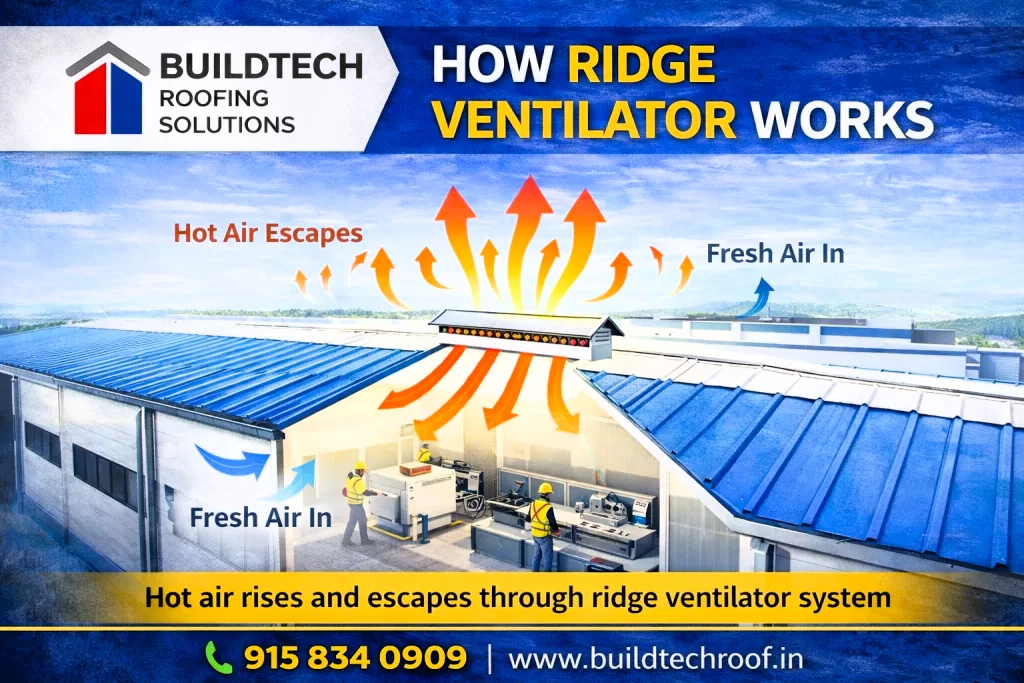
Introduction Industrial buildings such as factories, warehouses, logistics hubs, and manufacturing units generate a significant amount of internal heat due to machinery, production processes, and limited airflow. In cities like Pune, where temperatures can rise considerably during summer, this heat buildup becomes a major challenge. Poor ventilation leads to: This is where the Ridge Ventilator System Pune solutions by Buildtech Roofing Solutions provide an efficient and cost-effective solution. Ridge ventilators are natural ventilation systems installed at the highest point of industrial roofs. They allow hot air to escape, improving airflow and maintaining a balanced indoor environment without using electricity. This comprehensive guide explains everything about ridge ventilators, including working principles, types, benefits, installation process, and industrial applications. What is a Ridge Ventilator System? A ridge ventilator is a roof-mounted ventilation system installed along the ridge line of a building. Its primary function is to: It works on the principle of natural convection, where hot air rises and escapes through the roof opening. How Ridge Ventilators Work Ridge ventilators operate based on natural airflow dynamics: Step-by-step working: This creates a continuous airflow cycle. Importance of Industrial Ventilation Proper ventilation is essential for industrial buildings. 1. Temperature Control Excess heat is removed, maintaining a comfortable environment. 2. Worker Safety & Comfort Improved airflow reduces heat stress and enhances productivity. 3. Energy Savings Natural ventilation reduces dependence on fans and AC systems. 4. Moisture Control Prevents condensation and corrosion. 5. Equipment Protection Maintains optimal temperature for machinery. Types of Ridge Ventilator Systems 1. Turbo Ridge Ventilators These ventilators use wind energy to rotate and enhance airflow. Features: 2. Static Ridge Ventilators Fixed ventilators with no moving parts. Advantages: 3. Monitor Roof Ventilators Raised structures along the ridge for maximum airflow. Best For: Key Features of Ridge Ventilators 1. Natural Ventilation Operates without electricity. 2. Continuous Airflow Provides constant ventilation. 3. Weather Protection Designed to prevent rainwater entry. 4. Durable Construction Made from corrosion-resistant materials. 5. Low Maintenance Minimal servicing required. Benefits of Ridge Ventilator Systems 1. Reduces Indoor Temperature Helps maintain cooler working conditions. 2. Improves Air Quality Removes stale air and pollutants. 3. Enhances Productivity Comfortable workers perform better. 4. Reduces Energy Costs Less dependency on electrical ventilation. 5. Prevents Moisture Damage Avoids condensation-related issues. 6. Eco-Friendly Solution Supports sustainable building practices. Applications of Ridge Ventilators Ridge ventilators are widely used in: Ridge Ventilator vs Exhaust Fans Feature Ridge Ventilator Exhaust Fan Power Requirement No Yes Maintenance Low High Cost One-time Recurring Airflow Continuous Limited Noise Silent Noisy Step-by-Step Installation Process Step-1 – Site Inspection Evaluate roof structure and ventilation requirements. Step-2 – Design Planning Determine ventilator size, placement, and quantity. Step-3 – Ridge Opening Creation Create an opening along the roof ridge. Step-4 – Ventilator Installation Install the ventilator structure securely. Step-5 – Sealing & Waterproofing Ensure no water leakage. Step-6 – Final Inspection Check airflow efficiency and installation quality. Factors to Consider Before Installation Maintenance Tips Cost of Ridge Ventilator System in Pune Cost depends on: 💡 Tip: Ridge ventilators provide long-term savings by reducing energy costs. Why Choose Buildtech Roofing Solutions Pune Buildtech Roofing Solutions is a leading provider of industrial ventilation systems. Key Advantages: ✔ High-quality ventilators✔ Expert installation team✔ Customised industrial solutions✔ Competitive pricing✔ Fast project execution Industries Served Future of Industrial Ventilation With increasing focus on: Ridge ventilators are becoming essential in modern industrial infrastructure. Conclusion Ridge ventilator systems provide an efficient, cost-effective, and eco-friendly solution for industrial ventilation. With Ridge Ventilator System Pune solutions by Buildtech Roofing Solutions, businesses can achieve better airflow, reduced heat, and improved working conditions.

Ridge Ventilator System in Pune Read More »

Industrial Ridge Ventilators: Natural Ventilation Solutions for Modern Industrial Buildings

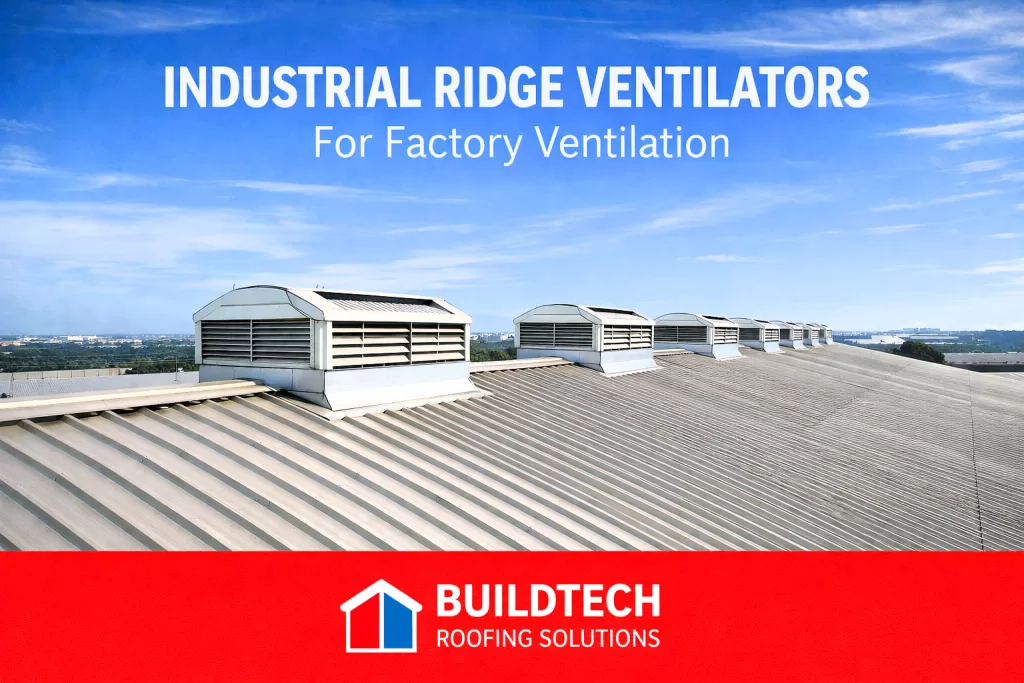
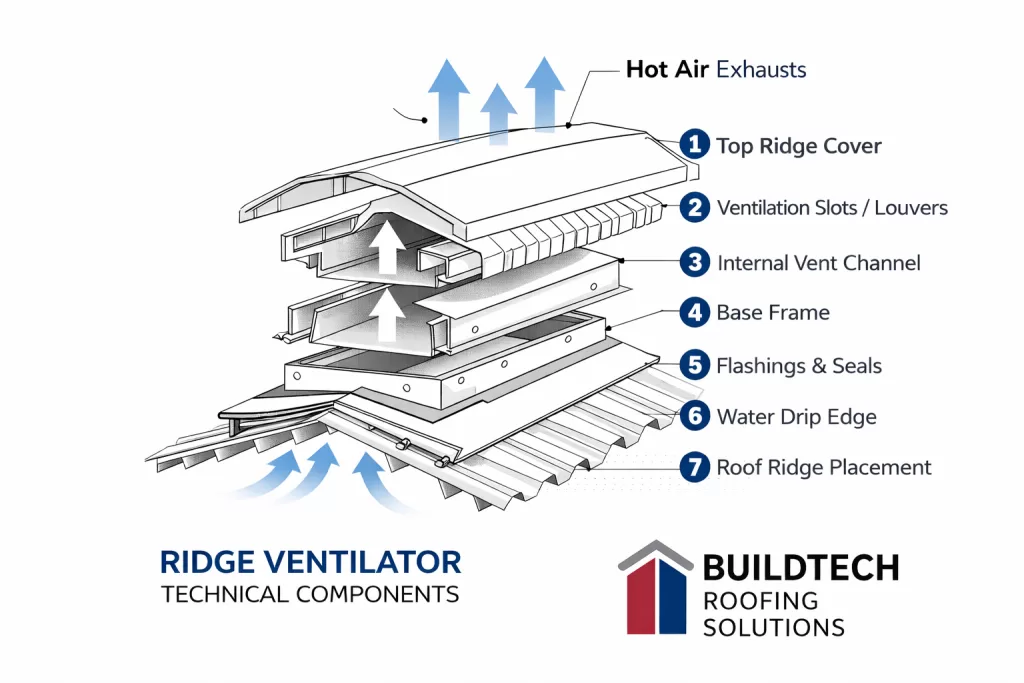
Industrial Ridge Ventilators: The Smart Ventilation System for Modern Buildings Industrial buildings require effective ventilation systems to maintain indoor air quality, control heat, and improve working conditions. One of the most efficient passive ventilation technologies available today is the Industrial Ridge Ventilator. At Buildtech Roofing Solutions, we design and supply high-performance ridge ventilators that provide continuous natural ventilation for factories, warehouses, and large commercial structures. In this comprehensive guide, we will explore: What is an Industrial Ridge Ventilator? An Industrial Ridge Ventilator is a passive ventilation system installed along the ridge line of a roof. Its primary purpose is to remove hot air, fumes, and humidity from the building without using electricity. Unlike mechanical ventilation systems, ridge ventilators rely on natural airflow principles, making them energy-efficient and cost-effective. They are commonly used in: • Manufacturing factories• Warehouses• Logistics hubs• Industrial plants• Commercial buildings• Agricultural storage facilities Why Industrial Buildings Need Proper Roof Ventilation Factories generate large amounts of heat, dust, and industrial fumes. Without proper ventilation, this can lead to serious issues such as: Heat Build-Up Industrial roofs absorb sunlight throughout the day, causing indoor temperatures to rise significantly. Poor Air Quality Machines and production processes often release gases, vapours, and dust. Worker Discomfort Excess heat leads to reduced productivity and unsafe working conditions. Moisture & Condensation Poor ventilation causes condensation, which may damage machinery and roofing structures. Installing industrial ridge ventilators solves all these problems by enabling continuous natural airflow. How Industrial Ridge Ventilators Work Ridge ventilators operate using a natural convection process known as the Stack Effect. Step-by-step airflow process This creates constant natural airflow inside the building. Because the system uses natural air pressure and temperature differences, it requires no electricity. Key Components of a Ridge Ventilator System A well-designed ridge ventilator system includes several engineered components. 1. Ventilator Body The main structure is mounted on the roof ridge. 2. Wind Deflectors Prevents rainwater entry while allowing airflow. 3. Side Louvers Improves airflow efficiency and blocks debris. 4. Bird Mesh Protects the building interior from birds and insects. 5. Flashing System Ensures leak-proof integration with roofing sheets. At Buildtech Roofing Solutions, ridge ventilators are manufactured using high-quality colour-coated steel or aluminium to ensure long service life. Advantages of Industrial Ridge Ventilators 1. 100% Natural Ventilation Ridge ventilators provide continuous air circulation without electricity, making them highly energy efficient. 2. Temperature Reduction Factories using ridge ventilation can reduce indoor temperatures by 3–6°C, depending on building design. 3. Improved Worker Productivity Better airflow creates comfortable working conditions, increasing productivity and reducing fatigue. 4. Moisture Control Proper ventilation prevents condensation that could damage equipment and roofing systems. 5. Environmentally Friendly Because ridge ventilators do not require electricity, they reduce carbon emissions and energy consumption. 6. Low Maintenance With no moving parts, ridge ventilators require minimal maintenance. Technical Specifications of Buildtech Ridge Ventilators Typical specifications include: Feature Specification Material Colour Coated Steel / Aluminium Thickness 0.5 mm – 0.8 mm Vent Width 300 mm – 1000 mm Finish Weather-resistant coating Installation Roof ridge mounted Airflow Continuous passive ventilation Custom designs are available depending on the roof structure and airflow requirements. Applications of Ridge Ventilators Industrial ridge ventilators are widely used across different sectors. Manufacturing Plants Removes machine heat and fumes. Warehouses Controls humidity and temperature. Steel Plants Ventilates smoke and hot air. Food Processing Units Maintains hygienic airflow conditions. Textile Industries Removes humidity generated during production. Integration with Modern Roofing Systems Ridge ventilators are typically installed along with: • Colour-coated roofing sheets• Deck sheets• Insulated roofing panels• Industrial louvers• Metal flashing systems This creates a complete roofing ventilation ecosystem. Installation Guidelines Proper installation is essential for achieving maximum ventilation performance. Important installation steps Professional installation ensures long-term durability and performance. Why Choose Buildtech Ridge Ventilators? Buildtech Roofing Solutions is one of the trusted suppliers of industrial roofing products in Maharashtra. Key advantages of Buildtech roofing solutions • High-quality materials• Precision fabrication• Custom sizes available• Leak-proof installation• Competitive pricing• Experienced technical support We serve factories, warehouses, infrastructure projects, and industrial contractors across India. Future of Industrial Ventilation Systems With increasing focus on energy efficiency and sustainable construction, natural ventilation systems like ridge ventilators are becoming essential components of modern building design. Architects and engineers are now integrating ridge ventilators with: • Green building concepts• Passive cooling systems• Sustainable architecture• Energy-efficient factory design This trend makes ridge ventilators a key technology for the future of industrial infrastructure. Conclusion Industrial ridge ventilators provide a simple, energy-efficient, and reliable solution for factory ventilation. They improve air quality, reduce heat, and enhance working conditions — all without consuming electricity. By choosing Buildtech Roofing Solutions, businesses can ensure high-quality roofing ventilation systems designed for long-term performance. If you are planning a factory roofing project or ventilation upgrade, ridge ventilators are one of the smartest investments you can make.

Industrial Ridge Ventilators: Natural Ventilation Solutions for Modern Industrial Buildings Read More »

Ridge Ventilators for Industrial Buildings Buyer Guide

Introduction: Why Ventilation Is Critical in Industrial Buildings Industrial buildings generate substantial heat due to heavy machinery, continuous production processes, artificial lighting, and high workforce density. Without proper ventilation, this heat accumulates near the roof level, leading to poor working conditions, higher energy costs, equipment inefficiency, and potential safety risks. Conventional mechanical ventilation systems consume electricity, require ongoing maintenance, and increase operational expenses. As industries increasingly focus on energy efficiency and sustainability, ridge ventilators have become a preferred solution for natural, power-free roof ventilation. Ridge ventilators are now widely used in factories, warehouses, manufacturing plants, logistics centers, and industrial sheds, where continuous heat removal is essential. This buyer’s guide explains what ridge ventilators are, how they work, their benefits, technical specifications, applications, and how to select the right system for your industrial facility. What Are Ridge Ventilators? Ridge ventilators are continuous natural ventilation systems installed along the ridge line (highest point) of an industrial roof. Their primary function is to allow hot air, fumes, and moisture to escape naturally from inside the building. They work on the principle of natural convection, where hot air rises and exits through the ridge, creating a pressure difference that draws fresh air inside from side openings, louvers, or doors. Unlike mechanical exhaust systems, ridge ventilators: How Ridge Ventilators Work (Natural Ventilation Principle) Understanding the working principle helps buyers make informed decisions. Step-by-Step Working Mechanism This natural cycle runs round the clock without power, making ridge ventilators highly reliable for industrial use. Why Ridge Ventilators Are Ideal for Industrial Buildings Industrial structures differ significantly from residential or commercial buildings due to: Ridge ventilators are specifically designed to handle these conditions. Key Reasons Industries Prefer Ridge Ventilators Key Benefits of Ridge Ventilators 1. Power-Free Operation Ridge ventilators operate without electricity, reducing operational costs and carbon footprint. 2. Continuous Ventilation They function 24×7, unlike exhaust fans that rely on manual operation or power availability. 3. Lower Indoor Temperature Efficient heat removal significantly reduces internal temperature buildup. 4. Moisture & Fume Control Prevents condensation, corrosion, and accumulation of industrial fumes. 5. Minimal Maintenance No motors, belts, or electrical components mean fewer breakdowns. 6. Long Service Life Manufactured from corrosion-resistant materials suitable for harsh environments. Types of Ridge Ventilators 1. Box Type Ridge Ventilators 2. Aerodynamic Ridge Ventilators 3. Continuous Ridge Ventilators Materials Used in Ridge Ventilators Material selection plays a vital role in performance and durability. Commonly Used Materials Why Material Selection Matters Technical Specifications (Typical Range) Parameter Specification Material GI / PPGI / Aluminium Thickness 0.45 – 0.80 mm Ventilator Length Continuous / Modular Installation Roof ridge mounted Power Requirement Nil Maintenance Minimal Applications of Ridge Ventilators Ridge ventilators are suitable for a wide range of industrial and commercial buildings, including: They are especially effective for buildings with large roof spans and high heat loads. Ridge Ventilator vs Other Ventilation Systems Aspect Ridge Ventilators Exhaust Fans Power Consumption None High Maintenance Low Moderate Operation Continuous Manual Noise Silent Noisy Running Cost Zero Ongoing Ridge Ventilators vs Turbo Ventilators Installation Process Proper installation ensures maximum performance and leak-free operation. Typical Installation Steps Professional installation prevents leakage and ensures long service life. How to Choose the Right Ridge Ventilator Evaluate Roof Design Assess Heat Load Consider Environmental Conditions Budget Planning Common Buyer Mistakes to Avoid Avoiding these mistakes ensures reliable and efficient ventilation. Energy Efficiency & Sustainability Benefits Ridge ventilators directly support green building practices by: They contribute significantly to sustainable industrial infrastructure. Why Choose Buildtech Roofing Solutions Buildtech Roofing Solutions offers complete ridge ventilator solutions, including: Our approach ensures performance, safety, and long-term value. Frequently Asked Questions (FAQs) Do ridge ventilators work without wind?Yes. They primarily rely on heat convection, not wind pressure. Are ridge ventilators suitable for all roof types?Yes. They can be customized for most industrial roof profiles. Can ridge ventilators reduce electricity bills?Yes. They reduce reliance on exhaust fans and air conditioning systems. Are ridge ventilators waterproof?Yes. Properly designed systems include rain protection and flashing. Conclusion Ridge ventilators are one of the most effective, economical, and sustainable ventilation solutions for industrial buildings. Their power-free operation, continuous performance, and low maintenance make them ideal for modern industrial facilities. Choosing the right ridge ventilator system improves worker comfort, energy efficiency, and roof longevity. Final Call to Action 📞 Call: 9158340909📩 Request a Ridge Ventilator Consultation Today

Ridge Ventilators for Industrial Buildings Buyer Guide Read More »

Ridge Ventilators for Industrial Roof Ventilation | Buildtech Roofing Solutions

Ridge Ventilators – Natural Roof Ventilation for Industrial Buildings Industrial buildings generate excess heat, fumes, and moisture during daily operations. Without proper ventilation, this trapped heat can reduce productivity, damage equipment, and increase energy costs. Ridge ventilators provide a highly effective, power-free solution for releasing hot air naturally from the roof. At Buildtech Roofing Solutions, we design, manufacture, and install industrial ridge ventilators that deliver continuous airflow, improved indoor comfort, and long-term performance for factories, warehouses, and commercial sheds. What Are Ridge Ventilators? Ridge ventilators are ventilation systems installed along the highest point of the roof (ridge line). They work on the principle of natural convection, where hot air rises and escapes through the ridge opening while fresh air enters from side openings, louvers, or windows. Because ridge ventilators operate without electricity, they provide uninterrupted ventilation throughout the day and night. Why Ridge Ventilators Are Essential for Industrial Buildings Proper roof ventilation directly impacts building efficiency and worker comfort. Ridge ventilators help to: As a result, industries benefit from safer working conditions and reduced operational expenses. Types of Ridge Ventilators 1. Natural Ridge Ventilators Operate entirely on natural airflow without any moving parts or electricity. 2. Turbo-Assisted Ridge Ventilators Combined with turbo ventilators to enhance airflow in high-heat environments. 3. Custom-Fabricated Ridge Ventilators Designed to match roof profile, length, and ventilation requirements. Materials Used in Buildtech Ridge Ventilators Buildtech ridge ventilators are manufactured using: All materials are corrosion-resistant and suitable for harsh industrial conditions. Key Features of Buildtech Ridge Ventilators Applications of Ridge Ventilators Ridge ventilators are widely used in: Technical Specifications (Typical) Parameter Specification Material PPGI / PPGL / GI Thickness 0.45 – 0.80 mm Vent Type Natural / Turbo-assisted Installation Roof ridge mounted Operation Power-free Customisation Length & profile as required Installation Best Practices Buildtech follows industry-approved installation methods: This ensures maximum ventilation efficiency and leak-free performance. Why Choose Buildtech Roofing Solutions Integrated Roofing & Ventilation Solutions Buildtech also supplies: One trusted partner for complete industrial roofing systems. Conclusion Ridge ventilators are a smart, energy-efficient solution for maintaining airflow and temperature control in industrial buildings. With Buildtech Roofing Solutions, you receive durable materials, expert engineering, and professional installation—built for long-term performance.

Ridge Ventilators for Industrial Roof Ventilation | Buildtech Roofing Solutions Read More »

Industrial Ridge Ventilators in Maharashtra

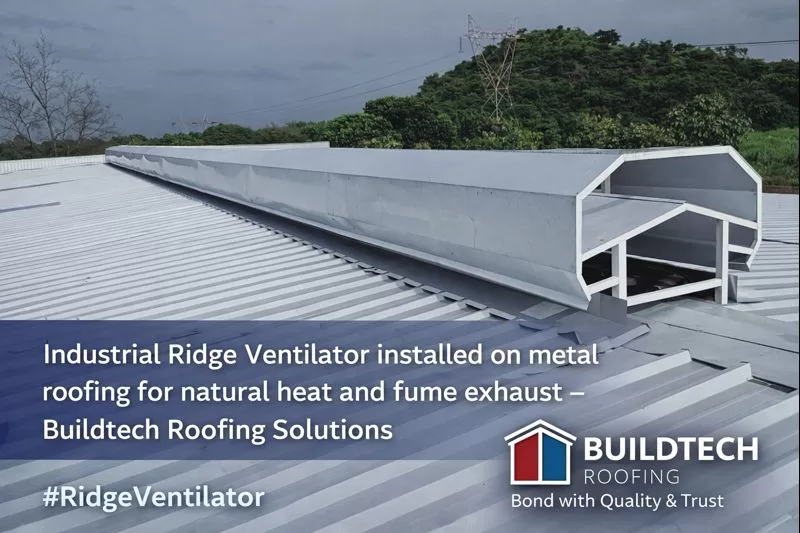
Industrial Ridge Ventilators – Energy-Free Ventilation for Modern Buildings Industrial ridge ventilators play a critical role in maintaining healthy, productive, and energy-efficient industrial environments. In factories, warehouses, and heavy industrial plants, heat builds up rapidly due to machinery, equipment, and continuous operations. Without proper ventilation, this trapped heat reduces worker comfort, affects productivity, and shortens equipment life. At Buildtech Roofing Solutions, we design, manufacture, supply, and install high-performance industrial ridge ventilators that provide continuous airflow, effective heat removal, and moisture control—without electricity or ongoing operating costs. What Is an Industrial Ridge Ventilator? An industrial ridge ventilator is a natural ventilation system installed along the highest point of a sloped industrial roof. It operates on the principle of natural convection. As hot air rises inside the building, it exits through the ridge ventilator, while cooler air enters through side louvers or openings. As a result, a continuous airflow cycle is created, keeping indoor temperatures balanced and improving overall air quality. Image Alt Text: Industrial ridge ventilator installed on factory roof by Buildtech Roofing Solutions How Industrial Ridge Ventilators Work First, heat generated inside the building rises naturally.Next, the hot air moves toward the roof ridge.Then, the ridge ventilator allows this hot air to escape safely.Meanwhile, fresh air enters from louvers or side openings.Consequently, continuous ventilation is maintained 24×7, even during power failures. Because this system is completely natural, it remains reliable in all operating conditions. Key Advantages of Industrial Ridge Ventilators ✔ Energy-Free Ventilation Since ridge ventilators require no electricity, they operate at zero energy cost. ✔ Effective Heat Reduction They significantly lower indoor temperatures, especially in large industrial sheds. ✔ Improved Indoor Air Quality They efficiently remove hot air, fumes, dust, and excess moisture. ✔ Weather-Resistant Design Well-engineered ridge ventilators prevent rainwater entry while ensuring airflow. ✔ Low Maintenance Once installed, they require minimal maintenance throughout their service life. Applications of Industrial Ridge Ventilators Industrial ridge ventilators supplied by Buildtech Roofing Solutions are widely used in: Image Alt Text: Ridge ventilator system for warehouse ventilation in Maharashtra Technical Specifications (Typical) Parameter Specification Material GI / PPGI / PPGL Thickness 0.45 – 0.60 mm Length Customised as per roof Throat Width 300 / 400 / 600 mm Operation Natural airflow Power Requirement Nil Ridge Ventilators vs Exhaust Fans Feature Ridge Ventilator Exhaust Fan Power Consumption None High Maintenance Very low Regular Coverage Area Large roof span Limited Operating Cost Zero Continuous Noise Silent Audible Therefore, ridge ventilators are far more suitable for large industrial buildings than conventional exhaust systems. Installation Best Practices To ensure long-term performance, proper installation is essential: Buildtech Roofing Solutions follows strict installation standards to deliver leak-free and durable ventilation systems. Why Choose Buildtech Roofing Solutions? As a result, industries across Maharashtra trust Buildtech for reliable and efficient ridge ventilation systems. Conclusion Industrial ridge ventilators are a smart and sustainable investment for factories and warehouses seeking better heat control, improved air quality, and lower energy costs. With expert design, quality materials, and professional installation by Buildtech Roofing Solutions, these systems deliver dependable performance year after year in demanding industrial environments.

Industrial Ridge Ventilators in Maharashtra Read More »

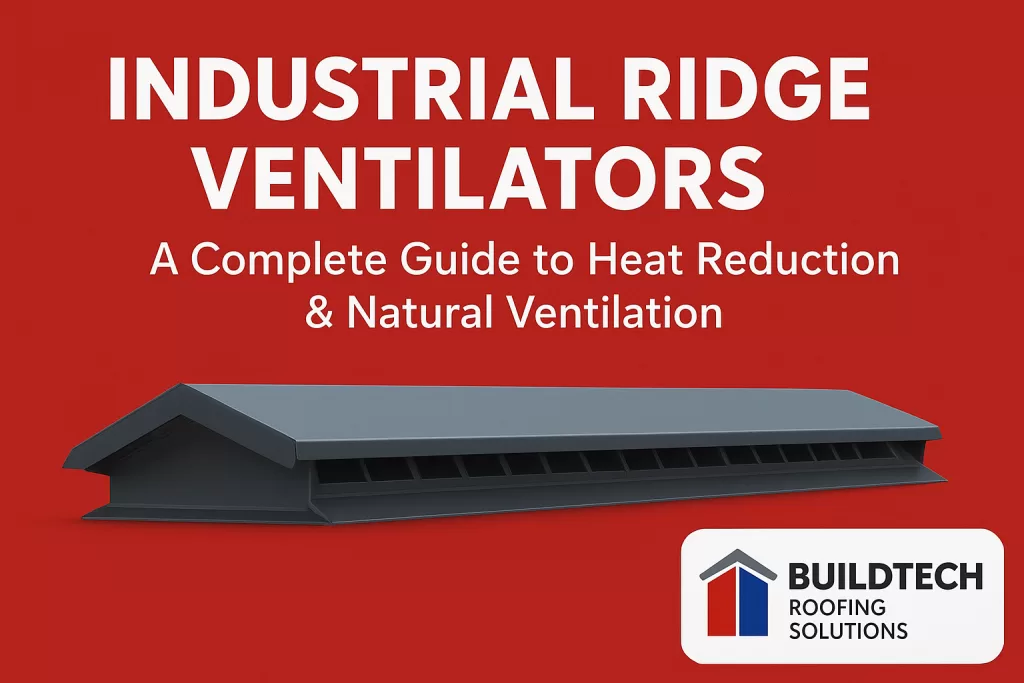
Industrial Ridge Ventilators:

Industrial Ridge Ventilators: A Complete Guide to Heat Reduction & Natural Ventilation 1. Introduction Industrial sheds, factories, warehouses, and commercial buildings often struggle with excessive heat buildup. Large machinery, metal roofing, and continuous operations generate high internal temperatures that affect worker comfort, equipment performance, and energy costs. The most effective and maintenance-free solution to this problem is the Industrial Ridge Ventilator. Ridge ventilators use the natural movement of hot air to exhaust heat, smoke, fumes, and humidity from inside a building — without electricity, motors, or maintenance. This article provides a comprehensive overview of ridge ventilators, covering all the essential information you need to know.: ✅ Picture Suggestion (Intro Section): A large industrial shed showing a row of ridge ventilators installed along the roof ridge. 2. What Is a Ridge Ventilator? A ridge ventilator is a ventilation device installed along the top ridge of industrial or commercial roofs. It allows hot air to escape while keeping out rain and dust. This creates a consistent airflow cycle: 3. How Ridge Ventilators Work Ridge ventilators operate on the principle of natural convection. Hot air is lighter, so it rises and escapes through the ridge opening. Meanwhile, cool air enters from lower points, creating continuous air circulation. – No mechanical components are involved.– It does not require any power. – No maintenance is necessary. 4. Types of Ridge Ventilators ✅ 1. Static Ridge Ventilator ✅ 2. Turbo Ridge Ventilator (Hybrid) ✅ 3. Continuous Ridge Ventilator 5. Key Benefits of Industrial Ridge Ventilators ✅ 1. Reduces Heat by 12–18°C Natural exhaust removes trapped heat from inside the building. ✅ 2. Zero Energy Consumption Operates without electricity, motors, or wiring. ✅ 3. Improves Worker Comfort A cooler workspace increases productivity and reduces fatigue. ✅ 4. Protects Machinery Reduced heat = longer equipment life. ✅ 5. Prevents Moisture Build-Up Controls humidity and prevents condensation. ✅ 6. Long Life & Low Maintenance Made using PPGL sheets with 150–200 gsm coating. ✅ 7. Increases Fresh Air Flow Better ventilation means healthier indoor air. 6. Technical Specifications (Recommended for Industry) Specification Recommended Range Material PPGL (AZ150) / PPGI (Z275) Coating 18–25 Microns Length 2 ft – 10 ft modules Throat Size 24″ / 32″ / 36″ Airflow Rate 300–1200 CFM (depends on size) Accessories Bird mesh, rainproof cowl 7. Applications of Ridge Ventilators ✅Industrial ✅Commercial ✅Institutional & Infrastructure 8. How to Choose the Right Ridge Ventilator Consider: 9. Installation Guidelines Improper installation may cause leakage issues. 10. Maintenance Tips Ridge ventilators are designed for effortless maintenance, making them a hassle-free choice for ensuring proper airflow!: 11. Pricing Factors Pricing depends on: PPGL ridge ventilators offer the best lifespan in industrial conditions. 12. Why Choose Buildtech Roofing Solutions Buildtech Roofing Solutions provides high-quality, long-life industrial ridge ventilators manufactured from premium PPGL/PPGI sheets. ✅ Our Advantages: 13. Conclusion Industrial ridge ventilators are an essential part of modern building design. They reduce heat, improve airflow, protect machinery, and offer long-term sustainability — all without electricity or maintenance. Ridge ventilators are a cost-effective, durable, and high-performing solution for your ventilation needs.

Industrial Ridge Ventilators: Read More »

Understanding Ridge Vents:

Essential Insights for Homeowners, Small Business Owners, Contractors, and Builders Ridge vents are an integral part of roof ventilation systems, yet they often remain overlooked by many homeowners and builders. This article aims to cover everything you need to know about ridge vents, their benefits, installation processes, and maintenance tips. Whether you’re a homeowner looking to enhance your roof’s performance, a small business owner needing to understand building codes, or a contractor seeking to offer better solutions to clients, this comprehensive guide will serve your needs. What is a Ridge Vent? A ridge vent is a type of passive ventilation system installed along the peak of a sloped roof. It works in conjunction with soffit vents located at the eaves to create a natural airflow that helps regulate temperature and moisture levels in the attic or roof space. As warm air rises, it escapes through the ridge vent, while cooler air enters through the soffit vents. This continuous cycle of airflow is crucial for maintaining a balanced environment, which can lead to improved energy efficiency and longevity of roofing materials. Types of Ridge Vents Ridge vents come in various designs, each with its own unique features: Benefits of Ridge Vents Ridge vents offer numerous advantages, making them an excellent choice for any roofing system: 1. Improved Energy Efficiency By allowing hot air to escape, ridge vents help maintain a cooler attic space. This can lead to reduced energy costs, especially during hot summers, as your air conditioning system won’t have to work as hard to cool your home. 2. Moisture Control Excess moisture in the attic can lead to mould growth and wood rot. Ridge vents promote adequate airflow, helping to remove moisture and protect your home’s structural integrity. 3. Extended Roof Lifespan Proper ventilation reduces the risk of heat and moisture buildup, which can damage roofing materials over time. By investing in ridge vents, you’re likely to extend the life of your roof. 4. Increase in Home Value A well-ventilated roof is an attractive feature for potential buyers. Installing ridge vents can enhance your property’s value by ensuring that the roof remains in good condition. 5. Easy Installation Ridge vents are relatively easy to install compared to other ventilation systems. Most roofing contractors can add them during a new roof installation or as an upgrade for an existing roof. Installation Process 1. Assessing Your Ventilation Needs Before installation, it’s essential to evaluate your attic’s ventilation requirements. A general rule of thumb is to have one square foot of ventilation for every 150 square feet of attic space. 2. Choosing the Right Vent Select the appropriate type of ridge vent based on your roof’s design and your specific needs. It’s advisable to consult with a contractor or a building professional for recommendations. 3. Preparing the Roof Ensure that the roof is clean and free of debris. If you are installing ridge vents on an existing roof, make sure to remove any shingles along the ridge where the vent will be placed. 4. Cutting the Ridge Using a saw, cut a straight line along the peak of the roof, making sure the opening matches the dimensions of your chosen ridge vent. 5. Installing the Ridge Vent Position the ridge vent over the opening, ensuring it sits flush against the roof. Secure it in place with roofing nails, following the manufacturer’s instructions for spacing. 6. Shingling Over the Vent Replace the shingles over the ridge vent, ensuring a watertight seal. This step is crucial to prevent leaks. 7. Inspecting the Installation Once the installation is complete, inspect the vent to ensure it is securely fastened and that there are no gaps where water can infiltrate. Maintenance Tips for Ridge Vents 1. Regular Inspections Conduct regular inspections, especially after severe weather conditions. Look for any signs of damage or blockages that may hinder airflow. 2. Cleaning Remove debris, such as leaves or twigs, that may accumulate on or around the ridge vent. This will help maintain optimal airflow and prevent moisture buildup. 3. Check for Animal Intrusions Ensure that no animals have nested inside the vent or that there are no signs of pests. If you notice any issues, take immediate action to resolve them. 4. Professional Maintenance Consider hiring a professional for thorough inspections and maintenance. They can identify potential problems that may not be easily visible to the untrained eye. Common Misconceptions About Ridge Vents 1. Ridge Vents Are Too Expensive While the initial cost may seem high, the long-term benefits, such as energy savings and increased roof lifespan, often outweigh the initial investment. 2. Ridge Vents Are Not Effective Some people believe that ridge vents do not provide sufficient ventilation. However, when installed correctly and in conjunction with soffit vents, they can significantly improve airflow. 3. They Only Work in Certain Climates Ridge vents are effective in various climates. They are designed to facilitate airflow, regardless of temperature or humidity levels. Conclusion Understanding ridge vents is crucial for homeowners, small business owners, contractors, and builders alike. They play a vital role in maintaining a healthy roofing system, improving energy efficiency, and extending the life of your roof. If you’re considering installing ridge vents, consult with a professional to ensure you choose the right type and follow proper installation techniques. With regular maintenance, ridge vents can provide years of reliable service, making them a worthwhile investment for any property.

Understanding Ridge Vents: Read More »

Where is Ridge Vent Installed?

A Comprehensive Guide for Homeowners and Contractors Ridge vents are essential for ventilating buildings, especially in attics. Proper ventilation is essential for maintaining air quality, managing moisture levels, and improving energy efficiency. This article aims to provide homeowners, commercial property owners, facility managers, small business owners, contractors, and builders with a detailed understanding of ridge vent installation, its benefits, and best practices. Understanding Ridge Vents What is a Ridge Vent? A ridge vent is a type of exhaust vent that runs along the roof peak, allowing hot air and moisture to escape from the attic space. Installed at the roof’s highest point, it works with soffit vents to create a continuous flow of air. This ventilation system effectively prevents heat buildup and moisture accumulation, which can cause mould growth and roof damage. Benefits of Ridge Ventilation Ideal Locations for Ridge Vent Installation Residential Homes Ridge vents typically go on pitched roofs in residential properties. The ideal locations include: Commercial Properties In commercial buildings, ridge vents can enhance ventilation on various roof types, including sloped and flat roofs. This can effectively reduce passive energy loss to under 10%, improving overall energy efficiency.: New Construction vs. Retrofit Installation Process Materials Needed Step-by-Step Installation Best Practices Common Mistakes to Avoid Conclusion Ridge vents are essential to effective roofing systems, providing numerous benefits to homeowners and property managers. Proper installation and maintenance can lead to improved air quality, energy efficiency, and a longer lifespan for your roof. Understanding where and how to install ridge vents is crucial for optimal results, whether you’re a homeowner or a contractor. With this guide, you are now equipped with the knowledge needed to make informed decisions regarding ridge vent installation.  #factory #supplier #performance #order #quality #india  #productions #thickness #avilablenow #manufacturing #Ridge Vent #Metal Ridge Ventilation System #Roof Ventilation #ridgeventilators #structuralridgeventilator #ridgevent

Where is Ridge Vent Installed? Read More »

©2023 buildtechroof. All Rights Reserved.