
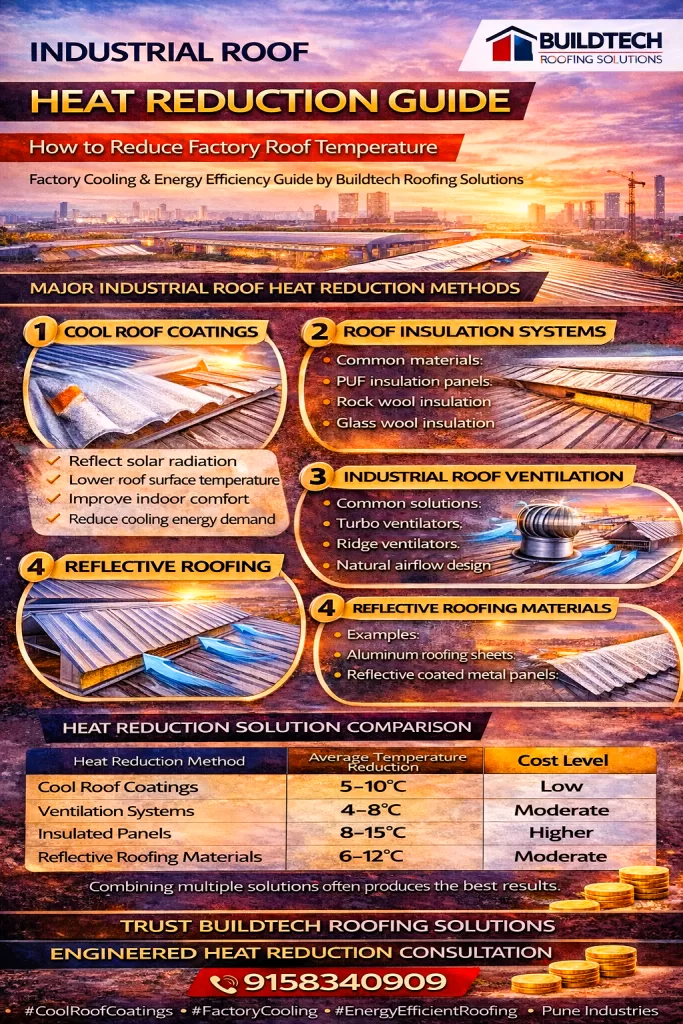
Industrial Roof Heat Reduction Guide: How to Reduce Factory Roof Temperature
Introduction: Why Industrial Roof Heat Reduction Is Essential Industrial buildings often experience excessive indoor heat because large metal roofing surfaces absorb sunlight throughout the day. As heat accumulates under the roof, indoor temperatures rise significantly, making working conditions uncomfortable and increasing energy consumption. In cities like Pune, where summers can be extremely hot, factories and warehouses require effective strategies for industrial roof heat reduction. Implementing cooling solutions not only improves worker comfort but also enhances productivity, protects equipment, and reduces operational costs. This guide explains practical methods industries can use to reduce roof heat and maintain a comfortable indoor environment. How Heat Enters Industrial Buildings Heat enters industrial sheds through three primary mechanisms: Solar Radiation Sunlight directly heats metal roofing sheets, increasing surface temperature. Heat Conduction Heat travels through roofing material into the interior space. Trapped Hot Air Without proper ventilation, rising hot air accumulates below the roof structure. These processes cause indoor temperatures to rise significantly during daytime operations. Why Industrial Roof Heat Reduction Matters Reducing heat inside industrial buildings improves: Heat management is therefore an important aspect of facility management. Major Industrial Roof Heat Reduction Methods 1️⃣ Cool Roof Coatings Cool roof coatings are reflective coatings applied to roofing surfaces to reduce heat absorption. Benefits Cool roof coatings are one of the most cost-effective heat reduction solutions. 2️⃣ Roof Insulation Systems Roof insulation materials prevent heat transfer into the building. Common insulation materials include: Insulated roofing significantly improves thermal performance. 3️⃣ Industrial Roof Ventilation Ventilation systems remove accumulated hot air from the building. Common ventilation solutions: These systems allow hot air to escape naturally. 4️⃣ Reflective Roofing Materials Light-colored or reflective roofing sheets absorb less heat compared to darker materials. Examples include: These materials reduce solar heat gain. Heat Reduction Solution Comparison Heat Reduction Method Average Temperature Reduction Cost Level Cool Roof Coatings 5–10°C Low Ventilation Systems 4–8°C Moderate Insulated Panels 8–15°C Higher Reflective Roofing Materials 6–12°C Moderate Combining multiple solutions often produces the best results. Signs Your Factory Needs Heat Reduction Industries should consider roof heat reduction if they notice: These indicators suggest heat accumulation problems. Benefits of Industrial Roof Cooling Implementing heat reduction strategies provides several advantages: Cooling solutions therefore, improve both operational efficiency and cost control. Industrial Roof Heat Reduction Implementation Process Professional heat reduction solutions follow a structured process: Engineering-based planning ensures optimal cooling performance. Common Industrial Roof Heat Reduction Mistakes Industries sometimes make mistakes, such as: These errors reduce effectiveness and increase long-term costs. Why Professional Heat Reduction Solutions Matter Industrial roofing experts ensure: Professional planning ensures reliable cooling performance. Why Industries Choose Buildtech Roofing Solutions Buildtech Roofing Solutions provides: This ensures factories maintain comfortable working conditions while improving efficiency. FAQs: Industrial Roof Heat Reduction How much temperature reduction can cool roof coatings provide?Reflective coatings can reduce roof temperature by approximately 5–10°C. Do turbo ventilators help reduce heat?Yes, turbo ventilators remove hot air trapped inside the building. Is insulation better than roof coating?Insulation prevents heat transfer while coatings reflect sunlight; both solutions work best together. What is the most economical heat reduction solution?Cool roof coatings combined with ventilation systems are usually the most cost-effective approach. Conclusion: Smart Heat Reduction Improves Industrial Efficiency Industrial roof heat reduction plays an important role in improving indoor comfort, lowering energy consumption, and extending roof lifespan. By combining reflective coatings, insulation systems, and ventilation solutions, factories and warehouses can create a cooler and more efficient working environment. For professional heat reduction solutions and roofing consultation in Pune, Buildtech Roofing Solutions offers engineered solutions tailored for industrial performance.
Industrial Roof Heat Reduction Guide: How to Reduce Factory Roof Temperature Read More »