buildtech roofing solutions

Buildtech Roofing Solutions offers top-quality roofing supplies and professional roofing services for all types of properties. Trusted by customers of all ages, we provide durable and affordable roofing solutions tailored to your needs.
Suppliers & Appliers of Profile Coated Sheet – Pre-Painted Profile Sheets, Color Cladding Sheets, Colour Profile Sheets, and Color Coated Profile Sheet used on Industrial & residency roofing & cladding sheet providers in Maharashtra, India.

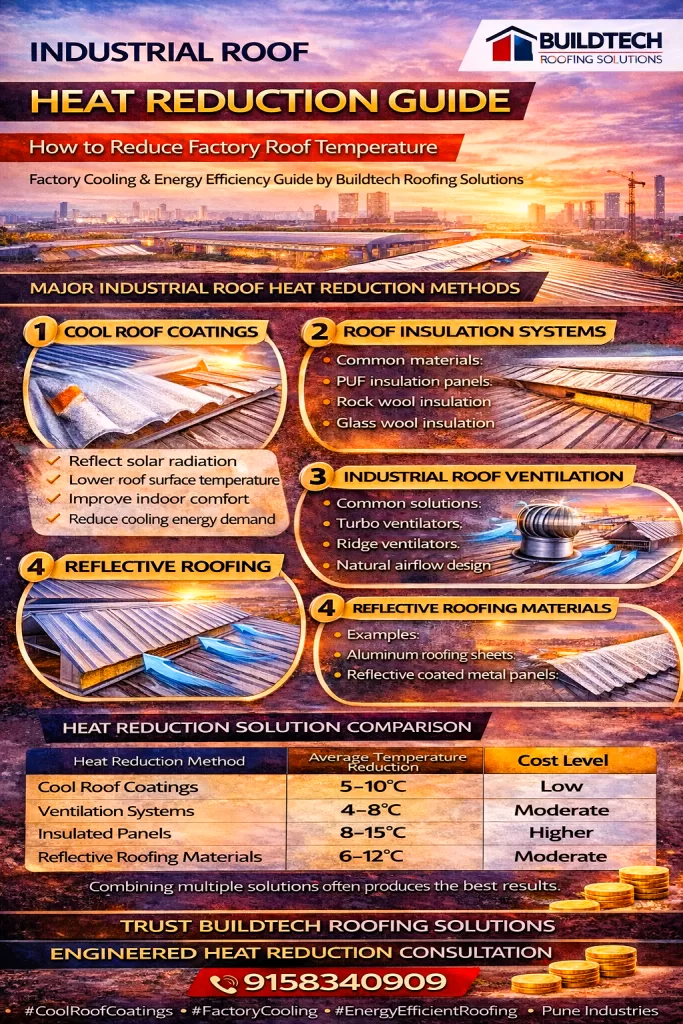
Industrial Roof Heat Reduction Guide: How to Reduce Factory Roof Temperature

Introduction: Why Industrial Roof Heat Reduction Is Essential Industrial buildings often experience excessive indoor heat because large metal roofing surfaces absorb sunlight throughout the day. As heat accumulates under the roof, indoor temperatures rise significantly, making working conditions uncomfortable and increasing energy consumption. In cities like Pune, where summers can be extremely hot, factories and warehouses require effective strategies for industrial roof heat reduction. Implementing cooling solutions not only improves worker comfort but also enhances productivity, protects equipment, and reduces operational costs. This guide explains practical methods industries can use to reduce roof heat and maintain a comfortable indoor environment. How Heat Enters Industrial Buildings Heat enters industrial sheds through three primary mechanisms: Solar Radiation Sunlight directly heats metal roofing sheets, increasing surface temperature. Heat Conduction Heat travels through roofing material into the interior space. Trapped Hot Air Without proper ventilation, rising hot air accumulates below the roof structure. These processes cause indoor temperatures to rise significantly during daytime operations. Why Industrial Roof Heat Reduction Matters Reducing heat inside industrial buildings improves: Heat management is therefore an important aspect of facility management. Major Industrial Roof Heat Reduction Methods 1️⃣ Cool Roof Coatings Cool roof coatings are reflective coatings applied to roofing surfaces to reduce heat absorption. Benefits Cool roof coatings are one of the most cost-effective heat reduction solutions. 2️⃣ Roof Insulation Systems Roof insulation materials prevent heat transfer into the building. Common insulation materials include: Insulated roofing significantly improves thermal performance. 3️⃣ Industrial Roof Ventilation Ventilation systems remove accumulated hot air from the building. Common ventilation solutions: These systems allow hot air to escape naturally. 4️⃣ Reflective Roofing Materials Light-colored or reflective roofing sheets absorb less heat compared to darker materials. Examples include: These materials reduce solar heat gain. Heat Reduction Solution Comparison Heat Reduction Method Average Temperature Reduction Cost Level Cool Roof Coatings 5–10°C Low Ventilation Systems 4–8°C Moderate Insulated Panels 8–15°C Higher Reflective Roofing Materials 6–12°C Moderate Combining multiple solutions often produces the best results. Signs Your Factory Needs Heat Reduction Industries should consider roof heat reduction if they notice: These indicators suggest heat accumulation problems. Benefits of Industrial Roof Cooling Implementing heat reduction strategies provides several advantages: Cooling solutions therefore, improve both operational efficiency and cost control. Industrial Roof Heat Reduction Implementation Process Professional heat reduction solutions follow a structured process: Engineering-based planning ensures optimal cooling performance. Common Industrial Roof Heat Reduction Mistakes Industries sometimes make mistakes, such as: These errors reduce effectiveness and increase long-term costs. Why Professional Heat Reduction Solutions Matter Industrial roofing experts ensure: Professional planning ensures reliable cooling performance. Why Industries Choose Buildtech Roofing Solutions Buildtech Roofing Solutions provides: This ensures factories maintain comfortable working conditions while improving efficiency. FAQs: Industrial Roof Heat Reduction How much temperature reduction can cool roof coatings provide?Reflective coatings can reduce roof temperature by approximately 5–10°C. Do turbo ventilators help reduce heat?Yes, turbo ventilators remove hot air trapped inside the building. Is insulation better than roof coating?Insulation prevents heat transfer while coatings reflect sunlight; both solutions work best together. What is the most economical heat reduction solution?Cool roof coatings combined with ventilation systems are usually the most cost-effective approach. Conclusion: Smart Heat Reduction Improves Industrial Efficiency Industrial roof heat reduction plays an important role in improving indoor comfort, lowering energy consumption, and extending roof lifespan. By combining reflective coatings, insulation systems, and ventilation solutions, factories and warehouses can create a cooler and more efficient working environment. For professional heat reduction solutions and roofing consultation in Pune, Buildtech Roofing Solutions offers engineered solutions tailored for industrial performance.

Industrial Roof Heat Reduction Guide: How to Reduce Factory Roof Temperature Read More »

Industrial Roofing Ventilation Systems Guide: Improve Airflow & Reduce Factory Heat

Introduction: Why Industrial Roof Ventilation Is Essential Industrial buildings generate and retain large amounts of heat due to machinery operation, solar exposure, and expansive roof surfaces. Without proper airflow, hot air accumulates beneath roofing sheets, increasing indoor temperature and energy consumption. In Pune’s hot climate, poor ventilation leads to uncomfortable working environments, reduced productivity, and higher cooling costs. Properly designed industrial roofing ventilation systems remove trapped heat naturally, improving operational efficiency while extending roof lifespan. How Heat Builds Up Inside Industrial Buildings Industrial structures experience a natural heat cycle: This phenomenon, known as the stack effect, continuously increases indoor temperature unless ventilation systems release hot air. Benefits of Industrial Roofing Ventilation Effective ventilation systems provide: Ventilation is one of the most cost-effective industrial upgrades. Types of Industrial Roofing Ventilation Systems 1️⃣ Turbo Ventilators (Wind-Driven Ventilation) Turbo ventilators rotate using wind energy to extract hot air. Advantages Commonly installed in factories and warehouses. 2️⃣ Ridge Ventilators Installed along the roof ridge for uniform exhaust. Benefits 3️⃣ Louvers & Air Intake Systems Ventilation requires both air exhaust and air intake. Louvers allow fresh air entry while ventilators remove hot air, creating balanced airflow. 4️⃣ Powered Ventilation Systems Electric exhaust systems are used when natural ventilation is insufficient. Best suited for: Turbo Ventilator vs Ridge Ventilator Comparison Feature Turbo Ventilator Ridge Ventilator Power Requirement None None Airflow Coverage Localized Continuous Installation Type Retrofit friendly New construction ideal Maintenance Low Very low Both systems may be combined for optimal performance. Key Ventilation Design Factors Professional design considers: Incorrect placement reduces effectiveness. Ventilation and Energy Efficiency Ventilation directly impacts energy consumption. By removing hot air naturally: Natural airflow improves sustainability and operational savings. Signs Your Factory Needs Roof Ventilation You may require ventilation if you notice: These symptoms indicate trapped heat. Industrial Ventilation Installation Process Engineering planning ensures optimal airflow performance. Maintenance of Industrial Ventilation Systems Recommended maintenance includes: Preventive maintenance ensures consistent performance. Common Ventilation Mistakes Industries Make Professional installation prevents these issues. Why Professional Ventilation Design Matters Industrial ventilation must integrate with the roofing structure and waterproofing systems. Professional design ensures: Why Industries Choose Buildtech Roofing Solutions Buildtech Roofing Solutions provides: This ensures long-term ventilation efficiency. FAQs: Industrial Roofing Ventilation Systems How many turbo ventilators are required for a factory?Quantity depends on building size, heat load, and airflow calculations. Do turbo ventilators reduce heat?Yes, they continuously remove hot air, lowering the indoor temperature. Are ridge ventilators better than turbo ventilators?Ridge ventilators provide uniform airflow, while turbo ventilators are ideal for retrofits. Does ventilation reduce electricity costs?Yes, natural ventilation reduces dependency on cooling systems. Conclusion: Ventilation Turns Hot Buildings Into Efficient Workspaces Industrial roofing ventilation systems are essential for maintaining comfortable, efficient, and energy-optimised industrial environments. Proper airflow design improves productivity, protects roofing materials, and reduces operating costs. For professional industrial roof ventilation assessment and installation in Pune, Buildtech Roofing Solutions delivers engineered solutions tailored to industrial performance requirements.

Industrial Roofing Ventilation Systems Guide: Improve Airflow & Reduce Factory Heat Read More »

Industrial Roofing Materials Lifespan Guide: Choosing Durable Roofing for Factories & Warehouses

Introduction: Why Roofing Material Lifespan Matters Industrial roofing systems are long-term infrastructure investments. The durability of a factory or warehouse roof depends largely on selecting the right materials during construction or replacement planning. In Pune’s environment—high summer temperatures followed by heavy monsoon rainfall—roofing materials experience continuous thermal expansion, moisture exposure, and environmental stress. Choosing materials based only on initial price often leads to frequent repairs and reduced performance. Understanding industrial roofing materials’ lifespan helps industries plan maintenance budgets, reduce downtime, and achieve better lifecycle value. What Determines Roofing Material Lifespan? Roof lifespan depends on multiple technical factors: Even premium materials fail early if installation or maintenance is poor. Major Industrial Roofing Materials & Their Lifespan 1️⃣ Colour-Coated Steel Roofing Sheets Average Lifespan: 10–15 Years Advantages Limitations Best suited for cost-sensitive projects with maintenance planning. 2️⃣ Galvalume Roofing Sheets Average Lifespan: 20–25 Years Benefits Common choice for modern factories and warehouses. 3️⃣ Aluminium Roofing Systems Average Lifespan: 25–30 Years Advantages Ideal for pharmaceutical and coastal industries. 4️⃣ Insulated Sandwich Panels Average Lifespan: 25–35 Years Benefits Preferred for temperature-sensitive operations. 5️⃣ Deck Sheet Roofing Systems Average Lifespan: 20–30 Years Advantages Often used in multi-layer roofing systems. Industrial Roofing Material Lifespan Comparison Material Lifespan Maintenance Requirement Color-Coated Steel 10–15 yrs Medium Galvalume 20–25 yrs Low Aluminum 25–30 yrs Low Insulated Panels 25–35 yrs Very Low Deck Sheets 20–30 yrs Medium Factors That Reduce Roofing Material Lifespan Poor Installation Quality Incorrect fastener alignment or joint sealing allows early leakage. Lack of Maintenance Blocked drainage and loose fixings accelerate deterioration. Environmental Exposure Industrial pollution and moisture increase the corrosion rate. Inadequate Waterproofing Water penetration shortens material durability. Poor Ventilation Heat buildup stresses roofing sheets continuously. Selecting Materials Based on Industry Requirements Industry Type Recommended Material Manufacturing Plants Galvalume Sheets Warehouses Insulated Panels Pharmaceutical Units Aluminum Roofing Logistics Facilities Deck Sheet Systems Matching material to the operational environment improves performance. Signs Roofing Materials Are Reaching End of Life Early identification prevents emergency replacement. How Proper Material Selection Improves ROI Correct material choice delivers: Lifecycle planning always outperforms short-term cost savings. Common Industrial Roofing Material Selection Mistakes These mistakes significantly shorten roof life. Professional Material Assessment Process Industrial roofing experts follow a structured evaluation: Engineering-led assessment ensures optimal material choice. Why Industries Choose Buildtech Roofing Solutions Buildtech Roofing Solutions provides: This approach ensures long-term durability and predictable performance. FAQs: Industrial Roofing Materials Lifespan Which industrial roofing material lasts longest?Insulated sandwich panels and aluminium roofing systems typically offer the longest lifespan. Is Galvalume better than colour-coated sheets?Yes, Galvalume provides superior corrosion resistance and durability. Do insulated panels reduce heat inside factories?Yes, insulation significantly lowers indoor temperature and energy consumption. When should roofing materials be replaced?Replacement is recommended when repairs become frequent or structural integrity declines. Conclusion: Durable Materials Create Reliable Industrial Roofs Industrial roofing performance begins with informed material selection. Understanding lifespan differences allows industries to balance cost, durability, and efficiency while avoiding premature replacement. Choosing the right roofing material ensures long-term protection, reduced maintenance, and improved operational stability. For expert guidance on selecting industrial roofing materials in Pune, Buildtech Roofing Solutions provides engineering-driven consultation tailored to industrial requirements.

Industrial Roofing Materials Lifespan Guide: Choosing Durable Roofing for Factories & Warehouses Read More »

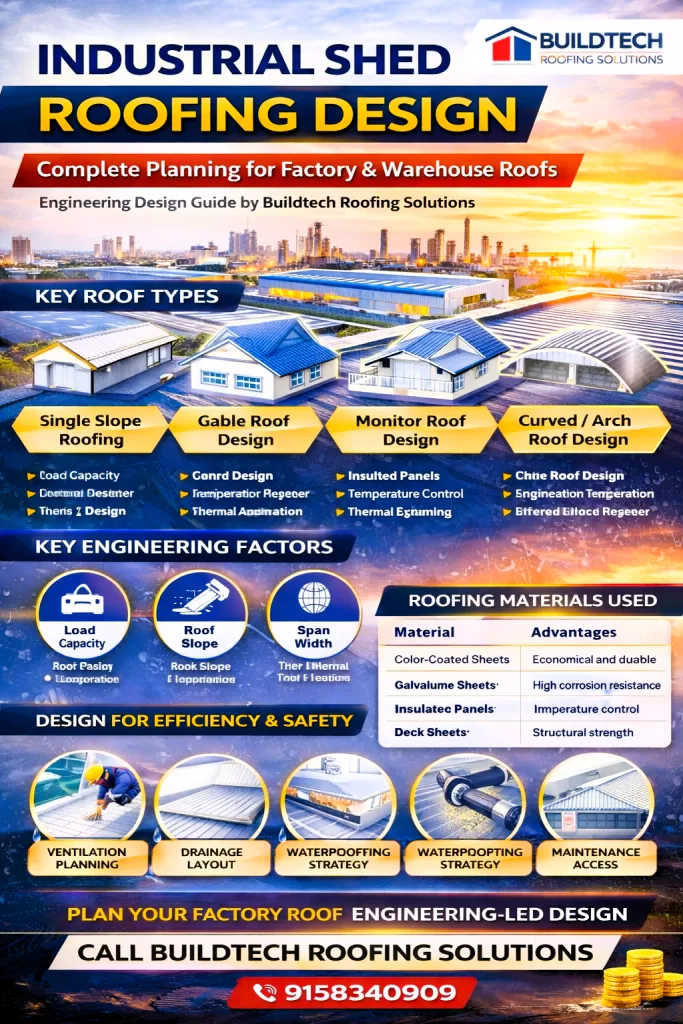
Industrial Shed Roofing Design Guide: Complete Planning for Factory & Warehouse Roofs

Introduction: Why Industrial Shed Roofing Design Matters Industrial shed construction begins long before installation—it starts with a correct roofing design. A well-designed industrial roof ensures durability, efficient drainage, proper ventilation, and reduced maintenance costs throughout the building lifecycle. In Pune’s climate, where intense sunlight combines with heavy monsoon rainfall, poor design decisions often lead to leakage, overheating, and structural stress. Proper industrial shed roofing design prevents these issues by integrating engineering planning, material science, and operational requirements. This guide explains how industries can design factory and warehouse roofs for long-term performance and efficiency. What Is Industrial Shed Roofing Design? Industrial shed roofing design refers to the engineering and planning process that determines how a roof performs structurally and environmentally. It includes: Design quality directly impacts roof lifespan and operational reliability. Types of Industrial Shed Roofing Designs 1️⃣ Single Slope Roofing A simple roof inclined in one direction. Advantages 2️⃣ Gable Roof Design Two sloping sides meeting at a ridge. Benefits 3️⃣ Monitor Roof Design Raised central section allowing airflow and lighting. Best for 4️⃣ Curved or Arch Roof Design Modern structural system used for large spans. Advantages Key Engineering Factors in Shed Roofing Design Structural Load Capacity Engineers calculate loads, including: Incorrect load assumptions can cause deformation or leakage. Roof Slope Design Slope determines drainage efficiency. Typical industrial slopes: Span Width Planning Large spans require stronger structural systems and correct purlin spacing. Proper spacing improves durability and stability. Thermal Expansion Allowance Metal roofs expand under heat. Design must include: Roofing Materials Used in Industrial Sheds Material Advantages Colour-Coated Sheets Economical and durable Galvalume Sheets High corrosion resistance Insulated Panels Temperature control Deck Sheets Structural strength Material selection depends on the environment and operational needs. Ventilation Design for Industrial Sheds Heat accumulation is a major industrial problem. Effective ventilation includes: Proper airflow reduces indoor temperature and improves worker comfort. Drainage Planning in Shed Roofing Drainage failures are the leading cause of industrial roof leakage. Key components: Engineering drainage during design prevents future repairs. Waterproofing Integration During Design Stage Waterproofing should be planned—not added later. Design integration includes: Early planning reduces long-term maintenance costs. Safety Considerations in Shed Roofing Design Industrial roofs must allow safe maintenance. Important safety provisions: Safety design improves compliance and reduces risk. Energy-Efficient Shed Roofing Design Energy-efficient roofing lowers operating costs. Design strategies include: Energy efficiency improves indoor working conditions. Common Industrial Shed Roofing Design Mistakes Avoid these frequent errors: Most roofing problems originate from early design mistakes. Industrial Shed Roofing Design Process Structured design ensures predictable project outcomes. Why Professional Roofing Design Matters Professional design delivers: Industrial roofing is an engineering system—not just sheet installation. Why Industries Choose Buildtech Roofing Solutions Buildtech Roofing Solutions provides: This ensures industrial sheds perform reliably for years. FAQs: Industrial Shed Roofing Design Which roof design is best for industrial sheds?Gable and monitor roofs are commonly preferred for ventilation and drainage efficiency. What slope is ideal for shed roofing?Typically between 5° and 15°, depending on material and rainfall conditions. How can the heat inside industrial sheds be reduced?Ventilation systems, insulation, and reflective coatings significantly reduce heat gain. Which roofing material lasts longest?Galvalume and insulated roofing systems offer excellent durability. Conclusion: Smart Design Creates Long-Lasting Industrial Roofs Effective industrial shed roofing design combines engineering precision, material selection, ventilation planning, and waterproofing integration. Industries that invest in proper design benefit from improved durability, reduced maintenance, and enhanced operational efficiency. For professional industrial shed roofing planning and installation in Pune, Buildtech Roofing Solutions delivers engineered solutions tailored to industrial performance requirements.

Industrial Shed Roofing Design Guide: Complete Planning for Factory & Warehouse Roofs Read More »

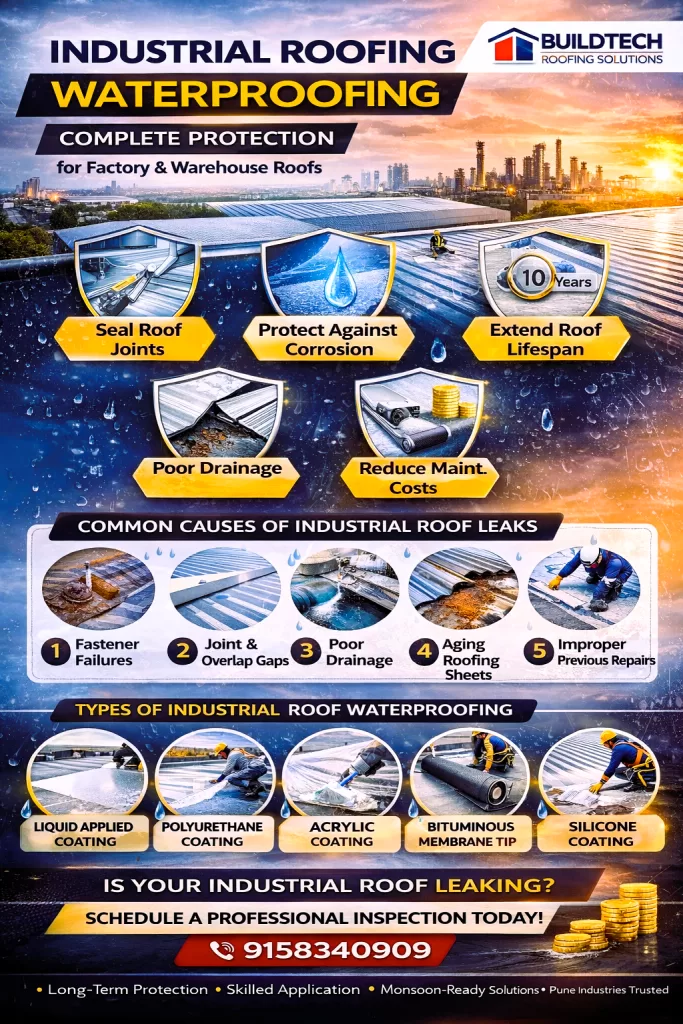
Industrial Roofing Waterproofing Guide: Complete Protection for Factory & Warehouse Roofs

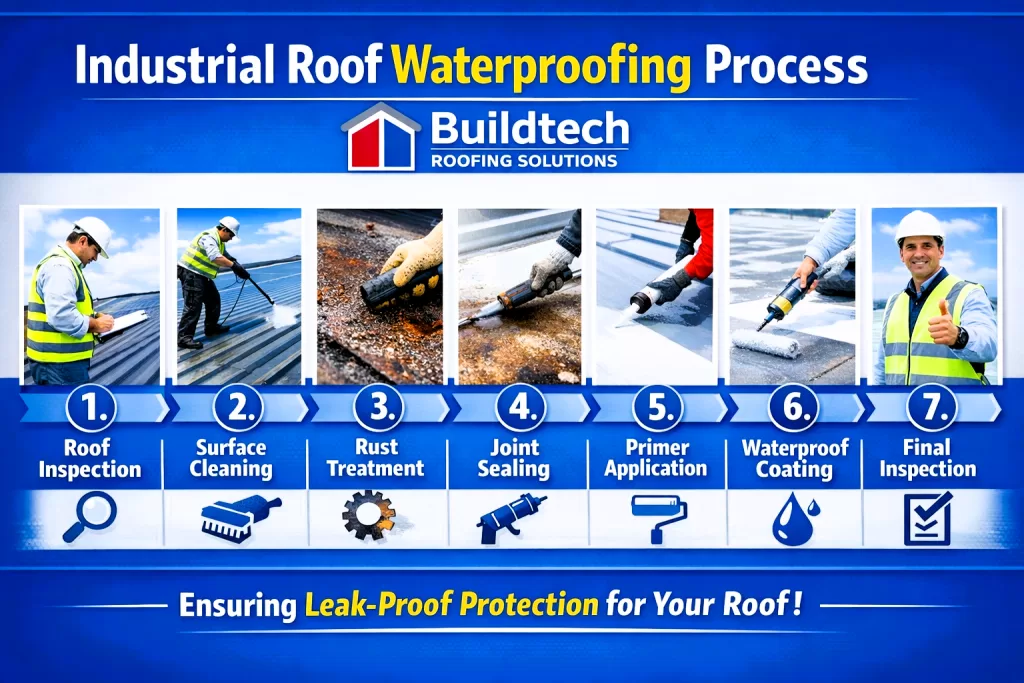
Industrial Roofing Waterproofing: Complete Protection for Factory & Warehouse Roofs Introduction: Why Industrial Roofing Waterproofing Is Critical Industrial roofing waterproofing plays a vital role in protecting factories and warehouses from water damage. In Pune, heavy monsoon rainfall, high humidity, and extreme heat cycles place constant stress on industrial roofs. Over time, even small defects in joints, fasteners, or coatings allow water to penetrate the structure. As a result, leaks begin to damage machinery, inventory, and structural components. Therefore, industrial roofing waterproofing should not be treated as a reactive repair measure. Instead, it must be implemented as a preventive protection strategy. When applied correctly, waterproofing reduces maintenance costs, extends roof lifespan, and ensures uninterrupted operations. What Is Industrial Roofing Waterproofing? Industrial roofing waterproofing is a protective system designed to prevent water penetration and moisture-related damage. It creates a sealed barrier across vulnerable roof areas, including joints, overlaps, fasteners, and drainage points. Primary Objectives: Unlike temporary sealants, professional waterproofing delivers continuous protection. Common Causes of Industrial Roof Leakage Understanding the root cause of leakage ensures long-term solutions. 1️⃣ Fastener Deterioration Loose screws and damaged washers allow rainwater to enter through fixing points. 2️⃣ Joint & Overlap Separation Thermal expansion and contraction gradually create small gaps. 3️⃣ Poor Drainage Systems Blocked gutters cause water ponding, increasing seepage risk. 4️⃣ Ageing Roof Coatings Over time, protective layers degrade and expose metal surfaces. 5️⃣ Improper Patch Repairs Temporary fixes without proper preparation fail quickly. Therefore, industrial roofing waterproofing must address both visible damage and hidden vulnerabilities. Types of Industrial Roofing Waterproofing Systems Different roofing types require different waterproofing solutions. ✔ Liquid-Applied Waterproofing Creates a seamless protective layer across the surface.Ideal for large industrial roofs with complex shapes. ✔ Polyurethane (PU) Coating Highly elastic and flexible.Best suited for metal roofing systems. ✔ Acrylic Waterproof Coating Cost-effective and UV-resistant.Suitable for moderate exposure environments. ✔ Bituminous Membrane Common for RCC concrete roofs.Provides strong water resistance but requires skilled installation. ✔ Silicone Coatings Premium, long-lasting solution.Excellent resistance to UV and heavy rainfall. Correct material selection improves durability and ROI. Waterproofing by Roof Type Roofing Type Recommended Waterproofing Metal Roofing PU or Silicone Coating PEB Roofing Joint sealing + Coating RCC Concrete Roof Membrane Waterproofing Deck Sheet Roofing Seam sealing system Proper matching of system and structure ensures performance. Step-by-Step Industrial Roofing Waterproofing Process Professional waterproofing follows a structured execution method: Surface preparation is the most critical stage. Without it, even premium coatings fail prematurely. Signs Your Industrial Roof Needs Waterproofing Watch for these early indicators: If these signs appear, immediate industrial roofing waterproofing can prevent structural damage. Waterproofing vs Roof Replacement Waterproofing Roof Replacement Lower cost High capital investment Faster execution Longer downtime Extends roof lifespan Full reconstruction Minimal operational impact Major disruption In many cases, waterproofing provides a cost-effective alternative to replacement. Best Time for Industrial Roofing Waterproofing in Pune Timing significantly affects durability. Ideal Periods: Avoid application during active rainfall for optimal adhesion. How Industrial Roofing Waterproofing Improves ROI Industrial roofing waterproofing enhances financial performance by: Over time, preventive waterproofing lowers total lifecycle cost. Common Waterproofing Mistakes to Avoid Industries often reduce effectiveness due to: Professional execution prevents these costly errors. Why Choose Buildtech Roofing Solutions in Pune? Buildtech Roofing Solutions delivers structured, inspection-based waterproofing services: This engineering-led approach ensures long-lasting waterproof performance. FAQs: Industrial Roofing Waterproofing How long does industrial roofing waterproofing last?Typically, 5–10 years, depending on the system and maintenance. Which waterproofing system is best for metal roofs?PU and silicone coatings offer high flexibility and durability. Can waterproofing stop existing leaks?Yes, when surface preparation and joint sealing are done correctly. How often should waterproofing be inspected?At least once annually, especially before the monsoon season. Conclusion: Waterproofing Is Preventive Protection, Not Just Repair Industrial roofing waterproofing is a strategic investment that protects infrastructure, prevents downtime, and extends roof life. Instead of waiting for leaks to disrupt operations, factories and warehouses should adopt preventive waterproofing solutions. For professional industrial roofing waterproofing in Pune, Buildtech Roofing Solutions provides inspection-based planning and long-term protection designed for demanding industrial environments.

Industrial Roofing Waterproofing Guide: Complete Protection for Factory & Warehouse Roofs Read More »

Industrial Roofing Waterproofing Guide: Complete Protection for Factory & Warehouse Roofs

Introduction: Why Industrial Roof Waterproofing Is Critical Industrial roofs face constant exposure to heat, rain, dust, and structural movement. In Pune, intense monsoon rainfall exposes even minor roofing defects, leading to leaks, corrosion, and operational disruption. Many industries treat waterproofing only as a repair activity after leakage occurs. In reality, industrial roofing waterproofing is a preventive protection system that safeguards infrastructure, machinery, and production continuity. A professionally waterproofed roof reduces maintenance costs, prevents corrosion, and significantly extends roofing lifespan. What Is Industrial Roofing Waterproofing? Industrial roof waterproofing is a protective treatment applied to roofing systems to prevent water penetration and moisture damage. Key Objectives Unlike temporary patchwork repairs, waterproofing creates a continuous protective barrier. Common Causes of Industrial Roof Leakage 1️⃣ Fastener Failures Loose screws and damaged washers allow water to seep through fixing points. 2️⃣ Joint & Overlap Gaps Thermal expansion and contraction create openings in sheet overlaps. 3️⃣ Poor Drainage Blocked gutters cause water accumulation and seepage. 4️⃣ Ageing Roofing Sheets Protective coatings degrade over time, exposing metal surfaces. 5️⃣ Improper Previous Repairs Temporary sealants without preparation fail quickly. Understanding root causes ensures long-term solutions instead of repeated repairs. Types of Industrial Roof Waterproofing Systems Liquid Applied Waterproofing A seamless coating system is applied across roof surfaces. Advantages Polyurethane (PU) Waterproof Coating Highly elastic system ideal for industrial metal roofs. Benefits Acrylic Waterproof Coating Cost-effective solution with UV resistance. Best suited for moderate exposure environments. Bituminous Membrane Waterproofing Heavy-duty waterproof layer commonly used on concrete roofs. Provides strong water resistance but requires skilled installation. Silicone Roof Coatings Premium solution offering high weather resistance and durability. Ideal for long-term protection. Waterproofing Solutions for Different Roofing Types Roofing Type Recommended Waterproofing Metal Roofing PU or acrylic coatings PEB Roofing Joint sealing + coating Concrete Roof Membrane waterproofing Deck Sheet Roofing Seam sealing systems Correct system selection ensures performance. Industrial Roof Waterproofing Process (Step-by-Step) Proper preparation is the most critical stage for durability. Signs Your Industrial Roof Needs Waterproofing Early waterproofing prevents structural damage. Waterproofing vs Roof Replacement Waterproofing Roof Replacement Lower cost High investment Faster execution Longer downtime Extends lifespan Full reconstruction Minimal disruption Operational impact Waterproofing is often the most economical first solution. Best Time for Waterproofing in Pune Ideal Periods Avoid application during active rainy conditions. How Waterproofing Improves Roofing ROI Waterproofing directly contributes to financial performance: Preventive waterproofing offers a strong return on investment over time. Common Waterproofing Mistakes Industries Make Professional execution prevents premature failure. Why Professional Waterproofing Matters Industrial roofing requires specialized expertise because: Improper application often causes leaks to return quickly. Why Industries Choose Buildtech Roofing Solutions Buildtech Roofing Solutions delivers structured waterproofing services: This ensures long-lasting waterproof performance. FAQs: Industrial Roofing Waterproofing How long does industrial roof waterproofing last?Typically, 5–10 years, depending on coating type and maintenance. Which waterproofing is best for metal roofs?PU and silicone coatings perform best due to their flexibility. Can waterproofing stop existing leaks?Yes, when proper surface preparation and sealing are performed. How often should waterproofing be done?Inspection annually and recoating based on condition. Conclusion: Waterproofing Protects Your Industrial Investment Industrial roofing waterproofing is not merely a repair—it is a strategic protection system that preserves infrastructure and prevents costly disruptions. Proper waterproofing safeguards factories and warehouses from monsoon damage while improving roof longevity and operational reliability. For professional waterproofing inspection and solutions in Pune, Buildtech Roofing Solutions provides engineered protection designed for industrial environments.

Industrial Roofing Waterproofing Guide: Complete Protection for Factory & Warehouse Roofs Read More »

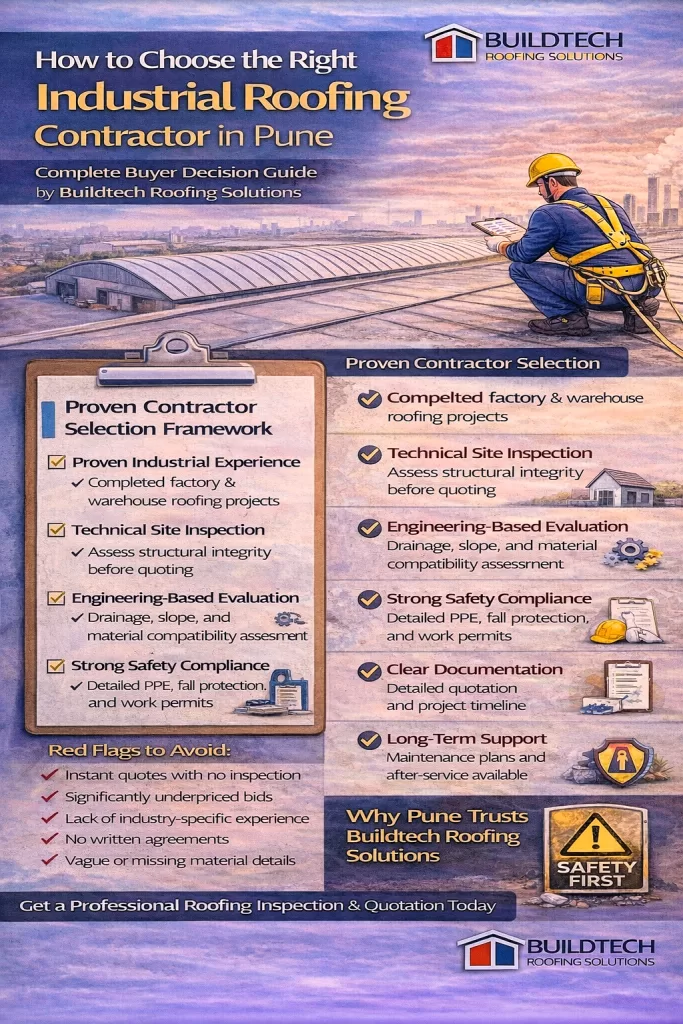
How to Choose the Right Industrial Roofing Contractor in Pune

Introduction: The Contractor You Choose Determines Roof Performance Industrial roofing success depends less on materials and more on who installs them. Even premium roofing sheets can fail if installed incorrectly, while properly engineered installation can extend roof lifespan for decades. Factories and warehouses in Pune often face recurring leakage, corrosion, or repair costs not because of poor materials—but because of choosing the wrong contractor. This guide explains how to evaluate contractors professionally so your roofing investment delivers long-term reliability. Why Industrial Roofing Requires Specialized Contractors Industrial roofing differs significantly from residential or small commercial roofing. Industrial roofing involves: A general contractor may handle construction, but industrial roofing requires technical expertise and system-level understanding. Essential Qualities of a Professional Industrial Roofing Contractor 1️⃣ Proven Industrial Project Experience Look for contractors who have completed: Experience with similar structures reduces execution risks. Ask for: project photos, case studies, and references. 2️⃣ Engineering-Based Approach Professional contractors evaluate before recommending solutions. They should assess: If a contractor recommends solutions without inspection, it is a warning sign. 3️⃣ Deep Material Knowledge A qualified contractor explains: They guide decisions instead of pushing one product. 4️⃣ Safety & Compliance Standards Industrial roofing is high-risk work at height. Professional contractors must provide: Safety reflects professionalism and protects your organization legally. 5️⃣ Clear Scope and Documentation Reliable contractors provide: Transparency prevents disputes later. Red Flags When Choosing Roofing Contractors Avoid contractors who: Low-cost shortcuts usually result in higher long-term expenses. Questions You Must Ask Before Hiring Use these questions during evaluation: Professional contractors answer clearly and confidently. Why Site Inspection Is Non-Negotiable Every industrial roof is unique. Inspection helps determine: Without inspection, quotations are assumptions—not solutions. Contractor Comparison Checklist Criteria Contractor A Contractor B Industrial Experience Engineering Assessment Safety Compliance Documentation Warranty Maintenance Support This structured comparison improves decision quality. Why the Cheapest Contractor Is Usually the Most Expensive Short-term savings often create long-term problems: Lifecycle cost—not quotation price—defines true value. Importance of After-Service Support Roofing is not a one-time activity. Professional contractors provide: After-service support ensures sustained performance. How Professional Contractors Improve Roofing ROI A specialized contractor increases ROI by: Professional execution converts roofing into a long-term asset. Why Industries in Pune Choose Buildtech Roofing Solutions Buildtech Roofing Solutions follows an engineering-led process: This approach minimizes risk while maximizing durability and return on investment. Final Contractor Selection Framework Choose a contractor who provides: ✔ Technical inspection before quotation✔ Engineering-based recommendations✔ Safety compliance procedures✔ Clear documentation✔ Proven industrial experience✔ Long-term support If any of these elements are missing, reconsider the decision. FAQs: Industrial Roofing Contractor Selection How do I choose an industrial roofing contractor?Evaluate experience, engineering approach, safety compliance, and documentation—not just price. Should I choose the lowest quote?Not necessarily. Lower quotes often exclude critical long-term protections. Why is inspection important before quotation?Because roofing solutions must match structural and environmental conditions. Do contractors provide maintenance support?Professional industrial roofing contractors usually offer maintenance programs. Conclusion: The Right Contractor Protects Your Investment Selecting the right industrial roofing contractor determines whether your roof becomes a reliable asset or a recurring problem. Careful evaluation, proper inspection, and choosing expertise over price ensure durable performance and predictable costs. For professional consultation and industrial roofing solutions in Pune, Buildtech Roofing Solutions provides engineering-driven planning, safe execution, and long-term support.

How to Choose the Right Industrial Roofing Contractor in Pune Read More »

Industrial Roofing ROI Guide: Cost vs Long-Term Savings for Factories & Warehouses

Introduction: Roofing Is an Investment, Not an Expense Industrial roofing decisions are often treated like routine purchases, evaluated only on initial price. In reality, a roof is a long-term operational asset that directly affects production continuity, maintenance budgets, and facility lifespan. The cheapest quotation rarely delivers the best value. What matters is return on investment (ROI)—how much money the roof saves over its lifetime compared to what it costs. Understanding industrial roofing ROI allows factory owners, procurement teams, and financial managers in Pune to justify capital decisions based on measurable savings rather than assumptions. This guide explains how roofing generates financial returns, what hidden costs buyers overlook, and how to calculate ROI realistically. Understanding ROI in Industrial Roofing ROI Formula(Return − Investment) ÷ Investment In industrial roofing, “returns” are not direct revenue but cost savings and risk reduction, such as: A well-designed roofing system produces continuous operational savings year after year. Where Industrial Roofing Generates Financial Returns 1. Lower Maintenance Costs High-quality roofing systems require fewer repairs. Properly installed metal or PEB roofing typically needs only periodic inspections and minor resealing, significantly reducing annual expenditure. 2. Reduced Production Downtime Roof leaks can halt production lines, damage materials, and disrupt schedules. Even a few hours of downtime can cost more than preventive roofing maintenance for an entire year. 3. Energy Efficiency Gains Reflective coatings, insulation systems, and ventilation reduce internal heat. This lowers cooling costs and improves working conditions. 4. Longer Service Life Premium roofing materials last longer. Extending roof lifespan by even five years dramatically improves ROI because replacement costs are postponed. ROI Comparison: Cheap Roofing vs Engineered Roofing Factor Low-Cost Roofing Engineered Roofing Initial Cost Low Medium Repairs Frequent Rare Downtime Risk High Minimal Lifespan Short Long Maintenance Cost High Low ROI Low High The cheapest roof is rarely the most economical in the long run. Hidden Costs Most Buyers Ignore Many industries underestimate indirect costs caused by poor roofing: These costs rarely appear in quotations but strongly affect ROI. ROI by Roofing Type Metal Roofing Provides strong ROI due to durability, moderate cost, and low maintenance. Ideal for most factories and warehouses. PEB Roofing Systems Often deliver the highest ROI for large facilities because of engineered design, optimized material usage, and minimal structural stress. Concrete Roofing Typically lower ROI for industrial sheds because of higher maintenance and waterproofing requirements. Insulated Panels Offer high ROI in facilities where temperature control reduces energy consumption or protects sensitive goods. Realistic ROI Scenario (Illustrative Example) Consider two factories choosing between roofing options: Factory A – Low-Cost Roof Factory B – Engineered Roof After several years, Factory B’s total cost becomes significantly lower—even though its starting price was higher. This is the core principle of ROI. How to Calculate Roofing ROI for Your Facility Follow this practical framework: When these factors are combined, ROI becomes measurable rather than theoretical. When Investing More Upfront Is Financially Smarter Higher initial investment makes sense when: In such facilities, durability and reliability outweigh upfront savings. Signs Your Current Roof Is Costing You Money Your roof may be producing negative ROI if you notice: These indicators suggest the roof is consuming more money than it saves. How Professional Roofing Improves ROI Professional industrial roofing contractors enhance returns through: Quality execution reduces long-term operational costs. Financial Impact of Preventive Maintenance Preventive maintenance plays a major role in ROI. Without maintenance With maintenance Maintenance turns roofing into a predictable expense instead of a surprise liability. ROI Decision Checklist for Industrial Buyers Before approving a roofing project, decision-makers should verify: This checklist prevents short-term decisions that harm long-term ROI. Why Industries Choose Buildtech for High-ROI Roofing Industries across Pune select Buildtech Roofing Solutions because of its lifecycle-focused approach: This method ensures roofing investments deliver measurable financial returns. FAQs: Industrial Roofing ROI What is ROI in industrial roofing?It measures how much cost savings and operational benefits a roofing system delivers compared to its investment cost. Is expensive roofing cheaper in the long run?Often yes. Higher-quality systems usually require fewer repairs and last longer. Which roofing type has the best ROI?PEB and well-designed metal roofing systems generally provide the highest returns for industrial facilities. How can I estimate my roof’s ROI?Add repair savings, downtime reduction, and lifespan extension, then compare against installation cost. Conclusion: Smart Roofing Investments Deliver Long-Term Profit Industrial roofing decisions influence maintenance costs, productivity, and infrastructure reliability for decades. Evaluating industrial roofing ROI helps businesses move beyond price comparisons and choose systems that deliver long-term financial value. Factories and warehouses in Pune that invest in engineered roofing solutions typically experience fewer disruptions, lower maintenance expenses, and stronger operational stability. For a professional ROI assessment tailored to your facility, Buildtech Roofing Solutions provides data-driven recommendations and execution designed for lasting performance.

Industrial Roofing ROI Guide: Cost vs Long-Term Savings for Factories & Warehouses Read More »

Industrial Roofing Safety & Compliance Guide: Protecting Workers, Assets & Operations

Introduction: Why Roofing Safety Is a Critical Industrial Priority Industrial roofing is one of the highest-risk activities in factory and warehouse environments. Work-at-height exposure, metal surface instability, weather conditions, and structural load limitations create significant safety challenges. For industries in Pune, ensuring industrial roofing safety and compliance is not just a regulatory obligation—it is essential for worker protection, uninterrupted operations, and liability control. Accidents during roofing work can result in production downtime, legal complications, and reputational damage. This guide explains the key safety risks, required preventive measures, compliance considerations, and best practices for executing safe industrial roofing work. Why Industrial Roofing Safety Is Critical Roofing activities introduce multiple risk factors: Even routine maintenance can become hazardous without structured safety planning. Key Industrial Roofing Safety Risks 1️⃣ Fall Hazards The most common and severe risk in industrial roofing is. Risk zones Fall incidents can cause severe injuries and operational disruption. 2️⃣ Structural Load Risks Industrial roofs are engineered for specific load capacities. Improper practices such as: can create structural stress or collapse risks. 3️⃣ Electrical Hazards Factories often have: Roof work must consider electrical isolation and a safe distance from energized components. 4️⃣ Weather-Related Risks Pune’s climate introduces: Wet metal roofing significantly increases slip hazards. Essential Safety Measures for Industrial Roofing Work ✔ Personal Protective Equipment (PPE) Mandatory PPE includes: PPE usage must be enforced—not optional. ✔ Fall Protection Systems Fall protection is a structured safety system. Recommended controls These systems dramatically reduce fall risk. ✔ Controlled Roof Access Only authorized personnel should access industrial roofs. Controlled access reduces unauthorized exposure. Compliance Considerations for Industrial Roofing in India Industrial roofing work falls under general factory safety and work-at-height compliance norms. Key compliance principles: While regulations provide frameworks, practical enforcement ensures real protection. Safety Checklist Before Starting Roofing Work Before any installation, repair, or inspection: This pre-work planning stage prevents most accidents. Safety During Roof Maintenance & Repairs Maintenance tasks introduce specific hazards. Fastener tightening & joint resealing Gutter cleaning Sheet replacement Phased execution reduces concentrated load and risk. Role of Safety Documentation & Reporting Professional roofing work should include: Documentation protects both contractor and client. Common Safety Violations in Industrial Roofing These shortcuts create unnecessary exposure to risk. Professional Roofing Contractors & Compliance A professional industrial roofing contractor ensures: Safety should be integrated into execution—not treated as an afterthought. Why Safety-First Roofing Matters for Businesses Industrial roofing accidents can result in: Safety investments are far less expensive than accident consequences. Why Choose Buildtech for Safe & Compliant Roofing in Pune Buildtech Roofing Solutions follows a structured safety-first approach: This ensures roofing work is completed efficiently without compromising worker or facility safety. FAQs: Industrial Roofing Safety and Compliance Is industrial roofing considered high-risk work?Yes. Work-at-height and structural exposure make it inherently high-risk. What safety equipment is mandatory for roof work?Safety harness, helmet, non-slip footwear, and fall protection systems are essential. Who is responsible for roofing safety compliance?Both the contractor and facility management share responsibility for safe execution. Can roofing work continue during the monsoon?It is generally avoided during active rainfall due to slip and electrical risks. Conclusion: Safety Is a Business Investment Industrial roofing safety and compliance are not merely regulatory requirements—they are operational safeguards. Structured safety planning, professional execution, and documented compliance prevent accidents, reduce liability, and protect long-term business stability. For safety-compliant industrial roofing services in Pune, Buildtech Roofing Solutions delivers professional, risk-aware, and documentation-backed execution.

Industrial Roofing Safety & Compliance Guide: Protecting Workers, Assets & Operations Read More »

Industrial Roofing Warranty & Lifespan Guide: How Long Do Factory & Warehouse Roofs Last?

Introduction: Why Lifespan Matters More Than Initial Cost When industries evaluate roofing systems, the focus often stays on initial pricing. However, roofing is a long-term infrastructure decision. The real question is not “How much does it cost today?” but “How long will it perform reliably?” Understanding industrial roofing warranty and lifespan helps factory owners and facility managers in Pune make informed investment decisions. Warranty terms, maintenance practices, environmental exposure, and installation quality all influence how long a roof truly lasts. This guide explains lifespan expectations, warranty coverage, common misconceptions, and how proper maintenance protects both your roof and your warranty. Average Lifespan of Industrial Roofing Types 1️⃣ Metal Roofing Typical Lifespan: 20–30 yearsMetal roofing remains the most common industrial solution due to durability and cost efficiency. What affects lifespan? With preventive care, metal roofs frequently exceed two decades of service in Pune’s climate. 2️⃣ PEB Roofing Systems Typical Structural Lifespan: 25+ years Pre-Engineered Building systems combine structural steel frames with optimized roofing sheets. Advantages PEB systems typically deliver the lowest lifecycle cost among industrial roofing types when maintained properly. 3️⃣ Concrete (RCC) Roofing Structural Lifespan: LongWaterproofing Lifespan: Shorter (requires periodic renewal) Concrete roofs are structurally strong but depend heavily on waterproofing layers. Over time, cracks and expansion cycles reduce performance. Maintenance frequency is higher compared to metal or PEB roofing. 4️⃣ Insulated Roofing Panels Typical Lifespan: 15–25 years Used in temperature-sensitive industries, insulated panels perform well when seal integrity is maintained. Environmental exposure and joint condition largely determine durability. What Does an Industrial Roofing Warranty Cover? Warranties vary by manufacturer and contractor. Understanding coverage avoids future disputes. Material Warranty Covers: Usually provided by the material manufacturer. Workmanship Warranty Covers: Provided by the roofing contractor. What Warranties Usually Do NOT Cover Many warranties require proof of maintenance compliance. Warranty vs Actual Lifespan: Important Distinction A 10-year warranty does not mean the roof lasts only 10 years. Similarly, a 25-year product claim does not guarantee 25 years without maintenance. Warranty = protection against defectsLifespan = performance under real-world conditions Maintenance, inspection, and environmental exposure determine real lifespan. Factors That Affect Roofing Lifespan in Pune 1️⃣ Monsoon Intensity Heavy rainfall stresses joints, drainage systems, and sealants. 2️⃣ Heat & Expansion Cycles Repeated thermal expansion and contraction affect fasteners and overlaps. 3️⃣ Industrial Pollution Chemical exposure accelerates corrosion. 4️⃣ Drainage Efficiency Water ponding significantly reduces lifespan. 5️⃣ Maintenance Frequency Regular inspections extend roof life by years. Pune’s climate makes preventive maintenance essential. Signs Your Industrial Roof Is Nearing the End of Life When these signs appear consistently, replacement or retrofit should be evaluated. How Maintenance Extends Roofing Lifespan Maintenance is the most powerful lifespan multiplier. Key actions These small steps can extend metal and PEB roof performance well beyond standard expectations. Warranty Compliance: Why Documentation Matters To maintain warranty validity: Professional documentation protects both warranty and asset value. Replacement vs Retrofit Decision Guide Roof Condition Recommended Action Minor wear Preventive maintenance Local corrosion Targeted repair Moderate aging Partial retrofit Structural deterioration Full replacement An engineering assessment prevents premature replacement or delayed upgrades. How to Maximize Roofing Lifespan (Practical Advice) Long-term durability begins with correct decisions at the installation stage. Why Industries in Pune Choose Buildtech Roofing Solutions Buildtech Roofing Solutions focuses on: This approach ensures roofing systems perform for decades—not just through the warranty period. FAQs: Industrial Roofing Warranty and Lifespan How long does an industrial metal roof last?Typically, 20–30 years with proper maintenance. What voids an industrial roofing warranty?Poor maintenance, unauthorized changes, and misuse. Does maintenance affect warranty validity?Yes. Many warranties require documented maintenance. When should an industrial roof be replaced?When structural integrity declines or repair frequency becomes excessive. Conclusion: Invest for Lifespan, Not Just Warranty Period Understanding industrial roofing warranty and lifespan allows factories and warehouses to plan strategically rather than reactively. The right materials, professional installation, and consistent maintenance turn roofing into a stable, long-term asset instead of a recurring expense. For a professional lifespan assessment and warranty review in Pune, Buildtech Roofing Solutions provides engineering-backed guidance and execution.

Industrial Roofing Warranty & Lifespan Guide: How Long Do Factory & Warehouse Roofs Last? Read More »

©2023 buildtechroof. All Rights Reserved.