Buildtechroof

Decking Sheets in Pune – Complete Guide for Industrial & Commercial Construction

Decking Sheets in Pune for Industrial & Commercial Roof

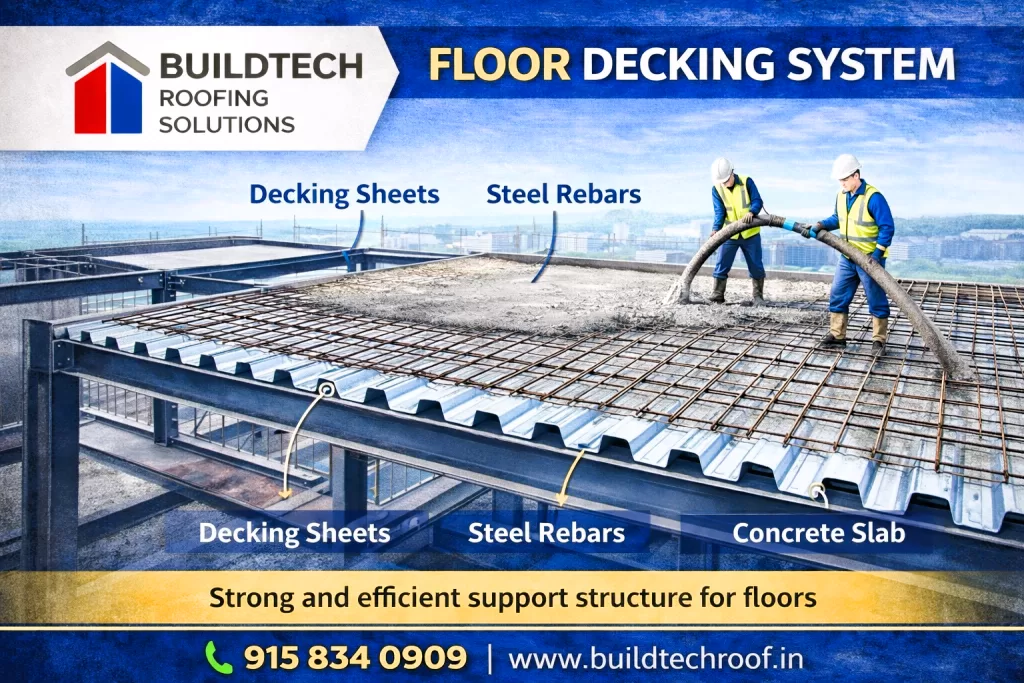
Introduction Modern construction requires materials that are strong, durable, efficient, and cost-effective. Traditional methods for slabs and roofing are often time-consuming, labour-intensive, and expensive. This is where Decking Sheets Pune solutions by Buildtech Roofing Solutions provide a modern alternative. Decking sheets are crucial for industrial and commercial construction due to their strength, lightweight nature, ease of installation, and cost-effectiveness. They find use in factories, warehouses, commercial complexes, and multi-storey buildings. In Pune, a rapidly growing industrial hub, businesses are adopting decking sheets. This choice helps reduce construction time and improve structural performance. This comprehensive guide will help you understand decking sheets, their types, benefits, applications, installation process, and why they are a smart choice for modern construction. What Are Decking Sheets? Decking sheets are corrugated metal sheets that provide structural support for concrete slabs or roofing systems. They act as: These sheets typically consist of galvanised steel, which ensures durability and corrosion resistance. Once you pour concrete over them, they create a composite structure that increases strength and stability. Once we pour concrete over them, they create a composite structure that increases strength and stability. How Decking Sheets Work Decking sheets function as a base layer for concrete slabs. Working Process: This system improves structural performance and minimises material usage, which leads to fewer transit impacts. Types of Decking Sheets 1. Floor Decking Sheets These sheets support concrete floors in multi-storey buildings. Features: Applications: 2. Roof Decking Sheets Used for roofing applications where structural support is required. Benefits: 3. Composite Decking Sheets Designed to work with concrete to create a strong composite structure. Advantages: 4. Non-Composite Decking Sheets Used as simple support systems without bonding with concrete. Key Features of Decking Sheets 1. High Strength Decking sheets are designed to handle heavy loads, making them ideal for industrial use. 2. Lightweight Choosing decking sheets instead of traditional slabs reduces the overall structural weight. This change enhances the building’s efficiency by making it lighter. This solution simplifies construction and enhances efficiency, making it a smarter choice for building projects. 3. Corrosion Resistance Galvanised coating protects sheets from rust and environmental damage. 4. Fast Installation Prefabricated sheets allow quick construction. 5. Cost Efficiency It substantially reduces both material and labor costs. 6. Versatility Can be used for flooring and roofing applications. Benefits of Decking Sheets 1. Faster Construction Decking sheets significantly reduce construction time. 2. Reduced Material Usage Less concrete and steel are required. 3. Improved Structural Performance Composite action increases strength and durability. 4. Cost Savings Lower labor and material costs lead to a decrease in overall project expenses. 5. Safety A stable working platform is created during construction. 6. Long Lifespan Highly durable and resistant to environmental conditions. Applications of Decking Sheets Decking sheets are widely used in: Decking Sheets vs Traditional Slab Construction Feature Decking Sheets Traditional Slab Construction Speed Fast Slow Cost Lower Higher Weight Lightweight Heavy Strength High Medium Labor Requirement Low High Step-by-Step Installation Process Step-1 – Structural Preparation Ensure the steel framework is ready and aligned. Step-2 – Decking Sheet Placement Sheets are placed over beams and aligned properly. Step-3 – Fixing Sheets are secured using fasteners or welding. Step-4 – Reinforcement Placement Steel reinforcement is added if required. Step-5 – Concrete Pouring Concrete is poured over the decking sheets. Step-6 – Finishing & Curing Concrete is allowed to cure for strength development. Advantages for Industrial Projects Maintenance Tips Cost of Decking Sheets in Pune The cost depends on: 💡 Tip: Investing in high-quality decking sheets ensures long-term savings. Why Choose Buildtech Roofing Solutions Pune Buildtech Roofing Solutions is a trusted provider of industrial roofing and structural systems. Key Advantages: ✔ High-quality decking sheets✔ Expert installation team✔ Customised solutions✔ Competitive pricing✔ Fast project execution Industries Served Future of Construction with Decking Sheets Decking sheets are transforming modern construction due to: They are becoming a preferred choice for developers and industrial projects. Conclusion Decking sheets offer a perfect combination of strength, efficiency, and cost-effectiveness. With Decking Sheets Pune solutions by Buildtech Roofing Solutions, businesses can achieve faster construction, stronger structures, and long-term durability.

Decking Sheets in Pune for Industrial & Commercial Roof Read More »
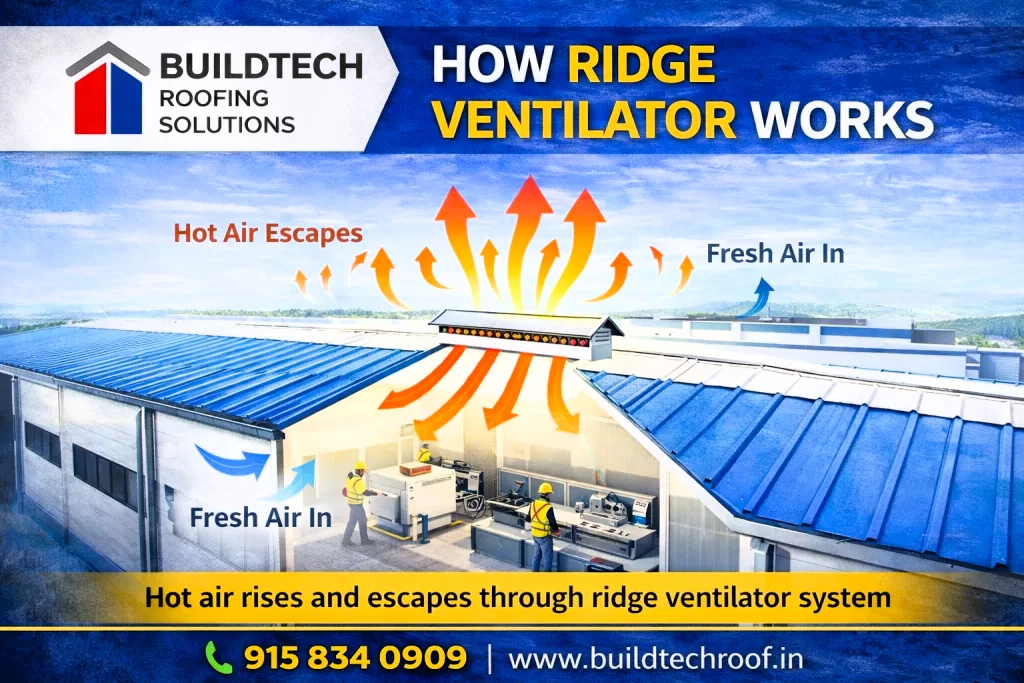
Ridge Ventilator System in Pune

Ridge Ventilator System in Pune

Introduction Industrial buildings such as factories, warehouses, logistics hubs, and manufacturing units generate a significant amount of internal heat due to machinery, production processes, and limited airflow. In cities like Pune, where temperatures can rise considerably during summer, this heat buildup becomes a major challenge. Poor ventilation leads to: This is where the Ridge Ventilator System Pune solutions by Buildtech Roofing Solutions provide an efficient and cost-effective solution. Ridge ventilators are natural ventilation systems installed at the highest point of industrial roofs. They allow hot air to escape, improving airflow and maintaining a balanced indoor environment without using electricity. This comprehensive guide explains everything about ridge ventilators, including working principles, types, benefits, installation process, and industrial applications. What is a Ridge Ventilator System? A ridge ventilator is a roof-mounted ventilation system installed along the ridge line of a building. Its primary function is to: It works on the principle of natural convection, where hot air rises and escapes through the roof opening. How Ridge Ventilators Work Ridge ventilators operate based on natural airflow dynamics: Step-by-step working: This creates a continuous airflow cycle. Importance of Industrial Ventilation Proper ventilation is essential for industrial buildings. 1. Temperature Control Excess heat is removed, maintaining a comfortable environment. 2. Worker Safety & Comfort Improved airflow reduces heat stress and enhances productivity. 3. Energy Savings Natural ventilation reduces dependence on fans and AC systems. 4. Moisture Control Prevents condensation and corrosion. 5. Equipment Protection Maintains optimal temperature for machinery. Types of Ridge Ventilator Systems 1. Turbo Ridge Ventilators These ventilators use wind energy to rotate and enhance airflow. Features: 2. Static Ridge Ventilators Fixed ventilators with no moving parts. Advantages: 3. Monitor Roof Ventilators Raised structures along the ridge for maximum airflow. Best For: Key Features of Ridge Ventilators 1. Natural Ventilation Operates without electricity. 2. Continuous Airflow Provides constant ventilation. 3. Weather Protection Designed to prevent rainwater entry. 4. Durable Construction Made from corrosion-resistant materials. 5. Low Maintenance Minimal servicing required. Benefits of Ridge Ventilator Systems 1. Reduces Indoor Temperature Helps maintain cooler working conditions. 2. Improves Air Quality Removes stale air and pollutants. 3. Enhances Productivity Comfortable workers perform better. 4. Reduces Energy Costs Less dependency on electrical ventilation. 5. Prevents Moisture Damage Avoids condensation-related issues. 6. Eco-Friendly Solution Supports sustainable building practices. Applications of Ridge Ventilators Ridge ventilators are widely used in: Ridge Ventilator vs Exhaust Fans Feature Ridge Ventilator Exhaust Fan Power Requirement No Yes Maintenance Low High Cost One-time Recurring Airflow Continuous Limited Noise Silent Noisy Step-by-Step Installation Process Step-1 – Site Inspection Evaluate roof structure and ventilation requirements. Step-2 – Design Planning Determine ventilator size, placement, and quantity. Step-3 – Ridge Opening Creation Create an opening along the roof ridge. Step-4 – Ventilator Installation Install the ventilator structure securely. Step-5 – Sealing & Waterproofing Ensure no water leakage. Step-6 – Final Inspection Check airflow efficiency and installation quality. Factors to Consider Before Installation Maintenance Tips Cost of Ridge Ventilator System in Pune Cost depends on: 💡 Tip: Ridge ventilators provide long-term savings by reducing energy costs. Why Choose Buildtech Roofing Solutions Pune Buildtech Roofing Solutions is a leading provider of industrial ventilation systems. Key Advantages: ✔ High-quality ventilators✔ Expert installation team✔ Customised industrial solutions✔ Competitive pricing✔ Fast project execution Industries Served Future of Industrial Ventilation With increasing focus on: Ridge ventilators are becoming essential in modern industrial infrastructure. Conclusion Ridge ventilator systems provide an efficient, cost-effective, and eco-friendly solution for industrial ventilation. With Ridge Ventilator System Pune solutions by Buildtech Roofing Solutions, businesses can achieve better airflow, reduced heat, and improved working conditions.

Ridge Ventilator System in Pune Read More »

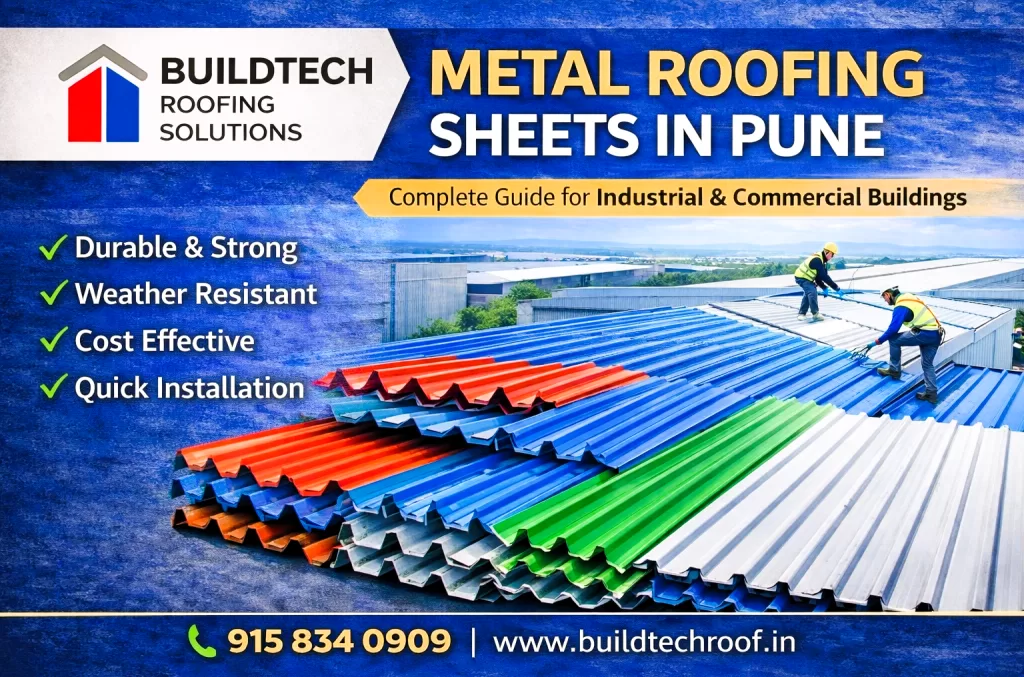
Metal Roofing Sheets in Pune

Metal Roofing Sheets in Pune for Industrial & Commercial Buildings

Introduction Industrial and commercial buildings require roofing systems that can withstand harsh environmental conditions, provide structural stability, and ensure long-term performance. In cities like Pune, where buildings face intense sunlight, heavy monsoon rains, and fluctuating temperatures, selecting the right roofing material becomes critical. Metal roofing sheets have emerged as one of the most reliable and widely used solutions for industrial and commercial roofing. Known for their durability, cost-effectiveness, and ease of installation, these sheets are ideal for factories, warehouses, logistics parks, and industrial sheds. This is where Metal Roofing Sheets Pune solutions by Buildtech Roofing Solutions provide high-quality materials and professional installation services tailored to industrial requirements. This comprehensive guide covers everything you need to know about metal roofing sheets, including types, features, benefits, applications, installation process, and expert selection tips. What Are Metal Roofing Sheets? Metal roofing sheets are thin sheets made from steel, aluminium, or alloy-coated metals, designed to provide strong, weather-resistant roofing systems. These sheets are manufactured with protective coatings such as: These coatings enhance durability, corrosion resistance, and aesthetic appeal. Types of Metal Roofing Sheets 1. Colour-Coated Roofing Sheets These are pre-painted metal sheets available in various colours and finishes. Features: Best For: 2. Galvanised Iron (GI) Sheets GI sheets are coated with zinc to prevent rusting. Advantages: Applications: 3. Galvalume Roofing Sheets Galvalume sheets are coated with aluminium, zinc, and silicon. Benefits: 4. Corrugated Roofing Sheets These sheets have a wave-like pattern for added strength. Features: 5. Standing Seam Roofing Sheets A premium roofing system with concealed fasteners. Advantages: Key Features of Metal Roofing Sheets 1. High Strength & Durability Metal sheets are designed to withstand: 2. Weather Resistance Protective coatings prevent corrosion and damage from UV rays. 3. Lightweight Structure Metal sheets reduce structural load, making them ideal for large-span buildings. 4. Long Lifespan With proper maintenance, metal roofs can last 20–30 years. 5. Fire Resistance Metal roofing provides better fire safety compared to traditional materials. 6. Eco-Friendly Metal sheets are recyclable and sustainable. Benefits of Metal Roofing Sheets 1. Cost-Effective Solution Lower installation and maintenance costs make metal roofing economical. 2. Quick Installation Prefabricated sheets allow faster project completion. 3. Low Maintenance Minimal upkeep is required compared to traditional roofing. 4. Versatility Suitable for multiple industrial and commercial applications. 5. Energy Efficiency Reflective coatings reduce heat absorption. Applications of Metal Roofing Sheets Metal roofing sheets are widely used in: Metal Roofing Sheets vs Traditional Roofing Feature Metal Roofing Traditional Roofing Durability High Medium Installation Fast Slow Maintenance Low High Cost Moderate High Lifespan 20–30 Years 10–15 Years Step-by-Step Installation Process Step-1 – Site Inspection Evaluate building structure and requirements. Step-2 – Structural Preparation Ensure purlins and support systems are properly aligned. Step-3 – Sheet Installation Position sheets accurately for proper alignment. Step-4 – Fastening Secure sheets using high-quality fasteners. Step-5 – Sealing & Waterproofing Seal joints and overlaps to prevent leakage. Step-6 – Final Inspection Check alignment, fastening, and leak-proofing. How to Choose the Right Metal Roofing Sheet 1. Thickness Choose an appropriate thickness (0.3mm to 0.6mm) based on the application. 2. Coating Type 3. Climate Conditions Select sheets based on exposure to heat, rain, and corrosion. 4. Budget Balance between initial cost and long-term performance. 5. Application Type Different structures require different sheet profiles. Maintenance Tips for Metal Roofing Cost of Metal Roofing Sheets in Pune The cost depends on: 💡 Tip: Investing in higher-quality sheets reduces long-term maintenance costs. Why Choose Buildtech Roofing Solutions Pune Buildtech Roofing Solutions is a trusted name in industrial roofing. Key Advantages: ✔ Premium quality roofing sheets✔ Expert installation team✔ Customised industrial solutions✔ Competitive pricing✔ Fast project execution Industries Served Service Areas | Pune | Mumbai | Nashik | Kolhapur | Sangli | Satara | Future of Metal Roofing Metal roofing continues to evolve with: It remains one of the most reliable solutions for industrial roofing. Conclusion Metal roofing sheets offer a perfect combination of durability, affordability, and performance. With Metal Roofing Sheets Pune solutions by Buildtech Roofing Solutions, businesses can ensure strong, long-lasting, and efficient roofing systems.

Metal Roofing Sheets in Pune for Industrial & Commercial Buildings Read More »

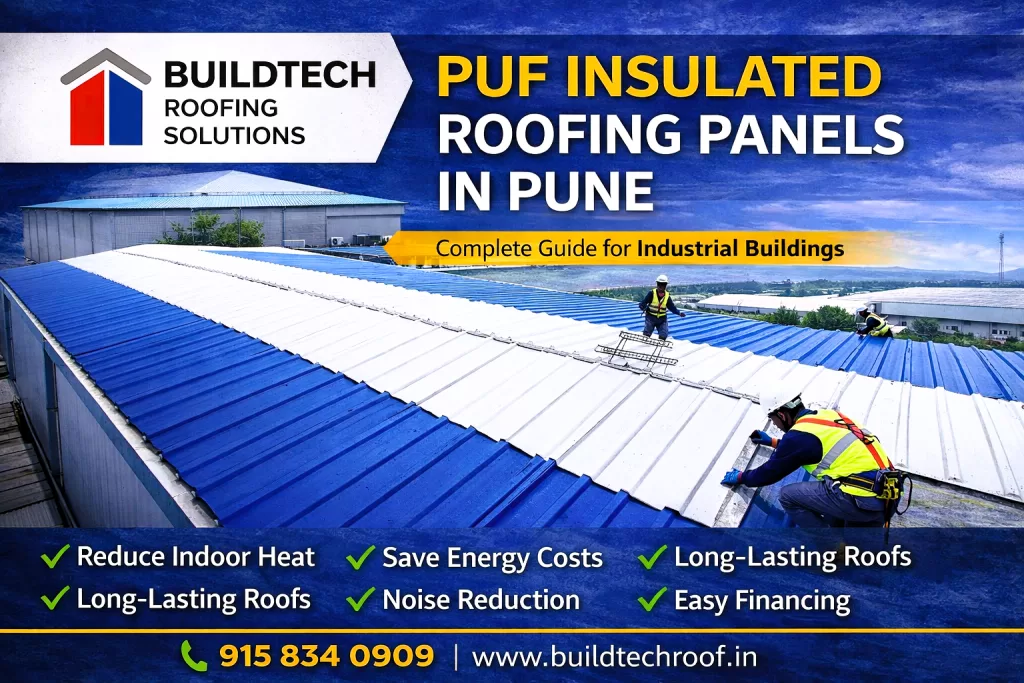
PUF-insulated-roofing-panels-in-Pune

PUF Insulated Roofing Panels in Pune for Industrial Buildings

Introduction Industrial and commercial buildings in Pune operate under challenging environmental conditions. With temperatures rising significantly during summer and heavy rainfall during monsoon, roofing systems must perform efficiently to ensure operational continuity. Traditional roofing systems, such as single metal sheets, often fail to provide adequate insulation. As a result, buildings experience excessive heat, higher energy consumption, and uncomfortable working conditions. This is where PUF Insulated Roofing Panels Pune solutions by Buildtech Roofing Solutions provide a modern and efficient alternative. PUF (Polyurethane Foam) insulated panels are engineered roofing systems designed to deliver superior thermal insulation, structural strength, and long-term durability. These panels are widely used across industries such as manufacturing, warehousing, pharmaceuticals, food processing, and logistics. This comprehensive guide will help you understand everything about PUF roofing panels, including features, benefits, types, applications, installation process, and why they are the preferred choice for industrial roofing. What Are PUF Insulated Roofing Panels? PUF insulated panels are sandwich panels consisting of three layers: The core material acts as a thermal barrier, preventing heat transfer between external and internal environments. These panels are manufactured under controlled conditions to ensure uniform density, strength, and insulation performance. How PUF Panels Work PUF panels reduce heat transfer through a process called thermal resistance. This results in: Key Features of PUF Insulated Roofing Panels 1. High Thermal Insulation PUF panels provide excellent insulation, making them ideal for hot climates like Pune. 2. Lightweight Construction Compared to traditional materials, PUF panels are lightweight, reducing structural load. 3. High Strength & Durability These panels are resistant to: 4. Moisture Resistance PUF panels prevent condensation and water leakage. 5. Energy Efficiency Reduced heat transfer leads to lower electricity consumption. 6. Easy & Fast Installation Prefabricated panels allow quick installation. Benefits of PUF Roofing Panels 1. Significant Temperature Reduction PUF panels can reduce indoor temperature by 5°C to 10°C, improving working conditions. 2. Lower Energy Costs Reduced cooling requirements result in lower electricity bills. 3. Improved Productivity Comfortable working conditions enhance workforce efficiency. 4. Long Lifespan PUF roofing systems last longer than traditional roofing. 5. Noise Reduction The foam core reduces external noise. 6. Environment-Friendly Energy-efficient systems contribute to sustainability. Types of PUF Insulated Panels 1. Roof Panels Designed specifically for roofing applications with weather-resistant coatings. 2. Wall Panels Used for vertical cladding in industrial buildings. 3. Single Skin Panels Basic insulation applications. 4. Double Skin Panels Maximum insulation and durability. 5. Cold Storage Panels Specialised panels for temperature-controlled environments. PUF Panels vs Traditional Roofing Feature PUF Panels Metal Roofing Insulation High Low Energy Efficiency High Low Comfort High Low Cost Higher initial Lower initial Long-Term Savings High Low Applications of PUF Roofing Panels PUF panels are widely used across industries: Step-by-Step Installation Process Step-1 – Site Inspection Evaluate structure and requirements. Step-2 – Structural Preparation Ensure purlins and framework are ready. Step-3 – Panel Placement Install panels with proper alignment. Step-4 – Fastening Secure panels using specialised fasteners. Step-5 – Joint Sealing Seal joints to prevent leakage. Step-6 – Finishing Ensure proper waterproofing and alignment. Maintenance of PUF Roofing Panels Cost of PUF Roofing Panels in Pune The cost depends on: 💡 Tip: Though the initial cost is higher, long-term savings are significant. Why Choose Buildtech Roofing Solutions Pune Buildtech Roofing Solutions is a trusted provider of industrial roofing systems. Key Advantages: ✔ High-quality PUF panels✔ Expert installation✔ Customised solutions✔ Affordable pricing✔ Fast project delivery Service Areas | Pune | Mumbai | Nashik | Kolhapur | Sangli | Satara | Ahmednagar | Future of Industrial Roofing PUF panels represent the future of industrial roofing due to: As industries move towards eco-friendly infrastructure, PUF roofing systems will become the standard choice. Conclusion PUF insulated roofing panels are a smart investment for modern industrial buildings. With PUF Insulated Roofing Panels Pune solutions by Buildtech Roofing Solutions, businesses can achieve better insulation, energy savings, and long-term durability.

PUF Insulated Roofing Panels in Pune for Industrial Buildings Read More »

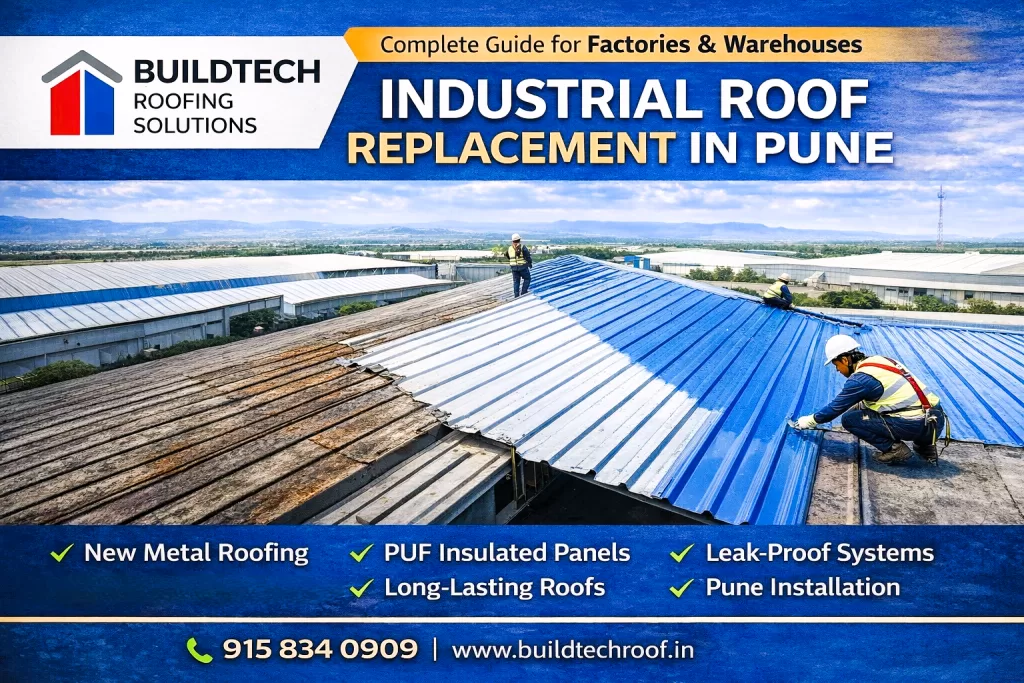
Industrial Roof Replacement in Pune

Introduction Industrial roofs play a critical role in protecting factory operations, machinery, and stored goods. However, over time, roofing systems deteriorate due to weather exposure, corrosion, leakage, and structural fatigue. When repairs are no longer effective, Industrial Roof Replacement Pune services by Buildtech Roofing Solutions become essential. Roof replacement is not just about removing old sheets—it involves engineering, safety planning, structural evaluation, and installation of advanced roofing systems designed for long-term performance. This guide explains when to replace your roof, replacement options, cost factors, and benefits. When Does an Industrial Roof Need Replacement? Not all roofing problems can be solved with repairs. Replacement becomes necessary when damage is extensive. Key Signs: 1. Frequent Leakage Problems Repeated leaks even after repairs indicate system failure. 2. Severe Corrosion Rust weakens metal roofing sheets and reduces durability. 3. Structural Weakness Sagging roofs or damaged purlins indicate structural risk. 4. High Maintenance Costs Frequent repairs become more expensive than replacement. 5. Ageing Roof (15–25 Years) Older roofs lose performance and efficiency. Types of Industrial Roof Replacement Systems 1. Metal Roofing Sheet Replacement Replacing old sheets with new colour-coated metal roofing. Benefits: ✔ High durability✔ Weather resistance✔ Cost-effective 2. PUF Insulated Roofing System Upgrading to insulated sandwich panels. Advantages: ✔ Heat reduction✔ Energy efficiency✔ Noise reduction 3. Standing Seam Roofing Modern roofing system with concealed fasteners. Benefits: ✔ Leak-proof system✔ Premium finish✔ Long lifespan 4. Double Skin Roofing System Two-layer roofing system for thermal insulation. 5. Retrofit Roofing System Installing a new roof over the existing structure. Benefits: ✔ No production shutdown✔ Faster installation✔ Cost savings Step-by-Step Industrial Roof Replacement Process Step-1 – Site Inspection & Structural Analysis Step-2 – Planning & Design Step-3 – Dismantling Old Roof Step-4 – Structural Repair Step-5 – New Roof Installation Step-6 – Waterproofing & Finishing Step-7 – Quality Check & Handover Benefits of Industrial Roof Replacement ✔ Eliminates leakage problems✔ Improves energy efficiency✔ Enhances building safety✔ Reduces maintenance cost✔ Increases property value Cost Factors for Industrial Roof Replacement Several factors affect project cost: 💡 Tip: Retrofit systems can reduce costs significantly. Why Choose Buildtech Roofing Solutions Pune ✔ Experienced industrial roofing experts✔ Advanced roofing systems✔ Safety-compliant work✔ High-quality materials✔ Fast project completion Buildtech provides reliable roofing solutions across Maharashtra. Industries Served Service Areas | Pune | Mumbai | Nashik | Kolhapur | Sangli | Satara | Ahmednagar | Maintenance Tips After Roof Replacement Conclusion Industrial roof replacement is a critical investment for long-term building safety and efficiency. By choosing Industrial Roof Replacement Pune services from Buildtech Roofing Solutions, businesses can upgrade to modern, durable, and energy-efficient roofing systems.

Industrial Roof Replacement in Pune Read More »

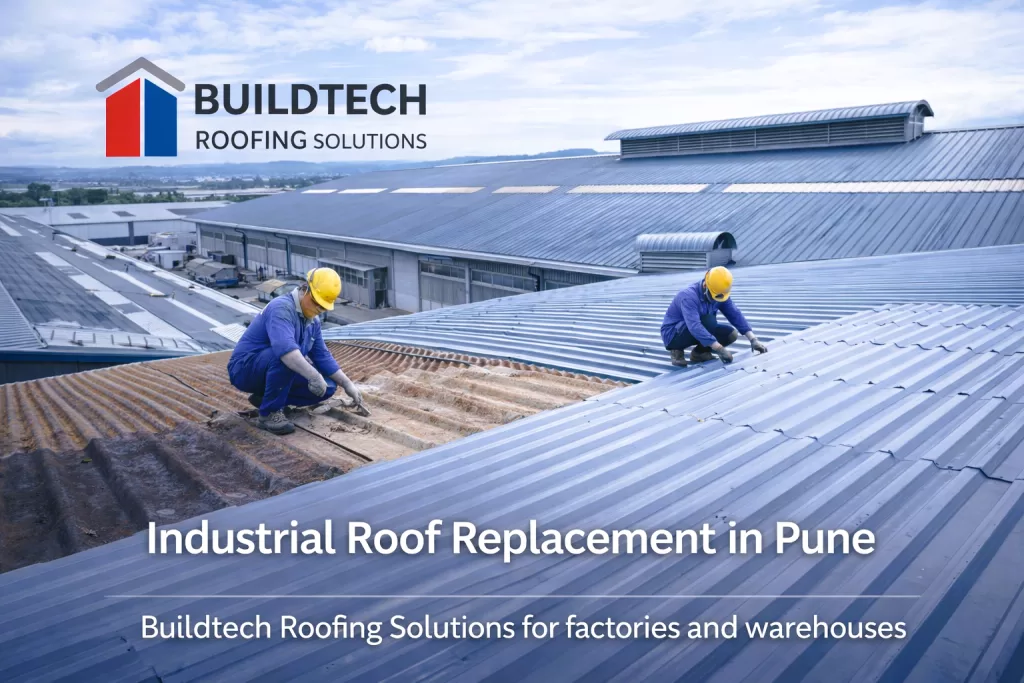
Industrial Roof Replacement in Pune

Introduction Industrial roofing systems are the first line of defence for factories, warehouses, and commercial facilities. They protect machinery, inventory, and operations from harsh environmental conditions such as heavy rainfall, heat, dust, and corrosion. In industrial zones like Pune, roofing systems are constantly exposed to extreme weather variations. Over time, these conditions lead to deterioration, leakage, and structural weakening. When repairs are no longer sufficient, Industrial Roof Replacement Pune services by Buildtech Roofing Solutions become essential. Roof replacement is not just about changing sheets—it is a complete engineering process involving structural assessment, safety planning, modern material selection, and precision installation. This guide will help you understand when to replace your roof, available replacement systems, cost factors, and the long-term benefits of upgrading your industrial roofing system. When Does an Industrial Roof Need Replacement? Not all roofing issues can be fixed with repairs. In many cases, continued patchwork leads to higher long-term costs. Here are the key indicators that your industrial roof requires replacement: 1. Frequent Leakage Problems If your roof continues to leak even after multiple repairs, it is a sign that the roofing system has failed. Persistent leakage can damage machinery, electrical systems, and stored materials. 2. Severe Corrosion Metal roofs are prone to rust over time, especially in humid or industrial environments. Corrosion weakens the roofing sheets and reduces their load-bearing capacity. 3. Structural Weakness Signs such as sagging roofs, bent purlins, or structural deformation indicate serious safety risks and require immediate attention. 4. High Maintenance Costs If your maintenance expenses are increasing year after year, replacing the roof becomes more economical than repeated repairs. 5. Ageing Roof (15–25 Years) Industrial roofs typically have a lifespan of 15–25 years. Beyond this period, performance declines significantly. Types of Industrial Roof Replacement Systems Modern industrial roofing offers a variety of advanced solutions tailored to different requirements. 1. Metal Roofing Sheet Replacement This involves replacing old or damaged sheets with new colour-coated metal roofing sheets. Benefits: ✔ High durability✔ Corrosion resistance✔ Cost-effective solution✔ Quick installation 2. PUF Insulated Roofing System PUF (Polyurethane Foam) panels provide insulation along with structural strength. Advantages: ✔ Excellent thermal insulation✔ Reduced energy consumption✔ Noise reduction✔ Improved indoor comfort 3. Standing Seam Roofing System A premium roofing solution with concealed fasteners, offering superior waterproofing. Benefits: ✔ Leak-proof design✔ Modern appearance✔ Long lifespan✔ Minimal maintenance 4. Double Skin Roofing System A dual-layer roofing system designed for high thermal insulation and performance. Key Features: ✔ Better heat control✔ Increased durability✔ Suitable for high-temperature industries 5. Retrofit Roofing System One of the most efficient methods is where a new roof is installed over the existing one. Benefits: ✔ No production downtime✔ Faster project completion✔ Cost savings✔ Improved insulation Step-by-Step Industrial Roof Replacement Process A systematic process ensures durability and safety. Step1 – Site Inspection & Structural Analysis Step2 – Planning & Design Step3 – Dismantling Old Roof Step4 – Structural Repair Step5 – New Roof Installation Step6 – Waterproofing & Finishing Step7 – Quality Check & Handover Benefits of Industrial Roof Replacement Replacing an industrial roof offers multiple long-term advantages: ✔ Eliminates leakage issues✔ Improves energy efficiency✔ Enhances structural safety✔ Reduces maintenance costs✔ Increases property value✔ Improves working conditions Cost Factors for Industrial Roof Replacement The cost of roof replacement depends on several variables: 1. Roof Size Larger roofs require more materials and labor. 2. Material Type Premium systems like standing seam or insulated panels cost more than basic metal sheets. 3. Structural Condition If the structure requires repair, the cost increases. 4. Labor and Installation Skilled labor and safety compliance impact overall cost. 5. Accessibility Difficult site conditions may increase project complexity. 💡 Pro Tip: Retrofit roofing systems can significantly reduce overall project cost and downtime. Why Choose Buildtech Roofing Solutions Pune Choosing the right contractor is critical for successful roof replacement. Buildtech Roofing Solutions Pune is known for delivering high-performance industrial roofing systems tailored to client requirements. Key Advantages: ✔ Experienced industrial roofing specialists✔ Advanced roofing technologies✔ Strict safety compliance✔ High-quality materials✔ Timely project completion✔ Customised solutions Industries Served Industrial roof replacement services are widely used across: Each sector requires tailored roofing systems to meet specific operational demands. Service Areas Buildtech Roofing Solutions provides services across: Maintenance Tips After Roof Replacement To ensure long-term performance: Future Trends in Industrial Roofing Modern roofing systems are evolving with innovations: These technologies are helping industries reduce costs and improve sustainability. Conclusion Industrial roof replacement is a strategic investment that ensures long-term protection, safety, and efficiency of your facility. By choosing Industrial Roof Replacement Pune services from Buildtech Roofing Solutions, businesses can upgrade to modern, durable, and energy-efficient roofing systems. Whether you are dealing with leakage, corrosion, or ageing infrastructure, replacing your industrial roof ensures better performance, reduced maintenance, and peace of mind.

Industrial Roof Replacement in Pune Read More »

Industrial Roof Waterproofing in Pune

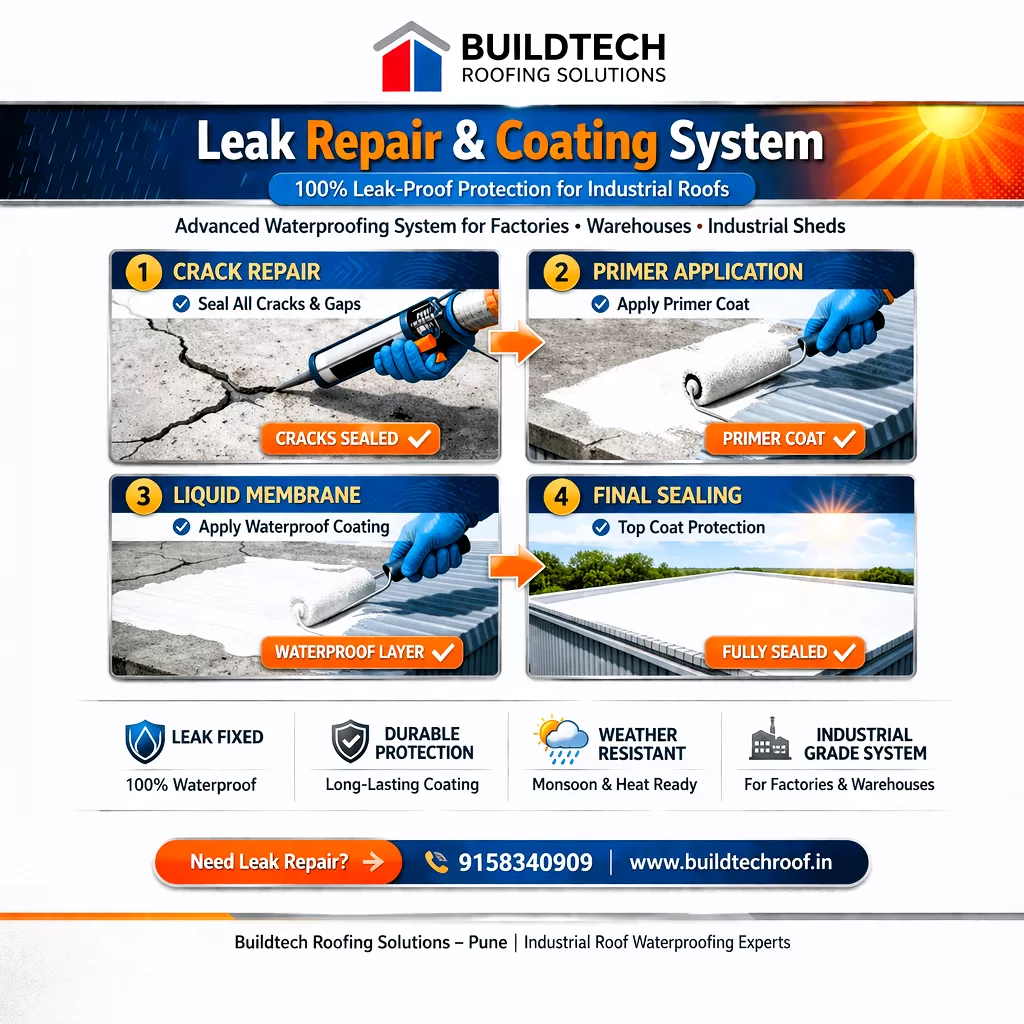
Introduction Industrial roofing systems in Pune and Maharashtra face continuous exposure to harsh environmental conditions, including heavy monsoon rainfall, extreme summer heat, dust, and UV radiation. Over time, these factors lead to roof deterioration, water leakage, corrosion, and structural damage. For factories, warehouses, and industrial facilities, even a minor roof leak can result in: This is where Industrial Roof Waterproofing Pune services by Buildtech Roofing Solutions play a critical role. With advanced waterproofing technologies like liquid membranes, elastomeric coatings, PU systems, and joint sealing solutions, industrial roofs can be protected effectively, ensuring long-term durability and performance. This comprehensive guide covers everything you need to know about industrial roof waterproofing. It discusses the causes of leakage, the types of systems available, and the application process. Additionally, it highlights the benefits of waterproofing and provides maintenance strategies to ensure effectiveness. Using these strategies can greatly enhance the durability and performance of your roofing system. What is Industrial Roof Waterproofing? Industrial roof waterproofing is the process of applying specialised protective layers or coatings that prevent water penetration into roofing structures. These systems create a seamless barrier that protects roofs from: Waterproofing is essential for both: Why Industrial Roof Waterproofing is Important 1. Prevents Water Leakage Water seepage is the most common issue in industrial buildings. Waterproofing ensures that rainwater does not enter through joints, fasteners, or cracks. 2. Protects Structural Integrity Continuous moisture exposure weakens roofing structures, leading to corrosion and deterioration. Waterproofing enhances structural strength. 3. Reduces Maintenance Costs Frequent repairs can be expensive. Waterproofing acts as a preventive solution, reducing long-term costs. 4. Extends Roof Lifespan A properly waterproofed roof lasts longer than one that hasn’t been treated. 5. Improves Energy Efficiency Reflective waterproof coatings reduce heat absorption, lowering indoor temperatures and energy consumption. Common Causes of Industrial Roof Leakage Understanding the root causes of leakage is essential for selecting the right waterproofing solution. 1. Damaged Roofing Sheets Metal sheets may develop cracks, holes, or corrosion from weather exposure. 2. Loose Fasteners Fasteners can loosen over time from vibrations and thermal expansion, leading to water infiltration. 3. Joint Failures Roof joints are highly vulnerable areas where leakage commonly occurs. 4. Poor Installation Improper installation leads to weak sealing and premature roof failure. 5. Blocked Drainage Systems Clogged gutters cause water accumulation, increasing leakage risk. Types of Industrial Roof Waterproofing Systems 1. Liquid Waterproofing Membrane A liquid-applied system that forms a seamless waterproof layer. Benefits: 2. Elastomeric Waterproof Coating Highly flexible coating that adapts to temperature changes. Advantages: 3. Polyurethane (PU) Waterproofing High-performance waterproofing system for industrial applications. Benefits: 4. Bituminous Waterproofing Traditional system using asphalt-based materials. Features: 5. Acrylic Waterproofing Coating Water-based coating is ideal for reflective and protective purposes. Step-by-Step Industrial Roof Waterproofing Process Step1 – Roof Inspection Step2 – Surface Preparation Step3 – Crack and Joint Repair Step4 – Primer Application Step5 – Waterproofing Application Step6 – Quality Testing Step7 – Final Inspection & Handover Benefits of Industrial Roof Waterproofing ✔ Complete leak protection✔ Improved building safety✔ Increased roof durability✔ Lower maintenance costs✔ Enhanced energy efficiency✔ Protection against corrosion Signs Your Industrial Roof Needs Waterproofing Early detection helps avoid major damage. Why Choose Buildtech Roofing Solutions Pune Buildtech Roofing Solutions is a trusted industrial roofing company providing advanced waterproofing services. Key Advantages: ✔ Experienced professionals✔ Advanced waterproofing systems✔ High-quality materials✔ Safety-compliant work✔ Cost-effective solutions✔ Timely project completion Industries Served Service Areas Pune | Mumbai | Nashik | Kolhapur | Satara | Sangli | Ahmednagar | Across Maharashtra Maintenance Tips After Waterproofing Conclusion Industrial roof waterproofing is not just a maintenance activity—it is a long-term investment in building safety and operational efficiency. With Industrial Roof Waterproofing Pune services by Buildtech Roofing Solutions, businesses can protect their infrastructure, reduce costs, and ensure uninterrupted operations.

Industrial Roof Waterproofing in Pune Read More »

Industrial Roof Waterproofing in Pune

Introduction Industrial roofs are constantly exposed to harsh environmental conditions such as heavy rainfall, extreme heat, UV radiation, and dust accumulation. Over time, these factors degrade roofing materials, leading to water leakage, corrosion, and structural damage. In a rapidly growing industrial hub like Pune, protecting factory and warehouse roofs is not optional—it is essential for operational continuity and cost control. This is where Industrial Roof Waterproofing Pune solutions by Buildtech Roofing Solutions play a critical role. With advanced waterproofing technologies such as liquid membranes, elastomeric coatings, and joint sealing systems, industrial roofs can achieve long-lasting protection and improved performance. This guide explains everything you need to know about industrial roof waterproofing—from causes of leakage to modern solutions and maintenance strategies. What is Industrial Roof Waterproofing? Industrial roof waterproofing is the process of applying protective systems that prevent water penetration into roofing structures. It creates a continuous barrier that protects both the roof surface and the internal structure of the building. Key Objectives Waterproofing systems are suitable for: Why Waterproofing is Critical for Industrial Roofs 1. Prevents Roof Leakage Water seepage can damage machinery, finished goods, and electrical systems, leading to major financial losses. 2. Protects Structural Integrity Continuous exposure to moisture weakens steel structures and concrete slabs, compromising building safety. 3. Reduces Maintenance Costs Preventive waterproofing eliminates frequent repair expenses and emergency maintenance. 4. Improves Roof Lifespan A properly waterproofed roof can last significantly longer, reducing capital expenditure. 5. Enhances Energy Efficiency Reflective waterproof coatings reduce heat absorption, lowering indoor temperatures. Common Causes of Industrial Roof Leakage Understanding the root causes helps in selecting the right waterproofing solution. 1. Damaged Roofing Sheets Corrosion, cracks, and wear lead to water penetration. 2. Loose or Improper Fasteners Gaps around fasteners allow water to seep inside. 3. Cracked Waterproof Layers Old coatings lose elasticity and develop cracks. 4. Poor Installation Incorrect roofing practices result in weak joints and gaps. 5. Blocked Drainage Systems Water accumulation leads to seepage and structural stress. Types of Industrial Roof Waterproofing Systems 1. Liquid Waterproofing Membrane A seamless liquid coating is applied directly to the roof surface. Benefits: 2. Elastomeric Roof Coating Highly elastic coatings that expand and contract with temperature changes. Advantages: 3. Bituminous Waterproofing A traditional asphalt-based waterproofing system is widely used in industrial applications. Features: 4. PU (Polyurethane) Waterproofing System High-performance liquid membrane used for critical industrial applications. Benefits: 5. Acrylic Waterproofing Coating Water-based coating ideal for reflective and protective applications. Advantages: Step-by-Step Industrial Roof Waterproofing Process A professional waterproofing system follows a systematic approach. Step 1 – Roof Inspection Detailed inspection to identify cracks, leakage points, and weak areas. Step 2 – Surface Preparation Cleaning the surface by removing dust, rust, oil, and debris. Step 3 – Crack & Joint Repair Sealing all joints, gaps, and damaged areas using appropriate fillers. Step 4 – Primer Application Ensures strong bonding between the roof surface and coating. Step 5 – Membrane Application Uniform application of waterproofing coating or membrane. Step 6 – Final Inspection Quality check to ensure complete leak-proof sealing. Benefits of Industrial Roof Waterproofing ✔ 100% leak protection✔ Extended roof lifespan✔ Reduced repair and maintenance costs✔ Improved safety of building and assets✔ Enhanced energy efficiency✔ Better indoor working conditions Signs Your Industrial Roof Needs Waterproofing Early detection can save significant repair costs. If any of these signs appear, immediate waterproofing is recommended. Why Choose Buildtech Roofing Solutions When it comes to industrial roofing and waterproofing, expertise matters. Buildtech Roofing Solutions Pune provides customised waterproofing systems designed for industrial applications. Key Advantages ✔ Experienced technical team✔ Advanced waterproofing technologies✔ High-quality materials✔ Long-lasting performance✔ Cost-effective solutions✔ Timely project execution The company focuses on delivering durable and reliable waterproofing systems tailored to each industrial requirement. Industries Served Industrial roof waterproofing is essential across multiple sectors: Each industry requires specialised waterproofing solutions based on its operational environment. Service Areas Buildtech Roofing Solutions provides services across: Maintenance Tips After Waterproofing Proper maintenance ensures long-term performance. Future of Industrial Roof Waterproofing Modern waterproofing technologies are evolving rapidly. Advanced coatings now offer: These innovations are making industrial buildings more energy-efficient and sustainable. Conclusion Industrial roof waterproofing is not just a maintenance task—it is a strategic investment in building protection and operational efficiency. By choosing Industrial Roof Waterproofing Pune services from Buildtech Roofing Solutions, businesses can ensure: Whether you own a factory, warehouse, or commercial facility, investing in professional waterproofing ensures safety, reliability, and peace of mind.

Industrial Roof Waterproofing in Pune Read More »

Industrial Roofing Solutions: Guide for Factories & Warehouses in Pune

Introduction Industrial buildings such as factories, warehouses, logistics hubs, and manufacturing plants require roofing systems that do more than simply cover the structure. Modern industrial roofing must provide structural strength, efficient ventilation, thermal control, and long-term durability. In rapidly growing industrial regions like Pune, businesses are increasingly adopting advanced roofing systems to improve energy efficiency, workplace comfort, and building performance. This is where Buildtech Roofing Solutions plays a vital role. As a specialised industrial roofing provider, the company offers innovative roofing products such as ridge ventilators, metal louvers, insulated panels, decking sheets, and complete roofing accessories designed for modern industrial infrastructure. This comprehensive guide explains how industrial roofing systems work, their benefits, and why choosing the right roofing solution is critical for long-term operational efficiency. Understanding Industrial Roofing Systems Industrial roofing systems differ significantly from residential or commercial roofing. Industrial facilities often span large areas and require roofing structures capable of handling: Modern industrial roofing integrates ventilation systems, structural sheets, insulation layers, and protective coatings to create a high-performance roofing environment. Key components typically include: These elements work together to improve airflow, temperature control, and overall building performance. Importance of Proper Ventilation in Industrial Buildings One of the most common challenges inside industrial buildings is heat accumulation. Machinery, production equipment, and large enclosed spaces generate significant amounts of heat. Without proper ventilation, the interior temperature of a factory can rise dramatically, leading to: Natural ventilation systems, such as ridge ventilators and louvers allow hot air to escape naturally through the roof, creating continuous airflow throughout the building. This method significantly reduces dependence on mechanical ventilation systems and lowers electricity consumption. Industrial Ridge Ventilators: The Heart of Natural Ventilation Ridge ventilators are one of the most efficient solutions for improving airflow inside large industrial buildings. Installed along the ridge line of the roof, these ventilators allow hot air and fumes to exit the building naturally. How Ridge Ventilators Work Hot air naturally rises upward. Ridge ventilators create an outlet at the highest point of the roof where trapped heat can escape. Fresh air then enters through side openings or louvers, creating a natural circulation cycle. Benefits of Ridge Ventilators Industrial ridge ventilators provide multiple advantages: For factories that operate heavy machinery or manufacturing equipment, ridge ventilators are essential for maintaining a healthy indoor environment. Metal Louvers for Industrial Ventilation Metal louvers are another critical element of modern industrial roofing systems. Installed on building walls or ventilation openings, louvers allow air to flow inside while preventing rainwater and debris from entering the building. Key Functions of Metal Louvers Metal louvers serve several important purposes: High-quality metal louvers are typically manufactured from powder-coated aluminium or galvanised steel, ensuring long-term corrosion resistance. For factories located in industrial environments, durable louvers help maintain reliable ventilation without compromising structural integrity. Decking Sheets for Structural Roofing Decking sheets form the structural base of many industrial roofing systems. These sheets support the roofing structure and act as the foundation for insulation layers and roofing panels. Advantages of Decking Sheets Decking sheets are widely used because they offer: These sheets are particularly useful in multi-story industrial structures and commercial buildings where roofing systems must support heavy loads. Insulated Roofing Panels for Energy Efficiency Insulated roofing panels are becoming increasingly popular in modern industrial construction. These panels consist of two metal sheets with a thermal insulation core between them. Why Insulated Panels Matter Factories often struggle with heat buildup, especially in hot climates. Insulated roofing panels help reduce heat transfer, maintaining cooler interior temperatures. Key benefits include: For warehouses storing temperature-sensitive products, insulated roofing panels are essential for maintaining stable interior conditions. Polycarbonate Sheets for Natural Daylighting Industrial buildings often require adequate daylight to reduce reliance on artificial lighting. Polycarbonate sheets are commonly integrated into roofing systems to allow natural sunlight into the building. Benefits of Polycarbonate Sheets Polycarbonate roofing sheets provide: These sheets are typically installed as skylight panels within metal roofing structures. Roofing Metal Accessories: Small Components with Big Impact While large components like ventilators and panels receive the most attention, roofing accessories are equally important for a complete roofing system. Essential roofing accessories include: These components ensure proper sealing, water drainage, and long-term durability of the roofing structure. Industrial Roofing Installation Process A professionally designed roofing system follows a structured installation process to ensure performance and longevity. Step 1 – Site Assessment Engineers evaluate the building structure, ventilation requirements, and environmental conditions. Step 2 – System Design Based on the assessment, a customised roofing system is designed, including ventilators, louvers, sheets, and insulation materials. Step 3 – Material Selection High-quality materials are selected to ensure durability and weather resistance. Step 4 – Installation Experienced technicians install roofing components according to engineering standards. Step 5 – Inspection and Testing Final inspections ensure the roofing system functions efficiently and meets safety requirements. Industrial Roof Replacement and Retrofitting Many older factories suffer from roofing problems, such as: Roof retrofitting allows businesses to upgrade their roofing systems without completely replacing the building structure. Modern retrofitting solutions include: These upgrades significantly extend the lifespan of industrial buildings. Sustainability in Modern Industrial Roofing Sustainability is becoming a major priority in industrial construction. Advanced roofing systems contribute to environmentally responsible buildings by improving energy efficiency and reducing carbon footprints. Sustainable roofing solutions often include: These technologies help industries lower energy consumption and support green building initiatives. Why Choose Buildtech Roofing Solutions When selecting an industrial roofing contractor, experience and technical expertise are crucial. Buildtech Roofing Solutions provides complete roofing systems designed for long-term performance and efficiency. Key strengths include: The company works closely with architects, contractors, and facility managers to deliver roofing solutions tailored to each project. Industries That Benefit from Industrial Roofing Systems Industrial roofing solutions are widely used across multiple sectors, including: Each industry requires roofing systems that support ventilation, durability, and energy efficiency. Future Trends in Industrial Roofing The industrial roofing industry continues to evolve with new technologies and materials. Some emerging trends include: These innovations are helping industrial buildings

Industrial Roofing Solutions: Guide for Factories & Warehouses in Pune Read More »

Industrial Roof Heat Reduction Solutions

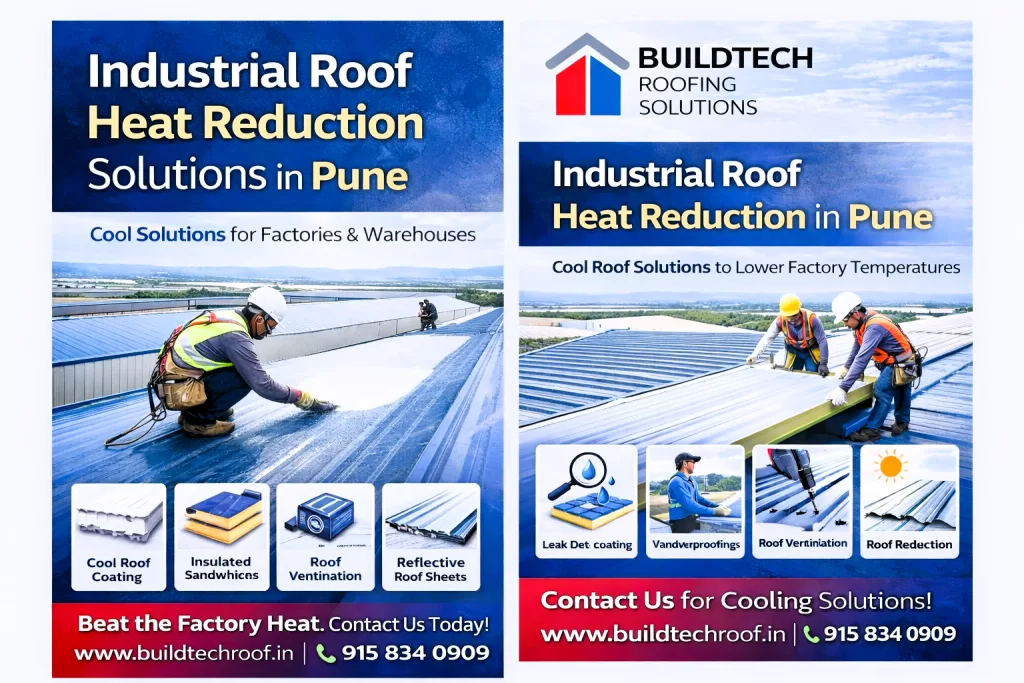
Introduction Industrial buildings in Pune and across Maharashtra experience extremely high temperatures during summer. Metal roofing sheets absorb significant solar heat, which increases indoor temperatures in factories, warehouses, and production facilities. High roof temperatures lead to: • Worker discomfort• Reduced productivity• Increased electricity consumption• Higher HVAC costs This is why Industrial Roof Heat Reduction Pune solutions by Buildtech Roofing Solutions are becoming essential for modern industrial infrastructure. Using advanced technologies like cool roof coatings, insulation panels, ventilators, and reflective systems, industrial roofs can reduce indoor temperatures significantly while improving energy efficiency. Why Industrial Roof Heat Reduction is Important Industrial roofs made from metal sheets can reach temperatures above 70°C under direct sunlight. Without proper heat control, buildings experience several problems. 1. Worker Productivity Decline High indoor temperatures create uncomfortable working environments. Heat stress can lead to: • Worker fatigue• Lower efficiency• Increased health risks Heat reduction systems create better working conditions. 2. Increased Electricity Costs Factories often rely on cooling systems such as: • Air conditioning• Exhaust systems• Industrial fans When roof heat increases, energy consumption rises. Heat reduction solutions help reduce cooling costs. 3. Equipment Damage Extreme heat affects sensitive machinery and electronics. Problems may include: • Overheating equipment• Reduced machine lifespan• Production interruptions Cool roofing systems protect valuable equipment. Major Causes of Roof Heat in Industrial Buildings Understanding heat sources helps implement the right solution. 1. Metal Roofing Heat Absorption Metal sheets absorb solar radiation quickly. Dark roofing colours increase heat absorption. 2. Lack of Roof Insulation Buildings without insulation transfer heat directly indoors. 3. Poor Ventilation Without proper airflow, hot air gets trapped inside industrial sheds. 4. Large Roof Surface Area Industrial buildings have massive roof areas exposed to sunlight. Best Industrial Roof Heat Reduction Solutions Buildtech Roofing Solutions offers multiple systems to reduce roof temperature. 1. Cool Roof Reflective Coating Cool roof coatings reflect solar radiation instead of absorbing it. Benefits • Reduces roof temperature• Reflects sunlight• Improves energy efficiency• Extends roof life Indoor temperature reduction: 5°C to 10°C 2. PUF Insulated Roofing Panels PUF sandwich panels provide excellent thermal insulation. Advantages • High thermal resistance• Energy efficiency• Moisture protection• Noise reduction These panels are ideal for warehouses and manufacturing plants. 3. Roof Ventilation Systems Proper ventilation removes trapped hot air. Common systems include: • Ridge ventilators• Turbo ventilators• Air exhaust systems These solutions improve airflow inside factories. 4. Double Skin Roofing System A double-layer roof creates an air gap that reduces heat transfer. Benefits include: • Lower roof temperature• Reduced heat penetration• Better insulation 5. Reflective Roof Sheets Special reflective coatings on metal sheets reduce solar heat absorption. Step-by-Step Industrial Roof Heat Reduction Process Professional heat reduction projects follow a systematic process. Step 1 – Roof Inspection Experts analyse roof condition and heat levels. Step 2 – Heat Source Identification Identify areas where heat absorption is highest. Step 3 – Solution Planning Select the best cooling system based on building design. Step 4 – Professional Installation Install coatings, insulation panels, or ventilators. Step 5 – Performance Testing Measure the temperature difference after installation. Benefits of Industrial Roof Cooling Systems Businesses that implement heat reduction solutions experience significant advantages. Improved worker comfort Reduced electricity bills Increased equipment life Better productivity Longer roof lifespan Why Choose Buildtech Roofing Solutions Pune Buildtech Roofing Solutions specialises in industrial roofing and heat reduction systems. Key advantages ✔ Experienced roofing professionals✔ Advanced heat reduction technology✔ High-quality materials✔ Safe installation practices✔ Cost-effective industrial solutions Buildtech delivers reliable roofing systems for factories and warehouses. Industries That Need Roof Heat Reduction • Manufacturing plants• Warehouses• Automotive factories• Textile industries• Pharmaceutical companies• Food processing plants• Logistics parks Service Areas Buildtech Roofing Solutions serves industrial clients across: PuneMumbaiNashikKolhapurSangliSataraAhmednagarMaharashtra Industrial Regions Conclusion Industrial roof heat can severely impact worker productivity, equipment efficiency, and operational costs. By implementing Industrial Roof Heat Reduction Pune solutions, factories can maintain comfortable indoor environments while reducing energy consumption. Buildtech Roofing Solutions provides advanced cool roof systems, insulation panels, ventilation systems, and heat reflective coatings designed for industrial buildings.

Industrial Roof Heat Reduction Solutions Read More »

©2023 buildtechroof. All Rights Reserved.