
Introduction
Industrial buildings such as factories, warehouses, logistics hubs, and manufacturing units generate a significant amount of internal heat due to machinery, production processes, and limited airflow. In cities like Pune, where temperatures can rise considerably during summer, this heat buildup becomes a major challenge.
Poor ventilation leads to:
- Increased indoor temperature
- Worker discomfort
- Reduced productivity
- Higher electricity consumption
- Moisture accumulation
This is where the Ridge Ventilator System Pune solutions by Buildtech Roofing Solutions provide an efficient and cost-effective solution.
Ridge ventilators are natural ventilation systems installed at the highest point of industrial roofs. They allow hot air to escape, improving airflow and maintaining a balanced indoor environment without using electricity.
This comprehensive guide explains everything about ridge ventilators, including working principles, types, benefits, installation process, and industrial applications.
What is a Ridge Ventilator System?
A ridge ventilator is a roof-mounted ventilation system installed along the ridge line of a building.
Its primary function is to:
- Remove hot air
- Improve air circulation
- Maintain indoor temperature
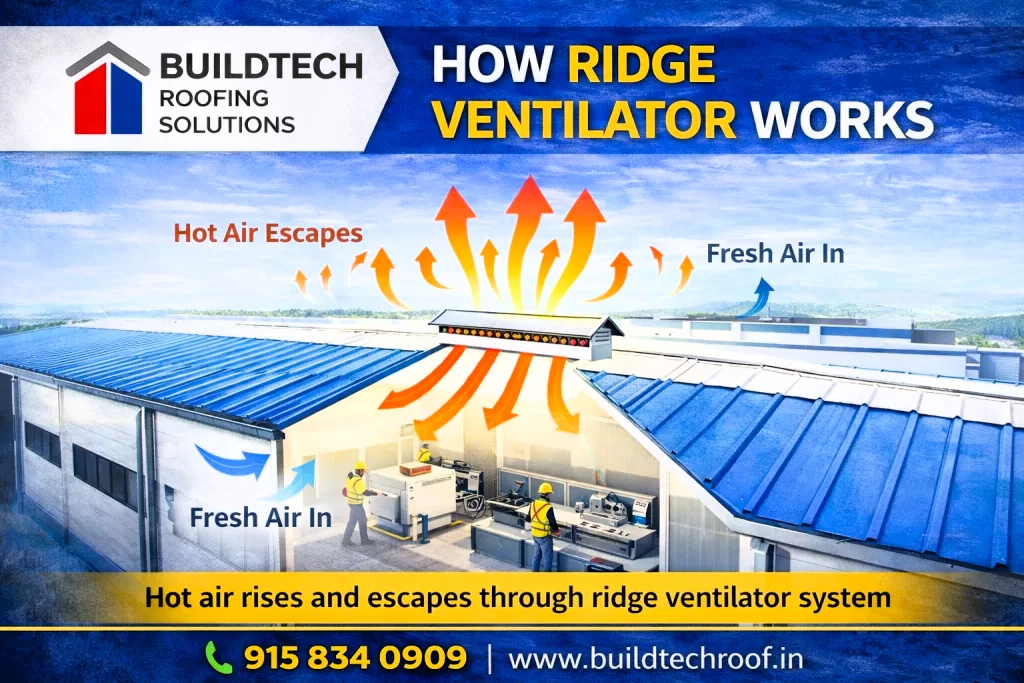
It works on the principle of natural convection, where hot air rises and escapes through the roof opening.
How Ridge Ventilators Work
Ridge ventilators operate based on natural airflow dynamics:
Step-by-step working:
- Heat is generated inside the building
- Hot air rises toward the roof
- The ventilator allows hot air to escape
- Fresh air enters through side openings
This creates a continuous airflow cycle.
Importance of Industrial Ventilation
Proper ventilation is essential for industrial buildings.
1. Temperature Control
Excess heat is removed, maintaining a comfortable environment.
2. Worker Safety & Comfort
Improved airflow reduces heat stress and enhances productivity.
3. Energy Savings
Natural ventilation reduces dependence on fans and AC systems.
4. Moisture Control
Prevents condensation and corrosion.
5. Equipment Protection
Maintains optimal temperature for machinery.
Types of Ridge Ventilator Systems
1. Turbo Ridge Ventilators
These ventilators use wind energy to rotate and enhance airflow.
Features:
- High efficiency
- Continuous operation
- Suitable for large buildings
2. Static Ridge Ventilators
Fixed ventilators with no moving parts.
Advantages:
- Low maintenance
- Cost-effective
- Durable
3. Monitor Roof Ventilators
Raised structures along the ridge for maximum airflow.
Best For:
- Large industrial plants
- High heat environments
Key Features of Ridge Ventilators
1. Natural Ventilation
Operates without electricity.
2. Continuous Airflow
Provides constant ventilation.
3. Weather Protection
Designed to prevent rainwater entry.
4. Durable Construction
Made from corrosion-resistant materials.
5. Low Maintenance
Minimal servicing required.
Benefits of Ridge Ventilator Systems
1. Reduces Indoor Temperature
Helps maintain cooler working conditions.
2. Improves Air Quality
Removes stale air and pollutants.
3. Enhances Productivity
Comfortable workers perform better.
4. Reduces Energy Costs
Less dependency on electrical ventilation.
5. Prevents Moisture Damage
Avoids condensation-related issues.
6. Eco-Friendly Solution
Supports sustainable building practices.
Applications of Ridge Ventilators
Ridge ventilators are widely used in:
- Industrial sheds
- Warehouses
- Manufacturing plants
- Textile industries
- Food processing units
- Logistics hubs
- Commercial buildings
Ridge Ventilator vs Exhaust Fans
| Feature | Ridge Ventilator | Exhaust Fan |
|---|---|---|
| Power Requirement | No | Yes |
| Maintenance | Low | High |
| Cost | One-time | Recurring |
| Airflow | Continuous | Limited |
| Noise | Silent | Noisy |
Step-by-Step Installation Process
Step-1 – Site Inspection
Evaluate roof structure and ventilation requirements.
Step-2 – Design Planning
Determine ventilator size, placement, and quantity.
Step-3 – Ridge Opening Creation
Create an opening along the roof ridge.
Step-4 – Ventilator Installation
Install the ventilator structure securely.
Step-5 – Sealing & Waterproofing
Ensure no water leakage.
Step-6 – Final Inspection
Check airflow efficiency and installation quality.
Factors to Consider Before Installation
- Building size
- Roof design
- Heat generation level
- Ventilation requirements
- Budget
Maintenance Tips
- Inspect annually
- Clean dust and debris
- Check for damage
- Ensure proper airflow
Cost of Ridge Ventilator System in Pune
Cost depends on:
- Ventilator type
- Size and length
- Material quality
- Installation complexity
💡 Tip: Ridge ventilators provide long-term savings by reducing energy costs.
Why Choose Buildtech Roofing Solutions Pune
Buildtech Roofing Solutions is a leading provider of industrial ventilation systems.
Key Advantages:
✔ High-quality ventilators
✔ Expert installation team
✔ Customised industrial solutions
✔ Competitive pricing
✔ Fast project execution
Industries Served
- Manufacturing plants
- Warehouses
- Automotive industries
- Textile units
- Pharmaceutical companies
- Food processing industries
Future of Industrial Ventilation
With increasing focus on:
- Energy efficiency
- Sustainability
- Worker safety
Ridge ventilators are becoming essential in modern industrial infrastructure.
Conclusion
Ridge ventilator systems provide an efficient, cost-effective, and eco-friendly solution for industrial ventilation.
With Ridge Ventilator System Pune solutions by Buildtech Roofing Solutions, businesses can achieve better airflow, reduced heat, and improved working conditions.