
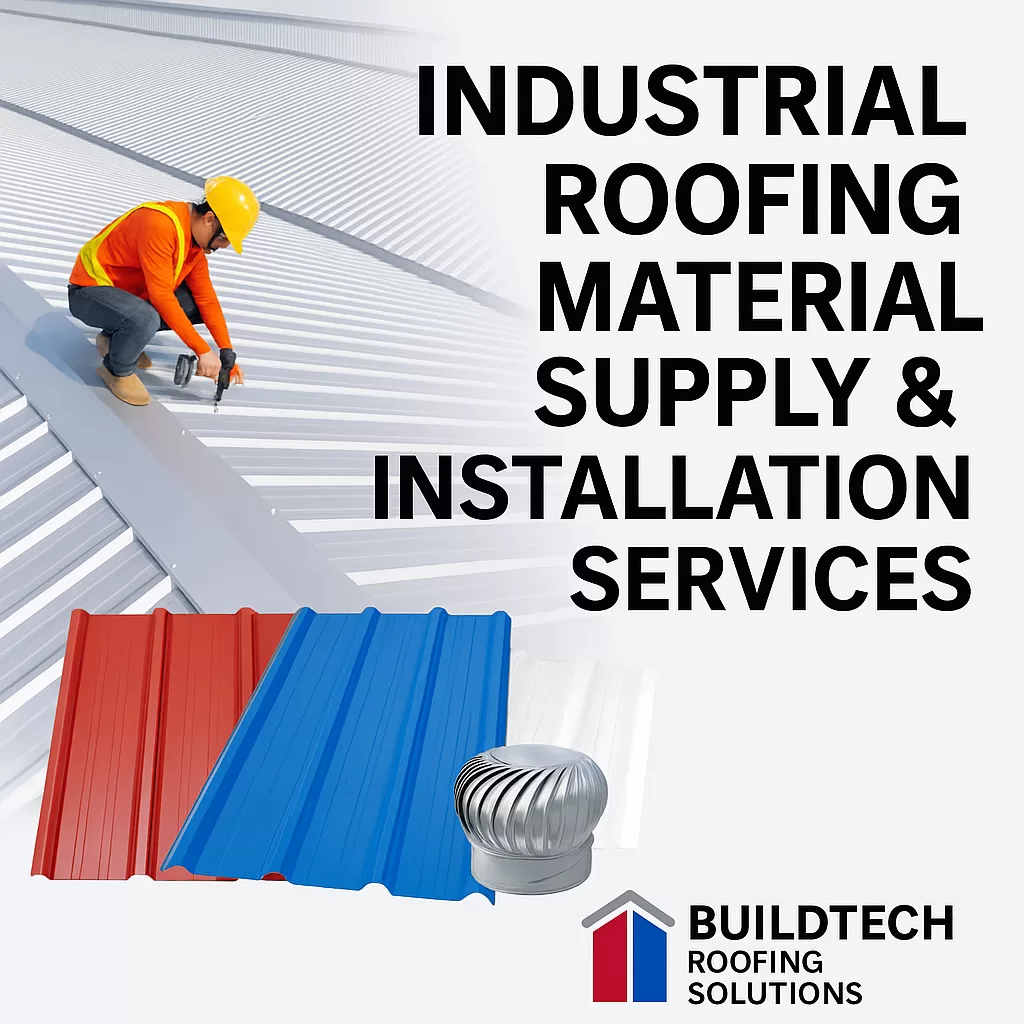
Industrial Roofing Material Supply & Installation Services
Industrial Roofing Material Supply & Installation Services Industrial facilities, including factories, warehouses, logistics hubs, and production units, need roofing systems that provide long-lasting structural performance, energy efficiency, and safety. These roofs must endure temperature fluctuations, heavy rainfall, high wind loads, and the demands of constant operations. This guide explains everything about industrial roofing material supply and installation services, along with the benefits, technical details, and friendly insights for business owners, contractors, and developers seeking durable roofing solutions. 1. What Is Industrial Roofing? Industrial roofing refers to specialized roofing systems engineered for commercial and manufacturing environments. Unlike residential roofs, industrial roofs must support: The most commonly used industrial roofing materials include metal roofing sheets, PUF panels, polycarbonate sheets, turbo ventilators, and insulation systems. 2. Industrial Roofing Materials: Types, Features & Applications 2.1 Metal Roofing Sheets Metal roofing is the preferred choice in industrial infrastructure because of its durability and structural strength. Material Options: Key Features: 2.2 PUF / PIR Sandwich Panels These insulated panels combine metal sheets with a thermal insulation core. Advantages: 2.3 Polycarbonate & FRP Daylight Sheets Used to reduce energy consumption through natural light. Benefits: 2.4 Roof Ventilation Systems Proper ventilation improves internal air quality and reduces heat accumulation. Common Ventilation Products: Benefits: 2.5 Industrial Roof Insulation Insulation protects the building from external heat and improves energy efficiency. Types: Advantages: 3. Industrial Roofing Installation Services: Process & Best Practices A professional roofing installation ensures long-lasting performance and reduces the risk of leakages or structural failure. 3.1 Site Inspection & Structural Assessment A detailed evaluation includes: 3.2 Material Optimization Optimizing sheet length and layout reduces material waste and project cost. Tasks include: 3.3 Safe & Technical Installation Professional installation follows engineering and safety guidelines. Installation Steps: Safety Measures: 3.4 Leak Prevention & Waterproofing Waterproofing ensures roof durability through all seasons. Techniques used: 3.5 Final Inspection & Maintenance Support Periodic maintenance extends roof life and prevents operational downtime. Services include: 4. Advantages of Choosing Professional Industrial Roofing Services 4.1 Enhanced Durability & Strength High-quality materials extend roof life in industrial conditions. 4.2 Improved Energy Efficiency Insulation + ventilation reduces heat gain and saves electricity. 4.3 Leak-Proof Performance Engineering-grade waterproofing prevents monsoon leakage. 4.4 Faster Project Execution Optimized planning ensures minimal disruption to operations. 4.5 Compliance With Industry Standards Material and installation methods follow safety and structural codes. 6. Conclusion Industrial roofing is a long-term investment that directly affects productivity, safety, and operational efficiency. Selecting the right roofing materials and partnering with a professional installation team ensures that factories, warehouses, and industrial structures remain protected for years. When you need metal roofing sheets, insulation systems, ventilators, or a complete roof installation, partnering with an experienced industrial roofing specialist guarantees durability and performance, as well as peace of mind. By selecting the right expert, you can be confident that your roofing needs will be met to the highest standards.
Industrial Roofing Material Supply & Installation Services Read More »
