Industrial Roofing Maintenance Cost in Pune: Complete Breakdown for Factories & Warehouses
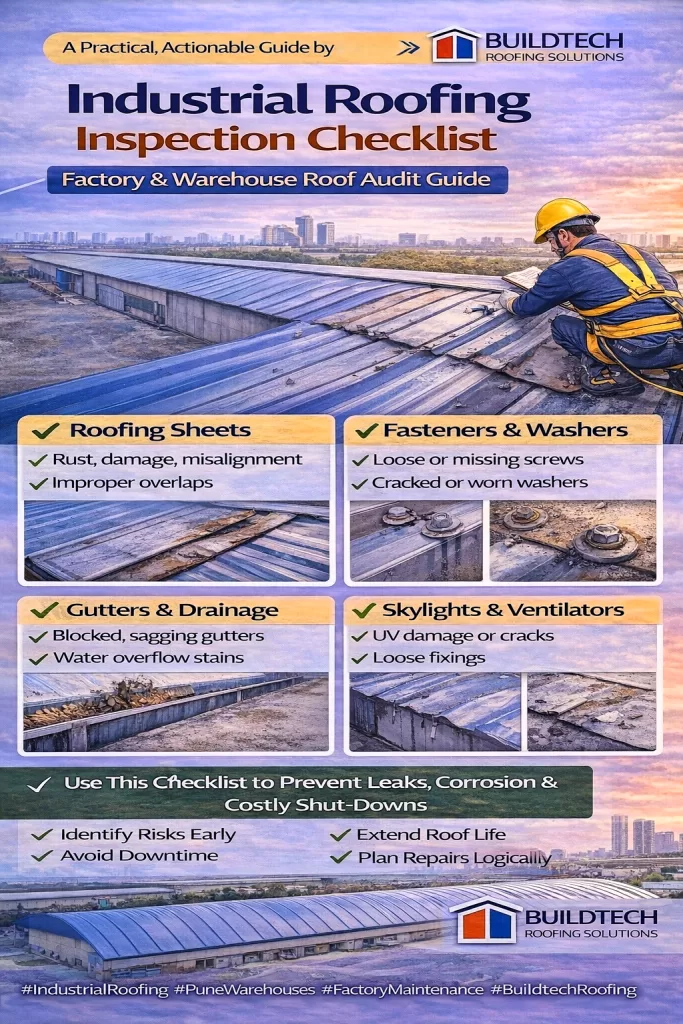
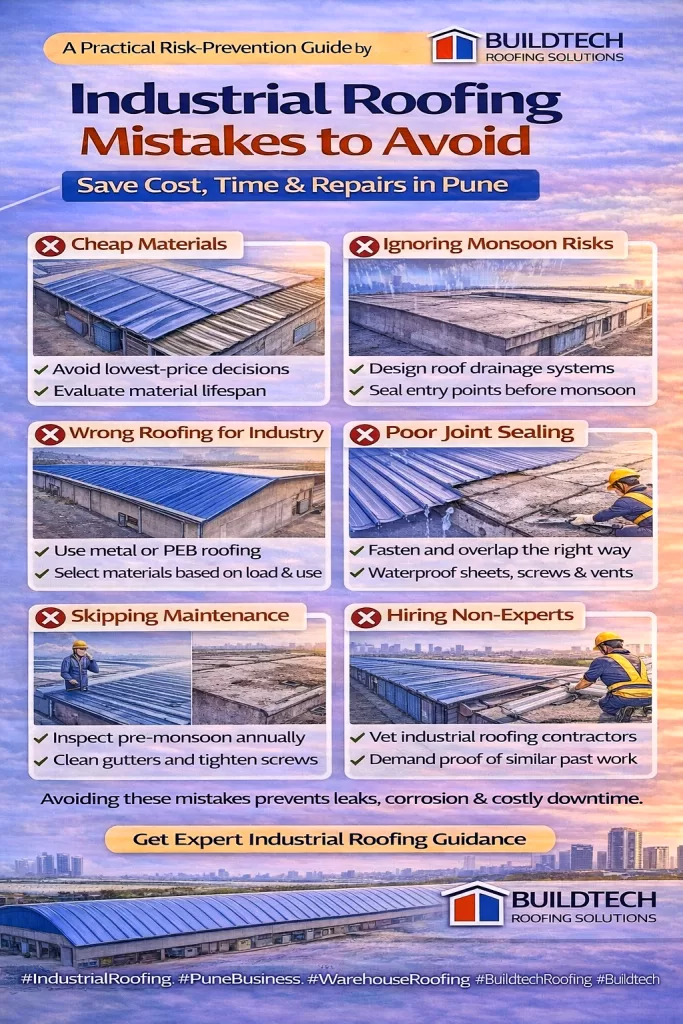
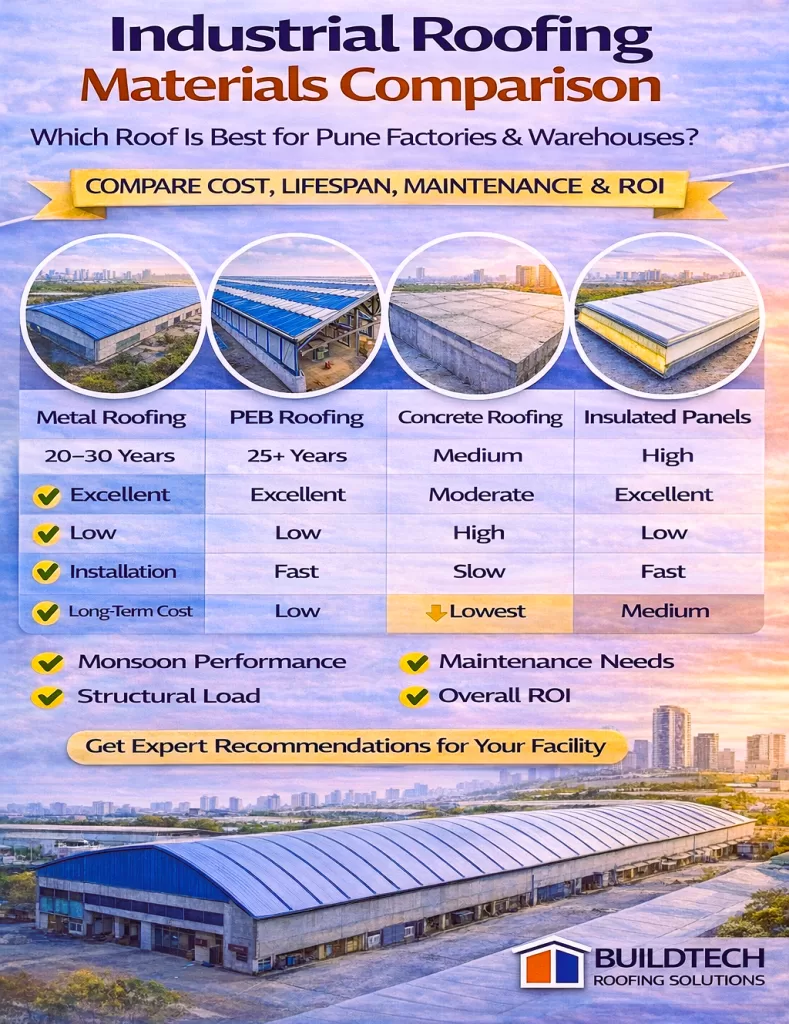
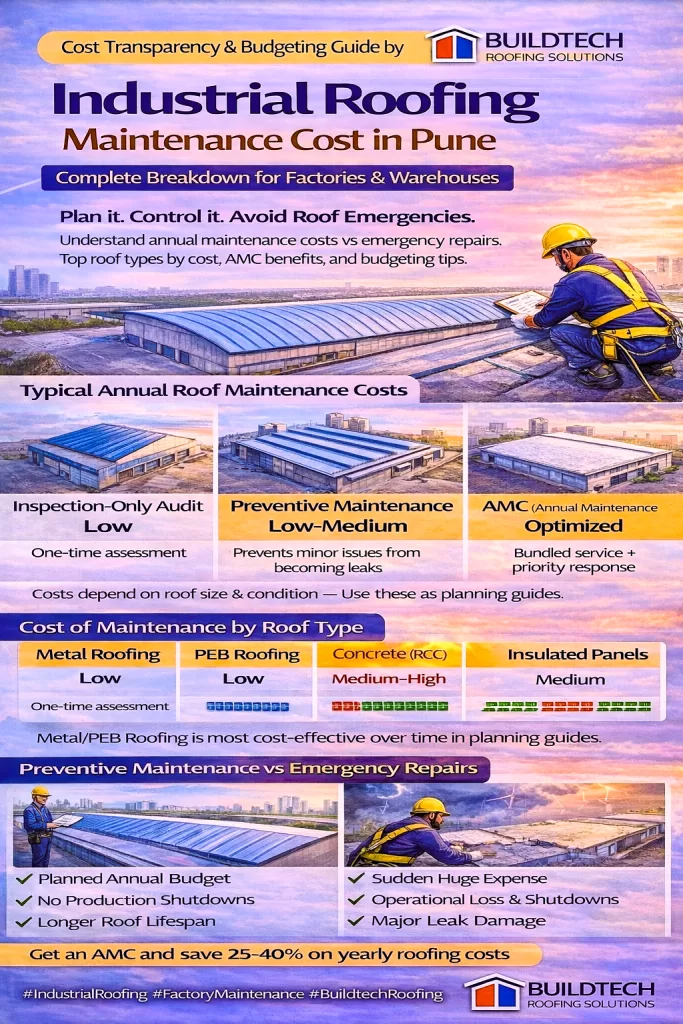
Introduction: Why Maintenance Costs Are Predictable — and Far Lower Than Repairs Industrial roofing failures rarely happen overnight. Problems develop slowly: fasteners loosen, sealants age, gutters clog, and corrosion spreads. When the monsoon arrives, these small issues quickly turn into leaks, water damage, and operational disruptions. The good news is that industrial roofing maintenance costs in Pune are predictable and manageable when addressed through planned annual programs. Compared to emergency repairs or premature roof replacement, preventive maintenance is significantly more economical. This guide explains what maintenance includes, how costs vary by roof type, the difference between AMC and ad-hoc spending, and how to budget wisely to protect operations year-round. What Is Included in Industrial Roofing Maintenance? Professional roof maintenance is structured and documented — not just a casual visual check. Typical Maintenance Scope Result: Early problem detection, reduced leak risk, longer roof lifespan, and predictable annual expenditure. Industrial Roofing Maintenance Cost in Pune (Indicative View) Maintenance pricing depends on site conditions, roof type, and access requirements. These are planning ranges rather than quotations. Service Type Cost Nature Purpose Inspection-Only Audit Low, one-time Condition assessment & planning Preventive Maintenance Low–Medium annually Stop small issues from becoming leaks AMC (Annual Maintenance Contract) Optimized bundled cost Regular service + priority response What Influences Cost? Maintenance Cost by Roof Type Roof Type Maintenance Frequency Relative Annual Cost Key Cost Drivers Metal Roofing Low Low–Medium Fasteners, joints, coating care PEB Roofing Low Low Engineered detailing, minimal stress points Concrete (RCC) High Medium–High Crack repairs, waterproofing cycles Insulated Panels Low Medium Seal integrity and joint care Key Insight: For most Pune factories and warehouses, metal and PEB roofing systems offer the lowest lifecycle maintenance costs. Preventive Maintenance vs Emergency Repairs Preventive Maintenance Emergency Repairs Planned annual budget Sudden unplanned expense No production interruption Possible operational shutdown Minor, controlled repairs Major leak-related damage Extended roof lifespan Accelerated deterioration A single emergency leak during peak monsoon can cost more than an entire year of preventive maintenance. Factors That Increase or Reduce Maintenance Costs Cost-Increasing Factors Cost-Reducing Factors Good design and consistent care directly lower annual maintenance spending. Why AMC (Annual Maintenance Contracts) Offers Better Value AMCs transform unpredictable repair costs into a controlled annual plan. Benefits of an AMC Best suited for: Factories and warehouses where uptime and cost control are critical. The Hidden Costs of Skipping Maintenance Delaying maintenance leads to more than just roof damage. Skipping maintenance doesn’t eliminate cost — it multiplies it. Sample Annual Maintenance Budget Structure (Illustrative) A structured maintenance budget typically includes: This approach ensures the roof remains reliable throughout the monsoon season without unexpected spending spikes. How to Reduce Maintenance Costs Without Increasing Risk Preventive discipline keeps costs low while preserving roof performance. Why Choose Buildtech Roofing Solutions for Cost-Effective Maintenance in Pune Buildtech delivers maintenance strategies that protect assets and reduce long-term roofing costs. FAQs: Industrial Roofing Maintenance Cost in Pune How much does industrial roof maintenance cost in Pune?Costs vary by roof type, size, and condition. Planned maintenance is always more affordable than emergency repairs. Is an AMC cheaper than ad-hoc repairs?Yes. AMCs bundle inspections and priority support, reducing total annual expenditure. How often should maintenance be done?At least once per year, with a mandatory inspection before the monsoon. Conclusion: Budget Once, Protect Operations All Year Understanding industrial roofing maintenance costs in Pune helps factories and warehouses shift from reactive repairs to proactive protection. When maintenance is planned and documented, it becomes a small, predictable annual investment that prevents major financial and operational losses. Buildtech Roofing Solutions helps industries protect their roofing assets with structured maintenance programs designed for durability, safety, and long-term savings.