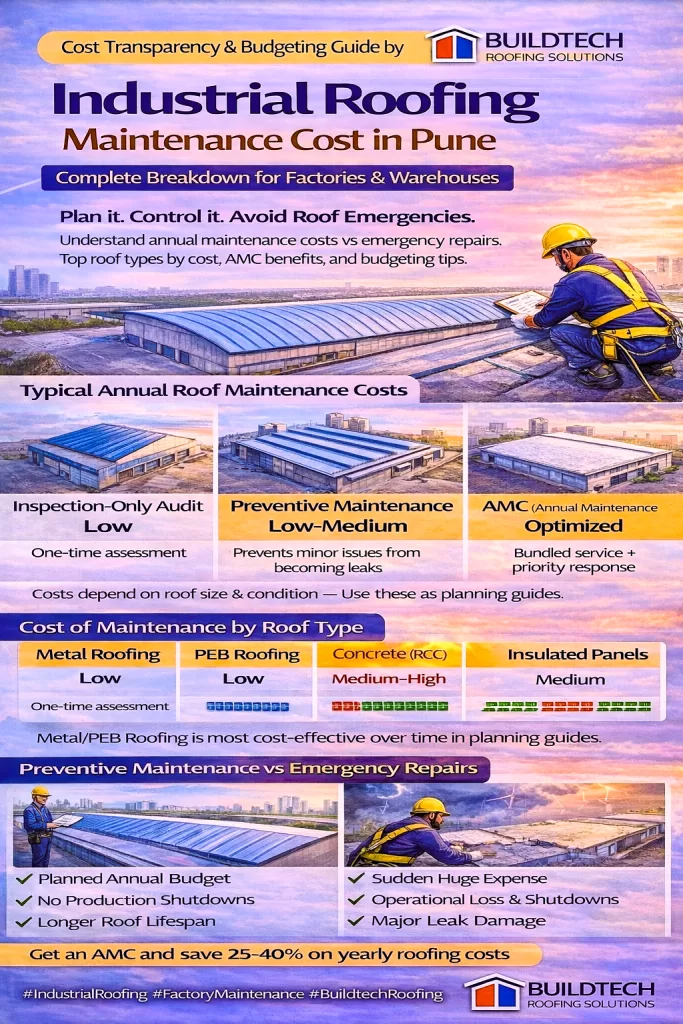
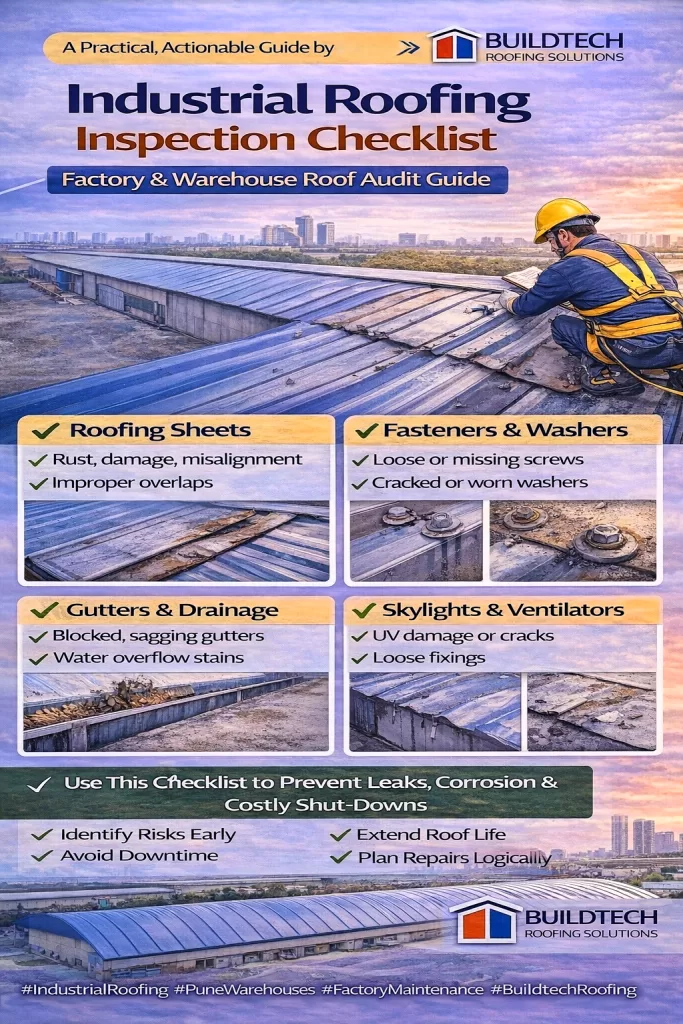
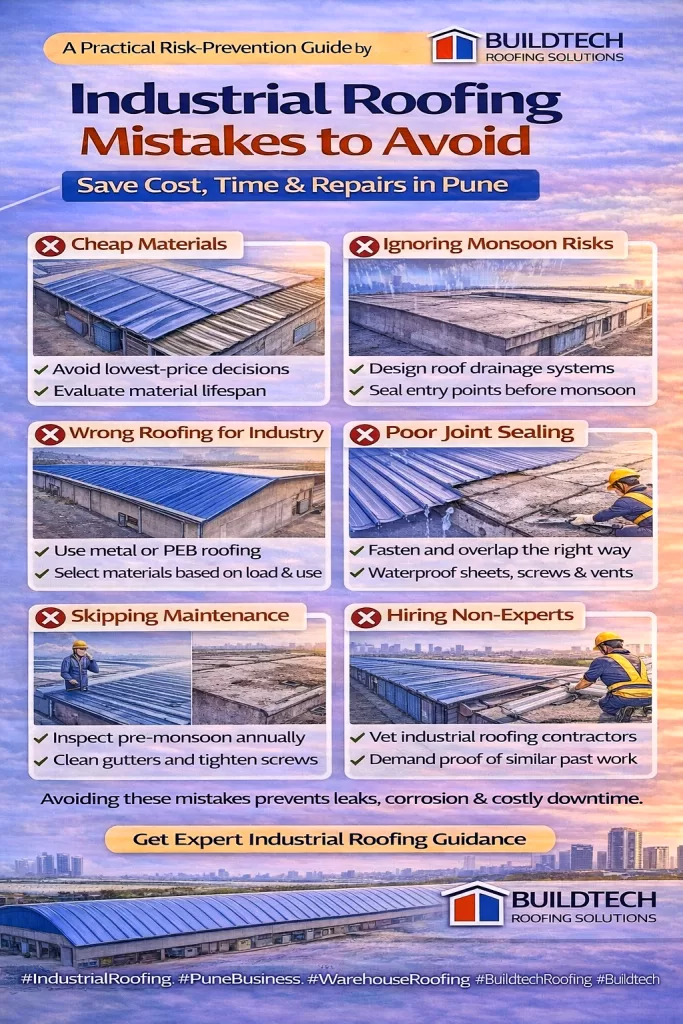
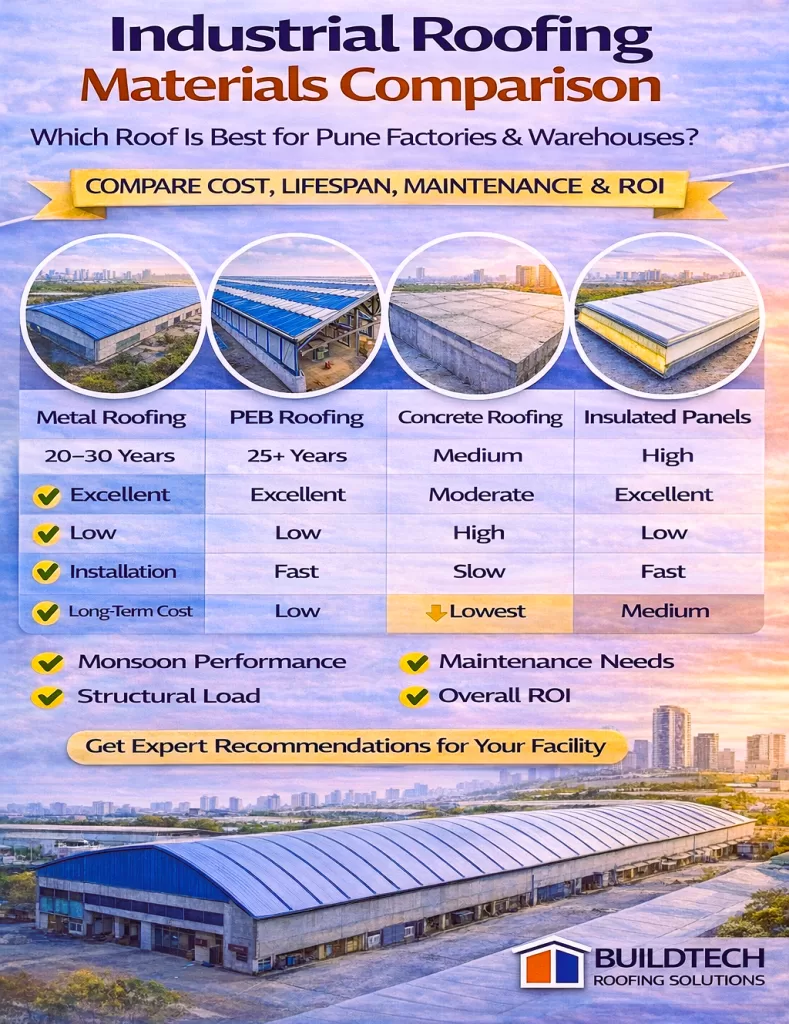
Industrial Roofing Warranty & Lifespan Guide: How Long Do Factory & Warehouse Roofs Last?
Introduction: Why Lifespan Matters More Than Initial Cost When industries evaluate roofing systems, the focus often stays on initial pricing. However, roofing is a long-term infrastructure decision. The real question is not “How much does it cost today?” but “How long will it perform reliably?” Understanding industrial roofing warranty and lifespan helps factory owners and facility managers in Pune make informed investment decisions. Warranty terms, maintenance practices, environmental exposure, and installation quality all influence how long a roof truly lasts. This guide explains lifespan expectations, warranty coverage, common misconceptions, and how proper maintenance protects both your roof and your warranty. Average Lifespan of Industrial Roofing Types 1️⃣ Metal Roofing Typical Lifespan: 20–30 yearsMetal roofing remains the most common industrial solution due to durability and cost efficiency. What affects lifespan? With preventive care, metal roofs frequently exceed two decades of service in Pune’s climate. 2️⃣ PEB Roofing Systems Typical Structural Lifespan: 25+ years Pre-Engineered Building systems combine structural steel frames with optimized roofing sheets. Advantages PEB systems typically deliver the lowest lifecycle cost among industrial roofing types when maintained properly. 3️⃣ Concrete (RCC) Roofing Structural Lifespan: LongWaterproofing Lifespan: Shorter (requires periodic renewal) Concrete roofs are structurally strong but depend heavily on waterproofing layers. Over time, cracks and expansion cycles reduce performance. Maintenance frequency is higher compared to metal or PEB roofing. 4️⃣ Insulated Roofing Panels Typical Lifespan: 15–25 years Used in temperature-sensitive industries, insulated panels perform well when seal integrity is maintained. Environmental exposure and joint condition largely determine durability. What Does an Industrial Roofing Warranty Cover? Warranties vary by manufacturer and contractor. Understanding coverage avoids future disputes. Material Warranty Covers: Usually provided by the material manufacturer. Workmanship Warranty Covers: Provided by the roofing contractor. What Warranties Usually Do NOT Cover Many warranties require proof of maintenance compliance. Warranty vs Actual Lifespan: Important Distinction A 10-year warranty does not mean the roof lasts only 10 years. Similarly, a 25-year product claim does not guarantee 25 years without maintenance. Warranty = protection against defectsLifespan = performance under real-world conditions Maintenance, inspection, and environmental exposure determine real lifespan. Factors That Affect Roofing Lifespan in Pune 1️⃣ Monsoon Intensity Heavy rainfall stresses joints, drainage systems, and sealants. 2️⃣ Heat & Expansion Cycles Repeated thermal expansion and contraction affect fasteners and overlaps. 3️⃣ Industrial Pollution Chemical exposure accelerates corrosion. 4️⃣ Drainage Efficiency Water ponding significantly reduces lifespan. 5️⃣ Maintenance Frequency Regular inspections extend roof life by years. Pune’s climate makes preventive maintenance essential. Signs Your Industrial Roof Is Nearing the End of Life When these signs appear consistently, replacement or retrofit should be evaluated. How Maintenance Extends Roofing Lifespan Maintenance is the most powerful lifespan multiplier. Key actions These small steps can extend metal and PEB roof performance well beyond standard expectations. Warranty Compliance: Why Documentation Matters To maintain warranty validity: Professional documentation protects both warranty and asset value. Replacement vs Retrofit Decision Guide Roof Condition Recommended Action Minor wear Preventive maintenance Local corrosion Targeted repair Moderate aging Partial retrofit Structural deterioration Full replacement An engineering assessment prevents premature replacement or delayed upgrades. How to Maximize Roofing Lifespan (Practical Advice) Long-term durability begins with correct decisions at the installation stage. Why Industries in Pune Choose Buildtech Roofing Solutions Buildtech Roofing Solutions focuses on: This approach ensures roofing systems perform for decades—not just through the warranty period. FAQs: Industrial Roofing Warranty and Lifespan How long does an industrial metal roof last?Typically, 20–30 years with proper maintenance. What voids an industrial roofing warranty?Poor maintenance, unauthorized changes, and misuse. Does maintenance affect warranty validity?Yes. Many warranties require documented maintenance. When should an industrial roof be replaced?When structural integrity declines or repair frequency becomes excessive. Conclusion: Invest for Lifespan, Not Just Warranty Period Understanding industrial roofing warranty and lifespan allows factories and warehouses to plan strategically rather than reactively. The right materials, professional installation, and consistent maintenance turn roofing into a stable, long-term asset instead of a recurring expense. For a professional lifespan assessment and warranty review in Pune, Buildtech Roofing Solutions provides engineering-backed guidance and execution.