Industrial Roof Repair & Restoration Guide: Extend Factory Roof Life Without Replacement
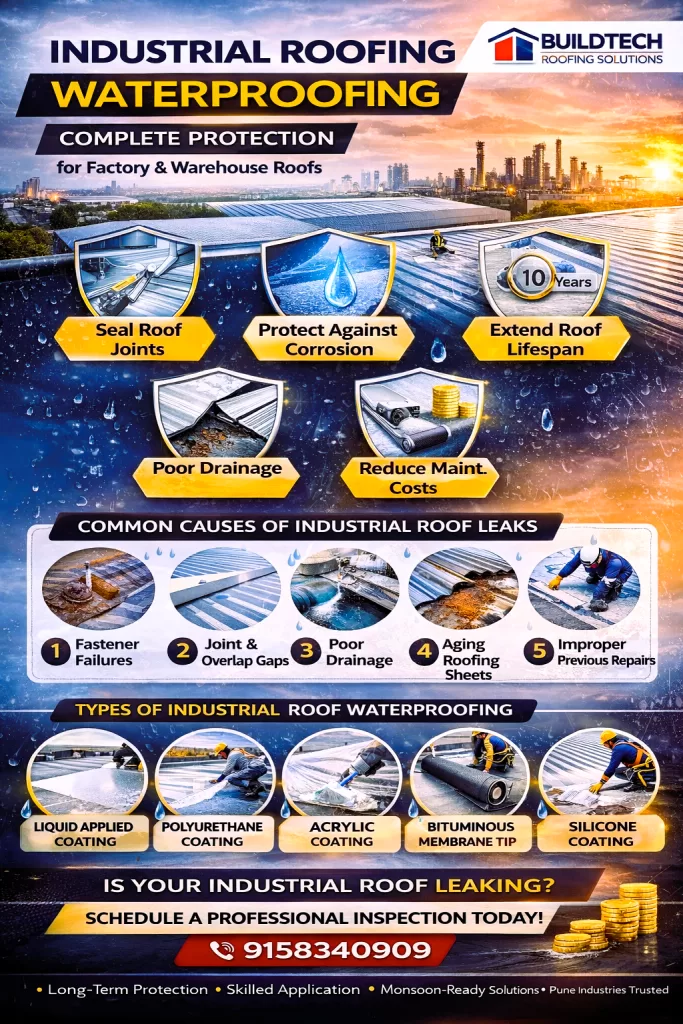
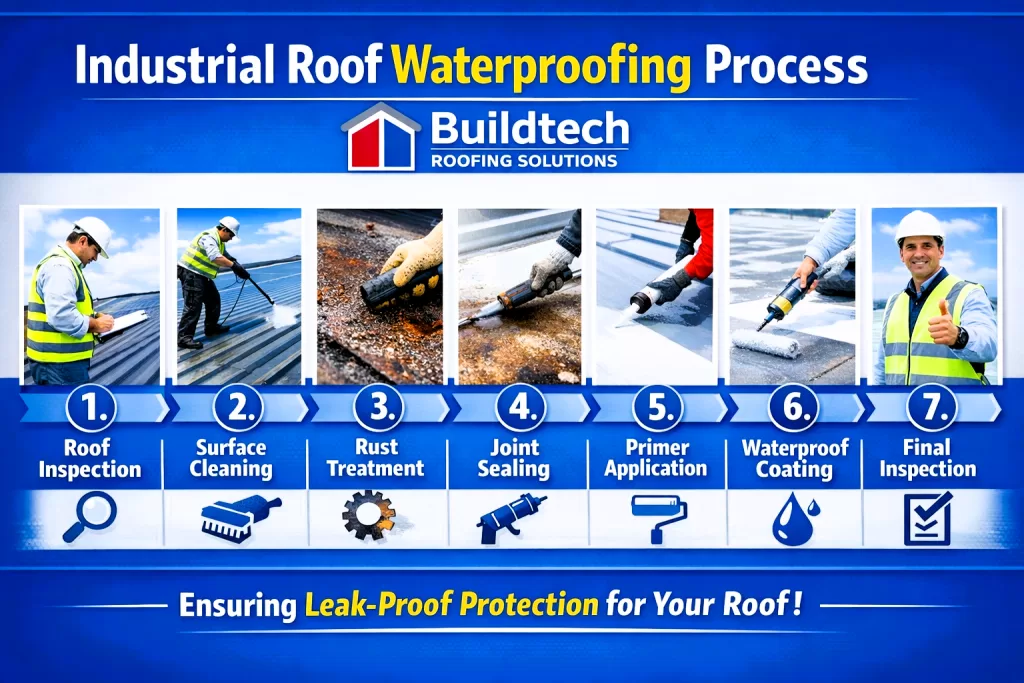
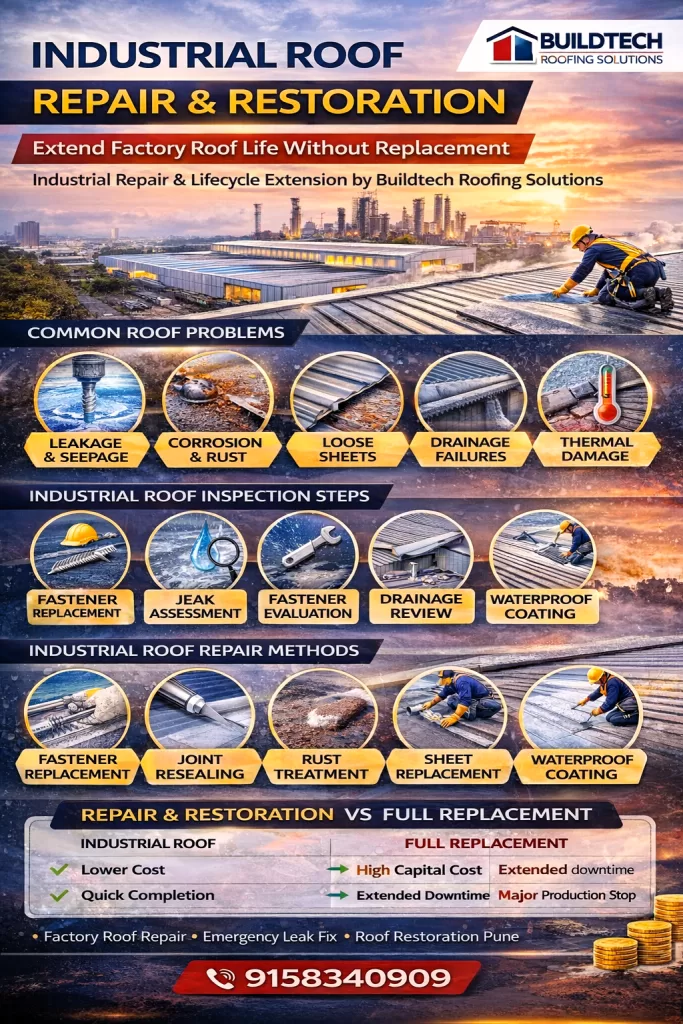
Industrial Repair & Lifecycle Extension Guide by Buildtech Roofing Solutions Introduction: Why Industrial Roof Repair Is a Strategic Investment Industrial roofs experience continuous stress from sunlight, heavy rainfall, wind exposure, and operational vibration. Over time, even well-installed roofing systems develop leaks, corrosion, and structural wear. Many industries assume replacement is the only solution. However, professional industrial roof repair and restoration can restore performance, extend lifespan, and significantly reduce capital expenditure. In Pune’s climate—hot summers followed by intense monsoon rains—timely repair protects production operations and prevents costly damage to machinery and inventory. What Is Industrial Roof Repair & Restoration? Industrial roofing solutions generally fall into two categories: Roof Repair Focused correction of localised problems, such as: Roof Restoration A comprehensive upgrade that improves overall roof performance through coating, reinforcement, and preventive protection. The objective is to extend the usable life without replacing the entire roofing system. Common Industrial Roofing Problems Leakage & Water Seepage Water enters through fasteners, joints, or damaged overlaps. Corrosion & Rust Formation Protective coatings deteriorate over time, exposing metal surfaces. Loose or Vibrating Sheets Wind loads and machinery vibration loosen fixings. Drainage Failures Blocked gutters create ponding water and seepage. Thermal Expansion Damage Temperature variations cause metal movement and cracking. Understanding these problems helps select the right repair method. Signs Your Industrial Roof Needs Repair Watch for early warning signs: Early intervention prevents structural damage. Industrial Roof Inspection Process Professional inspection identifies root causes rather than symptoms. Inspection Steps Inspection provides a clear repair strategy. Industrial Roof Repair Methods Fastener Replacement Damaged screws and washers are replaced to eliminate leak entry points. Joint Resealing Industrial sealants reinforce overlaps and seams. Sheet Replacement Severely corroded or damaged sheets are replaced selectively. Rust Treatment Corrosion removal followed by protective coating application. Waterproof Coating Systems Creates seamless protective layer against moisture. Industrial Roof Restoration Process A full restoration typically includes: Restoration renews roofing performance at a fraction of replacement cost. Repair vs Roof Replacement Repair & Restoration Roof Replacement Lower investment High capital cost Faster completion Longer downtime Minimal disruption Operational impact Extends lifespan Complete rebuild Most industrial roofs can be restored successfully when addressed early. Cost Factors in Industrial Roof Repair Repair cost depends on: Professional inspection ensures accurate budgeting. How Repair Improves Roofing ROI Industrial repair contributes to financial efficiency by: Lifecycle cost reduction makes restoration financially attractive. Preventive Maintenance After Restoration Post-repair maintenance ensures durability. Recommended actions: Preventive care preserves restoration benefits. Common Industrial Roof Repair Mistakes Avoid these frequent issues: These mistakes lead to recurring leaks. Why Professional Industrial Roof Repair Matters Industrial roofing requires specialized expertise due to: Professional repair ensures long-term reliability. Why Industries Choose Buildtech Roofing Solutions Buildtech Roofing Solutions provides: This ensures dependable long-term roof performance. FAQs: Industrial Roof Repair Can industrial roof leaks be permanently repaired?Yes, when root causes are addressed through professional restoration methods. How long does roof restoration last?Typically, 5–10 years, depending on materials and maintenance. Is restoration cheaper than replacement?Yes, restoration costs significantly less while extending lifespan. When should industrial roofs be repaired?Immediately after the early signs, such as leaks or corrosion, appear. Conclusion: Repair Early, Extend Roof Life Industrial roof repair and restoration transform ageing roofs into reliable protective systems without major reconstruction costs. Early inspection, professional repair methods, and preventive maintenance allow factories and warehouses to operate safely while controlling expenses. For professional industrial roof repair services in Pune, Buildtech Roofing Solutions delivers engineered restoration solutions designed for durability and performance.
Industrial Roof Repair & Restoration Guide: Extend Factory Roof Life Without Replacement Read More »