
Introduction
Industrial buildings such as factories, warehouses, logistics hubs, and manufacturing plants require roofing systems that do more than simply cover the structure. Modern industrial roofing must provide structural strength, efficient ventilation, thermal control, and long-term durability.
In rapidly growing industrial regions like Pune, businesses are increasingly adopting advanced roofing systems to improve energy efficiency, workplace comfort, and building performance.
This is where Buildtech Roofing Solutions plays a vital role. As a specialised industrial roofing provider, the company offers innovative roofing products such as ridge ventilators, metal louvers, insulated panels, decking sheets, and complete roofing accessories designed for modern industrial infrastructure.
This comprehensive guide explains how industrial roofing systems work, their benefits, and why choosing the right roofing solution is critical for long-term operational efficiency.
Understanding Industrial Roofing Systems
Industrial roofing systems differ significantly from residential or commercial roofing. Industrial facilities often span large areas and require roofing structures capable of handling:
- Heavy loads
- Extreme weather conditions
- High interior heat levels
- Ventilation requirements
- Long-term durability
Modern industrial roofing integrates ventilation systems, structural sheets, insulation layers, and protective coatings to create a high-performance roofing environment.
Key components typically include:
- Ridge ventilators
- Metal louvers
- Decking sheets
- Insulated roofing panels
- Polycarbonate sheets for daylight
- Roofing metal accessories
These elements work together to improve airflow, temperature control, and overall building performance.
Importance of Proper Ventilation in Industrial Buildings
One of the most common challenges inside industrial buildings is heat accumulation. Machinery, production equipment, and large enclosed spaces generate significant amounts of heat.
Without proper ventilation, the interior temperature of a factory can rise dramatically, leading to:
- Worker discomfort
- Reduced productivity
- Higher energy consumption
- Equipment overheating
Natural ventilation systems, such as ridge ventilators and louvers allow hot air to escape naturally through the roof, creating continuous airflow throughout the building.
This method significantly reduces dependence on mechanical ventilation systems and lowers electricity consumption.
Industrial Ridge Ventilators: The Heart of Natural Ventilation
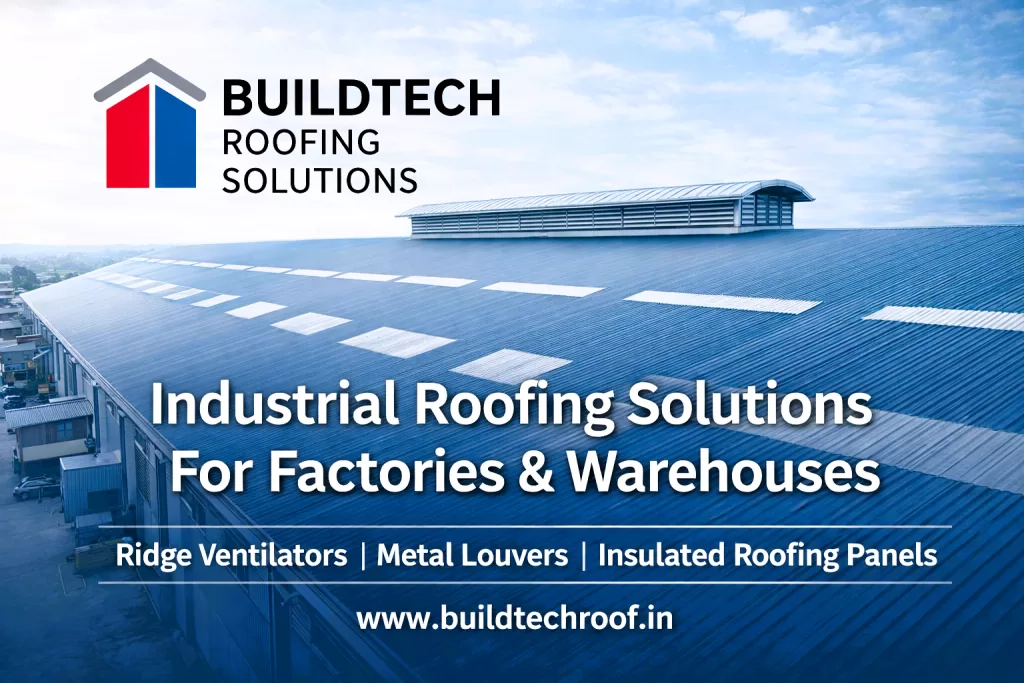
Ridge ventilators are one of the most efficient solutions for improving airflow inside large industrial buildings. Installed along the ridge line of the roof, these ventilators allow hot air and fumes to exit the building naturally.
How Ridge Ventilators Work
Hot air naturally rises upward. Ridge ventilators create an outlet at the highest point of the roof where trapped heat can escape. Fresh air then enters through side openings or louvers, creating a natural circulation cycle.
Benefits of Ridge Ventilators
Industrial ridge ventilators provide multiple advantages:
- Continuous natural airflow
- Reduced indoor temperature
- Improved worker comfort
- Lower energy consumption
- Removal of fumes and humidity
For factories that operate heavy machinery or manufacturing equipment, ridge ventilators are essential for maintaining a healthy indoor environment.
Metal Louvers for Industrial Ventilation
Metal louvers are another critical element of modern industrial roofing systems. Installed on building walls or ventilation openings, louvers allow air to flow inside while preventing rainwater and debris from entering the building.
Key Functions of Metal Louvers
Metal louvers serve several important purposes:
- Controlled airflow into buildings
- Protection against rain and dust
- Ventilation support for HVAC systems
- Improved building aesthetics
High-quality metal louvers are typically manufactured from powder-coated aluminium or galvanised steel, ensuring long-term corrosion resistance.
For factories located in industrial environments, durable louvers help maintain reliable ventilation without compromising structural integrity.
Decking Sheets for Structural Roofing
Decking sheets form the structural base of many industrial roofing systems. These sheets support the roofing structure and act as the foundation for insulation layers and roofing panels.
Advantages of Decking Sheets
Decking sheets are widely used because they offer:
- High load-bearing capacity
- Excellent structural stability
- Fast installation
- Compatibility with concrete slabs
These sheets are particularly useful in multi-story industrial structures and commercial buildings where roofing systems must support heavy loads.
Insulated Roofing Panels for Energy Efficiency
Insulated roofing panels are becoming increasingly popular in modern industrial construction. These panels consist of two metal sheets with a thermal insulation core between them.
Why Insulated Panels Matter
Factories often struggle with heat buildup, especially in hot climates. Insulated roofing panels help reduce heat transfer, maintaining cooler interior temperatures.
Key benefits include:
- Improved thermal insulation
- Reduced electricity consumption
- Comfortable indoor working conditions
- Lower air-conditioning costs
For warehouses storing temperature-sensitive products, insulated roofing panels are essential for maintaining stable interior conditions.
Polycarbonate Sheets for Natural Daylighting
Industrial buildings often require adequate daylight to reduce reliance on artificial lighting. Polycarbonate sheets are commonly integrated into roofing systems to allow natural sunlight into the building.
Benefits of Polycarbonate Sheets
Polycarbonate roofing sheets provide:
- Natural daylight illumination
- Reduced electricity usage
- High impact resistance
- Lightweight installation
These sheets are typically installed as skylight panels within metal roofing structures.
Roofing Metal Accessories: Small Components with Big Impact
While large components like ventilators and panels receive the most attention, roofing accessories are equally important for a complete roofing system.
Essential roofing accessories include:
- Flashings
- Ridge caps
- Gutters
- Fasteners
- Sealants
These components ensure proper sealing, water drainage, and long-term durability of the roofing structure.
Industrial Roofing Installation Process
A professionally designed roofing system follows a structured installation process to ensure performance and longevity.
Step 1 – Site Assessment
Engineers evaluate the building structure, ventilation requirements, and environmental conditions.
Step 2 – System Design
Based on the assessment, a customised roofing system is designed, including ventilators, louvers, sheets, and insulation materials.
Step 3 – Material Selection
High-quality materials are selected to ensure durability and weather resistance.
Step 4 – Installation
Experienced technicians install roofing components according to engineering standards.
Step 5 – Inspection and Testing
Final inspections ensure the roofing system functions efficiently and meets safety requirements.
Industrial Roof Replacement and Retrofitting
Many older factories suffer from roofing problems, such as:
- Leakage
- Poor ventilation
- Corrosion
- Structural damage
Roof retrofitting allows businesses to upgrade their roofing systems without completely replacing the building structure.
Modern retrofitting solutions include:
- Installing ridge ventilators
- Adding insulated roofing panels
- Replacing old sheets with coated metal roofing
- Improving drainage systems
These upgrades significantly extend the lifespan of industrial buildings.
Sustainability in Modern Industrial Roofing
Sustainability is becoming a major priority in industrial construction. Advanced roofing systems contribute to environmentally responsible buildings by improving energy efficiency and reducing carbon footprints.
Sustainable roofing solutions often include:
- Natural ventilation systems
- Thermal insulation panels
- Reflective roofing coatings
- Daylighting panels
These technologies help industries lower energy consumption and support green building initiatives.
Why Choose Buildtech Roofing Solutions
When selecting an industrial roofing contractor, experience and technical expertise are crucial.
Buildtech Roofing Solutions provides complete roofing systems designed for long-term performance and efficiency.
Key strengths include:
- Advanced industrial roofing technology
- High-quality roofing materials
- Custom ventilation system design
- Professional installation services
- Reliable project execution
The company works closely with architects, contractors, and facility managers to deliver roofing solutions tailored to each project.
Industries That Benefit from Industrial Roofing Systems
Industrial roofing solutions are widely used across multiple sectors, including:
- Manufacturing plants
- Warehouses and logistics hubs
- Automobile industries
- Pharmaceutical factories
- Food processing units
- Engineering workshops
Each industry requires roofing systems that support ventilation, durability, and energy efficiency.
Future Trends in Industrial Roofing
The industrial roofing industry continues to evolve with new technologies and materials. Some emerging trends include:
- Solar-integrated roofing systems
- Smart ventilation systems
- Advanced insulation materials
- Lightweight high-strength roofing panels
These innovations are helping industrial buildings become more energy-efficient and sustainable.
Conclusion
Industrial roofing is far more than a structural covering for factories and warehouses. It plays a crucial role in maintaining ventilation, controlling temperature, protecting equipment, and ensuring long-term durability of the building.
Modern roofing systems that incorporate ridge ventilators, metal louvers, insulated panels, and decking sheets significantly improve building performance and energy efficiency.
With expertise in advanced roofing technologies, Buildtech Roofing Solutions Pune provides reliable industrial roofing systems tailored to the needs of modern industries.
Whether constructing a new factory or upgrading an existing roof, choosing the right roofing solution ensures a safer, more efficient, and long-lasting industrial facility.