
Introduction: Why Industrial Buildings Need Efficient Roof Ventilation
Industrial buildings generate large amounts of heat every day. Machinery, welding processes, furnaces, lighting systems, and continuous human activity raise indoor temperatures significantly. When hot air becomes trapped near the roof, working conditions deteriorate quickly.
Poor ventilation often leads to uncomfortable environments, reduced productivity, faster equipment wear, and increased electricity costs. Exhaust fans and air-conditioning systems can help, but they consume power and demand ongoing maintenance.
As a result, many industries now prefer natural, power-free ventilation systems. Among available solutions, turbo ventilators have proven to be one of the most reliable and cost-effective options for factories, warehouses, and large industrial sheds.
This guide explains how turbo ventilators work, where they are used, and how to select the right system for long-term performance.
What Are Turbo Ventilators?
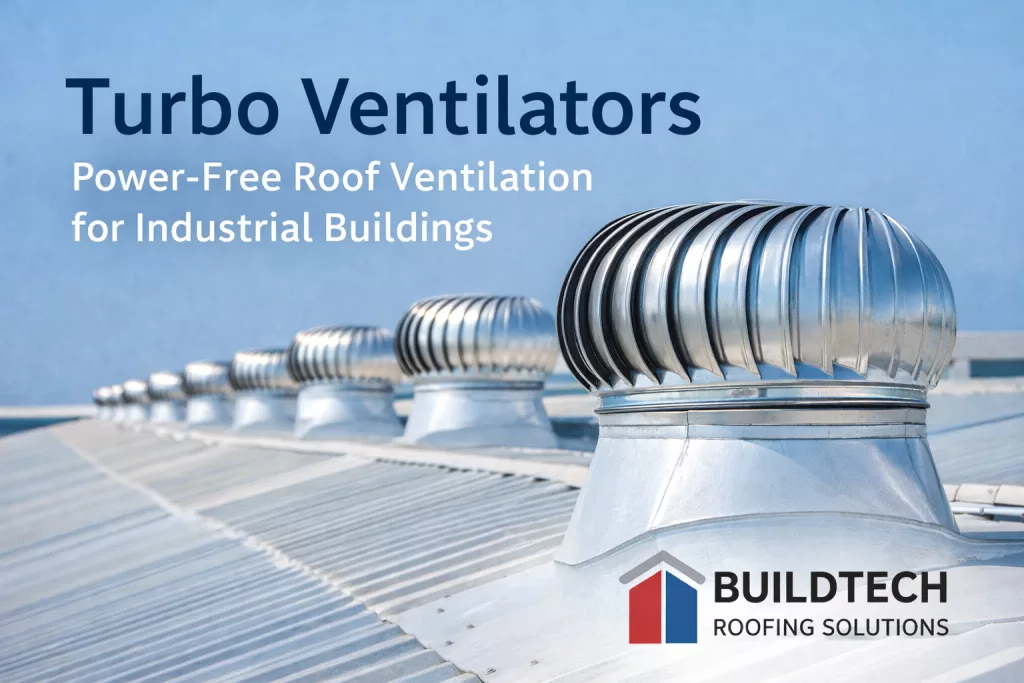
Turbo ventilators are wind-driven roof ventilation units installed at the highest point of an industrial roof. Each unit consists of a rotating turbine head mounted on a base that connects to the roof opening.
As the turbine rotates, it creates negative pressure inside the building. This pressure difference pulls hot air, fumes, and moisture upward and releases them outside. Fresh air enters naturally through doors, louvers, or side openings.
The defining advantage of turbo ventilators is their power-free operation. They work without electricity, motors, or electrical wiring.
How Turbo Ventilators Work
Turbo ventilators operate using a combination of wind movement and thermal convection.
Working Principle
- Heat produced inside the building rises toward the roof
- Hot air accumulates at the highest level
- Wind movement rotates the turbine head
- Rotation creates suction at the roof opening
- Hot air is expelled from the building
- Cooler air enters from lower openings
Even in low-wind conditions, temperature differences between indoor and outdoor air help maintain airflow. This ensures continuous ventilation throughout the day.
Why Turbo Ventilators Are Ideal for Industrial Buildings
Industrial structures differ from residential or commercial buildings. They usually feature large spans, high roof heights, and continuous heat generation.
Turbo ventilators are well suited to these conditions because they provide uninterrupted ventilation without increasing operating costs.
Key Reasons Industries Choose Turbo Ventilators
- Continuous natural airflow
- Zero electricity consumption
- Reduced indoor temperature
- Improved air quality
- Silent operation
- Long service life
Key Benefits of Turbo Ventilators
1. Power-Free Operation
Turbo ventilators function without electricity, which eliminates energy expenses over their entire lifespan.
2. Continuous Ventilation
Once installed, they operate 24×7 without manual control or power supply.
3. Heat and Humidity Reduction
By exhausting hot air, turbo ventilators lower indoor temperatures and reduce moisture buildup.
4. Improved Working Conditions
Better airflow enhances comfort, which supports worker productivity and safety.
5. Low Maintenance
With no motors or electrical components, maintenance requirements remain minimal.
6. Environment-Friendly Solution
Reduced energy consumption helps lower carbon emissions and supports sustainable building practices.
Types of Turbo Ventilators
Aluminium Turbo Ventilators
These are lightweight, corrosion-resistant, and suitable for most industrial environments.
Stainless Steel Turbo Ventilators
Designed for aggressive or corrosive conditions, including coastal and chemical industries.
Base-Mounted Turbo Ventilators
Custom-fabricated bases match roof profiles and ensure leak-proof installation.
Materials Used in Turbo Ventilators
Material selection directly impacts durability and performance.
Common materials include:
- Aluminium
- Stainless steel
- Galvanized steel
- PPGI / PPGL base flashings
High-quality materials ensure smooth rotation, weather resistance, and long service life.
Technical Specifications (Typical Range)
| Parameter | Specification |
|---|---|
| Diameter | 18″ / 21″ / 24″ / Custom |
| Material | Aluminium / Stainless Steel |
| Operation | Wind & thermal driven |
| Power Requirement | Nil |
| Installation | Roof-mounted |
| Maintenance | Minimal |
Applications of Turbo Ventilators
Turbo ventilators are widely used in:
- Industrial factories
- Warehouses and logistics parks
- Boiler rooms
- Generator sheds
- Manufacturing units
- Automobile workshops
- Textile and processing plants
They are especially effective on large-span roofs where natural airflow is essential.
Turbo Ventilators vs Exhaust Fans
| Aspect | Turbo Ventilators | Exhaust Fans |
|---|---|---|
| Electricity | Not required | Required |
| Operating Cost | Zero | High |
| Maintenance | Low | Moderate |
| Noise | Silent | Noisy |
| Lifespan | Long | Moderate |
Turbo ventilators provide continuous ventilation without ongoing energy expenses.
Installation Process
Correct installation plays a critical role in performance and leak prevention.
Typical Installation Steps
- Roof inspection and marking
- Cutting of roof opening
- Base fixing and flashing
- Turbo ventilator mounting
- Rotation and airflow testing
Professional installation ensures smooth operation and long-term reliability.
How to Choose the Right Turbo Ventilator
Roof Size
Larger roofs require multiple ventilators placed at proper intervals.
Heat Load
Higher heat generation demands larger sizes or additional units.
Environmental Conditions
Coastal or chemical environments require stainless steel models.
Budget Planning
Initial cost should be evaluated against long-term energy savings.
Common Buyer Mistakes to Avoid
- Installing an insufficient number of ventilators
- Selecting low-quality bearings
- Poor flashing and waterproofing
- Ignoring professional layout planning
Avoiding these issues ensures consistent ventilation performance.
Energy Efficiency and Sustainability Benefits
Turbo ventilators support sustainable construction by:
- Reducing electricity consumption
- Lowering HVAC load
- Minimizing carbon emissions
- Supporting green building initiatives
They contribute directly to energy-efficient industrial infrastructure.
Why Choose Buildtech Roofing Solutions
Buildtech Roofing Solutions delivers complete turbo ventilator solutions, including:
- High-quality ventilators
- Custom base fabrication
- Leak-proof installation
- Integrated roofing and ventilation services
- Professional project execution
Each system is engineered for durability, performance, and long-term value.
Frequently Asked Questions
Do turbo ventilators work without wind?
Yes. Thermal convection supports airflow even during low-wind conditions.
Are turbo ventilators waterproof?
Proper flashing and installation prevent rain ingress.
How many turbo ventilators are required?
The number depends on the roof area and internal heat load.
Do turbo ventilators reduce electricity bills?
Yes. They reduce reliance on exhaust fans and air conditioning systems.
Conclusion
Turbo ventilators offer one of the most economical and reliable solutions for industrial roof ventilation. Their power-free operation, minimal maintenance, and continuous performance make them a long-term investment for factories and warehouses.
By selecting the right turbo ventilator system, industries can improve indoor comfort, reduce operational costs, and enhance sustainability.
Final Call to Action
📞 Call: 9158340909
📩 Request a Turbo Ventilator Consultation Today