
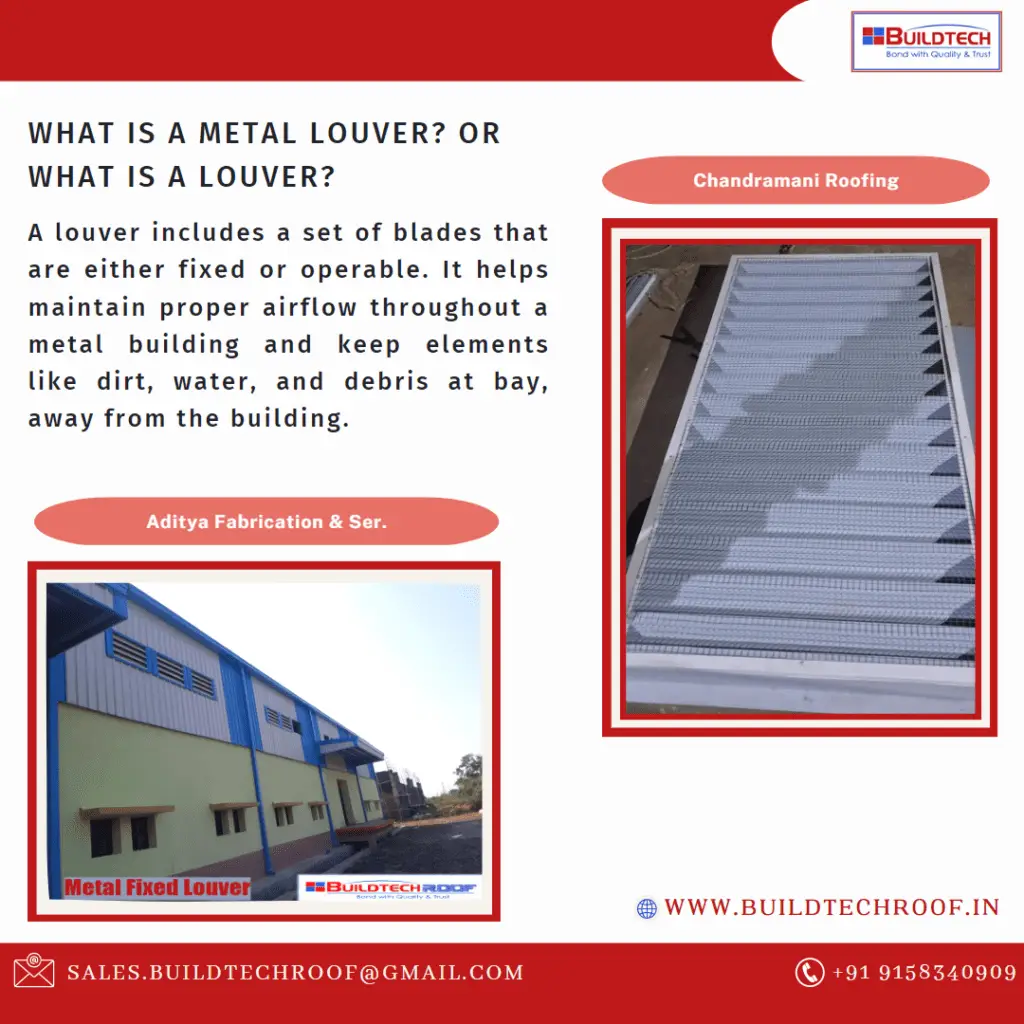
A metal louver, also known simply as a louver or louvre, serves as a cool architectural feature in buildings. Architects typically make it from metal, but they can also use wood or glass. Louvers have slats or blades that let in air, light, and sound while keeping out rain, direct sunlight, and noise.
Builders use metal louvers to add ventilation, control natural light, and make buildings look awesome. You can find them in different styles and sizes, including fixed or adjustable louvers.
Here are some common uses of metal louvers:
- Ventilation: Architects often install louvers in building facades or on roofs to allow fresh air to flow in and out, keeping indoor temperatures and humidity at comfortable levels.
- Sun Control: Louvers can block or filter direct sunlight, reducing heat and glare inside a building. This is especially handy in hot climates, as it can help save energy by reducing the need for air conditioning.
- Privacy and Security: Louvers act as screens, providing privacy and security for building occupants by blocking outside views while still allowing airflow and light to pass through.
- Architectural design often incorporates metal louvers as decorative elements, adding texture, depth, and visual interest to a building’s exterior.
- Sound Control: In some cases, designers can create louvers to help control and reduce noise transmission from the outside environment into a building’s interior spaces.
Metal louvers feature various designs and allow customisation to meet specific architectural and functional needs. Architects and builders use them in commercial, industrial, and residential buildings to enhance both performance and aesthetics.