
Introduction
Industrial construction demands structural components that are strong, lightweight, and capable of supporting heavy loads while maintaining long-term durability. Among the most essential components in modern industrial buildings are Z & C purlins.
Purlins play a critical role in supporting roofing sheets, wall cladding, and structural frameworks in factories, warehouses, and commercial buildings. Without proper purlin systems, roofing structures cannot maintain stability or load distribution.
This is where Z and C Purlins Pune solutions by Buildtech Roofing Solutions provide high-quality, engineered structural systems tailored for industrial applications.
In a rapidly developing industrial city like Pune, where construction efficiency and durability are key, Z & C purlins have become a preferred choice for builders, engineers, and contractors.
This comprehensive guide covers everything about Z & C purlins, including types, features, benefits, applications, installation process, and why they are essential for modern construction.
What Are Z & C Purlins?
Z & C purlins are cold-formed steel structural members used in industrial and commercial construction.
They are named based on their cross-sectional shapes:
- Z Purlins → Z-shaped profile
- C Purlins → C-shaped profile
These purlins are installed horizontally and act as support systems for:
- Roofing sheets
- Wall panels
- Structural frameworks
They transfer loads from the roof to the main structure, ensuring stability and strength.
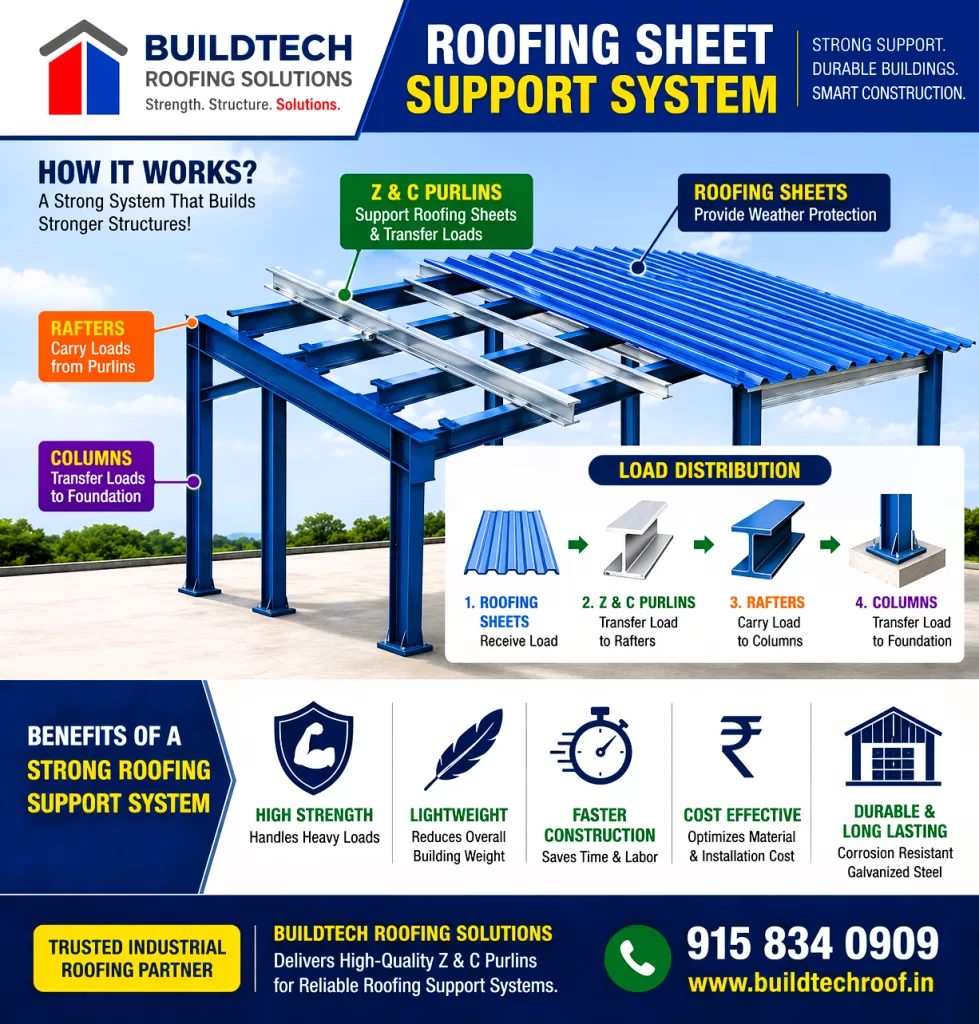
How Z & C Purlins Work
Purlins distribute loads efficiently across the structure.
Working Mechanism:
- Roofing sheets are placed over purlins
- Purlins support sheet weight
- Load is transferred to rafters
- Rafters transfer load to columns
- The entire structure remains stable
This system ensures balanced load distribution and structural integrity.
Difference Between Z and C Purlins
| Feature | Z Purlins | C Purlins |
|---|---|---|
| Shape | Z-shaped | C-shaped |
| Span Capacity | Higher | Moderate |
| Overlapping | Possible | Not possible |
| Structural Strength | High | Medium |
| Application | Large buildings | Small to medium structures |
Types of Z & C Purlins
1. Galvanised Purlins
These are coated with zinc to prevent corrosion.
Features:
- Rust-resistant
- Long lifespan
- Suitable for outdoor use
2. Pre-Engineered Purlins
Customised purlins used in PEB (Pre-Engineered Buildings).
Benefits:
- Precision design
- Optimized performance
- Reduced material wastage
3. Heavy-Duty Purlins
Designed for large-span industrial structures.
4. Light-Duty Purlins
Used in smaller structures or secondary support systems.
Key Features of Z & C Purlins
1. High Strength-to-Weight Ratio
Provides excellent strength while being lightweight.
2. Corrosion Resistance
Galvanised coating ensures long-term durability.
3. Dimensional Accuracy
Manufactured with precision for a perfect fit.
4. Easy Installation
Quick and efficient installation process.
5. Versatility
Suitable for roofing, cladding, and structural support.
Benefits of Z & C Purlins
1. Strong Structural Support
Ensures stability of roofing systems.
2. Faster Construction
Prefabricated design reduces construction time.
3. Cost Efficiency
Lower material and labour costs.
4. Durability
Long-lasting performance with minimal maintenance.
5. Flexibility
Can be customised for different project requirements.
Applications of Z & C Purlins
Z & C purlins are widely used in:
- Industrial sheds
- Warehouses
- Manufacturing plants
- Commercial buildings
- PEB structures
- Agricultural buildings
- Infrastructure projects
Role of Purlins in Industrial Roofing Systems
Purlins are essential for:
- Supporting roofing sheets
- Maintaining structural alignment
- Distributing loads evenly
- Enhancing roof durability
Without purlins, roofing systems would lack strength and stability.
Z & C Purlins vs Traditional Structural Members
| Feature | Z & C Purlins | Traditional Steel Sections |
|---|---|---|
| Weight | Lightweight | Heavy |
| Installation | Fast | Slow |
| Cost | Lower | Higher |
| Efficiency | High | Moderate |
Step-by-Step Installation Process
Step-1 – Structural Design
Analyse load requirements and design purlin layout.
Step-2 – Material Selection
Choose an appropriate thickness and size.
Step-3 – Positioning
Align purlins across rafters.
Step-4 – Fixing
Secure purlins using bolts and fasteners.
Step-5 – Alignment Check
Ensure proper spacing and alignment.
Step-6 – Roofing Installation
Install roofing sheets over purlins.
Factors to Consider Before Choosing Purlins
- Load requirements
- Building size
- Environmental conditions
- Budget
- Structural design
Maintenance Tips
- Inspect for corrosion
- Tighten fasteners
- Check alignment
- Ensure proper drainage
Cost of Z & C Purlins in Pune
Cost depends on:
- Thickness
- Material grade
- Galvanization level
- Project size
- Installation complexity
💡 Tip: Investing in high-quality purlins reduces long-term maintenance costs.
Why Choose Buildtech Roofing Solutions Pune
Buildtech Roofing Solutions is a trusted name in industrial roofing and structural systems.
Key Advantages:
✔ High-quality galvanised purlins
✔ Expert engineering and installation
✔ Customised solutions
✔ Competitive pricing
✔ Timely project execution
Industries Served
- Manufacturing plants
- Warehouses
- Logistics hubs
- Automotive industries
- Pharmaceutical companies
- Food processing units
Future of Structural Systems with Purlins
With increasing demand for:
- Faster construction
- Cost efficiency
- Sustainable structures
Z & C purlins are becoming the backbone of modern industrial construction.
Conclusion
Z & C purlins are essential structural components that provide strength, stability, and efficiency in industrial buildings.
With Z and C Purlins Pune solutions by Buildtech Roofing Solutions, businesses can ensure durable, cost-effective, and high-performance construction systems.