
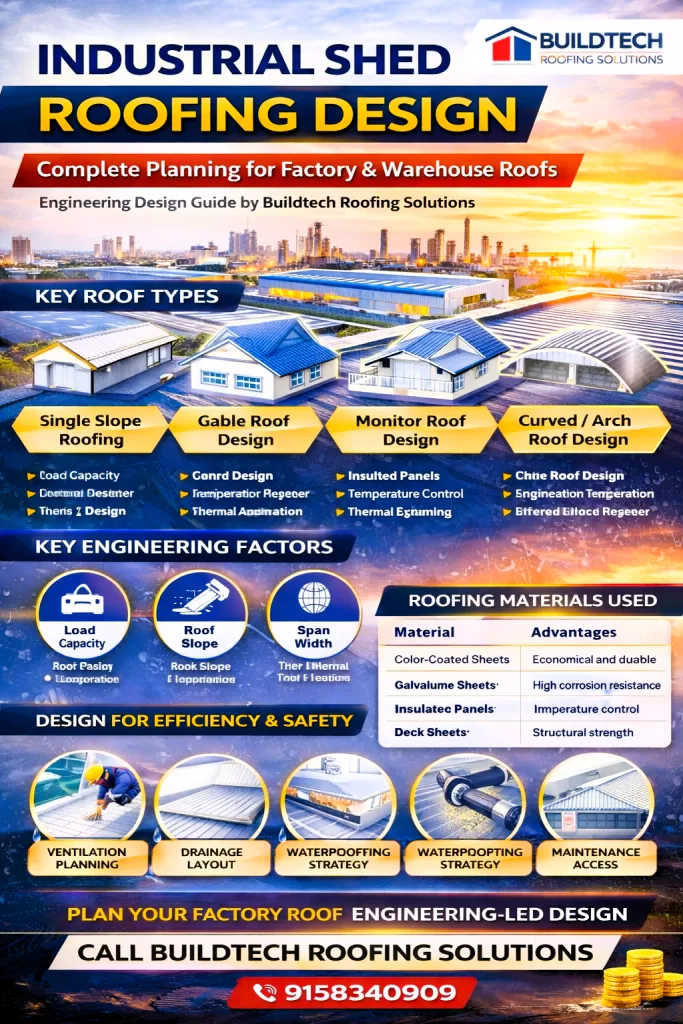
Introduction: Why Industrial Shed Roofing Design Matters
Industrial shed construction begins long before installation—it starts with a correct roofing design. A well-designed industrial roof ensures durability, efficient drainage, proper ventilation, and reduced maintenance costs throughout the building lifecycle.
In Pune’s climate, where intense sunlight combines with heavy monsoon rainfall, poor design decisions often lead to leakage, overheating, and structural stress. Proper industrial shed roofing design prevents these issues by integrating engineering planning, material science, and operational requirements.
This guide explains how industries can design factory and warehouse roofs for long-term performance and efficiency.
What Is Industrial Shed Roofing Design?
Industrial shed roofing design refers to the engineering and planning process that determines how a roof performs structurally and environmentally.
It includes:
- Structural load calculations
- Roofing material selection
- Ventilation planning
- Drainage engineering
- Waterproofing integration
- Maintenance accessibility
Design quality directly impacts roof lifespan and operational reliability.
Types of Industrial Shed Roofing Designs
1️⃣ Single Slope Roofing
A simple roof inclined in one direction.
Advantages
- Cost-effective construction
- Easy drainage planning
- Suitable for small and medium sheds
2️⃣ Gable Roof Design
Two sloping sides meeting at a ridge.
Benefits
- Balanced load distribution
- Improved rainwater flow
- Better internal air circulation
3️⃣ Monitor Roof Design
Raised central section allowing airflow and lighting.
Best for
- Heat-generating industries
- Natural ventilation improvement
4️⃣ Curved or Arch Roof Design
Modern structural system used for large spans.
Advantages
- High structural efficiency
- Reduced internal columns
- Modern industrial appearance
Key Engineering Factors in Shed Roofing Design
Structural Load Capacity
Engineers calculate loads, including:
- Wind pressure
- Rainwater accumulation
- Equipment installation loads
- Maintenance access loads
Incorrect load assumptions can cause deformation or leakage.
Roof Slope Design
Slope determines drainage efficiency.
Typical industrial slopes:
- Metal roofing: 5°–15°
- High rainfall zones require steeper slopes.
Span Width Planning
Large spans require stronger structural systems and correct purlin spacing.
Proper spacing improves durability and stability.
Thermal Expansion Allowance
Metal roofs expand under heat.
Design must include:
- Expansion gaps
- Flexible fasteners
- Proper joint detailing
Roofing Materials Used in Industrial Sheds
| Material | Advantages |
|---|---|
| Colour-Coated Sheets | Economical and durable |
| Galvalume Sheets | High corrosion resistance |
| Insulated Panels | Temperature control |
| Deck Sheets | Structural strength |
Material selection depends on the environment and operational needs.
Ventilation Design for Industrial Sheds
Heat accumulation is a major industrial problem.
Effective ventilation includes:
- Turbo ventilators
- Ridge ventilators
- Metal louvers
- Natural airflow pathways
Proper airflow reduces indoor temperature and improves worker comfort.
Drainage Planning in Shed Roofing
Drainage failures are the leading cause of industrial roof leakage.
Key components:
- Gutter sizing
- Downpipe positioning
- Roof slope optimization
- Rainwater discharge design
Engineering drainage during design prevents future repairs.
Waterproofing Integration During Design Stage
Waterproofing should be planned—not added later.
Design integration includes:
- Joint sealing strategy
- Compatible coatings
- Fastener sealing systems
- Edge protection details
Early planning reduces long-term maintenance costs.
Safety Considerations in Shed Roofing Design
Industrial roofs must allow safe maintenance.
Important safety provisions:
- Roof access ladders
- Lifeline anchoring points
- Maintenance walkways
- Fall protection planning
Safety design improves compliance and reduces risk.
Energy-Efficient Shed Roofing Design
Energy-efficient roofing lowers operating costs.
Design strategies include:
- Reflective roof coatings
- Insulated roofing panels
- Ventilation airflow optimization
- Daylighting panels for natural lighting
Energy efficiency improves indoor working conditions.
Common Industrial Shed Roofing Design Mistakes
Avoid these frequent errors:
- Incorrect roof slope
- Ignoring ventilation planning
- Underestimating load capacity
- Using low-quality fasteners
- No maintenance access design
Most roofing problems originate from early design mistakes.
Industrial Shed Roofing Design Process
- Site assessment
- Requirement analysis
- Structural engineering design
- Material selection
- Safety planning
- Installation scheduling
- Maintenance planning
Structured design ensures predictable project outcomes.
Why Professional Roofing Design Matters
Professional design delivers:
- Longer roof lifespan
- Reduced repair frequency
- Better energy performance
- Improved structural safety
- Lower lifecycle costs
Industrial roofing is an engineering system—not just sheet installation.
Why Industries Choose Buildtech Roofing Solutions
Buildtech Roofing Solutions provides:
- Engineering-led design approach
- Pune climate-based planning
- Industrial material expertise
- Safety-focused execution
- Lifecycle roofing solutions
This ensures industrial sheds perform reliably for years.
FAQs: Industrial Shed Roofing Design
Which roof design is best for industrial sheds?
Gable and monitor roofs are commonly preferred for ventilation and drainage efficiency.
What slope is ideal for shed roofing?
Typically between 5° and 15°, depending on material and rainfall conditions.
How can the heat inside industrial sheds be reduced?
Ventilation systems, insulation, and reflective coatings significantly reduce heat gain.
Which roofing material lasts longest?
Galvalume and insulated roofing systems offer excellent durability.
Conclusion: Smart Design Creates Long-Lasting Industrial Roofs
Effective industrial shed roofing design combines engineering precision, material selection, ventilation planning, and waterproofing integration. Industries that invest in proper design benefit from improved durability, reduced maintenance, and enhanced operational efficiency.
For professional industrial shed roofing planning and installation in Pune, Buildtech Roofing Solutions delivers engineered solutions tailored to industrial performance requirements.