
Introduction: Why Industrial Roof Waterproofing Is Critical
Industrial roofs face constant exposure to heat, rain, dust, and structural movement. In Pune, intense monsoon rainfall exposes even minor roofing defects, leading to leaks, corrosion, and operational disruption.
Many industries treat waterproofing only as a repair activity after leakage occurs. In reality, industrial roofing waterproofing is a preventive protection system that safeguards infrastructure, machinery, and production continuity.
A professionally waterproofed roof reduces maintenance costs, prevents corrosion, and significantly extends roofing lifespan.
What Is Industrial Roofing Waterproofing?
Industrial roof waterproofing is a protective treatment applied to roofing systems to prevent water penetration and moisture damage.
Key Objectives
- Seal joints and fasteners
- Prevent rainwater entry
- Protect metal surfaces from corrosion
- Improve roof durability
- Reduce long-term repair costs
Unlike temporary patchwork repairs, waterproofing creates a continuous protective barrier.
Common Causes of Industrial Roof Leakage
1️⃣ Fastener Failures
Loose screws and damaged washers allow water to seep through fixing points.
2️⃣ Joint & Overlap Gaps
Thermal expansion and contraction create openings in sheet overlaps.
3️⃣ Poor Drainage
Blocked gutters cause water accumulation and seepage.
4️⃣ Ageing Roofing Sheets
Protective coatings degrade over time, exposing metal surfaces.
5️⃣ Improper Previous Repairs
Temporary sealants without preparation fail quickly.
Understanding root causes ensures long-term solutions instead of repeated repairs.
Types of Industrial Roof Waterproofing Systems
Liquid Applied Waterproofing
A seamless coating system is applied across roof surfaces.
Advantages
- Flexible coverage
- No joint gaps
- Suitable for complex surfaces
Polyurethane (PU) Waterproof Coating
Highly elastic system ideal for industrial metal roofs.
Benefits
- Crack bridging capability
- Excellent adhesion
- Long service life
Acrylic Waterproof Coating
Cost-effective solution with UV resistance.
Best suited for moderate exposure environments.
Bituminous Membrane Waterproofing
Heavy-duty waterproof layer commonly used on concrete roofs.
Provides strong water resistance but requires skilled installation.
Silicone Roof Coatings
Premium solution offering high weather resistance and durability.
Ideal for long-term protection.
Waterproofing Solutions for Different Roofing Types
| Roofing Type | Recommended Waterproofing |
|---|---|
| Metal Roofing | PU or acrylic coatings |
| PEB Roofing | Joint sealing + coating |
| Concrete Roof | Membrane waterproofing |
| Deck Sheet Roofing | Seam sealing systems |
Correct system selection ensures performance.
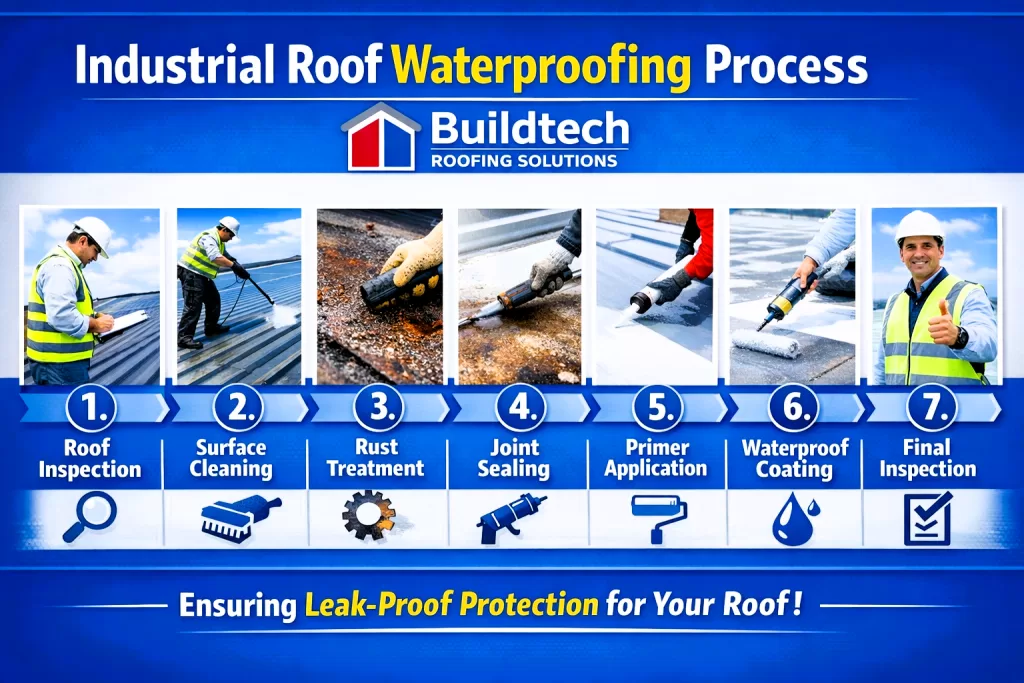
Industrial Roof Waterproofing Process (Step-by-Step)
- Detailed roof inspection
- Surface cleaning and preparation
- Rust removal and treatment
- Joint and fastener sealing
- Primer application
- Waterproof coating layers
- Final inspection and testing
Proper preparation is the most critical stage for durability.
Signs Your Industrial Roof Needs Waterproofing
- Water dripping during rainfall
- Rust patches appearing
- Damp ceiling areas
- Repeated leak repairs
- Standing water on the roof surface
Early waterproofing prevents structural damage.
Waterproofing vs Roof Replacement
| Waterproofing | Roof Replacement |
|---|---|
| Lower cost | High investment |
| Faster execution | Longer downtime |
| Extends lifespan | Full reconstruction |
| Minimal disruption | Operational impact |
Waterproofing is often the most economical first solution.
Best Time for Waterproofing in Pune
Ideal Periods
- February – May (Pre-Monsoon Preparation)
- October – December (Post-Monsoon Repairs)
Avoid application during active rainy conditions.
How Waterproofing Improves Roofing ROI
Waterproofing directly contributes to financial performance:
- Reduces repair frequency
- Prevents corrosion damage
- Maintains warranty conditions
- Extends roof service life
Preventive waterproofing offers a strong return on investment over time.
Common Waterproofing Mistakes Industries Make
- Applying a coating without cleaning the surface
- Ignoring joints and fasteners
- Using residential-grade materials
- Incorrect coating thickness
- No final inspection
Professional execution prevents premature failure.
Why Professional Waterproofing Matters
Industrial roofing requires specialized expertise because:
- Large surfaces require uniform coating thickness
- Metal expansion must be considered
- Drainage design affects performance
- Safety compliance is mandatory
Improper application often causes leaks to return quickly.
Why Industries Choose Buildtech Roofing Solutions
Buildtech Roofing Solutions delivers structured waterproofing services:
- Industrial-grade materials
- Detailed inspection-based planning
- Monsoon-ready solutions
- Skilled application teams
- Maintenance-backed protection
This ensures long-lasting waterproof performance.
FAQs: Industrial Roofing Waterproofing
How long does industrial roof waterproofing last?
Typically, 5–10 years, depending on coating type and maintenance.
Which waterproofing is best for metal roofs?
PU and silicone coatings perform best due to their flexibility.
Can waterproofing stop existing leaks?
Yes, when proper surface preparation and sealing are performed.
How often should waterproofing be done?
Inspection annually and recoating based on condition.
Conclusion: Waterproofing Protects Your Industrial Investment
Industrial roofing waterproofing is not merely a repair—it is a strategic protection system that preserves infrastructure and prevents costly disruptions. Proper waterproofing safeguards factories and warehouses from monsoon damage while improving roof longevity and operational reliability.
For professional waterproofing inspection and solutions in Pune, Buildtech Roofing Solutions provides engineered protection designed for industrial environments.