
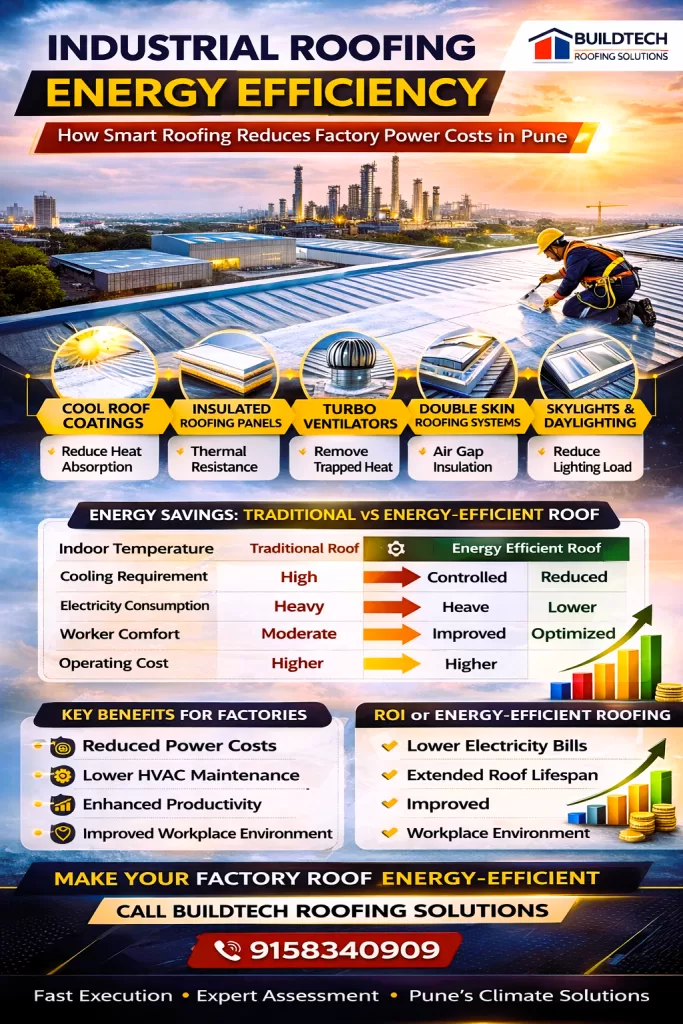
Industrial Roofing Energy Efficiency: How Smart Roofing Reduces Factory Power Costs
Introduction: Why Industrial Roofing Energy Efficiency Matters in Pune
Industrial roofing energy efficiency plays a critical role in controlling factory operating costs. In Pune’s climate, industrial roofs absorb intense solar radiation for most of the year. As a result, indoor temperatures rise, cooling systems work harder, and electricity bills increase.
Many factories focus on machinery efficiency but overlook roofing performance. However, improving industrial roofing energy efficiency can significantly reduce heat gain, lower HVAC load, and improve worker comfort.
Therefore, smart roofing design is not just a structural decision — it is an energy strategy.
How Industrial Roofs Influence Energy Consumption
Heat enters industrial buildings primarily through the roof. Because it is the largest exposed surface area, even small design inefficiencies create a measurable cost impact.
Key heat transfer mechanisms include:
- Solar radiation absorption through metal sheets
- Thermal conduction into interior workspaces
- Hot air accumulation below the roof deck
- Increased HVAC load to compensate for the temperature rise
Consequently, improving roofing design directly reduces power consumption.
Signs of Poor Industrial Roofing Energy Efficiency
Factories often experience warning signs long before taking action:
- Rising electricity bills every summer
- High indoor temperatures despite ventilation
- Worker discomfort near ceiling areas
- Increased air-conditioning usage
- Heat accumulation under metal sheets
If these indicators appear consistently, your roof may be costing more than it should.
Core Solutions That Improve Industrial Roofing Energy Efficiency
1️⃣ Cool Roof Coatings
Reflective coatings reduce solar heat absorption and lower roof surface temperatures.
Benefits include:
- Reduced indoor heat gain
- Lower cooling energy demand
- Extended roofing sheet durability
Cool roofing is one of the fastest retrofitting solutions available.
2️⃣ Insulated Roofing Panels
Insulated panels create thermal resistance between external heat and interior spaces.
Advantages:
- Stable indoor temperature
- Reduced HVAC operating hours
- Improved acoustic comfort
For temperature-sensitive industries, insulated roofing significantly improves efficiency.
3️⃣ Turbo Ventilators & Ridge Ventilation
Hot air naturally rises. Proper ventilation removes trapped heat without electricity.
This passive system:
- Improves airflow
- Reduces internal heat buildup
- Enhances worker comfort
- Lowers dependency on mechanical cooling
As a result, operational costs decline steadily.
4️⃣ Double Skin Roofing Systems
Double-layer roofing creates an air gap that acts as thermal insulation.
This system:
- Minimizes heat transfer
- Improves thermal stability
- Extends roofing lifespan
Modern industrial sheds increasingly adopt this design for performance optimisation.
5️⃣ Daylighting & Skylight Integration
Strategic daylighting reduces artificial lighting demand.
When properly designed, skylights:
- Reduce electrical load
- Improve workplace visibility
- Support productivity
Balanced integration prevents overheating while enhancing efficiency.
ROI of Industrial Roofing Energy Efficiency
Industrial roofing energy efficiency generates measurable financial returns.
Savings occur through:
- Reduced electricity bills
- Lower HVAC maintenance costs
- Improved machinery performance
- Extended roof lifespan
- Decreased operational interruptions
Over time, annual energy savings significantly exceed the initial investment.
Energy Efficiency in Pune’s Climate Conditions
Pune experiences:
- High solar radiation
- Prolonged summer heat
- Warm air accumulation in large sheds
- Monsoon humidity variations
Therefore, industrial roofing systems must be designed specifically for local environmental stress.
Climate-responsive roofing improves stability across seasons.
Common Energy Efficiency Mistakes
Factories often unintentionally reduce performance by:
- Using dark-colored roofing sheets
- Ignoring ventilation planning
- Installing inadequate insulation
- Blocking airflow pathways
- Neglecting ventilator maintenance
Correcting these issues restores efficiency quickly.
Retrofitting Existing Industrial Roofs
Energy efficiency improvements do not always require full replacement.
Retrofit options include:
- Applying reflective coatings
- Installing turbo ventilators
- Adding insulation layers
- Upgrading sealant systems
- Improving drainage and airflow
Retrofitting often provides rapid ROI.
How Buildtech Roofing Solutions Enhances Industrial Roofing Energy Efficiency
Buildtech Roofing Solutions follows an engineering-led approach:
- Site-specific heat assessment
- Ventilation optimisation planning
- Material performance evaluation
- Lifecycle cost analysis
- Precision industrial installation
This structured methodology ensures energy performance, durability, and long-term cost control for factories and warehouses in Pune.
FAQs: Industrial Roofing Energy Efficiency
How does industrial roofing energy efficiency reduce power costs?
By lowering heat gain, cooling systems operate less frequently, reducing electricity consumption.
What is a cool roof system?
A reflective roofing solution designed to minimize solar heat absorption.
Are turbo ventilators energy efficient?
Yes. They remove hot air using wind energy without electricity.
Can existing industrial roofs be upgraded?
Yes. Coatings, insulation, and ventilation retrofits improve performance significantly.
Conclusion: Energy-Efficient Roofing Strengthens Operational Stability
Industrial roofing energy efficiency is a strategic operational decision, not just a construction upgrade. By reducing heat gain and optimising ventilation, factories and warehouses in Pune lower power costs, improve working conditions, and extend infrastructure lifespan.
Businesses that invest in energy-efficient roofing benefit from long-term financial savings and predictable operating performance.
For professional assessment and energy-efficient industrial roofing solutions in Pune, Buildtech Roofing Solutions provides engineering-driven execution and lifecycle-focused planning.